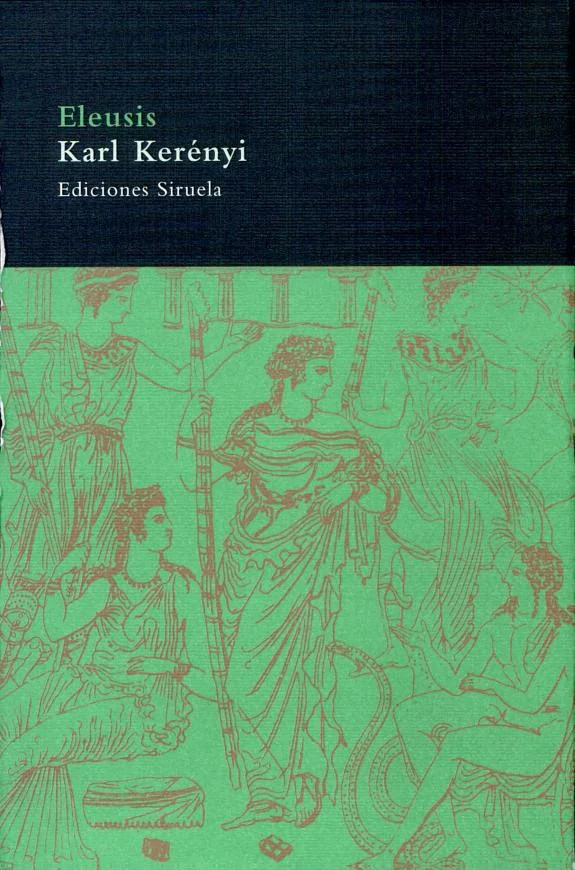
Eleusis
 75
75

Eleusis
Kerényi's *Eleusis* offers a dense, intellectually stimulating exploration of the ancient Greek mystery cults, focusing on the profound psychological impact of the initiation rites. His strength lies in synthesizing classical scholarship with Jungian archetypal theory, particularly in his interpretation of the Demeter-Persephone myth as a blueprint for spiritual rebirth. He skillfully unpacks the potential meaning of *epopteia*, the final vision granted to initiates, suggesting it was a direct apprehension of the divine order. A limitation, however, is the book's academic density; readers unfamiliar with classical mythology or Jungian concepts may find passages challenging to penetrate. The discussion surrounding the pharmakon, the ritual substance consumed, remains somewhat speculative, highlighting the inherent difficulties in reconstructing the Mysteries. Ultimately, *Eleusis* provides a compelling, albeit demanding, scholarly perspective on one of antiquity's most enduring spiritual phenomena.
📝 Description
75
Karl Kerényi's 2004 book, Eleusis, examines the ancient Greek initiation rites.
Eleusis by Karl Kerényi is a scholarly study of the Eleusinian Mysteries, the secret rites practiced annually in ancient Greece. Published in 2004, this work moves past simple historical accounts to consider the psychological and philosophical aspects of these ceremonies. Kerényi, a respected classicist and mythologist, applies both scholarly precision and philosophical insight to the subject. The book focuses on the myth of Demeter and Persephone, which forms the core narrative of the Mysteries. Kerényi analyzes the concept of *epopteia*, the highest level of initiation, and considers its potential significance. He also discusses the transformative effects attributed to the rites, suggesting they provided initiates with a deep link to the cycles of life, death, and renewal.
The study of the Eleusinian Mysteries has a long history, with scholars for centuries trying to uncover their meaning. Kerényi's contribution, emerging in the late 20th century, builds on previous research while integrating ideas from depth psychology. His method differs from purely historical or archaeological investigations by highlighting the lived experience and symbolic weight of the rituals. This book is for readers interested in classical antiquity, comparative religion, and the history of esoteric traditions, especially those seeking a more thorough grasp of ancient mystery cults.
This book situates itself within the study of ancient mystery cults, a significant current in esoteric traditions. The Eleusinian Mysteries were one of the most important of these cults in the Greco-Roman world, promising initiates a special understanding of life and death. Kerényi's analysis, informed by depth psychology, connects the symbolic narratives of the myth and ritual to universal human experiences of transformation and rebirth. It represents a scholarly approach to understanding the experiential and psychological impact of these ancient sacred practices.
💡 Why Read This Book?
• Gain an understanding of the *epopteia*, the highest stage of initiation in the Eleusinian Mysteries, and its purported psychological and spiritual effects, a concept central to the cult's transformative power. • Explore the myth of Demeter and Persephone as analyzed by Kerényi, recognizing its archetypal significance in understanding cycles of death and rebirth, a core theme presented in the book. • Appreciate the scholarly approach to ancient mystery cults that emerged in the mid-20th century, moving beyond simple historical accounts to examine the phenomenological experience of initiation, as exemplified by Kerényi's work.
⭐ Reader Reviews
Honest opinions from readers who have explored this book.
❓ Frequently Asked Questions
What were the Eleusinian Mysteries and why are they significant?
The Eleusinian Mysteries were secret initiation rites performed annually near Athens, Greece, honoring the goddesses Demeter and Persephone. Their significance lies in their promise of a better afterlife and their profound influence on ancient Greek religion and philosophy for over two millennia.
Who was Karl Kerényi and what is his connection to the Eleusinian Mysteries?
Karl Kerényi (1897-1973) was a Hungarian-Austrian classical scholar and mythologist. He extensively studied ancient Greek religion and mythology, with a particular focus on the Eleusinian Mysteries, interpreting them through the lens of depth psychology, particularly Carl Jung's theories.
When was Karl Kerényi's book 'Eleusis' first published?
Karl Kerényi's seminal work on the Eleusinian Mysteries, 'Eleusis: Archetypal Image of Mother and Daughter,' was first published in German in 1962. The English translation, often referenced, appeared later, with the edition discussed here first published in 2004.
What is the primary focus of Kerényi's analysis in 'Eleusis'?
The primary focus is the psychological and symbolic interpretation of the Eleusinian Mysteries. Kerényi delves into the myth of Demeter and Persephone, the stages of initiation, and the transformative experience promised to initiates, viewing them through an archetypal lens.
What does 'epopteia' refer to in the context of the Eleusinian Mysteries?
'Epopteia' refers to the final, highest stage of initiation in the Eleusinian Mysteries. It involved a sacred vision or direct apprehension, the precise nature of which was kept secret, but was believed to grant profound spiritual insight.
How does Kerényi's work differ from traditional historical accounts of the Mysteries?
Kerényi's work integrates classical philology and archaeology with depth psychology, particularly Jungian archetypes. He focuses on the subjective experience and symbolic meaning for the initiate, rather than solely on historical facts or ritualistic details.
🔮 Key Themes & Symbolism
The Myth of Demeter and Persephone
Kerényi meticulously dissects the myth of Demeter's grief over Persephone's abduction and her subsequent reunion with her daughter. This narrative is presented not merely as a story, but as the archetypal structure underpinning the Eleusinian rites. The myth serves as a symbolic representation of the descent into the underworld (Kore's journey) and the return to the divine light (Demeter's joy), mirroring the initiate's own transformative process. The cyclical nature of the myth reflects the agricultural and seasonal cycles central to ancient Greek life, linking the divine drama to the very sustenance of existence.
Initiation and Transformation
The core of the Eleusinian Mysteries lay in their initiatory process. Kerényi examines the progression through various stages, culminating in the *epopteia*. This final revelation was not simply intellectual knowledge but a direct, transformative experience. The book explores how this experience was believed to grant initiates a profound understanding of life, death, and the divine, offering a sense of assurance regarding the afterlife and a deeper connection to the cosmic order. This transformation was central to the cult's enduring appeal.
Archetypal Psychology and Myth
A significant contribution of Kerényi's work is its application of Carl Jung's analytical psychology to ancient mythology. He posits that the Eleusinian Mysteries and their core myth tap into universal, unconscious patterns of the human psyche – archetypes. The figures of Demeter and Persephone, for instance, represent fundamental maternal and maiden aspects of the Great Mother archetype. By understanding these myths through an archetypal lens, Kerényi suggests we can access deeper layers of meaning relevant to the modern psyche.
The Sacred and the Profane
The Eleusinian Mysteries represented a sacred space and time set apart from ordinary life. Kerényi highlights the wide impact of this ritual separation. The Mysteries provided a framework for confronting fundamental existential questions—life, death, and rebirth—in a divinely sanctioned context. This engagement with the sacred was believed to imbue the initiate's ordinary life with new meaning and perspective, bridging the gap between the mundane and the transcendent, and offering a powerful antidote to existential anxiety.
💬 Memorable Quotes
Direct passages from the work, attributed to the author.
“The Demeter-Persephone myth provides the blueprint for the entire mystery.”
— This highlights Kerényi's central thesis: the narrative of the mother goddess and her daughter is not just a story associated with the Eleusinian rites, but the fundamental symbolic structure that gives them meaning and initiates the transformative process.
“The *epopteia* was a vision that changed one's relationship with death.”
— This interpretation suggests that the ultimate revelation within the Mysteries, the *epopteia*, provided initiates with a perspective that fundamentally altered their fear or understanding of mortality, likely by offering assurance of continuity or rebirth.
“Mystery cults engaged with the psyche on an archetypal level.”
— This statement reflects Kerényi's Jungian approach, proposing that the power of ancient rituals like Eleusis stemmed from their ability to connect with and activate universal, unconscious patterns within the human mind, the archetypes.
“The rites mirrored the cycles of nature and the soul.”
— This captures the integration of natural phenomena—seasons, agriculture—with the inner, spiritual journey of the initiate. The Eleusinian Mysteries thus offered a microcosm of the larger cosmic processes, reflecting both external and internal transformations.
💡 Key Ideas
Editorial paraphrase of the work's core concepts — not direct quotes.
Initiation offered a glimpse into the divine order.
This paraphrased concept emphasizes the core promise of the Eleusinian Mysteries: through the ritual process, participants were believed to achieve a direct, albeit veiled, understanding of the fundamental workings of the cosmos and the divine realm.
🌙 Esoteric Significance
Tradition
Kerényi's work on Eleusis aligns with the tradition of interpreting ancient mystery cults through a psychological and symbolic lens, a path significantly illuminated by depth psychology, particularly the work of Carl Jung. While not strictly Hermetic or Gnostic, it draws from a broader Western esoteric current that seeks perennial wisdom in ancient mythologies and rituals. It departs from purely historical or philological approaches by prioritizing the inner experience and archetypal resonance of the rites, seeing them as expressions of universal psychic truths.
Symbolism
Key symbols in the Eleusinian context include the *kista* (a sacred chest containing ritual objects) and the *phallos* (a symbol of fertility and regeneration), both representing the hidden generative powers of nature and the divine. The grain (specifically barley or wheat) symbolizes life, death, and rebirth, mirroring Persephone's descent and return, and linking the Mysteries to agricultural cycles. The pomegranate, associated with Persephone, signifies her bond with the underworld and the cyclical nature of existence.
Modern Relevance
Kerényi's interpretation of the Eleusinian Mysteries continues to influence contemporary studies in comparative mythology, religious phenomenology, and depth psychology. Thinkers and practitioners interested in archetypal psychology, the sacred feminine, and the integration of ancient wisdom into modern life often turn to his analyses. His work provides a framework for understanding how ancient rituals can still speak to the human psyche, offering insights into the perennial concerns of life, death, and spiritual transformation.
👥 Who Should Read This Book
• Students of Comparative Mythology: Those seeking to understand how ancient myths, like that of Demeter and Persephone, function as archetypal narratives influencing cultural and psychological landscapes. • Explorers of Ancient Mystery Religions: Individuals interested in the Eleusinian Mysteries specifically, who desire an analysis that moves beyond historical accounts to explore the potential psychological and spiritual experiences of initiates. • Practitioners and Scholars of Depth Psychology: Readers familiar with Jungian concepts who wish to see how archetypal psychology can illuminate the study of ancient religious traditions and their enduring symbolic power.
📜 Historical Context
The study of the Eleusinian Mysteries has been a continuous thread in classical scholarship since antiquity. By the mid-20th century, when Karl Kerényi was developing his theories, the field was dominated by historical and archaeological approaches, often seeking to pinpoint exact ritual practices and origins. However, Kerényi, influenced by Carl Jung, sought to explore the psychological and archetypal dimensions of the Mysteries. He engaged with contemporaries like Walter Otto, who also focused on the religious experience of the Greeks, but Kerényi's specific integration of Jungian concepts set his work apart. While not a subject of major public controversy or censorship, the highly secret nature of the Eleusinian rites meant that scholarly interpretation, including Kerényi's, often relied on inference and comparative mythology, a point noted by critics of the time.
📔 Journal Prompts
The myth of Demeter and Persephone as an archetypal blueprint.
Reflect on the concept of *epopteia* and its potential meaning.
The symbolic significance of the grain in ancient mystery rites.
How does the Eleusinian focus on life, death, and rebirth connect to modern anxieties?
The integration of natural cycles with inner transformation in ancient cults.
🗂️ Glossary
Eleusinian Mysteries
Ancient Greek secret initiation rites performed annually in honor of the goddesses Demeter and Persephone, centered around the myth of Persephone's abduction and return, promising initiates a better afterlife.
Demeter
Greek goddess of agriculture, harvest, and the fertility of the earth. Her sorrow over her daughter Persephone's abduction and her subsequent search formed the central narrative of the Eleusinian Mysteries.
Persephone
Daughter of Demeter, abducted by Hades to become queen of the underworld. Her cyclical journey between the upper world and the underworld symbolized death and rebirth, crucial to the Mysteries.
Epopteia
The highest and final stage of initiation in the Eleusinian Mysteries. It involved a sacred vision or direct apprehension of divine realities, the nature of which was kept secret.
Kore
Greek for 'maiden' or 'daughter,' often used as an epithet for Persephone, emphasizing her youthful aspect and connection to the fertile earth before her descent.
Archetype
In Jungian psychology, a universal, inherited pattern of thought or imagery derived from the experiences of the species and present in the collective unconscious. Kerényi applied this concept to myth.
Pharmakon
Greek word with a dual meaning: 'remedy' or 'poison.' In the context of ancient rituals, it could refer to a sacred substance used in rites, potentially psychoactive or symbolic.
This book appears in 1 collection
🔮 Readers Also Liked
Browse all →








From the “Eleusinian Mysteries” Collection
View all →








More Free Esoteric History & Biography Books
View all →