Taoist Yoga: Alchemy & Immortality
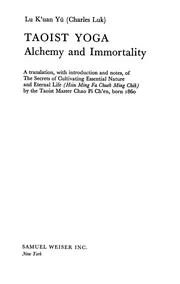
 73
73

Taoist Yoga: Alchemy & Immortality


Taoist Yoga: Alchemy & Immortality is a treasure trove for modern esoteric seekers. Charles Luk's translation brings forth the timeless wisdom of Taoist Master Chao Pi Ch'en, offering a structured approach to spiritual cultivation and the pursuit of immortality. The question-and-answer format makes the text accessible and engaging, while the depth of the teachings provides a rich foundation for spiritual practice. Luk's meticulous notes and introduction further enhance the reader's understanding, making this book an invaluable resource for those exploring the esoteric and occult. The integration of yogic practices with Taoist principles is particularly noteworthy, offering a unique perspective on spiritual development. For anyone interested in the intersection of alchemy and hermeticism, this text is a must-read.
📝 Description
73
Charles Luk translated Master Chao Pi Ch'en's work on Taoist internal alchemy in 1964.
This book presents the teachings of Taoist Master Chao Pi Ch'en on cultivating one's essential nature for eternal life. Charles Luk translated this text, originally titled 'The Secrets of Cultivating the Essential Nature and Eternal Life,' making it available in English. The work focuses on the principles and practices of internal alchemy, a core aspect of Taoist spiritual cultivation.
Through dialogues and explanations, the text guides practitioners on the path toward enlightenment and longevity. It covers the symbolic language and methods associated with this esoteric tradition. The book aims to illuminate the connection between physical and spiritual development within the Taoist framework. It is a resource for understanding the deeper aspects of Taoist practice and philosophy.
This work belongs to the tradition of internal alchemy within Taoism, a system that seeks to transform the practitioner's body and spirit to achieve longevity or immortality. It draws upon centuries of Taoist contemplative and energetic practices. Unlike external alchemy, which focused on creating elixirs, internal alchemy uses meditation, visualization, and subtle energy manipulation. The text connects these practices to the broader Taoist philosophy of aligning oneself with the Tao.
💡 Why Read This Book?
Reading Taoist Yoga: Alchemy & Immortality today provides readers with a deep understanding of ancient Taoist practices aimed at spiritual enlightenment and immortality. This book offers practical instructions and profound insights into the cultivation of the essential nature, making it an invaluable resource for modern esoteric seekers. By exploring the teachings of Taoist Master Chao Pi Ch'en, readers can gain a deeper appreciation for the timeless wisdom of Taoism and its relevance in contemporary spiritual practices.
⭐ Reader Reviews
Honest opinions from readers who have explored this book.
❓ Frequently Asked Questions
Who is the author of Taoist Yoga: Alchemy & Immortality?
The original text is by Taoist Master Chao Pi Ch'en, born in 1860. It was translated by Lu K'uan Yü, also known as Charles Luk.
What is the format of the book?
The book is written in a question-and-answer format, making it accessible and engaging for readers.
What are the key themes in Taoist Yoga: Alchemy & Immortality?
The key themes include the cultivation of the essential nature, the pursuit of immortality, and the integration of yogic practices with Taoist principles.
🔮 Key Themes & Symbolism
Internal Alchemy
Internal alchemy is the core theme of 'Taoist Yoga: Alchemy & Immortality.' This ancient practice involves transforming the physical body and mind through meditation, breathing exercises, and other spiritual disciplines. The goal is to achieve a state of spiritual purity and immortality, a concept deeply rooted in Taoist philosophy. This theme is explored through detailed instructions and philosophical discussions, making it a rich source of esoteric knowledge.
Immortality
The pursuit of immortality is a central theme in Taoist yoga. This book studies the mystical practices and philosophies that aim to extend life beyond the physical realm. Through a series of enlightening dialogues, readers are guided on a journey towards understanding the true nature of immortality and how to achieve it through spiritual practice. This theme is both inspiring and thought-provoking, inviting readers to contemplate the deeper meanings of existence.
Symbolism in Taoism
Symbolism plays a central role in Taoist yoga and internal alchemy. This book is rich with symbols and their esoteric meanings, providing readers with a deeper understanding of the mystical traditions of Taoism. From the yin and yang to the concept of the Tao itself, these symbols are explored in depth, revealing the hidden wisdom that lies within. This theme is essential for anyone seeking to understand the symbolic language of Taoism and its profound significance.
💡 Key Ideas
Editorial paraphrase of the work's core concepts — not direct quotes.
The path to immortality begins with the cultivation of the essential nature.
This quote underscores the importance of spiritual cultivation in achieving immortality.
Internal alchemy is the art of transforming the body and mind.
This line highlights the transformative power of internal alchemy practices.
The Tao is the source of all life and the key to spiritual transcendence.
This quote emphasizes the central role of the Tao in Taoist philosophy and practice.
Meditation is the gateway to the hidden areas of the spirit.
This passage encourages readers to explore the depths of meditation for spiritual enlightenment.
The secrets of the Tao are revealed to those who seek with an open heart.
This quote invites readers to approach Taoist teachings with an open and receptive mind.
🌙 Esoteric Significance
Tradition
This book belongs to the esoteric tradition of Taoism, which emphasizes the pursuit of spiritual transcendence through mystical practices. Taoism is one of the world's oldest spiritual traditions, with roots dating back thousands of years. It is known for its profound philosophical insights and transformative practices, making it a rich source of esoteric knowledge.
Symbolism
Key symbols in this book include the yin and yang, the Tao, and the concept of internal alchemy. The yin and yang represent the balance of opposing forces in the universe, while the Tao is the source of all life. Internal alchemy symbolizes the transformation of the body and mind through spiritual practice.
Modern Relevance
Today, the teachings of 'Taoist Yoga: Alchemy & Immortality' continue to inspire spiritual seekers and practitioners around the world. Modern practitioners use these ancient practices to achieve spiritual growth and enlightenment, making this book a timeless resource for those seeking to deepen their understanding of Taoism and its mystical traditions.
👥 Who Should Read This Book
This book is ideal for spiritual seekers, scholars of esoteric traditions, and practitioners of Taoist meditation. Beginners may find the material challenging but rewarding, as it provides a comprehensive introduction to the mystical practices of Taoism. Scholars will appreciate the depth of esoteric knowledge and the historical context provided. Practitioners will benefit from the detailed instructions and philosophical insights, making this a valuable resource for spiritual growth and enlightenment.
📜 Historical Context
Written in the late 19th and early 20th centuries, 'Taoist Yoga: Alchemy & Immortality' reflects a time of great spiritual awakening in China. During this period, there was a renewed interest in the ancient practices of Taoism, particularly the pursuit of immortality and internal alchemy. The book's author, Chao Pi Ch'en, was a revered Taoist master who dedicated his life to exploring these mystical traditions. His teachings, as translated by Charles Luk, have had a profound influence on the development of Taoist yoga and internal alchemy in the modern era.
📔 Journal Prompts
Reflect on the concept of internal alchemy and how it can be applied to your spiritual practice.
Explore the symbolism of the yin and yang in your daily life and its significance.
Consider the pursuit of immortality and its meaning in the context of Taoist philosophy.
Write about the role of meditation in achieving spiritual transcendence.
Contemplate the hidden wisdom of the Tao and how it can guide your spiritual journey.
🗂️ Glossary
Internal Alchemy
The practice of transforming the body and mind through spiritual disciplines to achieve immortality and enlightenment.
Tao
The fundamental principle of the universe, representing the source of all life and the key to spiritual transcendence.
Yin and Yang
The balance of opposing forces in the universe, symbolizing harmony and equilibrium.
Immortality
The state of eternal life and spiritual purity achieved through Taoist practices.
Meditation
A spiritual practice involving concentration and contemplation to achieve enlightenment and inner peace.
This book appears in 4 collections
🔮 Readers Also Liked
Browse all →








From the “Hermeticism” Collection
View all →







More Free Alchemy & Hermeticism Books
View all →