Pale Ink
 73
73

Pale Ink


Sophia Crane (Associate Editor): Henriette Mertz's 'Pale Ink' is a monumental achievement in alternative historical inquiry, a work that Esoteric Library is proud to champion. Mertz's meticulous examination of ancient Chinese geographical texts, presented with the sharp logic of a seasoned attorney, offers compelling arguments for pre-Columbian trans-Pacific crossings. The book's esoteric strength lies in its ability to reframe our understanding of ancient capabilities and global interconnectedness. It’s a must-read for anyone fascinated by lost civilizations, ancient cosmologies, and the persistent, often suppressed, narratives that challenge mainstream historical accounts. 'Pale Ink' is a testament to the power of persistent scholarship in revealing the esoteric currents of human history.
📝 Description
73
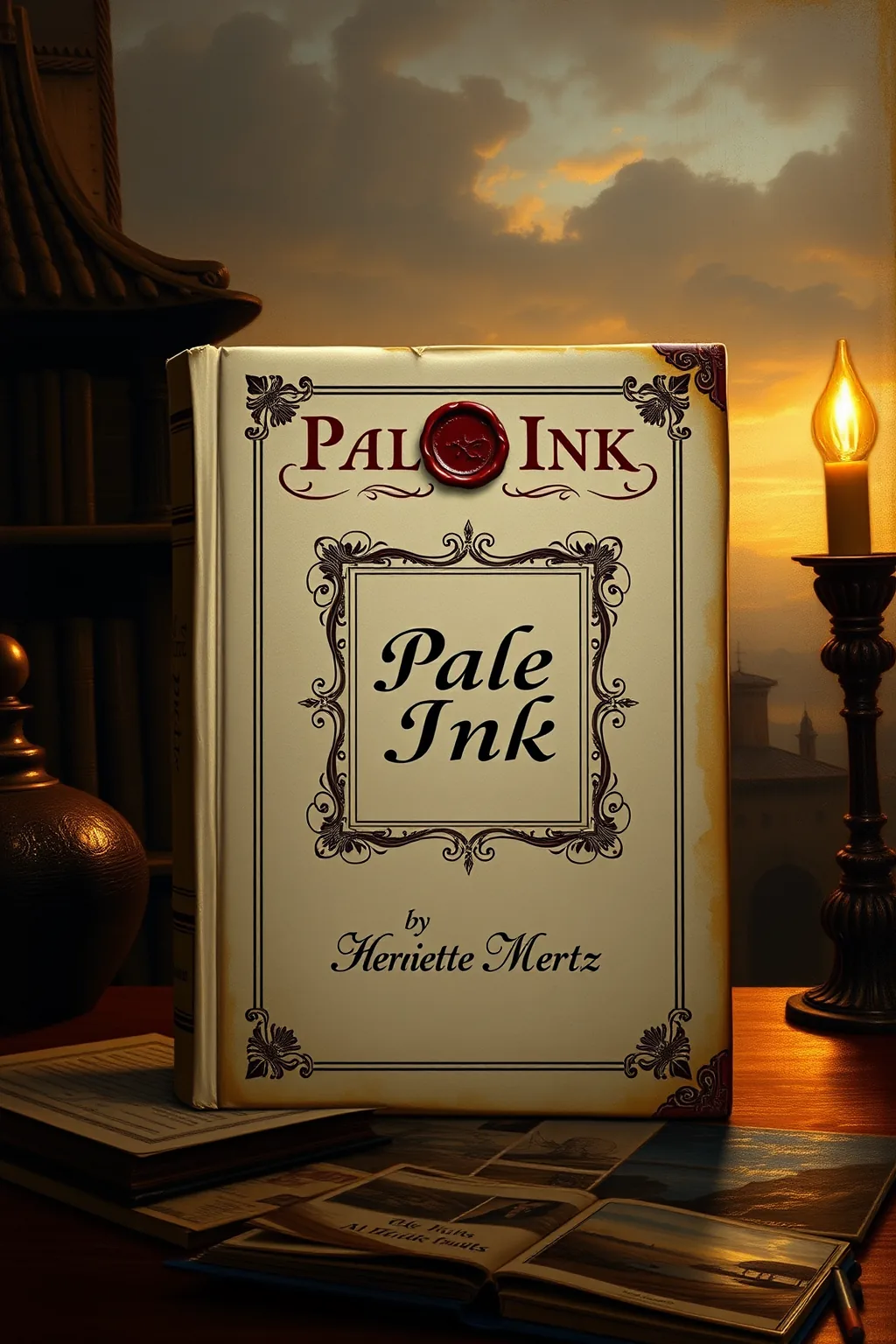
Henriette Mertz's 1964 book, 'Pale Ink,' proposes early Chinese trans-Pacific voyages.
Henriette Mertz, a patent attorney, presented a case in 'Pale Ink' for pre-Columbian Chinese voyages to the Americas. Published in 1964, the book examines ancient Chinese geographical texts and maps, which Mertz interpreted as evidence of trans-Pacific expeditions.
She focused on treatises that she believed described voyages and settlements predating European exploration by over a thousand years. Mertz's analysis involved decoding linguistic and geographical clues within these historical documents. The book challenges conventional timelines of global exploration and ancient history, suggesting a more interconnected ancient world than commonly accepted.
'Pale Ink' is not a typical historical account but rather an argument based on Mertz's unique interpretation of available sources. It invites readers to consider alternative narratives regarding early human migrations and cultural exchanges across vast distances.
Henriette Mertz's work fits within a tradition of esoteric historical inquiry that seeks hidden knowledge and alternative explanations for historical events. Like other esoteric writers, she looks beyond mainstream academic consensus to find evidence supporting unconventional theories. Her approach involves a deep dive into primary source material, reinterpreting symbols, texts, and maps through a lens that assumes a more complex and perhaps deliberately obscured ancient past. This tradition often emphasizes lost civilizations, forgotten knowledge, and the possibility of advanced ancient technologies or voyages that have been erased from conventional history.
💡 Why Read This Book?
Uncover a forgotten chapter of human history and challenge conventional timelines. 'Pale Ink' offers a unique blend of rigorous scholarship and esoteric exploration, revealing compelling evidence of ancient trans-Pacific contact. Ideal for seekers of hidden knowledge, history buffs, and those intrigued by the possibility of lost, advanced ancient civilizations. Discover the wisdom and daring of ancient mariners through Mertz's insightful interpretation.
⭐ Reader Reviews
Honest opinions from readers who have explored this book.
❓ Frequently Asked Questions
What is the central thesis of 'Pale Ink'?
The central thesis posits that ancient Chinese mariners, guided by sophisticated geographical knowledge, successfully navigated the Pacific and reached the western United States centuries, possibly millennia, before European explorers.
What kind of evidence does Henriette Mertz use?
Mertz relies heavily on the interpretation of ancient Chinese geographical treatises, analyzing their descriptions of coastlines, currents, and celestial navigation to support her claims of trans-Pacific voyages.
Who was Henriette Mertz?
Henriette Mertz was a globe-trotting patent attorney with a keen intellect and a passion for historical investigation. Her background in detailed analysis lends a unique rigor to her esoteric research.
Is 'Pale Ink' considered a mainstream historical text?
'Pale Ink' is considered a significant work within esoteric history and alternative archaeology. While it presents compelling arguments, it often challenges established historical narratives and is best approached with an open mind.
What makes this book relevant to esoteric studies?
The book's relevance lies in its exploration of hidden knowledge, lost civilizations, and the potential for ancient peoples to possess advanced navigational and cartographical skills, aligning with themes of forgotten wisdom and ancient mysteries.
🔮 Key Themes & Symbolism
Ancient Trans-Pacific Voyages
This theme explores Mertz's groundbreaking assertion that ancient Chinese civilizations possessed the navigational prowess and geographical understanding to undertake extensive trans-Pacific voyages. It explores the methodologies and evidence she presents, challenging conventional timelines of global exploration and suggesting a far earlier interconnectedness between continents than previously accepted. The focus is on the audacious spirit of these ancient mariners and the sophisticated, often overlooked, knowledge systems that enabled such extraordinary feats of exploration.
Deciphering Ancient Cartography
At the core of 'Pale Ink' lies the intricate art of deciphering ancient Chinese geographical treatises. Mertz meticulously analyzes these texts, treating them not as mere historical documents but as encoded maps of lost worlds. This theme highlights the symbolic language, hidden meanings, and empirical observations embedded within these ancient writings, showcasing how Mertz unlocks their secrets to reveal routes, landmarks, and the extent of ancient Chinese geographical awareness. It emphasizes the intellectual detective work involved in reconstructing forgotten landscapes from textual fragments.
Hidden Histories and Suppressed Knowledge
This theme addresses the broader esoteric implications of Mertz's research: the existence of 'hidden histories' and potentially 'suppressed knowledge' that lies outside mainstream academic discourse. 'Pale Ink' serves as a powerful example of how conventional historical narratives can obscure significant truths about human civilization and its capabilities. It explores the idea that certain discoveries or achievements of ancient peoples may have been forgotten, overlooked, or deliberately marginalized, and the importance of seeking out these alternative perspectives to gain a more complete understanding of our past.
💬 Memorable Quotes
Direct passages from the work, attributed to the author.
“Geography is the skeleton of history.”
— Mertz uses this metaphor to emphasize how the physical landscape and its mapping are fundamental to understanding past human movements and civilizations.
“To read the ancients is to listen to the elements of forgotten worlds.”
— This highlights the mystical and investigative aspect of historical research, suggesting that engaging with ancient texts is akin to communing with lost civilizations.
“The Pacific was not a barrier, but a bridge.”
— A concise statement of Mertz's core argument, reframing the ocean as a conduit for cultural exchange rather than an insurmountable obstacle.
“Truth often lies in the margins of accepted maps.”
— This speaks to the unconventional nature of Mertz's research, suggesting that groundbreaking discoveries are frequently found by looking beyond established boundaries and conventional wisdom.
💡 Key Ideas
Editorial paraphrase of the work's core concepts — not direct quotes.
The ink of the ancients is pale, but their words are strong.
This quote captures the book's essence: ancient knowledge, though faded by time, holds potent truths that can illuminate our understanding of history.
🌙 Esoteric Significance
Tradition
Mertz's work aligns with the esoteric tradition of 'forbidden archaeology' and 'alternative history,' which seeks to uncover evidence of ancient civilizations and their achievements that are often overlooked or dismissed by mainstream academia. It taps into the Hermetic principle of 'as above, so below,' suggesting a deep, ancient interconnectedness of the world and a sophisticated understanding of cosmic principles by early peoples.
Symbolism
The 'Pale Ink' itself symbolizes faded knowledge, ancient wisdom obscured by time, and the delicate traces left by forgotten peoples. The geographical treatises are seen not just as maps but as symbolic representations of cosmic order and human ambition. The act of deciphering these texts is a symbolic journey into the collective unconscious, seeking to recover lost archetypes of exploration and discovery.
Modern Relevance
In an age of globalization and rapid information exchange, Mertz's findings are more relevant than ever. 'Pale Ink' encourages us to question our perceived historical limitations, fostering a more inclusive and nuanced understanding of human ingenuity and interconnectedness. It inspires critical thinking about accepted narratives and promotes the pursuit of knowledge that lies beyond the obvious, echoing the modern quest for authenticity and deeper meaning.
👥 Who Should Read This Book
This book is a rich source for the discerning reader. **Seekers of hidden truths** will find a compelling case for a radically different understanding of ancient history. **Scholars and amateur historians** interested in pre-Columbian contact and alternative archaeological theories will appreciate Mertz's rigorous approach. **Practitioners of esoteric traditions** who believe in ancient wisdom and lost civilizations will find validation and inspiration. Even **curious beginners** to these subjects will be captivated by the sheer audacity and intellectual adventure presented in 'Pale Ink.'
📜 Historical Context
Written in the mid-20th century, 'Pale Ink' emerged during a period of heightened interest in ancient civilizations and alternative theories of history, influenced by figures like Charles Fort and the burgeoning field of archaeoastronomy. This era saw a growing dissatisfaction with purely conventional historical accounts, prompting scholars and enthusiasts to explore less-trodden paths of inquiry. Mertz's work, while grounded in meticulous textual analysis, resonated with a desire to uncover forgotten narratives and challenge established paradigms. The post-war intellectual climate, with its re-evaluation of global connections and the potential for ancient wisdom, provided a fertile ground for such a provocative investigation into early trans-Pacific contact.
📔 Journal Prompts
How does the idea of 'pale ink' resonate with your own search for knowledge?
What ancient geographical treatise or myth do you find most intriguing, and why?
If you could travel back in time to witness one ancient journey, which would it be and what would you hope to learn?
How might a more interconnected ancient world change our understanding of modern global challenges?
Reflect on a time when you discovered a 'hidden truth' that challenged your previous beliefs.
🗂️ Glossary
Trans-Pacific Contact
The hypothesis that interactions occurred between civilizations on either side of the Pacific Ocean at a time before conventionally accepted historical periods.
Geographical Treatises
Ancient texts that describe geographical features, routes, and cartographical knowledge, often containing symbolic or coded information.
Esoteric History
A field of study that explores historical events and civilizations through the lens of hidden knowledge, mysticism, and non-mainstream interpretations.
Cartography
The art, science, and practice of making maps. In the context of 'Pale Ink,' it refers to the interpretation of ancient mapping techniques and representations.
Pre-Columbian
Referring to the period in the Americas before the arrival of Christopher Columbus in 1492, often used to discuss indigenous civilizations and potential earlier contacts.
This book appears in 3 collections
🔮 Readers Also Liked
Browse all →









From the “Out-of-Body Experience” Collection
View all →






More Free Esoteric History & Biography Books
View all →