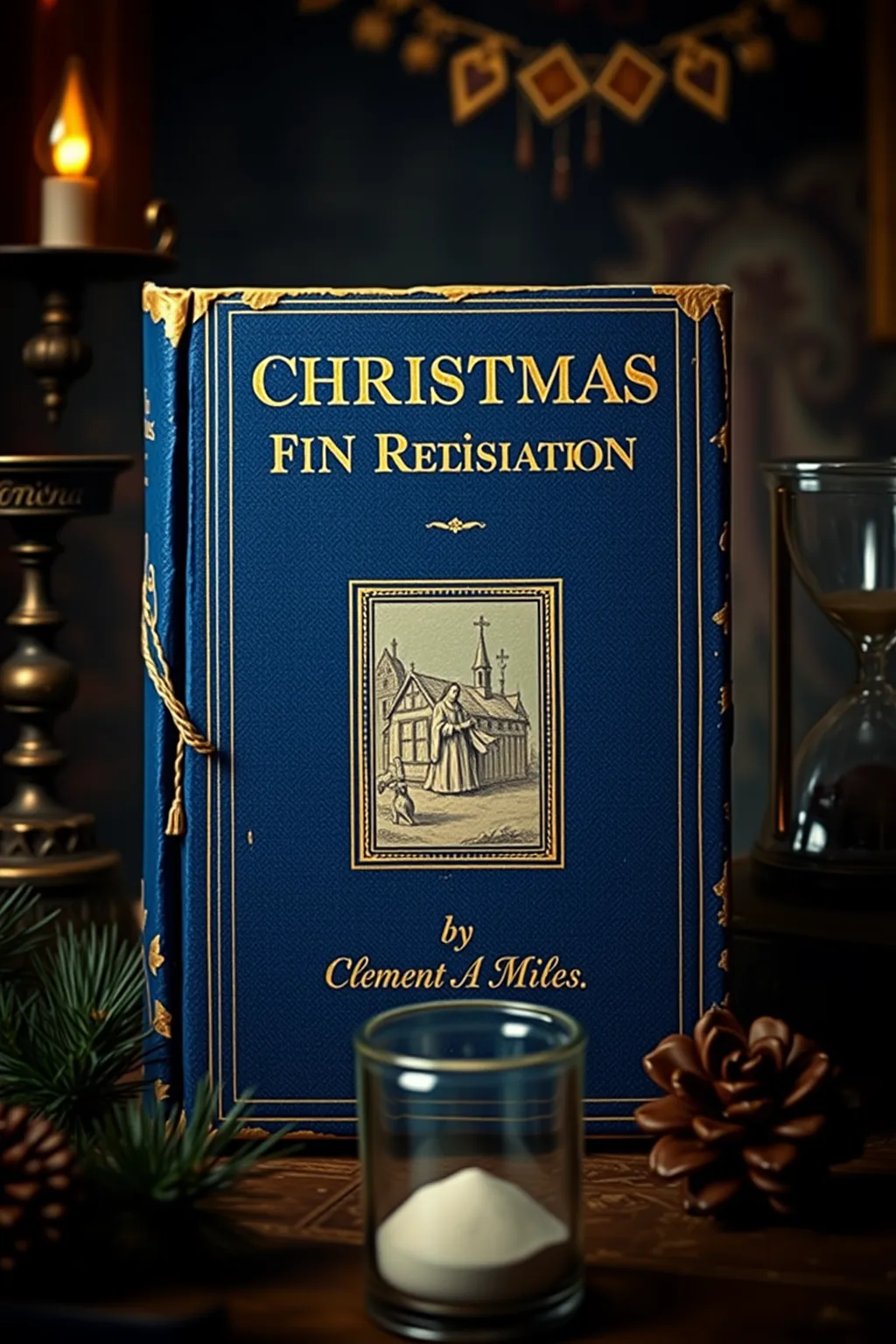
Christmas in Ritual and Tradition
 82
82

Christmas in Ritual and Tradition


Clement A. Miles' 'Christmas in Ritual and Tradition' remains an indispensable cornerstone for anyone seeking to penetrate the esoteric layers of this ancient festival. Miles' scholarly yet evocative prose skillfully navigates the complex tapestry of pagan survivals and Christian appropriations, offering profound insights into the perennial symbolism of rebirth, light, and cosmic renewal. This work is particularly valuable for its detailed examination of folk rituals and their hidden meanings, which resonate deeply with Hermetic and alchemical principles. It is an authoritative guide for practitioners and scholars alike, illuminating the alchemical transformation of a solar observance into a spiritual cornerstone. A truly illuminating read.
📝 Description
82
Clement A. Miles' 1912 book, Christmas in Ritual and Tradition, examines the pre-Christian origins of the holiday.
Published in 1912, Clement A. Miles' Christmas in Ritual and Tradition investigates the deep roots of the winter festival. The book uncovers connections between modern Christmas practices and older pagan observances, particularly solar cults and seasonal cycles. Miles details the symbolism of elements like the Yule log and mistletoe, showing how these traditions relate to concepts of death and rebirth within the year.
This work moves beyond a simple historical retelling. It aims to illuminate the underlying mystical and ritualistic aspects that shaped the holiday. Miles' research traces the evolution of these customs, revealing a continuity of meaning from ancient practices to the Christmas celebrated in his time. The book offers a detailed look at communal rituals tied to the turning of the seasons.
This book engages with the historical study of religious and folk traditions that often overlap with esoteric interests. Miles' approach, while rooted in scholarship of his era, touches upon themes central to many esoteric traditions: the investigation of ancient pagan practices, the symbolic meaning of natural cycles, and the hidden connections between seemingly disparate customs. It situates the popular Christmas celebration within a broader, older framework of nature worship and seasonal observance that appeals to those interested in the deeper currents of human ritual.
✍️ Author

Clement A Miles
Jennifer Clement (born 1960) is an American-Mexican author. Clement has written several novels, including Gun Love (2018) and Prayers for the Stolen (2014), and published several collections of poetry and the memoirs Widow Basquiat (2001) and The Promised P…
💡 Why Read This Book?
Delve into the mystical origins of Christmas, uncovering forgotten pagan rites and potent winter solstice symbolism. Understand the esoteric connections between ancient festivals and modern celebrations, revealing the deep archetypal patterns that continue to shape our spiritual landscape. Ideal for seekers of hidden knowledge, students of comparative mythology, and practitioners of earth-based spiritual traditions.
⭐ Reader Reviews
Honest opinions from readers who have explored this book.
❓ Frequently Asked Questions
What are the primary pagan influences on Christmas traditions discussed in the book?
The book meticulously details influences from ancient Germanic Yule celebrations, Roman Saturnalia, and Celtic winter solstice rites, focusing on themes of rebirth, feasting, and the vanquishing of darkness.
Does the book explore the symbolism of specific Christmas elements like the Yule log or mistletoe?
Absolutely. Miles dedicates significant attention to the rich, often pagan-rooted, symbolism of elements like the Yule log (representing the sun's return and fertility) and mistletoe (a potent symbol of life and union).
Is this book suitable for someone new to esoteric studies?
Yes, while scholarly, the book is accessible. It provides foundational knowledge for beginners interested in the historical and symbolic evolution of traditions, offering clear explanations of complex concepts.
What is the historical period covered by the book?
The book primarily covers the historical evolution of Christmas from its pre-Christian roots up to its consolidation as a major Christian festival, with insights into traditions prevalent around the early 20th century.
Can this book help in understanding the spiritual or magical aspects of Christmas?
Indeed. It provides the historical and symbolic context necessary to appreciate the deeper spiritual and even magical resonances inherent in Christmas rituals, connecting them to ancient cycles of nature and human spiritual aspiration.
🔮 Key Themes & Symbolism
The Solstice and the Return of Light
Miles illuminates Christmas as a profound echo of ancient winter solstice rituals, where the darkest night of the year marked a central turning point. This theme explores the universal human need to celebrate the inevitable return of light and life, connecting pre-Christian solar cults with the Christian narrative of the Nativity as a cosmic dawn. It studies the symbolic triumph over darkness, the concept of renewal, and the inherent hope that permeates this central period, revealing the deep psychological and spiritual significance of this annual celestial event.
Pagan Echoes in Christian Observance
This theme investigates the fascinating syncretism that occurred as Christianity absorbed and recontextualized existing pagan customs. Miles meticulously traces the lineage of Christmas traditions back to their pre-Christian origins, revealing how elements like the Yule log, feasting, gift-giving, and evergreen decorations were woven into the fabric of the Christian celebration. It highlights the enduring power of ancient archetypes and the human tendency to imbue sacred moments with familiar, potent symbolism, demonstrating how the spiritual landscape is often a layered palimpsest of belief systems.
Ritual and the Collective Unconscious
Miles' work underscores the profound role of ritual in shaping collective consciousness and spiritual understanding. By examining the diverse customs surrounding Christmas across different cultures and eras, the book reveals the shared human impulse to engage in practices that mark transitions, foster community, and connect individuals to the larger cosmic order. This theme explores how these rituals, often steeped in ancient symbolism, tap into the collective unconscious, offering a pathway to spiritual insight, communal bonding, and a deeper connection to the cyclical nature of existence.
💬 Memorable Quotes
Direct passages from the work, attributed to the author.
“The Yule log was a symbol of the sun's returning power and the promise of fertility.”
— This interpretation reveals the deeply solar and life-affirming symbolism of the Yule log, connecting it to ancient beliefs about the earth's rebirth and the cyclical nature of growth.
“Many customs we now consider purely Christian have a far older and more worldly origin.”
— This statement emphasizes the layered nature of tradition, suggesting that seemingly modern or religious practices often have roots in older, more elemental, or even pagan observances.
“Christmas, in its essence, is a festival of light conquering darkness.”
— This concise interpretation captures the core esoteric meaning of Christmas, framing it as a universal celebration of spiritual illumination and the triumph of hope over despair.
💡 Key Ideas
Editorial paraphrase of the work's core concepts — not direct quotes.
The old pagan world anticipated the birth of a divine child when the year was at its darkest.
This quote highlights the ancient, pre-Christian roots of the Christmas narrative, suggesting a universal archetype of hope and renewal symbolized by a divine birth during the winter solstice.
Evergreens, with their persistent life, were a potent emblem of hope in the bleak midwinter.
This quote points to the enduring symbolism of evergreen plants as a representation of life, resilience, and hope during the darkest, most dormant period of the year.
🌙 Esoteric Significance
Tradition
This book is deeply significant within the study of Western Esotericism, particularly in its exploration of pagan survivals and their integration into Christian cosmology. It appeals to traditions such as Traditionalism, pagan revivalism, and comparative mythology, offering a scholarly lens through which to view the alchemical process of cultural and spiritual transformation. It illuminates how ancient solar and nature-based beliefs continue to inform modern spiritual practices, even when consciously unacknowledged.
Symbolism
Miles meticulously dissects potent symbols like the Yule log (representing the solar fire and cyclical renewal), mistletoe (a symbol of life, fertility, and sacred union), evergreen trees (emblems of enduring life in winter), and the communal feasting (a ritual of abundance and social cohesion). These symbols, when viewed through an esoteric framework, reveal archetypal energies of death and rebirth, light overcoming darkness, and the sacred interconnectedness of humanity with the natural world.
Modern Relevance
In an era increasingly seeking deeper meaning beyond secularized celebrations, Miles' work offers a vital reconnection to the profound spiritual and symbolic heritage of Christmas. It provides a framework for understanding the enduring power of ancient archetypes in contemporary life and encourages a more conscious engagement with the holiday's deeper currents. For practitioners of earth-based spiritualities or those interested in the perennial philosophy, it offers a wide range of wisdom that remains remarkably relevant.
👥 Who Should Read This Book
This informative volume is essential for several distinct groups: **Scholars of Religion and Folklore** will find Miles' meticulous research and comparative analysis important for understanding the evolution of religious traditions. **Seekers of Esoteric Knowledge** will discover the hidden mystical dimensions of Christmas, tracing its lineage to ancient solar cults and pagan rites. **Practitioners of Earth-Based Spirituality** will gain a deeper appreciation for the perennial symbolism woven into winter festivals. Even **Curious Beginners** seeking to understand the true depth of this cherished holiday will find the book accessible and profoundly enlightening, offering a richer, more meaningful perspective.
📜 Historical Context
Published in 1912, 'Christmas in Ritual and Tradition' emerged during a period of intense scholarly interest in folklore, comparative mythology, and the origins of religious practices. The Edwardian era saw a rise in occultism and a fascination with ancient spiritualities, as thinkers sought to understand the underlying currents of human belief. Clement A. Miles' work tapped into this zeitgeist, offering a comprehensive and accessible exploration of Christmas's complex heritage. It stood as a significant contribution to a growing body of literature that sought to deconstruct modern customs and reveal their deep, often pagan, roots, providing a bridge between academic inquiry and burgeoning esoteric interests.
📔 Journal Prompts
Reflect on a personal Christmas tradition. How might its roots connect to ancient solstice observances or themes of light/darkness?
Consider the symbolism of evergreens. What does 'enduring life' mean to you in the context of the winter season?
Explore the concept of 'light conquering darkness.' How does this manifest in your personal life or in the wider world during winter?
If the Yule log represents the sun's return, what 'return' are you hoping for or celebrating in your life?
How can the communal aspects of Christmas rituals foster a deeper connection to your community or the natural world?
🗂️ Glossary
Yule
An ancient Germanic festival celebrated around the winter solstice, characterized by feasting, gift-giving, and the burning of a large log, symbolizing the sun's rebirth and fertility.
Saturnalia
A Roman festival held in December in honor of the god Saturn, featuring feasting, revelry, and a temporary inversion of social order, influencing many later winter celebrations.
Syncretism
The merging or blending of different religious or cultural beliefs and practices, often seen when Christianity adopted elements from pre-existing pagan traditions.
Archetype
A universal, inherited pattern of thought or imagery derived from the collective unconscious, such as the divine child, the hero, or the cycle of death and rebirth.
Perennial Philosophy
The concept that there is one fundamental spiritual truth or underlying reality that is common to all religions, often referring to universal spiritual principles and experiences.
This book appears in 1 collection
🔮 Readers Also Liked
Browse all →







From the “Transcendental Meditation” Collection
View all →



More Free Esoteric History & Biography Books
View all →