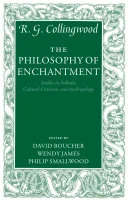
The Philosophy of Enchantment
 76
76

The Philosophy of Enchantment
Collingwood's posthumously published "The Philosophy of Enchantment" offers a fascinating, albeit fragmented, exploration of his less-discussed anthropological and historical theories. The central chapters on folktale and magic, dating from the mid-1930s, reveal a philosopher wrestling with the deep structures of myth and belief. His application of his philosophy of history to these subjects is characteristically rigorous, though the unfinished nature of the manuscript occasionally leaves the reader wanting more developed arguments. A particular strength lies in his nuanced understanding of how magical thinking represents a distinct form of historical consciousness, not simply irrationality. However, the volume suffers from its disparate origins; the collected essays, while relevant, don't always cohere seamlessly with the core study. The passage discussing the evolution of the concept of 'spirit' provides a compelling example of his method, but the book as a whole feels like a valuable quarry rather than a finished edifice. Nevertheless, it provides crucial insights into the breadth of Collingwood's philosophical project.
📝 Description
76
### What It Is The Philosophy of Enchantment presents a posthumous collection of essays and unfinished manuscripts by the British philosopher R. G. Collingwood, focusing on themes of folklore, magic, and cultural evolution. Originally conceived in the mid-1930s, the core of the work comprises six chapters intended for a book on folktale and magic. This publication offers a rare glimpse into Collingwood's application of his philosophy of history to anthropological and cultural phenomena, extending beyond his more widely recognized contributions to political philosophy and epistemology.
### Who It's For This volume is aimed at scholars of philosophy, history, and anthropology, particularly those interested in the intellectual lineage of R. G. Collingwood. It will appeal to readers engaged with the study of myth, folklore, and the historical development of belief systems. Those who appreciate rigorous philosophical inquiry into cultural practices and the evolution of consciousness will find substantial material here. It is also for students of the history of magic and its philosophical interpretations.
### Historical Context Collingwood's writings here were composed during a period of intense intellectual ferment in Britain, roughly the mid-1930s. This era saw prominent thinkers like A. R. Radcliffe-Brown developing structural anthropology, and Bronisław Malinowski focusing on functionalism in his ethnographic studies of the Trobriand Islanders. Collingwood's approach, however, diverges by embedding his analysis of magic and folktale within his broader philosophy of history, emphasizing the historical consciousness and the evolution of thought. His work offers a counterpoint to purely functionalist or structuralist analyses prevalent at the time.
### Key Concepts The book explores Collingwood's unique perspective on how myths and folktales function not merely as primitive explanations but as expressions of specific historical consciousnesses. It examines the evolution of magical practices and beliefs as integral to the development of human thought, linking them to broader shifts in cultural understanding. The work investigates the relationship between language, myth, and the conceptual frameworks that shape societies, suggesting that enchantment itself is a mode of historical understanding, tied to specific forms of social organization and belief.
💡 Why Read This Book?
• Gain insight into R. G. Collingwood's unique philosophical lens applied to folklore and magic, moving beyond his better-known work in history and politics, particularly by examining his mid-1930s study on folktales. • Understand the concept of 'enchantment' as a specific mode of historical consciousness and belief, as explored in the book's analysis of myth's role in cultural evolution. • Discover how Collingwood's philosophy of history provides a framework for analyzing the long-term development of human thought and societal structures, as evidenced in his critique of earlier anthropological theories.
⭐ Reader Reviews
Honest opinions from readers who have explored this book.
❓ Frequently Asked Questions
When was R. G. Collingwood's "The Philosophy of Enchantment" first published?
The Philosophy of Enchantment was first published in 2005, long after R. G. Collingwood's death in 1943, compiling writings from various periods of his career.
What are the main subjects covered in "The Philosophy of Enchantment"?
The book primarily covers themes of folklore, magic, cultural evolution, and the philosophy of history, with a significant portion dedicated to a study of folktale and magic composed in the mid-1930s.
What is R. G. Collingwood known for besides this work?
R. G. Collingwood is widely known for his significant contributions to the philosophy of history, political philosophy, and his archaeological work in Britain.
How does Collingwood's philosophy of history apply to enchantment?
Collingwood applies his philosophy of history to interpret enchantment not as superstition, but as a specific form of historical consciousness and understanding inherent to certain cultural stages and social structures.
Is "The Philosophy of Enchantment" a complete book written by Collingwood?
No, the book is a posthumous collection of writings, including an unfinished study intended for a book on folktale and magic, alongside other essays and fragments.
What intellectual currents were active when Collingwood wrote his study on folktale and magic?
During the mid-1930s, when Collingwood composed his study, intellectual currents included structural anthropology (e.g., Radcliffe-Brown) and functionalism in ethnography (e.g., Malinowski).
🔮 Key Themes & Symbolism
Folktale as Historical Consciousness
Collingwood posits that folktales are not mere narratives but embody specific forms of historical consciousness. His analysis, particularly in the mid-1930s study, suggests that the structure and content of myths reflect the way a particular society understood its past and its place in the world. He links the evolution of these tales to broader shifts in human thought and cultural frameworks, arguing that understanding them requires engaging with the historical context in which they arose and functioned.
The Nature of Magic
Departing from simplistic views of magic as irrational, Collingwood interprets magical practices as a coherent system of thought integral to certain stages of cultural development. He examines how magic operates within specific social and conceptual landscapes, reflecting a distinct mode of engaging with reality. This perspective frames magic as a key to understanding the evolution of human belief and the development of more abstract forms of reasoning.
Cultural Evolution and Philosophy of History
The book applies Collingwood's robust philosophy of history to the study of cultural phenomena. He argues that understanding cultural elements like folklore and magic requires tracing their historical trajectory and recognizing them as expressions of evolving human consciousness. This approach situates these seemingly primitive elements within a larger narrative of human intellectual and social development, challenging contemporary anthropological models.
Enchantment as a Conceptual Framework
Collingwood views 'enchantment' not just as a set of beliefs but as a fundamental way of conceptualizing the world, deeply intertwined with social structures and historical periods. The work explores how this framework shapes perception and action, and how its historical transformation reflects broader changes in human understanding. This offers a unique lens for analyzing the persistence and mutation of mythic and magical thought in different eras.
💬 Memorable Quotes
Direct passages from the work, attributed to the author.
“The evolution of magic is the evolution of thought itself.”
— This statement captures Collingwood's view that magical practices are not mere superstitions but are intrinsically linked to the development of human reasoning and conceptual frameworks throughout history.
“Folktales are records of historical consciousness.”
— This suggests that myths and stories, far from being simple fictions, offer useful insights into how past societies understood their world, their origins, and their collective identity.
“Enchantment represents a distinct mode of historical understanding.”
— Collingwood proposes that the worldview associated with enchantment is not an absence of reason, but a specific, historically situated way of interpreting reality and human agency.
“The study of magic requires a philosophy of history.”
— This highlights his core argument: to truly grasp the nature and function of magic, one must analyze it through the lens of historical development and evolving consciousness, not as an isolated phenomenon.
💡 Key Ideas
Editorial paraphrase of the work's core concepts — not direct quotes.
Culture evolves through changes in its conceptual apparatus.
This paraphrased concept underscores Collingwood's belief that societal and cultural transformations are fundamentally driven by shifts in the underlying ideas, beliefs, and ways of thinking that characterize a people.
🌙 Esoteric Significance
Tradition
While R. G. Collingwood was not explicitly part of any esoteric tradition, "The Philosophy of Enchantment" speaks to Hermetic and Neoplatonic thought through its focus on the evolution of consciousness and the underlying principles governing reality. His interpretation of 'enchantment' as a mode of understanding can be seen as an intellectual echo of older philosophies that viewed the cosmos as imbued with inherent meaning or intelligence, accessible through specific forms of thought and perception.
Symbolism
The book engages with the symbolism inherent in folktales and magical practices, viewing them not as arbitrary but as rich expressions of a culture's worldview. Symbols within myths often represent fundamental concepts of creation, transformation, and cosmic order. For example, the recurring motif of the 'trickster' figure in folklore can symbolize the liminal space between order and chaos, a concept explored in various esoteric cosmologies as a necessary catalyst for change and evolution.
Modern Relevance
Contemporary thinkers exploring the philosophy of mind, consciousness studies, and the anthropology of belief systems find Collingwood's work relevant. His approach to interpreting myth and magic as historical expressions of thought informs modern discussions on cognitive archeology and the evolution of religious and secular worldviews. Practitioners of Western esoteric traditions may also find value in his rigorous, philosophical framework for understanding the underlying logic of symbolic systems and enchanted worldviews.
👥 Who Should Read This Book
• Scholars of R. G. Collingwood's philosophy: Gain a deeper understanding of his less-explored work on cultural evolution and the philosophy of history, particularly his mid-1930s study. • Students of folklore and mythology: Benefit from a philosophical interpretation of myths and tales as embodiments of historical consciousness, offering an alternative to purely structural or functional analyses. • Researchers in anthropology and cultural studies: Engage with a unique historical perspective on the development of belief systems and magical practices, providing context for contemporary cultural phenomena.
📜 Historical Context
Written primarily in the mid-1930s, R. G. Collingwood's "The Philosophy of Enchantment" emerged during a vibrant period for British anthropology and philosophy. This era saw figures like A. R. Radcliffe-Brown championing structural anthropology and Bronisław Malinowski developing functionalist theories based on his extensive fieldwork. Collingwood's work, however, offered a distinct perspective, rooted in his philosophy of history. While contemporaries focused on the social functions of myth or the structure of kinship, Collingwood sought to understand these phenomena as manifestations of evolving human consciousness. His approach diverged sharply from the prevailing empiricism and positivism in academic circles, offering a more idealistic and historically-minded interpretation of cultural practices. Though not a widely discussed contemporary of figures like Wittgenstein or Russell in the same circles, Collingwood's engagement with history and mind held a unique place. His work on the philosophy of history itself had begun to gain traction following publications like "An Autobiography" (1939), but this specific exploration of magic and folklore remained largely unpublished until much later.
📔 Journal Prompts
The concept of 'historical consciousness' as applied to folktale.
Collingwood's interpretation of magic as a mode of thought.
The relationship between 'enchantment' and specific social structures.
The evolution of belief systems as depicted in the mid-1930s study.
How does Collingwood's philosophy of history illuminate primitive belief?
🗂️ Glossary
Philosophy of History
Collingwood's specific approach to history, emphasizing the historian's imaginative reconstruction of past thoughts and beliefs as the core of historical understanding, rather than mere empirical data collection.
Historical Consciousness
The awareness and understanding of historical processes, context, and the evolution of thought that characterizes a particular society or individual at a specific point in time.
Enchantment
In Collingwood's context, a mode of perceiving and interacting with the world characterized by belief in immanent spiritual or magical forces, often associated with pre-modern or specific cultural stages.
Folktale
Traditional stories passed down orally, which Collingwood analyzes not just as narrative but as reflections of a society's collective consciousness and historical understanding.
Magic
Collingwood views magic as a system of belief and practice that operates according to its own internal logic, representing a particular stage or form of human thought and social organization.
Anthropology
The study of human societies and cultures and their development. Collingwood engages with anthropological themes but filters them through his distinct philosophy of history.
Conceptual Apparatus
The set of ideas, concepts, and frameworks through which a society or individual understands and interprets reality.
This book appears in 1 collection
🔮 Readers Also Liked
Browse all →






From the “Enchantment” Collection
View all →








More Free Esoteric History & Biography Books
View all →