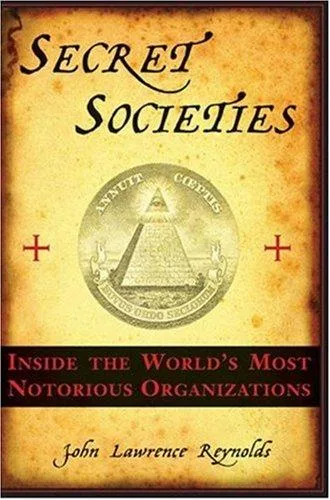
Secret Societies
 75
75

Secret Societies
Reynolds’ "Secret Societies" tackles a subject ripe for speculation, and largely succeeds in grounding it in verifiable instances. The author’s examination of the Freemasons' documented presence in U.S. government, citing sixteen confirmed presidential affiliations, serves as a strong anchor. However, the book occasionally struggles to maintain critical distance, sometimes leaning into the very suspicion it purports to analyze. A particular strength lies in its discussion of how secrecy itself becomes a tool for maintaining power and public intrigue. A limitation is the uneven depth; some societies receive extensive treatment while others feel cursorily mentioned. Despite this, the work provides a solid overview for those seeking to understand the enduring allure and perceived influence of these clandestine organizations.
📝 Description
75
John Lawrence Reynolds published "Secret Societies" in 2011, examining clandestine organizations.
John Lawrence Reynolds' "Secret Societies" scrutinizes organizations that operate outside public view. Published in 2011, the book analyzes the nature of their covert actions, the fear and fascination they provoke, and their potential structural influence.
This work is for readers interested in power dynamics, hidden histories, and the sociological effects of exclusive groups. It appeals to those who question standard accounts and wish to understand unseen forces that might shape society, from political spheres to historical developments. Anyone who reads investigative journalism or historical analysis will find considerable substance here.
Reynolds' study of secret societies connects to ongoing public discussions about groups such as the Freemasons, Illuminati, and Skull and Bones. The early 21st century, a time of calls for transparency alongside persistent rumors of hidden power, forms the backdrop for this examination. The book engages with years of speculation and research on their origins and modern forms.
This book engages with the long tradition of inquiry into groups that operate with degrees of secrecy, from ancient mystery schools to modern fraternal orders. It touches upon the enduring human interest in hidden knowledge and power structures, a theme present in various esoteric traditions that often explore the world behind appearances. Reynolds' work contributes to this discourse by analyzing the mechanisms and societal impact of such organizations in the contemporary era.
💡 Why Read This Book?
• Understand the sociological impact of oath-bound loyalty, a concept central to maintaining organizational cohesion and secrecy, as explored through numerous case studies. • Gain insight into the historical presence of organizations like the Freemasons in governmental structures, referencing their documented influence on U.S. presidencies since the nation's founding. • Analyze how public perception, often fueled by fear and suspicion, shapes the narrative around secret societies, a dynamic Reynolds illustrates with specific examples.
⭐ Reader Reviews
Honest opinions from readers who have explored this book.
❓ Frequently Asked Questions
What is the primary focus of John Lawrence Reynolds' "Secret Societies"?
The book focuses on the nature, influence, and public perception of clandestine organizations. It examines how their secrecy generates both fear and fascination, and explores their alleged impact on governments and justice systems.
Which secret societies are discussed in the book?
While the book mentions several, it prominently features the Freemasons, highlighting their significant presence in U.S. government and presidential affiliations. Other groups are discussed in relation to their methods and public image.
When was "Secret Societies" by John Lawrence Reynolds first published?
The book was first published on September 1, 2011. This publication date situates its analysis within the early 21st-century context of information accessibility and public discourse on hidden power structures.
Does the book provide evidence for conspiracy theories?
Reynolds' work aims to examine the verifiable influence and public perception of secret societies rather than definitively proving widespread conspiracy theories. It analyzes documented affiliations and historical trends.
What does the book say about the influence of Freemasonry?
It highlights the significant political influence of Freemasonry, noting that more U.S. government officials belong to this organization than any other, and that at least sixteen presidents have declared Masonic affiliation.
Is "Secret Societies" suitable for beginners in the study of esoteric groups?
Yes, the book provides a factual and accessible overview, making it suitable for readers new to the subject. It lays out core concepts and historical examples without assuming prior specialized knowledge.
🔮 Key Themes & Symbolism
Mechanisms of Secrecy
The work meticulously details how secrecy is maintained within these organizations. Reynolds explores the role of oaths, rituals, and internal hierarchies in preserving exclusive knowledge and operational autonomy. The book suggests that the very act of maintaining secrecy becomes a powerful tool, fostering both internal cohesion and external intrigue, often leading to the generation of fear and suspicion among the uninitiated.
Societal Influence and Power
Reynolds investigates the tangible impact secret societies are perceived to have on governance and justice. The prominence of Freemasons within the U.S. government, with numerous presidents and officials affiliated, serves as a primary example of how such groups can wield significant influence from behind the scenes, potentially shaping policy and outcomes.
Public Perception and Fascination
A significant theme is the paradoxical public reaction to secret societies: a mixture of apprehension and intense curiosity. The book analyzes why these groups, despite their often-hidden nature, command such widespread attention and speculation. This fascination, Reynolds argues, is fueled by the inherent human desire to understand the unknown and the perceived threat or allure of exclusive knowledge.
Historical Continuity
The book traces the enduring presence of secret societies throughout history, suggesting their methods and impact have remained consistent across different eras. By examining organizations that have persisted for centuries, Reynolds highlights the adaptability and resilience of these structures in navigating changing social and political landscapes.
💬 Memorable Quotes
Direct passages from the work, attributed to the author.
“Secret societies thrive among us, yet they remain shrouded in mystery.”
— This observation captures the central paradox Reynolds explores: the simultaneous presence and hiddenness of these groups. It underscores their embeddedness within society while emphasizing the enigmatic veil that prevents full public understanding.
“Their secrecy suggests, to many, sacrilege or crime.”
— This highlights the immediate negative assumption often projected onto clandestine organizations. The lack of transparency invites suspicion, leading the public to infer nefarious intent or illicit activities as the primary drivers of their hidden nature.
“The Freemasons, for example, hold more seats of power in the U.S. government than any other organization.”
— This concrete assertion points to the significant, documented political influence of a specific secret society. It provides a factual basis for the book's broader arguments about the power dynamics inherent in such groups.
“No fewer than sixteen presidents have declared their Masonic affiliation, and there may have been more.”
— This statistic underscores the deep historical penetration of Freemasonry into the highest levels of American leadership. It suggests a long-standing and potentially influential relationship between the organization and the presidency.
“Their loyalties are often accused of undermining governments and tipping the scales of justice.”
— This statement reflects the common accusations leveled against secret societies. It points to the public's concern that exclusive allegiances within these groups can override broader civic duties and fair legal processes.
🌙 Esoteric Significance
Tradition
While "Secret Societies" primarily adopts a sociological and historical lens rather than a strictly esoteric one, it touches upon themes common in Western esoteric traditions. The emphasis on oath-bound loyalty and hidden knowledge aligns with concepts found in Hermeticism and Rosicrucianism, which often involve initiation and progressive revelation of secrets. The work implicitly explores how these traditions, when institutionalized into secret societies, interact with secular power structures.
Symbolism
The book frequently references symbols associated with Freemasonry, such as the square and compasses. While Reynolds focuses on their organizational implications, within esoteric traditions, these symbols represent moral rectitude, divine order, and the architectonic power of the Grand Architect. The very act of using shared symbols within a clandestine group reinforces group identity and can serve as mnemonic devices for esoteric teachings.
Modern Relevance
Contemporary thinkers exploring power dynamics, institutional sociology, and the psychology of belief systems may find Reynolds' work relevant. It provides a historical and factual basis for understanding how the impulse to form exclusive groups with shared knowledge and loyalty persists. Modern movements focused on transparency, or conversely, those seeking to understand the mechanics of influence in an interconnected world, can draw insights from its analysis.
👥 Who Should Read This Book
• Students of political science and sociology seeking to understand the role of non-governmental organizations in power structures. • History enthusiasts interested in the documented influence of fraternal orders, particularly the Freemasons, in American political history. • Skeptics and critical thinkers who wish to examine claims about secret societies with a foundation in verifiable facts and historical context.
📜 Historical Context
John Lawrence Reynolds' "Secret Societies," published in 2011, emerged during a period of heightened public interest in hidden power structures, fueled by the internet's capacity to disseminate information and speculation rapidly. The early 21st century saw a continuation of debates that had been active since at least the Enlightenment regarding the influence of groups like the Freemasons and the alleged machinations of the Illuminati. Reynolds' work engages with this ongoing discourse, attempting to separate documented influence from pure conjecture. While not directly engaging with a specific contemporary scholar in the text itself, the book implicitly participates in the broader academic and popular study of fraternal organizations and clandestine movements, a field that includes prominent historians like David Stevenson, who has written extensively on Freemasonry. The reception of such works often involves a tension between acknowledging historical realities of group influence and avoiding unsubstantiated conspiracy theories.
📔 Journal Prompts
The concept of oath-bound loyalty as a mechanism for maintaining secrecy.
Reflect on the public's fascination with the hidden activities of organizations.
Analyze the specific influence attributed to Freemasons within governmental structures.
Consider the balance between perceived societal benefit and inherent secrecy in organizations.
Examine the historical recurrence of clandestine groups throughout different eras.
🗂️ Glossary
Secret Society
An organization whose membership, activities, or knowledge are intentionally concealed from the public or non-members. Such groups often rely on rituals, oaths, and internal hierarchies.
Freemasons
A fraternal organization originating in the late 16th to early 17th century, known for its use of symbolic rituals and its historical influence in various governments and institutions worldwide.
Oath-bound Loyalty
A commitment to an organization or individual, formalized through a sacred promise or oath, often carrying severe penalties for betrayal. This is a key mechanism for ensuring secrecy and obedience.
Esoteric
Intended for or likely to be understood by only a small number of people with a specialized knowledge or interest. In the context of societies, it refers to hidden doctrines or practices.
Clandestine
Kept secret or done secretively, especially because illicit. In the context of societies, it emphasizes the hidden nature of their operations.
Public Perception
The way in which an organization or group is viewed by the general population, often shaped by media, rumor, and limited information.
Sacrilege
Violation or misuse of something held to be sacred. In the context of secret societies, it implies their activities may transgress societal or moral norms.