Apocalyptic Desires
 79
79

Apocalyptic Desires
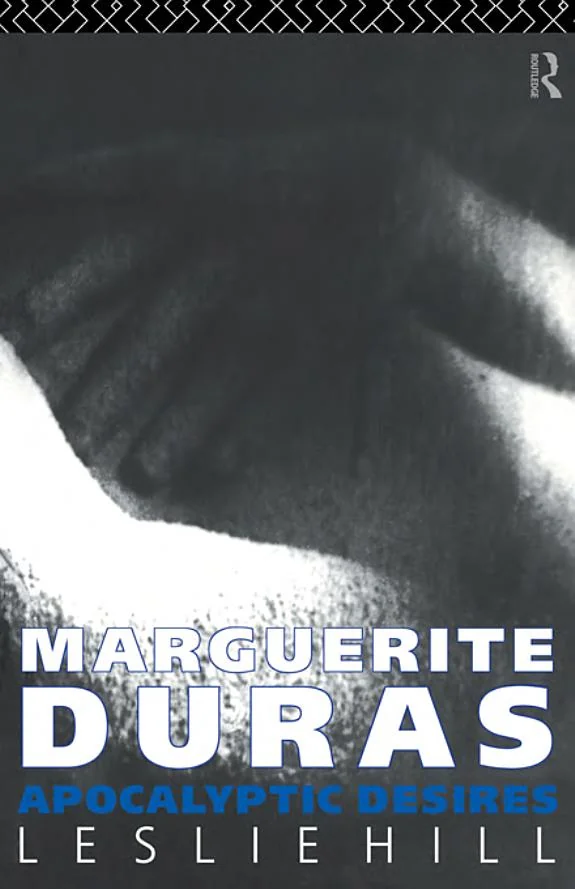
Leslie Hill’s Apocalyptic Desires offers a rigorous examination of Marguerite Duras, positioning her not merely as a celebrated novelist but as a profound disruptor of cultural and intellectual norms. Hill’s strength lies in meticulously connecting Duras’s literary output with her engagement with psychoanalysis, feminism, and political discourse, particularly evident in his analysis of her experimental autobiographical texts. The book illuminatingly discusses Duras's relationship with figures like Julia Kristeva, underscoring her controversial status. A particular passage that stands out is the exploration of how Duras's exploration of desire in works like *The Lover* functions as a form of political resistance against bourgeois conventions. However, the dense theoretical framework, while precise, may present a barrier for readers less familiar with post-structuralist criticism. The detailed dissection of her filmic and literary techniques, while insightful, occasionally sacrifices narrative flow for academic rigor. Ultimately, Apocalyptic Desires provides an indispensable, if challenging, critical lens for understanding Duras's transgressive legacy.
📝 Description
79
Leslie Hill's 1993 study, Apocalyptic Desires, examines Marguerite Duras's challenging literary and cinematic work.
Published in 1993, Leslie Hill's Apocalyptic Desires offers a critical analysis of Marguerite Duras, a significant figure in 20th-century French literature and film. The book traces Duras's artistic development, from her early, more conventional narratives in the 1950s to the experimental, autobiographical styles of later works like *The Lover*. Hill argues that Duras consistently functioned as a transgressive artist, pushing against prevailing societal norms through her writing and filmmaking.
This study is aimed at students and scholars of French literature, film studies, and feminist theory. It will also appeal to readers interested in post-structuralist thought, psychoanalytic criticism, and the links between art, politics, and media. The book encourages a deeper engagement with Duras's output, moving beyond superficial readings to consider the philosophical bases of her oeuvre.
Apocalyptic Desires arrives from a period of intense theoretical debate in the late 20th century, engaging with feminist, psychoanalytic, and literary criticism. Duras herself was a subject of considerable intellectual interest, discussed by figures like Julia Kristeva and Jacques Lacan. Hill situates Duras within this intellectual climate, focusing on her unconventional treatments of autobiography, sexuality, and political themes. The book reflects the post-structuralist focus on authorship and subjectivity prevalent in the 1980s and early 1990s.
💡 Why Read This Book?
• Gain a nuanced understanding of Marguerite Duras's critical reception and intellectual connections, particularly her interactions with thinkers like Jacques Lacan, as explored in the book's detailed analysis of her post-structuralist engagement. • Uncover the specific ways Duras’s writing and filmmaking challenged 1980s French societal norms regarding sexuality and politics, as dissected through Hill’s examination of her transgressive literary strategies. • Appreciate the evolution of Duras’s experimental autobiographical style, learning how her later works, like *The Lover*, departed from earlier narrative forms, a shift critically examined within the book's historical context.
⭐ Reader Reviews
Honest opinions from readers who have explored this book.
❓ Frequently Asked Questions
What is the primary focus of Leslie Hill's book 'Apocalyptic Desires'?
The book is a critical study of French writer and filmmaker Marguerite Duras, analyzing her engagement with feminism, psychoanalysis, sexuality, literature, film, politics, and media. It explores her controversial and transgressive artistic approach.
When was 'Apocalyptic Desires' by Leslie Hill first published?
Leslie Hill's 'Apocalyptic Desires' was first published in 1993, reflecting critical discourse prevalent in the late 20th century concerning literary theory and post-structuralism.
Which influential figures are discussed in relation to Duras in 'Apocalyptic Desires'?
The book mentions influential figures such as Julia Kristeva and Jacques Lacan, who engaged with or commented on Marguerite Duras's work, highlighting her significant impact on intellectual circles.
How does the book address Duras's literary style?
It traces Duras's stylistic evolution from her 1950s novels to her radically innovative experimental autobiographical texts of the 1980s, like 'The Lover', examining her transgressive techniques.
What academic disciplines would benefit from reading 'Apocalyptic Desires'?
Scholars and students of French literature, film studies, feminist theory, psychoanalysis, and post-structuralist thought would find this book particularly relevant and insightful.
What does 'Apocalyptic Desires' reveal about Duras's relationship with politics and media?
The book delves into Duras's commentary on politics and her interaction with media, illustrating how her transgressive art often served as a critique of established societal structures and discourse.
🔮 Key Themes & Symbolism
Transgression and Societal Critique
The central theme is Duras's persistent transgression of societal norms. Hill explores how her literary and cinematic works, from the 1950s through the 1980s, consistently challenged bourgeois morality, conventional representations of sexuality, and political orthodoxies. This transgressive impulse is framed not as mere rebellion, but as a fundamental aspect of her artistic project to expose the underlying structures of power and desire. The analysis highlights how her experimental autobiographical texts, in particular, became vehicles for this critique.
Psychoanalysis and Desire
Apocalyptic Desires meticulously examines Duras's engagement with psychoanalytic theory, especially Lacanian concepts. Hill investigates how Duras's narratives explore the nature of desire, memory, and trauma, often through fragmented and non-linear structures. The book posits that her characters' intense emotional landscapes and unconventional relationships are not just plot devices but manifestations of psychic states that defy easy categorization, reflecting a deeper exploration of the unconscious and its impact on lived experience.
Literature, Film, and Media
This theme focuses on Duras's complex artistic career, bridging literature and cinema. Hill analyzes how her novels were adapted into films and how her approach to storytelling, characterized by innovation and disruption, influenced both mediums. The book also considers her interaction with the media, understanding it as another arena where her transgressive voice could be amplified or contested. This intersectionality reveals Duras as a complex cultural figure engaging with diverse forms of expression.
Feminism and Subjectivity
The study probes Duras's relationship to feminism and her impact on notions of female subjectivity. While not always aligning with explicit feminist movements, Duras's exploration of female desire, agency, and experience was inherently challenging to patriarchal structures. Hill examines how her protagonists navigate complex sexual and social landscapes, often subverting traditional gender roles. The book positions Duras as a figure whose work, though sometimes controversial within feminist discourse, fundamentally expanded the possibilities for representing women's lives.
💬 Memorable Quotes
Direct passages from the work, attributed to the author.
“Duras is revealed to be a profoundly transgressive artist.”
— This statement captures the core argument of Hill's analysis, framing Duras not just as a writer but as an agent of disruption across various cultural and intellectual domains, challenging established boundaries in her art and thought.
“Her influence extends from her early novels of the 1950's to her radically innovative experimental autobiographical text of the 1980's The Lover.”
— This highlights the remarkable scope and evolution of Duras's career, underscoring her ability to innovate and push boundaries throughout decades of writing, particularly noting the shift towards experimental autobiography with 'The Lover'.
“Hill's book throws new light on Duras's relationship to feminism, psychoanalysis, sexuality, literature, film, politics, and the media.”
— This indicates the comprehensive nature of the study, emphasizing its aim to provide fresh perspectives on the interconnectedness of Duras's work with a wide array of critical and artistic fields, moving beyond singular interpretations.
“Feted by Kristeva, and Laca who claimed her as almost his other self.”
— This points to Duras's significant standing within intellectual circles, referencing the high regard in which she was held by prominent thinkers like Julia Kristeva and Jacques Lacan, suggesting a profound resonance with their theoretical frameworks.
“Marguerite Duras is France's best-known and most controversial contemporary woman writer.”
— This establishes Duras's dual reputation: her widespread recognition and fame, juxtaposed with the often contentious nature of her work and public persona, setting the stage for a critical examination of her impact.
🌙 Esoteric Significance
Tradition
While not strictly adhering to a singular esoteric tradition, 'Apocalyptic Desires' can be viewed through a lens informed by Gnostic and Hermetic thought due to its focus on transgression, hidden knowledge, and the critique of societal illusions. Duras's exploration of suppressed desires and the fragmented self echoes Gnostic ideas of alienation and the search for authentic being. The emphasis on challenging established norms and uncovering deeper psychological truths aligns with Hermetic principles of understanding hidden correspondences and the power of self-knowledge.
Symbolism
Within the context of Duras's work as analyzed by Hill, potent symbols emerge. The motif of the 'apocalypse' itself, as suggested by the title, can symbolize not just destruction but a revelation or unveiling of suppressed truths and desires, akin to an esoteric gnosis. Her recurrent explorations of water, particularly the sea, often represent the unconscious, primal states, and the fluidity of identity, a common symbol in many mystical traditions for the formless or the source of creation. The act of writing and storytelling itself becomes a symbolic ritual, a means of excavating buried realities and reconstituting the self.
Modern Relevance
Contemporary thinkers exploring the intersections of trauma studies, queer theory, and experimental narrative find resonance in Duras's oeuvre as analyzed by Hill. Her radical approach to autobiography and her unflinching examination of desire continue to inform artists and writers grappling with identity, memory, and societal constraints. The book's focus on transgression and the critique of dominant narratives remains relevant for scholars and practitioners interested in decolonial thought and critical theory, demonstrating how Duras's work continues to provoke and inspire new interpretations in diverse academic and artistic fields.
👥 Who Should Read This Book
• Academics and graduate students specializing in 20th-century French literature, film theory, and post-structuralist criticism will find this a crucial text for understanding Marguerite Duras's place in intellectual history. • Readers interested in psychoanalytic literary criticism will benefit from the detailed exploration of Duras's engagement with Freudian and Lacanian concepts as presented in the book. • Feminist scholars and cultural critics seeking to analyze transgressive female voices and their impact on societal norms will gain valuable insights into Duras's challenging oeuvre.
📜 Historical Context
Published in 1993, Leslie Hill's 'Apocalyptic Desires' engaged with the intellectual ferment of the late 20th century, a period heavily influenced by post-structuralist theory and feminist critiques. Marguerite Duras, a figure already established and debated, was a central point of inquiry. Hill's work emerged when critical attention was intensely focused on authorial subjectivity, the nature of narrative, and the intersection of personal experience with broader political and social issues. Duras, championed by figures like Julia Kristeva and Jacques Lacan (who reportedly saw her as an intellectual counterpart), was seen as embodying a radical departure from traditional literary forms. This era also saw critical re-evaluations of sexuality and gender, areas where Duras's work was particularly provocative. Hill's analysis positions Duras within this complex web, exploring her dialogue with, and departure from, prevailing theoretical currents, making the book a significant contribution to understanding her legacy within its immediate intellectual milieu.
📔 Journal Prompts
Duras's transgressive impulse in 'Apocalyptic Desires': how does it challenge conventional morality?
The role of psychoanalysis in understanding Duras's portrayal of desire, as per Hill's analysis.
Analyze the symbolic significance of water in Duras's work, drawing from esoteric interpretations.
Reflect on the evolution of Duras's autobiographical style from the 1950s to 'The Lover'.
Consider the influence of Kristeva and Lacan on Duras's reception, as documented in the book.
🗂️ Glossary
Transgressive
Characterized by or constituting a violation of established norms, boundaries, or conventions, particularly in social, moral, or artistic contexts. In Duras's work, it signifies a deliberate challenge to societal expectations.
Post-structuralism
A broad philosophical and critical movement that emerged in the mid-20th century, questioning foundational assumptions of structuralism. It emphasizes the instability of meaning, the critique of grand narratives, and the analysis of power structures embedded in language and discourse.
Psychoanalysis
A set of theories and therapeutic techniques originating with Sigmund Freud, dealing with the unconscious mind, repression, and the interpretation of dreams and desires. Jacques Lacan's work significantly reinterpreted Freudian concepts.
Experimental Autobiographical Text
A form of writing that blends personal experience with innovative narrative structures, challenging traditional notions of autobiography. Duras's later works, such as 'The Lover,' exemplify this category.
Feminism
A range of social movements, political movements, and ideologies that share a common goal: to define, establish, and achieve the political, economic, personal, and social equality of the sexes.
Ouevre
The entire body of works produced by an artist, writer, or composer. In this context, it refers to the complete collection of Marguerite Duras's literary and cinematic creations.
Gnosticism
A complex set of religious and philosophical ideas and systems that emerged in the early centuries CE. Gnosticism emphasizes spiritual knowledge (gnosis) as the path to salvation and often views the material world as flawed or evil.
This book appears in 1 collection
🔮 Readers Also Liked
Browse all →







From the “Apocalyptic Literature” Collection
View all →




More Free Esoteric History & Biography Books
View all →