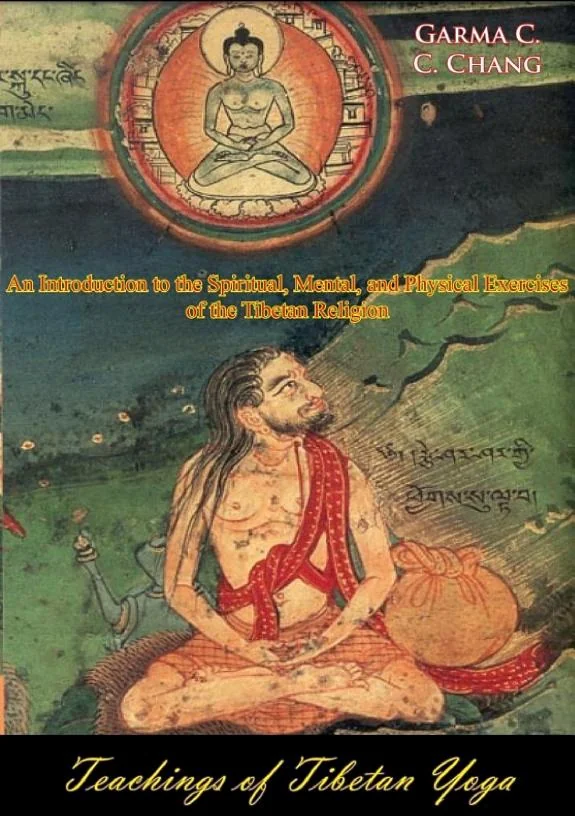
Teachings of Tibetan Yoga
 77
77

Teachings of Tibetan Yoga
Garman C. C. Chang's "Teachings of Tibetan Yoga" provides a remarkably direct transmission of practices often obscured by layers of cultural and doctrinal explanation. The author's personal narrative, moving from aristocratic China to Tibetan monasteries and then to Western academia, imbues the text with a unique authority. His description of the Five-Point Relaxed Attitude, for instance, is precise and actionable, moving beyond vague spiritual platitudes. However, the book's strength in direct instruction can also be its limitation; the philosophical context, while present, sometimes feels secondary to the mechanics of the practices themselves. A reader might wish for more extended contemplation on the theoretical framework supporting the exercises, particularly concerning the 'Trul Khor' practices. The passage detailing the specific visualizations for 'Tummo' practice, while clear, would benefit from more extensive commentary on its experiential implications. Ultimately, this is an invaluable manual for the dedicated student of Tibetan contemplative arts.
📝 Description
77
Garma C. C. Chang's 2016 book details Tibetan Buddhist contemplative practices.
Published in 2016, "Teachings of Tibetan Yoga" presents the practical methods of Tibetan Buddhist meditation, postures, and breathing exercises. Chang drew upon his extensive training within Tibetan monastic traditions to describe these techniques. The book aims to clarify the philosophical basis of these practices, connecting abstract ideas to direct experience for those interested in Tibetan spiritual disciplines.
This work is valuable for serious practitioners of meditation and yoga who want to understand the Tibetan Buddhist lineage. Students of comparative religion will find its focus on the contemplative aspects of Buddhism particularly relevant. It also speaks to individuals from other meditative backgrounds seeking to grasp the distinct approach of Tibetan Yoga. Chang's unique background as a Western-educated individual deeply engaged with Tibetan masters also makes it suitable for those interested in cross-cultural spiritual inquiry.
The author's own life story informs the book's context. Born to aristocratic Chinese parents, Chang later studied extensively in Tibet before the mid-20th century political shifts. His later Western education in fields like animal husbandry highlights his effort to bridge Eastern spiritual knowledge with Western practical learning. This perspective is key to understanding the book's origins and Chang's role as an interpreter of traditions.
Garma C. C. Chang's "Teachings of Tibetan Yoga" falls within the Vajrayana tradition of Tibetan Buddhism. This lineage emphasizes the use of specific techniques, including visualization, mantra recitation, and physical postures, as direct methods for spiritual realization. The book reflects the esoteric nature of these practices, which are often transmitted through direct lineage from teacher to student. Chang's work makes these often-guarded teachings accessible to a wider audience, detailing the systematic approach developed over centuries to transform consciousness.
💡 Why Read This Book?
• Gain a practical understanding of Tibetan yogic exercises like 'Trul Khor' and 'Tummo,' essential components of Tibetan Buddhist tantra, presented by an author with direct monastic training. • Learn the 'Five-Point Relaxed Attitude,' a specific meditative posture detailed in the book, crucial for stabilizing the mind and body in contemplation. • Understand the integration of physical postures, breathing techniques, and visualization as presented in the context of Tibetan Buddhism, drawing from Garman C. C. Chang's unique East-West educational background.
⭐ Reader Reviews
Honest opinions from readers who have explored this book.
❓ Frequently Asked Questions
What is the origin of Garman C. C. Chang's teachings on Tibetan Yoga?
Garman C. C. Chang trained for eight years in Tibetan monasteries, six of those under a single Guru, before studying in the West. This book reflects his direct experience and tutelage within these traditions.
Is 'Teachings of Tibetan Yoga' suitable for beginners?
The book offers direct instruction on practices like the 'Five-Point Relaxed Attitude,' making it accessible to dedicated beginners. However, prior familiarity with meditation or Buddhist philosophy can enhance comprehension.
What are the main practices detailed in the book?
The book details practices such as the 'Five-Point Relaxed Attitude' for posture, 'Trul Khor' exercises for energy channels, and 'Tummo' (inner heat) cultivation, alongside specific visualizations.
When was 'Teachings of Tibetan Yoga' first published?
The work was first published on October 27, 2016, making it a relatively recent presentation of classical Tibetan yogic teachings.
Does the book discuss the philosophical underpinnings of Tibetan Yoga?
Yes, while focusing on practice, the book also explores the philosophical concepts that inform Tibetan yogic disciplines, such as the nature of mind and the subtle body.
What makes Garman C. C. Chang's perspective unique?
Chang's unique perspective stems from his aristocratic Chinese background, extensive Tibetan monastic training, and subsequent Western education in fields like animal husbandry, bridging Eastern spirituality and Western practicality.
🔮 Key Themes & Symbolism
Contemplative Posture and Attitude
The book emphasizes the 'Five-Point Relaxed Attitude,' a specific yogic posture integral to Tibetan Buddhist meditation. It details how physical alignment, from the crown of the head to the soles of the feet, facilitates mental stillness and concentration. This is not merely about comfort but about creating a stable, receptive vessel for profound inner work, connecting the physical form to the cultivation of awareness and insight within the Tibetan contemplative tradition.
Subtle Body Energetics
Central to the practices are 'Trul Khor' exercises, which focus on the purification of the 'channels and winds' (Tibetan: rtsa and rlung) of the subtle body. This concept, prevalent in Tibetan tantric traditions, posits that manipulating these energetic currents through specific movements and breath control can unlock spiritual potential and lead to heightened states of consciousness. The book explains how these practices aim to dissolve energetic blockages, facilitating the flow of vital energy.
Cultivating Inner Heat (Tummo)
The practice of 'Tummo,' or inner heat, is presented as a powerful yogic technique within Tibetan Buddhism. The book describes methods for generating and circulating this internal heat, not just for physiological warmth but as a means to purify the mind and body, enhance vitality, and achieve profound states of meditative absorption. It is understood as a key practice for overcoming spiritual inertia and realizing the luminous nature of consciousness.
Visualization and Deity Yoga
Visualization plays a significant role, particularly in meditations involving deities and mandalas. The book outlines how practitioners engage with these symbolic representations to embody specific qualities, purify perception, and gain direct experience of enlightened mind. This practice is not mere fantasy but a sophisticated method for transforming consciousness by engaging with archetypal forms within the Vajrayana framework.
💬 Memorable Quotes
Direct passages from the work, attributed to the author.
“The Five-Point Relaxed Attitude is the foundation for all practices.”
— This highlights the crucial role of proper physical posture in Tibetan Yoga. It suggests that before one can effectively engage in deeper mental or energetic work, establishing a stable and conducive physical base is paramount.
“Trul Khor is the union of channels and winds.”
— This concise statement defines a core practice within Tibetan Yoga, indicating that its purpose is to integrate the subtle energetic pathways (channels) with the vital life force (winds), a fundamental aspect of yogic science in Tibet.
“Tummo practice generates heat to purify the mind.”
— This emphasizes the transformative power of inner heat cultivation. It frames Tummo not just as a physical exercise but as a method for spiritual purification and mental clarity, central to advanced Tibetan yogic disciplines.
“Visualization helps realize the nature of mind.”
— This points to the sophisticated use of mental imagery in Tibetan Buddhism. It suggests that by engaging with visualized forms, practitioners can directly access and understand the fundamental essence of consciousness.
“The author trained for eight years in Tibetan monasteries.”
— This factual statement underscores the author's deep immersion and direct transmission of knowledge. It establishes his authority and the authenticity of the teachings presented in the book, coming from firsthand experience.
🌙 Esoteric Significance
Tradition
This work belongs squarely within the Vajrayana tradition of Tibetan Buddhism, a lineage often categorized as esoteric due to its reliance on direct transmission, initiation, and advanced contemplative practices. It departs from more general Buddhist texts by detailing specific yogic techniques, visualizations, and energetic manipulations (like Trul Khor and Tummo) that are characteristic of tantric paths aimed at rapid spiritual transformation.
Symbolism
Key symbols include the 'channels and winds' (rtsa and rlung), representing the subtle energetic body whose manipulation is central to yogic practice. The concept of 'Tummo' (inner heat) symbolizes the activation of vital energy and the purification of consciousness. Mandalas and deity visualizations are also significant, serving as complex symbolic maps of the enlightened mind and the cosmos, used as focal points for meditative practice.
Modern Relevance
Contemporary practitioners of Tibetan Buddhism, particularly those engaged with the Gelug and Kagyu lineages, often draw upon such texts for their practical instructions. Thinkers exploring embodied cognition and the neuroscience of meditation may also find Chang's detailed descriptions of physiological and mental states relevant. The work appeals to modern interest in holistic wellness and the integration of mind-body practices for personal development.
👥 Who Should Read This Book
• Dedicated students of Tibetan Buddhism seeking practical guidance on yogic and meditative techniques, moving beyond theoretical study to direct engagement with practices like Trul Khor and Tummo. • Comparative religion scholars interested in the specific esoteric dimensions of Vajrayana Buddhism, particularly its yogic and contemplative methodologies, as presented by an author with deep personal experience. • Yoga practitioners looking to expand their understanding beyond asana and pranayama into the more profound energetic and meditative aspects of contemplative traditions, informed by the unique context of Tibetan monasteries.
📜 Historical Context
Garman C. C. Chang's "Teachings of Tibetan Yoga" emerged from a period of immense flux for Tibetan Buddhism. His personal training occurred prior to the mid-20th century upheaval that followed the Communist invasion of Tibet. This era saw dedicated scholars and practitioners like Chang seeking to preserve and transmit authentic yogic lineages. While Western interest in Eastern spirituality grew, particularly through figures like Alexandra David-Néel and the broader Theosophical movement, Chang's path was distinct. He pursued rigorous monastic training before engaging with Western education, aiming to bridge the gap between esoteric traditions and modern understanding. His work offers a direct window into practices that were becoming increasingly inaccessible in their homeland, providing a vital resource for students of Vajrayana and comparative religion.
📔 Journal Prompts
The Five-Point Relaxed Attitude as a foundation for practice.
Trul Khor: Integrating channels and winds for energetic purification.
Tummo cultivation and its role in mental clarity.
The purpose of visualization in realizing the nature of mind.
Garman C. C. Chang's journey bridging Tibetan tradition and Western education.
🗂️ Glossary
Five-Point Relaxed Attitude
A specific yogic posture described in Tibetan Yoga, emphasizing balanced alignment of the body to facilitate deep meditation and concentration.
Trul Khor
Tibetan yogic exercises involving specific movements and breath control aimed at purifying the subtle energy channels (rtsa) and winds (rlung) within the body.
Tummo
A tantric practice within Tibetan Buddhism focused on generating and circulating 'inner heat' to purify the body and mind, enhance vitality, and achieve profound meditative states.
Rtsa
The subtle energy channels within the body, crucial in Tibetan yogic and tantric practices for the flow of vital energies.
Rlung
The vital winds or energies that circulate within the subtle channels of the body, essential for physical and mental functions in Tibetan traditions.
Mandala
A complex symbolic diagram, often circular, representing the cosmos or a deity's pure land, used in Tibetan Buddhism as a tool for meditation and visualization.
Vajrayana
The 'Diamond Vehicle,' a branch of Mahayana Buddhism prominent in Tibet, characterized by tantric practices, initiations, and a focus on rapid enlightenment.
This book appears in 1 collection
🔮 Readers Also Liked
Browse all →








From the “Dream Yoga” Collection
View all →






More Free Esoteric History & Biography Books
View all →