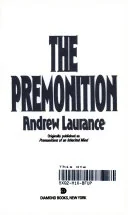
Blood of Nostradamus
 76
76

Blood of Nostradamus
Andrew Laurance’s *Blood of Nostradamus* offers a more grounded perspective on the famous seer than many sensationalist accounts. The strength lies in its attempt to situate Nostradamus within the intellectual milieu of the 16th century, exploring not just his prophecies but the very fabric of Renaissance thought that might have shaped them. Laurance’s examination of the historical context, including the prevalent alchemical and astrological beliefs of the era, provides a valuable counterpoint to purely mystical interpretations. However, the book sometimes struggles to maintain a clear analytical through-line, occasionally drifting into speculative territory without sufficient evidence to anchor its claims. A particularly compelling section explores the potential influence of Kabbalistic thought on Nostradamus's cryptic verse, though the connections are presented more as possibilities than certainties. Despite its occasional stumbles into conjecture, *Blood of Nostradamus* remains a worthwhile read for those seeking a more scholarly approach to the subject.
📝 Description
76
Andrew Laurance's 1991 book examines the life and predictive methods of Michel de Nostredame.
Published in 1991, Andrew Laurance's *Blood of Nostradamus* investigates the life and purported predictive abilities of the 16th-century French seer, Michel de Nostredame. The book aims to move past a simple listing of Nostradamus's quatrains. Instead, it seeks to uncover the principles and methods that might have informed his predictions. Laurance separates the historical figure from the legend that has grown over centuries.
This work is for readers interested in the history of prophecy, esoteric traditions, and Nostradamus himself. Those who appreciate detailed historical analysis and an examination of Renaissance occult sciences will find it rewarding. The book suits individuals who want to understand the context of prophetic writing, rather than just read predictions.
Published in 1991, *Blood of Nostradamus* appeared during a time of increased interest in New Age and occult studies. This followed earlier surges in fascination with figures like Nostradamus during the mid-20th century. The early 1990s offered a market for books decoding historical prophecies and linking them to current events. Laurance's work joined a conversation with various interpreters of Nostradamus, some focusing on astrology, others on history, numerology, or symbolism.
💡 Why Read This Book?
• Understand the historical and intellectual climate of 16th-century France, specifically the impact of Renaissance humanism and occult sciences on figures like Nostradamus, as detailed in the book's exploration of the era. • Gain insight into the purported methods of prophetic construction by examining Laurance's analysis of Nostradamus's likely use of astrological charts and alchemical symbolism, moving beyond a simple reading of quatrains. • Appreciate the challenges of interpreting historical prophecy by engaging with Laurance's critical approach to separating myth from the man, highlighting the difference between the historical Michel de Nostredame and his later popular image.
⭐ Reader Reviews
Honest opinions from readers who have explored this book.
❓ Frequently Asked Questions
When was Blood of Nostradamus originally published?
The book *Blood of Nostradamus* by Andrew Laurance was first published in May 1991. This places its release during a period of significant interest in esoteric subjects and historical mysteries.
What is the main focus of Blood of Nostradamus?
The book focuses on the life and prophecies of Michel de Nostredame, commonly known as Nostradamus. It aims to explore the historical context and potential methods behind his predictions, rather than just listing quatrains.
Does the book claim Nostradamus could actually see the future?
While the book examines the claims and interpretations surrounding Nostradamus's prophetic abilities, it adopts a more analytical approach. It seeks to understand the historical and intellectual framework from which these prophecies emerged, rather than definitively asserting supernatural foresight.
What historical period does the book discuss in relation to Nostradamus?
The book primarily discusses the 16th century, the period in which Michel de Nostredame lived and produced his prophecies. It delves into the Renaissance era's intellectual currents, including astrology and alchemy.
Is Blood of Nostradamus a collection of Nostradamus's prophecies?
No, the book is an analysis and exploration of Nostradamus's life and prophecies. While it references his work, its primary purpose is to provide context, explore potential influences, and analyze the phenomenon of his predictions.
What esoteric traditions are mentioned in Blood of Nostradamus?
The book touches upon various esoteric traditions relevant to the 16th century, including astrology and alchemy, and explores potential influences from Kabbalistic thought on Nostradamus's predictive system.
🔮 Key Themes & Symbolism
Renaissance Esotericism
The book situates Nostradamus within the complex intellectual range of the Renaissance, a period where astrology, alchemy, and Hermetic philosophy were not considered fringe pursuits but integral parts of scholarly and medical inquiry. Laurance examines how these disciplines, viewed through a modern lens, might have informed Nostradamus's approach to forecasting. The work suggests that understanding these interwoven traditions is crucial to deciphering the logic, if any, behind the famous quatrains and his perceived ability to predict future events.
The Art of Prophecy
Beyond a mere collection of predictions, *Blood of Nostradamus* investigates the *process* of prophecy. Laurance explores whether Nostradamus relied on astrological calculations, symbolic interpretations, historical patterns, or a combination thereof. The text probes the nature of predictive knowledge in the 16th century, contrasting it with contemporary understandings and considering the psychological and societal factors that contribute to the enduring appeal of prophecy. It questions the construction of the prophetic persona.
Historical Interpretation
A significant theme is the critical examination of how Nostradamus's work has been interpreted over centuries. Laurance addresses the tendency to retroactively apply events to his prophecies and the challenges of accurate translation and contextualization. The book emphasizes the importance of historical accuracy and scholarly rigor when analyzing prophetic texts, encouraging readers to look for verifiable influences and methods rather than accepting mystical claims at face value. It highlights the gap between the historical figure and his myth.
Nostradamus's Method
This theme focuses on deciphering the potential 'method' or 'system' that Nostradamus employed. Laurance investigates the role of specific tools and knowledge bases available to him, such as almanacs, astronomical charts, and his medical background. The work considers how these elements might have been synthesized to create his cryptic verses, moving away from the idea of divine inspiration towards a more human, albeit extraordinary, intellectual endeavor. The book explores the structure and language of the quatrains themselves.
💬 Memorable Quotes
Direct passages from the work, attributed to the author.
“The quatrains are not direct visions but encoded interpretations of astrological configurations.”
— This interpretation suggests that Nostradamus's 'predictions' were not spontaneous psychic events but derived from a structured analysis of celestial patterns, viewed through the lens of 16th-century astrological theory and symbolism.
“Nostradamus operated within a universe where the celestial sphere directly influenced earthly affairs.”
— This highlights the astrological worldview of the Renaissance, where the movements of planets and stars were seen as intrinsically linked to human destiny and historical events, a belief system fundamental to understanding Nostradamus's context.
“Alchemy provided a symbolic language that likely informed the cryptic nature of his prophecies.”
— This points to the potential use of alchemical metaphors and symbolism by Nostradamus, suggesting that his prophecies might be layered with hidden meanings accessible to those familiar with the esoteric practices and language of alchemy.
“The enduring power of Nostradamus lies as much in the interpreter as in the prophet.”
— This idea emphasizes that the legend and perceived accuracy of Nostradamus's prophecies are significantly shaped by centuries of interpretation, selection, and application by various individuals and movements seeking to find meaning.
“To understand Nostradamus, one must first understand the 16th-century mind.”
— This suggests that Nostradamus's prophecies are best understood not as isolated pronouncements but as products of their time, reflecting the prevailing scientific, religious, and philosophical beliefs of the Renaissance period.
🌙 Esoteric Significance
Tradition
The work engages with the Western Esoteric Tradition, particularly its Renaissance manifestations. It touches upon Hermeticism, astrology, and alchemy, which were interwoven during the period of Nostradamus's life. Laurance positions Nostradamus not as a solitary mystic but as a product of an era where these disciplines were considered legitimate avenues of knowledge, albeit often shrouded in symbolism and secrecy. The book attempts to understand Nostradamus's predictive framework within this context, departing from purely religious or purely scientific explanations.
Symbolism
Key symbols explored include astrological charts, which Laurance suggests formed the basis for many of Nostradamus’s predictions, and alchemical imagery, which may have provided a metaphorical language for his cryptic verses. The concept of the 'quatrain' itself becomes symbolic, representing a structured yet ambiguous form of prophetic utterance. The book hints at how these symbols were understood within the intellectual currents of the 16th century, representing forces and transformations beyond the mundane.
Modern Relevance
Contemporary thinkers interested in the history of divination, occult sciences, and the psychology of prophecy draw on works like *Blood of Nostradamus*. It provides a case study for understanding how historical figures and their writings are continuously reinterpreted to fit modern anxieties and fascinations. The book's analytical approach, seeking methods and context, speaks to modern scholarship that aims to explain historical occultism and understand its place within broader intellectual history.
👥 Who Should Read This Book
• Students of Renaissance history and intellectual currents seeking to understand the role of esoteric thought in the 16th century, particularly as it relates to figures like Nostradamus. • Enthusiasts of divination and prophecy who wish to move beyond sensationalism and explore the historical context and potential methodologies behind predictive systems. • Researchers of Western Esotericism interested in how figures like Nostradamus are analyzed and interpreted within broader traditions of astrology, alchemy, and Hermeticism.
📜 Historical Context
Published in May 1991, Andrew Laurance's *Blood of Nostradamus* entered a cultural moment where interest in prophecy, conspiracy, and esoteric history was re-emerging. The late 20th century saw a resurgence of New Age thought and a popular fascination with historical figures who transcended conventional understanding. Nostradamus, with his enigmatic quatrains, was a perennial favorite. Laurance’s work arrived amidst a field populated by various interpreters, from those focusing on numerology and astrology to those seeking direct historical correlations. A key intellectual current of the era was the desire to find hidden meanings and patterns in history, often as a counterpoint to a perceived rationalist or materialistic worldview. While not directly engaging with a specific contemporary author in a polemical way, Laurance's book implicitly responded to earlier, more sensationalist interpretations and sought a more grounded, historical analysis. The book's publication predated the widespread digitization of texts and scholarly resources, making its research more reliant on traditional library and archival methods.
📔 Journal Prompts
Nostradamus's use of astrological configurations as a basis for prophecy.
The symbolic language of alchemy in prophetic interpretation.
The enduring appeal of historical prophecy in contemporary society.
The distinction between historical fact and interpretive legend regarding Nostradamus.
The 16th-century worldview and its influence on predictive methods.
🗂️ Glossary
Quatrain
A stanza of four lines, especially one having a rhyme scheme. In the context of Nostradamus, these are the four-line verses in which his prophecies are written, known for their cryptic and often ambiguous nature.
Astrology
The study of the movements and relative positions of celestial bodies interpreted as having an influence on human affairs and the natural world. It was a significant intellectual pursuit in the Renaissance.
Alchemy
A medieval and ancient practice that aimed to purify, mature, and perfect certain objects. It was a precursor to modern chemistry and often involved symbolic and spiritual dimensions alongside material transformations.
Hermeticism
A religious, philosophical, and esoteric tradition based primarily upon writings attributed to Hermes Trismegistus. It emphasizes hidden knowledge, divine principles, and the interconnectedness of the cosmos.
Renaissance
The period in European history marking the transition from the Middle Ages to modernity, characterized by a flowering of art, science, and philosophy, and a renewed interest in classical antiquity.
Divination
The practice of seeking knowledge of the future or the unknown by supernatural means. This encompasses a wide range of techniques, including astrology and prophecy.
Apothecary
A person who prepared and sold medicines and drugs. Michel de Nostredame was trained as an apothecary, a profession that involved knowledge of herbs and their properties in the 16th century.
This book appears in 1 collection
🔮 Readers Also Liked
Browse all →








From the “Nostradamus” Collection
View all →




More Free Occult Philosophy Books
View all →