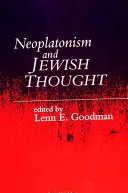
Neoplatonism and Jewish Thought
 79
79

Neoplatonism and Jewish Thought
Lenn E. Goodman’s exploration of Neoplatonism and Jewish thought offers a rigorous examination of the philosophical conduits between these traditions. The book excels in its detailed dissection of the problem of the One and the Many, illustrating how thinkers across centuries wrestled with unifying disparate realities. Goodman’s strength lies in his ability to parse complex theological and metaphysical arguments, particularly regarding mediation, drawing clear lines of influence and adaptation. A notable passage details Plotinus’s conception of the ‘return’ of the soul to the One, and how this echoes in later Jewish mystical and philosophical texts. However, the dense academic prose, while precise, can be demanding for those not already steeped in the subject matter. The sheer volume of figures and concepts discussed, while comprehensive, occasionally feels overwhelming, making it less accessible for a casual reader. Despite this, the work provides an indispensable scholarly resource for understanding a crucial thread in esoteric intellectual history.
📝 Description
79
Lenn E. Goodman's 2012 book examines Neoplatonism's influence on Jewish thought.
This volume analyzes the philosophical connections between Neoplatonic ideas and Jewish intellectual traditions. Goodman traces how concepts of the One and the Many, central to understanding the relationship between ultimate reality and its manifestations, were debated across these systems. The book engages with thinkers who bridged different intellectual worlds, from late antiquity through the Islamic Golden Age.
It addresses the problem of mediation, detailing how the transcendent is understood to connect with the material world. Discussions cover emanation, divine intellect, and the function of intermediary principles. Goodman scrutinizes the ways philosophers like Philo, Plotinus, Isaac Israeli, and Maimonides conceived of the links between the finite and the infinite, creation, evil, and divine guidance.
The book situates itself within the history of Western esotericism by examining how Neoplatonic metaphysics informed Jewish mystical and philosophical developments. It looks at the transmission and adaptation of Greek philosophical concepts, particularly those of Plotinus and Porphyry, by medieval Jewish thinkers. This dialogue contributed to a rich intellectual current that explored the nature of the divine, the cosmos, and humanity's place within them, influencing later Kabbalistic and esoteric traditions.
💡 Why Read This Book?
• Gain a nuanced understanding of the philosophical problem of the One and the Many, as explored by figures like Plotinus and Isaac Israeli, moving beyond simplistic dualisms. • Discover the specific mechanisms of divine mediation discussed by thinkers such as Philo and Abraham Ibn Daud, crucial for understanding emanationist cosmologies. • Trace the historical dialogue between Neoplatonic philosophy and Jewish intellectual traditions from antiquity through the medieval period, enriching your grasp of esoteric lineage.
⭐ Reader Reviews
Honest opinions from readers who have explored this book.
❓ Frequently Asked Questions
What is the central philosophical problem addressed in Neoplatonism and Jewish Thought?
The book primarily addresses the problem of the One and the Many, investigating how different philosophical and religious traditions reconcile the existence of a singular, ultimate reality with the multiplicity of the world.
Which historical figures are central to this study?
Key figures include the Neoplatonists Plotinus and Iamblichus, and Jewish thinkers such as Philo, Isaac Israeli, Abraham Ibn Daud, and Maimonides.
What does the book say about the concept of 'mediation'?
It focuses on mediation as the means by which the Absolute (the One) relates to the finite, immanent world, exploring various conceptualizations of this connection across different traditions.
When was Neoplatonism and Jewish Thought first published?
The book was first published on February 1, 2012.
What is the relationship between Neoplatonism and Jewish thought explored in the book?
The book examines how Neoplatonic philosophical concepts, particularly concerning emanation and the nature of the divine, influenced and were integrated into Jewish philosophical and mystical traditions.
Does the book discuss the problem of evil?
Yes, the problem of evil is treated as a special case of the general problem of relating the finite to the infinite, explored within the framework of Neoplatonic and Jewish thought.
🔮 Key Themes & Symbolism
The One and the Many
This volume dissects the fundamental philosophical challenge of reconciling a singular, ultimate divine principle (the One) with the diverse, pluralistic reality of the created world. It examines how thinkers like Plotinus and later Jewish philosophers conceptualized this relationship, viewing creation, evil, and ethics as manifestations of this core tension. The exploration moves beyond simple opposition, seeking the philosophical architecture that allows for both unity and multiplicity within a cohesive worldview, central to many esoteric cosmologies.
Divine Mediation
A principal focus is the concept of mediation—the philosophical and theological pathways through which the transcendent Absolute connects with the immanent 'here and now.' This theme investigates intermediary principles, divine intellects, or emanative processes that bridge the infinite and the finite. For traditions seeking direct experience of the divine, understanding these mediating factors, as articulated by figures from Philo to Avicenna, is crucial for mapping the spiritual cosmos.
Creation and Emanation
The book treats creation not merely as a singular event but as an ongoing process intrinsically linked to the problem of the One and the Many. It analyzes how Neoplatonic ideas of emanation—where reality flows from the Divine source in successive stages—were adapted and debated within Jewish thought. This provides insight into cosmogonies that posit a direct, hierarchical unfolding of existence from its ultimate origin, a common motif in esoteric systems.
Ethics and the Finite
Ethical considerations are presented as intrinsically tied to the metaphysical problem of relating the finite human condition to the infinite divine. The work explores how conceptions of the ultimate reality and its emanations inform moral frameworks. Understanding the Neoplatonic and Jewish perspectives on human limitations, the pursuit of virtue, and the path toward spiritual ascent offers a lens into the practical application of these profound metaphysical ideas.
💬 Memorable Quotes
Direct passages from the work, attributed to the author.
“The problems of creation, of evil, of revelation, and of ethics are all treated as special cases of the general problem of relating the finite to the infinite, the many to the one.”
— This statement captures the book's core thesis, framing complex theological and ethical issues as interconnected facets of a single, overarching metaphysical challenge: bridging the gap between ultimate reality and lived experience.
“The authors focus on the unifying theme of mediation, the means by which the Absolute relates to the here and now.”
— This highlights the book's emphasis on 'mediation' as the key concept for understanding how the divine or absolute principle interacts with the contingent, temporal world, a critical aspect of many mystical and esoteric philosophies.
“Principal figures studied include Philo, Plotinus, Iamblichus, Isaac Israeli, Avicenna, Ibn Gabirol, Al-Ghazâlî, Abraham Ibn Daud.”
— This list of thinkers underscores the book's broad scope, demonstrating its engagement with a wide spectrum of influential philosophers and theologians across different cultural and historical contexts.
“The book deals primarily with the problem of the one and the many.”
— This concise summary identifies the central philosophical conundrum that the volume seeks to unravel, a foundational question in metaphysics and ontology that has preoccupied thinkers for millennia.
“The problems of creation... are all treated as special cases of the general problem of relating the finite to the infinite.”
— This emphasizes how the book views specific theological and existential issues, such as the origin of the universe, through the lens of a broader metaphysical framework concerning the relationship between the limited and the boundless.
🌙 Esoteric Significance
Tradition
This work is foundational for understanding the esoteric lineage that bridges Hellenistic philosophy and Abrahamic mysticism. It details how Neoplatonic concepts, particularly emanation and the hierarchy of being, were assimilated into Jewish thought, laying groundwork for later Kabbalistic and mystical interpretations. It departs from purely theological treatments by focusing on the philosophical architecture, revealing the underlying structures that esoteric traditions often explore for spiritual ascent.
Symbolism
Key symbols explored implicitly include the 'One' as the ultimate, ineffable source, and the 'Many' as its diverse manifestations. The concept of 'mediation' itself functions symbolically, representing the conduits or bridges (e.g., divine intellect, emanations) that connect the transcendent to the immanent, a motif crucial in understanding spiritual cosmologies and pathways to the divine.
Modern Relevance
Contemporary esoteric thinkers and comparative religion scholars continue to draw on the insights into the synthesis of philosophical and religious thought presented here. The book’s analysis of how different traditions grapple with ultimate reality and its relationship to the world informs modern explorations of consciousness, metaphysics, and the nature of the sacred across diverse spiritual paths.
👥 Who Should Read This Book
• Students of Comparative Philosophy: Gain a rigorous understanding of how Neoplatonic metaphysics influenced Jewish philosophical discourse, moving beyond superficial comparisons. • Scholars of Western Esotericism: Uncover the historical roots of concepts like emanation and divine mediation that are central to many esoteric traditions. • Advanced Practitioners of Mystical Traditions: Deepen your grasp of the philosophical underpinnings of creation, the divine, and the human spiritual path as explored by key historical figures.
📜 Historical Context
Published in 2012, Lenn E. Goodman's "Neoplatonism and Jewish Thought" enters a scholarly landscape shaped by decades of renewed interest in Hellenistic philosophy and its reception. The book situates itself within the ongoing academic discourse on the cross-pollination of ideas between Greek philosophy, particularly the Neoplatonic school founded by Plotinus, and medieval Jewish intellectual traditions. It engages with figures who lived and wrote across centuries, from the 1st-century CE philosopher Philo of Alexandria to medieval thinkers like Maimonides. The work implicitly engages with competing intellectual currents of the medieval period, such as Aristotelianism, which offered alternative metaphysical frameworks. While direct reception events like specific academic debates or widespread controversies are not detailed in the blurb, the book's focus on figures like Isaac Israeli and Abraham Ibn Daud places it within the study of the transmission of philosophical thought in the Mediterranean world.
📔 Journal Prompts
The problem of the One and the Many as it relates to your personal worldview.
Concepts of mediation between the Absolute and the immanent world.
How the problem of evil is framed by relating the finite to the infinite.
Plotinus's ideas on the return of the soul to the One.
The role of Isaac Israeli's philosophical contributions.
🗂️ Glossary
Neoplatonism
A school of philosophy that emerged in the 3rd century CE, heavily influenced by Plato, with key figures like Plotinus. It posits a hierarchical structure of reality emanating from an ultimate, transcendent source known as 'The One'.
The One
In Neoplatonism, the ultimate, ineffable, and transcendent source of all reality. It is beyond being and description, from which all existence emanates.
The Many
Refers to the multiplicity and diversity of the phenomenal world, contrasted with the absolute unity of 'The One'. A central philosophical problem is how these two relate.
Emanation
The Neoplatonic concept that reality flows or proceeds from 'The One' in a necessary, hierarchical manner, like light from a source, without diminishing the source itself.
Mediation
The process or means by which the transcendent divine or Absolute relates to and interacts with the immanent, finite world. This can involve intermediary beings or principles.
Philo of Alexandria
A Hellenistic Jewish philosopher (c. 20 BCE – c. 50 CE) who sought to synthesize Jewish scripture with Greek philosophy, particularly Platonism, introducing concepts like the Logos.
Plotinus
The founder of Neoplatonism (c. 204/5 – 270 CE), whose philosophy, primarily recorded by Porphyry, profoundly influenced subsequent Western and Islamic thought.