Lost Civilizations
 71
71

Lost Civilizations
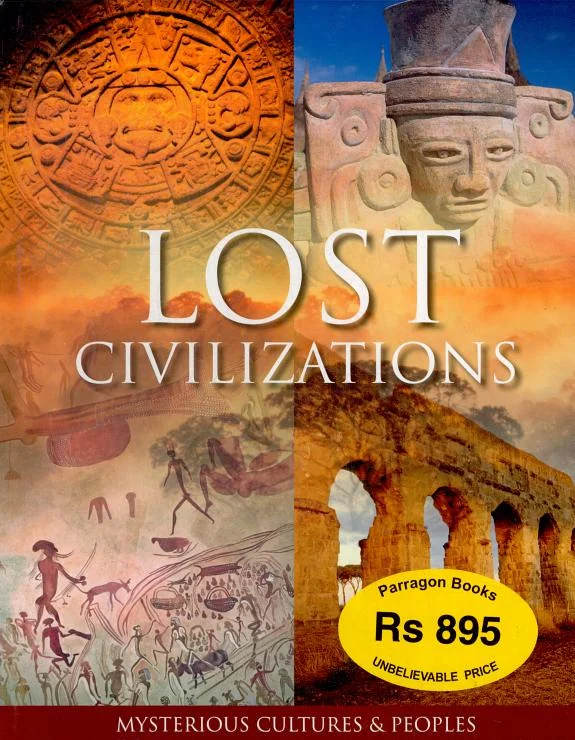
Markus Hattstein’s "Lost Civilizations" attempts a grand synthesis, covering vast swathes of human history from the ancient Near East to the Americas. The sheer volume of information presented, supported by over 400 illustrations and maps, is commendable and offers a solid starting point for those new to these subjects. The sections on the Persian Empire, for instance, effectively convey its administrative prowess and territorial extent. However, the book’s ambition to cover so much ground inevitably leads to a somewhat superficial treatment of many complex societies. While it touches upon the achievements of the Inca, Maya, and Aztecs, the depth of analysis regarding their unique cosmologies or political structures feels constrained by the encyclopedic approach. The work’s primary strength lies in its accessibility and visual appeal, making it a good introductory volume. Its limitation is the lack of deep engagement with the esoteric or philosophical underpinnings of these cultures, a crucial element for understanding their true 'lost' nature. Ultimately, "Lost Civilizations" serves as a competent, illustrated overview, but falls short of providing truly revelatory insights into the esoteric dimensions of these ancient peoples.
📝 Description
71
Markus Hattstein's 2004 book surveys influential ancient societies across the globe.
Markus Hattstein's "Lost Civilizations" surveys influential societies that shaped human history. The book details the expansive reach of the Persian, Greek, and Roman empires, alongside the sophisticated dynasties of China and India. It also highlights the architectural and societal achievements of Mesoamerican cultures like the Inca, Maya, and Aztecs.
With over 400 illustrations and numerous maps, this volume offers a visually rich companion to its informative texts. These elements work together to present detailed portraits of early societies, illustrating their structures, beliefs, and innovations. The book aims to illuminate the foundations upon which later civilizations were built, considering their unique contributions and lasting legacies.
The scope extends across continents, providing a view of human development from the ancient Near East to the complex societies of the Americas. Hattstein focuses on the defining characteristics and impacts of these peoples, showing how their power, cultural advancements, and societal structures influenced subsequent eras and continue to be studied.
While primarily a historical survey, "Lost Civilizations" touches upon themes often found in esoteric traditions. The focus on ancient achievements, societal structures, and the foundations of subsequent eras can resonate with those interested in cyclical views of history, lost knowledge, and the underlying patterns of human development. The book's detailed examination of diverse cultures, from the Near East to the Americas, allows readers to draw connections between seemingly disparate ancient worldviews and practices, hinting at universal principles or shared origins that appeal to esoteric inquiry.
💡 Why Read This Book?
• Understand the interconnectedness of ancient empires like the Persians and Romans, learning how their administrative and military structures laid groundwork for subsequent political thought. • Explore the advancements of Mesoamerican civilizations, specifically the architectural ingenuity of the Inca city of Machu Picchu, gaining insight into their engineering prowess. • Grasp the foundational achievements of early Chinese dynasties, such as the unification under Qin Shi Huang, and their lasting impact on East Asian culture and governance.
⭐ Reader Reviews
Honest opinions from readers who have explored this book.
❓ Frequently Asked Questions
What specific historical periods does "Lost Civilizations" cover?
The book spans a vast range of historical periods, from the early empires of the ancient Near East and the classical civilizations of Greece and Rome to the dynasties of China and India, and the pre-Columbian societies of the Americas.
How does "Lost Civilizations" illustrate its points?
It utilizes over 400 illustrations, including photographs of artifacts, artwork, and architectural sites, alongside numerous maps to visually represent the geographical scope and historical development of the civilizations discussed.
Which Mesoamerican civilizations are featured in the book?
The book highlights the Inca, Maya, and Aztec civilizations, detailing their societal achievements, cultural practices, and historical significance within the context of ancient American history.
Does "Lost Civilizations" focus on military history or cultural achievements?
The book provides a comprehensive overview, covering both the power and influence of empires (often involving military aspects) and their significant cultural, societal, and architectural achievements.
Is "Lost Civilizations" suitable for academic study?
While it offers a broad survey, its encyclopedic nature makes it an excellent introductory resource for students or general readers interested in comparative world history.
What is the primary geographical focus of the book?
The book adopts a global perspective, covering peoples and defining civilizations from all continents, with particular emphasis on Eurasia and the Americas.
🔮 Key Themes & Symbolism
Imperial Ascendancy
The work meticulously charts the rise and influence of dominant ancient powers, such as the Persian Empire under Cyrus the Great, the Roman Republic and its subsequent Empire, and the classical Greek city-states. It examines the mechanisms of their power, their administrative structures, and the cultural diffusion that accompanied their expansion. This theme explores how these entities established lasting legacies that continue to inform political and social structures today, often through military dominance and sophisticated governance.
Architectural and Engineering Marvels
A significant focus is placed on the monumental constructions and advanced engineering feats of various civilizations. This includes the intricate urban planning of the Maya, the impressive road networks and stonework of the Inca (exemplified by sites like Machu Picchu), and the enduring structures of the Romans. The book illustrates how these achievements reflect not only technological capability but also the cosmological beliefs and societal organization of these ancient peoples.
Cultural and Philosophical Foundations
Beyond political and architectural achievements, "Lost Civilizations" touches upon the cultural and philosophical underpinnings that defined these societies. It considers the development of writing systems in China and India, the philosophical inquiries of the Greeks, and the complex belief systems of Mesoamerican cultures. The exploration highlights how these foundational elements shaped their worldviews and contributed to the broader intellectual heritage of humanity.
Global Interconnections
The book emphasizes a global perspective, presenting civilizations not in isolation but as part of a broader human historical narrative. It connects disparate regions by examining trade routes, cultural exchanges, and the shared challenges and innovations faced by societies across continents. This theme underscores the interconnectedness of human development throughout antiquity and the shared patterns that emerge when viewed holistically.
💬 Memorable Quotes
Direct passages from the work, attributed to the author.
“The Persians established a vast administrative system that facilitated communication and governance across their extensive territories.”
— This highlights the sophisticated bureaucracy of the Achaemenid Empire, demonstrating an early model of centralized control and efficient management over diverse populations and regions.
“The achievements of the Inca included an exceptional road system connecting their Andean empire.”
— This points to the remarkable engineering and logistical capabilities of the Inca, emphasizing how infrastructure development was crucial for maintaining cohesion and control over their challenging mountain terrain.
“Greek philosophers laid the groundwork for Western rational thought and ethical inquiry.”
— This interpretation underscores the profound and lasting impact of thinkers like Plato and Aristotle, whose ideas on logic, politics, and ethics continue to influence philosophical discourse.
“Aztec society was organized around complex religious rituals and a sophisticated understanding of their calendar.”
— This emphasizes the integral role of religion and astronomical knowledge in Aztec life, showing how these elements structured their social hierarchy, agricultural practices, and ceremonial life.
“Ancient Indian dynasties fostered advancements in mathematics and astronomy.”
— This interpretation suggests that early Indian scholars made significant contributions to scientific fields, laying the groundwork for later developments in areas like the concept of zero and decimal systems.
🌙 Esoteric Significance
Tradition
While "Lost Civilizations" is primarily a historical and archaeological survey, its subject matter inherently intersects with the foundational myths, cosmologies, and symbolic systems that underpin various esoteric traditions. It provides the historical and cultural context from which many esoteric ideas—concerning cyclical time, divine kingship, cosmic order, and the relationship between humanity and the cosmos—emerged. The book doesn't belong to a specific esoteric lineage but serves as a resource for understanding the pre-esoteric roots of Western and Eastern thought.
Symbolism
The book implicitly engages with potent symbols inherent in the civilizations it covers. For example, the Sun symbol, central to Inca and Egyptian (though not explicitly detailed here) sun-worship, represents divine power, cosmic order, and life-giving force. The pyramids of Mesoamerica, whether Mayan or Aztec, symbolize cosmic mountains, gateways to the underworld, and the connection between earthly and celestial realms. The imagery of vast empires like Rome often symbolizes earthly power, dominion, and the human aspiration for order and control.
Modern Relevance
Contemporary esoteric thinkers and practitioners often draw upon the historical and archaeological evidence presented in works like "Lost Civilizations" to validate or contextualize their beliefs. For instance, discussions on ancient astronaut theories or lost high-civilizations often reference the advanced engineering and societal complexity of cultures like the Inca or Maya. Modern ceremonial magic practitioners might study Roman or Greek pantheons for inspiration, while students of comparative mythology find rich material in the foundational narratives of these ancient peoples.
👥 Who Should Read This Book
• Beginning students of comparative world history seeking a visually-supported introduction to major ancient civilizations like the Persians, Greeks, and Aztecs. • Armchair archaeologists and history enthusiasts interested in exploring the architectural achievements and societal structures of empires across different continents. • Individuals curious about the origins of foundational concepts in governance, philosophy, and technology that emerged from early human societies.
📜 Historical Context
Published in 2010, Markus Hattstein's "Lost Civilizations" emerged during a period of renewed interest in grand historical narratives and accessible popularizations of archaeology and ancient history. The early 21st century saw numerous ambitious survey works aiming to synthesize global history for a general audience, often leveraging digital illustration techniques. This book sits within a lineage of works that aim to make complex historical subjects digestible, akin to earlier encyclopedic efforts but updated with modern scholarship and visual presentation. While not directly engaging with esoteric traditions as its primary focus, its broad scope implicitly touches upon the mythologies, cosmologies, and foundational belief systems that inform esoteric thought. Contemporaries like Yuval Noah Harari, with his more philosophical "Sapiens: A Brief History of Humankind" (2011), offered different, though overlapping, grand historical perspectives, sparking debate about the nature of human progress and civilization. Hattstein's work, however, remains more grounded in archaeological and historical description than speculative philosophy.
📔 Journal Prompts
The administrative reach of the Persian Empire compared to Roman governance.
Architectural ingenuity exemplified by Inca stonework or Mayan pyramids.
The philosophical inquiries of ancient Greece and their enduring questions.
The symbolic significance of calendar systems in Mesoamerican civilizations.
Foundational advancements in mathematics and astronomy from ancient India.
🗂️ Glossary
Achaemenid Empire
The first Persian Empire, founded by Cyrus the Great around 550 BCE, known for its vast territory, efficient administration, and religious tolerance.
Qin Dynasty
A short-lived but highly influential imperial dynasty in China (221–206 BCE) that unified the country and initiated major projects like the Great Wall.
Inca Empire
A large empire in pre-Columbian America, centered in the Andes region of South America, known for its advanced road system and architectural feats like Machu Picchu.
Maya Civilization
A Mesoamerican civilization renowned for its advanced writing system, mathematics, calendar, and impressive art and architecture, flourishing from around 250 to 900 CE.
Aztec Empire
A powerful empire in central Mexico from the 14th to 16th centuries, known for its capital Tenochtitlan, complex religious system, and agricultural innovations like chinampas.
Hellenistic Period
The period of Mediterranean and Near Eastern history between the death of Alexander the Great (323 BCE) and the emergence of the Roman Empire (typically dated to the Battle of Actium in 31 BCE).
Roman Republic
The period of ancient Roman history from the overthrow of the Roman Kingdom (traditionally 509 BCE) to the establishment of the Roman Empire (27 BCE), characterized by a republican form of government.
This book appears in 1 collection
🔮 Readers Also Liked
Browse all →








From the “Lost Civilizations” Collection
View all →









More Free Esoteric History & Biography Books
View all →