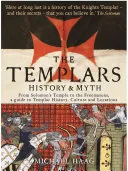
Geschichtliche Ewigkeit
 72
72

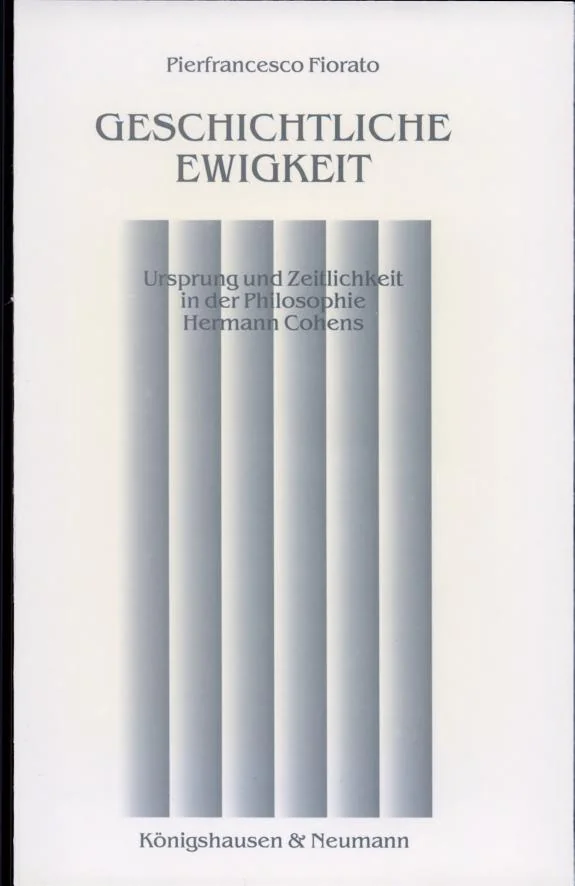
Geschichtliche Ewigkeit
Pierfrancesco Fiorato’s Geschichtliche Ewigkeit offers a challenging perspective on historical understanding, moving beyond linear chronology to explore cyclical patterns and symbolic resonance. The work’s strength lies in its ambitious attempt to synthesize esoteric philosophy with historical inquiry, particularly in its examination of how archetypal forces might manifest across epochs. Fiorato’s analysis of how specific historical moments can be seen as echoes of primordial myths is particularly striking, moving beyond simple allegory.
However, the book’s dense prose and reliance on specialized terminology can present a significant barrier to entry for readers unfamiliar with esoteric traditions or philosophical concepts of time. While the 1993 publication date places it in a specific intellectual milieu, some of its arguments might benefit from engagement with more contemporary scholarship on collective memory and historical narrative construction. A passage discussing the symbolic recurrence of certain motifs in periods of societal upheaval, for example, is compelling but requires careful unpacking.
Read more ↓
Geschichtliche Ewigkeit provides a complex, albeit demanding, framework for re-evaluating historical meaning.
📝 Description
72
Pierfrancesco Fiorato's 1993 book, Geschichtliche Ewigkeit, examines history not as a sequence of events but as a field of repeating archetypes.
Geschichtliche Ewigkeit, published in 1993, proposes a view of history centered on consciousness and its esoteric dimensions. Pierfrancesco Fiorato's work does not follow traditional historical methods. Instead, it analyzes how collective memory and narrative frameworks shape our perception of reality. The book discusses the cyclical nature of time and the symbolic meanings embedded in historical occurrences, suggesting an underlying, often hidden, order.
This text is for readers who approach history from unconventional angles, who are interested in the philosophy of time, and who engage with esoteric thought. It is for those who question standard historical accounts and wish to explore the archetypal forces that might influence human affairs. Students of comparative mythology, Jungian psychology, and those who research the occult history of ideas will find this book particularly rewarding.
Fiorato's work appeared in the early 1990s, a time of renewed interest in synchronicity, collective consciousness, and esoteric history, influenced by figures like Carl Jung and Mircea Eliade. The book provides an alternative to purely materialistic or positivistic historical methods. It engages with concepts explored by scholars of Western esotericism such as Antoine Faivre. Published before the widespread digital archiving of historical records, it offers a perspective on historical meaning construction from a pre-internet era.
💡 Why Read This Book?
• Gain a new lens on historical events by understanding the concept of 'historical eternity' as presented by Fiorato, revealing potential cyclical patterns beyond mere chronology. • Explore the esoteric concept of 'sacred time' versus 'profane time' as discussed in the book, which offers a framework for perceiving spiritual significance in historical occurrences. • Understand the role of myth and ritual in shaping collective consciousness, as examined in Fiorato's work, providing insights into how societal narratives are constructed and perpetuated.
⭐ Reader Reviews
Honest opinions from readers who have explored this book.
❓ Frequently Asked Questions
What is the central thesis of Geschichtliche Ewigkeit?
The central thesis of Geschichtliche Ewigkeit is that history is not merely a linear progression of events but is imbued with cyclical patterns and symbolic meanings, suggesting an underlying esoteric order that influences human development.
When was Geschichtliche Ewigkeit first published?
Geschichtliche Ewigkeit was first published in 1993.
Who is the author of Geschichtliche Ewigkeit?
The author of Geschichtliche Ewigkeit is Pierfrancesco Fiorato.
What kind of reader would appreciate this book?
Readers interested in esoteric philosophy, the philosophy of history, comparative mythology, and Jungian psychology will find this book particularly engaging.
Does the book offer practical applications?
While not a practical guide in the conventional sense, the book offers a framework for reinterpreting personal and collective history through an esoteric lens, fostering deeper self-understanding and a more symbolic view of events.
What is the primary subject matter explored?
The primary subject matter is the esoteric interpretation of history, focusing on concepts like cyclical time, archetypal patterns, and the symbolic significance of historical events.
🔮 Key Themes & Symbolism
Cyclical Nature of Time
The work posits that historical progression is not strictly linear but exhibits cyclical patterns, echoing primordial archetypes. Fiorato suggests that understanding these cycles, akin to the concept of 'sacred time' versus 'profane time', allows for a deeper perception of historical events as recurring symbolic manifestations rather than isolated incidents. This perspective challenges conventional chronological approaches, hinting at an underlying spiritual order governing human epochs.
Symbolic History
Geschichtliche Ewigkeit frames historical events not just as factual occurrences but as carriers of symbolic meaning. It examines how myths, rituals, and collective narratives function to transmit and reinforce archetypal patterns across generations. The book argues that these symbols are crucial for understanding the deeper currents that shape societies and individual consciousness, moving beyond empirical data to explore the spiritual or psychic dimensions of the past.
Historical Consciousness
The book examines the nature of 'historical consciousness' itself, exploring how societies and individuals perceive and interpret their past. Fiorato investigates how this consciousness is constructed through symbolic frameworks and narrative traditions. The work suggests that a more profound historical consciousness can be achieved by recognizing the esoteric underpinnings of historical phenomena, thereby connecting the present moment to a vaster, timeless continuum.
Archetypal Patterns
A core theme is the recurrence of archetypal patterns throughout history, aligning with concepts explored in depth by figures like Carl Jung. Fiorato argues that these universal motifs, present in myths and legends, also manifest in historical events, driving human actions and societal transformations. Understanding these archetypes provides a key to deciphering the hidden logic and spiritual significance of historical epochs.
💬 Memorable Quotes
Direct passages from the work, attributed to the author.
“History as the echo of primordial myths.”
— This concept suggests that seemingly distinct historical events are, in essence, re-enactments or reflections of fundamental, archetypal narratives that have existed since the dawn of human consciousness.
“The distinction between sacred and profane time.”
— This refers to an esoteric view where 'sacred time' represents moments of spiritual intensity or symbolic recurrence, contrasted with 'profane time,' which is ordinary, chronological, and devoid of deeper meaning.
“Archetypes manifesting in historical epochs.”
— This interpretation highlights the idea that universal, symbolic patterns (archetypes) are not confined to myth but actively shape and are visible within the unfolding of historical periods and major events.
“Collective memory shaped by symbolic frameworks.”
— This suggests that a society's understanding of its past is not solely based on factual accounts but is profoundly influenced by the symbolic systems, myths, and narratives it employs.
💡 Key Ideas
Editorial paraphrase of the work's core concepts — not direct quotes.
Geschichtliche Ewigkeit as a cyclical phenomenon.
This paraphrased concept expresses the book's central argument that historical duration is best understood not as a straight line, but as a recurring cycle of patterns and themes.
🌙 Esoteric Significance
Tradition
The work draws heavily from traditions exploring the philosophy of time and consciousness, particularly Hermeticism and certain Gnostic concepts of cyclical return and hidden meaning. It aligns with esoteric interpretations that view historical events not as random occurrences but as manifestations of deeper, often archetypal, forces. Fiorato's approach can be seen as contributing to the lineage of thinkers who sought to uncover a spiritual or symbolic order underlying the material world, extending this to the area of human history.
Symbolism
Key symbols explored include the concept of the Ouroboros, representing cyclical time and eternal return, and the serpent, often symbolizing hidden knowledge or transformative cycles within history. The recurrent motifs in myths and legends, such as the hero's journey or cataclysmic events, are also treated as symbolic keys to understanding historical epochs. These symbols are not merely decorative but are presented as active agents shaping historical consciousness.
Modern Relevance
Contemporary practitioners of Hermeticism, Jungian analysts, and scholars of comparative religion continue to find value in Fiorato's exploration of cyclical time and archetypal patterns in history. His work informs modern discussions on collective memory, the influence of myth in contemporary society, and the search for meaning beyond secular historical narratives. The book's ideas resonate with those seeking a more holistic understanding of human existence, bridging the gap between the historical past and present spiritual inquiry.
👥 Who Should Read This Book
• Students of esoteric philosophy seeking to understand historical events through a symbolic and cyclical lens, moving beyond conventional chronological accounts. • Comparative mythology enthusiasts interested in how archetypal patterns manifest across different cultures and historical periods, as explored by Fiorato. • Readers engaged with Jungian psychology and the concept of collective unconscious, looking for applications of these ideas to the interpretation of history.
📜 Historical Context
Pierfrancesco Fiorato's Geschichtliche Ewigkeit emerged in 1993, a period when Western esotericism was gaining academic recognition, partly due to scholars like Antoine Faivre. The intellectual climate was receptive to ideas challenging purely materialistic interpretations of history, influenced by Jungian psychology and the history of religions. Fiorato's work engaged with the concept of 'sacred time' and cyclical history, offering an alternative to the dominant linear, progress-oriented view of history prevalent in mainstream academia. This was also a time when comparative mythology and the study of archetypes were flourishing. While not explicitly engaging with contemporary historians of the time by name in its core thesis, the book implicitly stood against positivist historiography, aligning more with esoteric traditions and philosophical explorations of time and consciousness. Its reception was likely within specialized circles interested in occult philosophy and non-traditional historical analysis.
📔 Journal Prompts
Reflect on a personal experience mirroring a symbolic historical pattern discussed in the book.
Analyze a recurring motif in your local history through the lens of 'sacred time'.
Consider how a specific myth you know could represent an 'archetype' influencing societal trends.
How does your understanding of 'historical consciousness' differ from Fiorato's exploration?
Identify one instance where 'cyclical time' seems more applicable than linear progression in current events.
🗂️ Glossary
Geschichtliche Ewigkeit
German for 'Historical Eternity.' In the context of the book, it refers to the concept of recurring patterns, archetypes, and symbolic meanings within history, suggesting a timeless dimension to human events.
Sacred Time
An esoteric concept distinguishing moments of profound symbolic significance or spiritual intensity from ordinary, linear 'profane time.' It refers to a cyclical or archetypal dimension of temporal experience.
Profane Time
The ordinary, chronological, and secular measurement of time, perceived as devoid of deeper spiritual or symbolic meaning, contrasted with 'sacred time'.
Archetype
A universal, primordial pattern or symbol that recurs in myths, dreams, and historical events, representing fundamental aspects of human experience and consciousness, as explored by Jung and others.
Symbolic History
An approach to understanding history that emphasizes the symbolic meanings embedded within events, narratives, and cultural expressions, rather than focusing solely on factual accounts.
Historical Consciousness
The collective awareness and interpretation of the past within a society or culture, shaped by narratives, myths, and symbolic frameworks, as examined by Fiorato.
Cyclical Time
A concept of time as recurring in cycles or patterns, rather than progressing linearly. This view is often associated with ancient cosmologies and esoteric traditions.
This book appears in 1 collection
🔮 Readers Also Liked
Browse all →







From the “Messianism” Collection
View all →




More Free Esoteric History & Biography Books
View all →