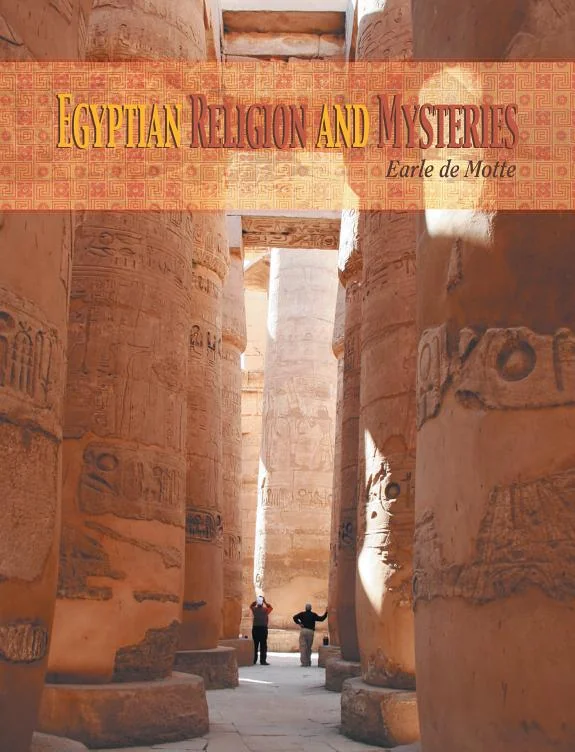
Egyptian Religion and Mysteries
 82
82

Egyptian Religion and Mysteries
Earle de Motte’s Egyptian Religion and Mysteries provides a rigorous, scholarly look at a civilization whose spiritual output continues to fascinate. The author’s strength lies in his meticulous dissection of complex concepts, particularly the Egyptian understanding of the soul and its post-mortem journey, as detailed in texts like the Book of the Dead. He effectively contextualizes Egyptian practices within broader mystical frameworks. A notable limitation, however, is the dense prose, which occasionally obscures the very mysteries it seeks to illuminate. The section on Ra’s nightly voyage, for instance, while informative, requires sustained concentration. Despite this, the work offers a valuable perspective on the initiatory significance of Egyptian cosmology, presenting it as a foundational paradigm for later mystery traditions. It serves as a sober, academic counterpoint to more fanciful interpretations of ancient Egyptian spirituality.
📝 Description
82
Earle de Motte's 2013 book examines ancient Egyptian spiritual traditions and their initiatory aspects.
Published in 2013, Egyptian Religion and Mysteries provides a detailed look at ancient Egyptian spiritual and mystical traditions. The author focuses on the theological foundations, the progression of religious ideas, and the complex metaphysical frameworks that characterized Egyptian civilization for a long period. The book moves past surface-level descriptions to discuss the initiatory elements and the philosophical questions within Egyptian religious practices.
This work is for dedicated students of esotericism, comparative religion, and ancient history. It will interest those curious about the origins of Western mystery traditions, the symbolic language of old cultures, and the lasting impact of Egyptian thought on later spiritual movements. Individuals looking for a scholarly yet understandable examination of these subjects will find it valuable. The book engages with current academic discussions on Egyptian cosmology and its connections to other ancient belief systems.
Earle de Motte's work fits within a modern scholarly interest in ancient Egypt that distinguishes itself from earlier 'Egyptomania.' It treats Egyptian religion not just as a historical subject but as a system of metaphysical thought. The book situates itself within ongoing academic conversations about Egyptian cosmology and its relation to other ancient belief systems, contributing to a deeper appreciation of its esoteric dimensions.
💡 Why Read This Book?
• Gain a structured understanding of the Egyptian soul complex (Ba and Ka), moving beyond simplistic notions of the afterlife as presented in texts like the Book of the Dead. • Comprehend the initiatory significance of Ra's journey through the Duat, recognizing it as a symbolic map for spiritual transformation and self-discovery. • Explore the Akhenaten heresy, understanding its radical departure from traditional Egyptian polytheism and its lasting impact on religious and mystical thought.
⭐ Reader Reviews
Honest opinions from readers who have explored this book.
❓ Frequently Asked Questions
What is the Akhenaten Heresy discussed in Egyptian Religion and Mysteries?
The Akhenaten Heresy refers to the religious revolution initiated by Pharaoh Akhenaten around the 14th century BCE, which promoted the worship of the Aten (sun disk) as a supreme, singular deity, challenging the established polytheistic pantheon.
How does the book explain the Egyptian concept of the soul?
The book details the complex Egyptian understanding of the soul, differentiating between aspects such as the Ka (life force) and Ba (personality/spirit), and exploring their respective roles in life and the afterlife.
What is the significance of Ra's journey through the Underworld?
According to the text, Ra's nightly journey through the Duat (underworld) represents an initiatory cycle of death and rebirth, symbolizing the cosmic order and providing a metaphysical model for spiritual progression.
Does the book cover the Egyptian Book of the Dead?
Yes, Egyptian Religion and Mysteries examines the secrets contained within the Book of the Dead, interpreting its spells and rituals as guides for the soul's passage through the afterlife and its metaphysical challenges.
What does the book say about Egyptian Mystery Schools?
The work posits Egyptian Mysteries as a prototype for later ancient mystery schools, exploring the roles of hierophants and the initiatory processes designed to impart esoteric knowledge and facilitate spiritual awakening.
Who was Earle de Motte?
Earle de Motte is the author of Egyptian Religion and Mysteries, with the first edition published in 2013. He is known for his scholarly approach to esoteric subjects.
🔮 Key Themes & Symbolism
The Nature of the Soul
The book looks at the many-sided Egyptian conception of the soul, distinguishing between the Ka, Ba, and other spiritual components. It examines how these elements were understood to interact during life and persist after death, forming the basis for complex funerary rituals and beliefs about the afterlife. The work interprets these beliefs not merely as superstition but as sophisticated metaphysical explorations of consciousness and existence.
Ra's Underworld Journey
A central theme is the symbolic interpretation of Ra's nightly passage through the Duat. This is presented as a profound initiatory cycle, mirroring the processes of death, dissolution, and rebirth. The text analyzes the challenges and encounters Ra faces, framing them as allegorical stages of spiritual development and the restoration of cosmic order, providing a blueprint for the soul's own transformative journey.
The Akhenaten Revolution
The work scrutinizes the religious upheaval caused by Pharaoh Akhenaten's monotheistic reforms. It explores the theological implications of elevating the Aten above the traditional pantheon, analyzing the impact of this heresy on Egyptian religious thought and mystical practices. The book positions this period as a critical juncture, highlighting its unique philosophical and spiritual dimensions.
Egyptian Mystery Schools
Egyptian Religion and Mysteries investigates the evidence for ancient Egyptian mystery schools, positing them as archetypal models for subsequent esoteric traditions. It discusses the role of hierophants and the nature of the initiatory process, suggesting that these schools offered a structured path for accessing profound spiritual truths and achieving higher states of consciousness.
💬 Memorable Quotes
Direct passages from the work, attributed to the author.
“The soul's journey through the Duat mirrors the process of initiation.”
— This statement captures the book's core argument that ancient Egyptian cosmology, particularly the myth of Ra's nightly underworld voyage, served as a symbolic map for spiritual transformation and esoteric awakening.
“Akhenaten's heresy fundamentally altered the religious landscape.”
— This highlights the significant impact of Akhenaten's religious reforms, emphasizing how the shift towards Atenism represented a radical departure from millennia of established polytheistic traditions in Egypt.
“Understanding the Ka and Ba is crucial to Egyptian metaphysics.”
— This points to the central importance of the Egyptian concepts of the Ka (life force) and Ba (spirit/personality) in grasping the civilization's complex understanding of human consciousness and the afterlife.
“Egyptian Mysteries provided a prototype for later esoteric orders.”
— This interpretation suggests that the rituals and teachings of ancient Egyptian spiritual systems laid the groundwork for the development of numerous mystery schools that emerged across the ancient world.
“The Book of the Dead guided the deceased through perilous spiritual trials.”
— This emphasizes the practical, functional aspect of the Book of the Dead, portraying its spells and texts as essential tools for working through the challenges and judgments encountered by the soul after physical death.
🌙 Esoteric Significance
Tradition
This work is firmly rooted in the Hermetic and esoteric study of ancient Egyptian religion. It positions Egyptian cosmology and mystery traditions as a foundational pillar of Western esotericism, predating and influencing Gnosticism, Neoplatonism, and later Hermetic revivals. The book aims to elucidate the initiatory and metaphysical dimensions inherent in Egyptian beliefs, viewing them through a lens that seeks hidden, universal truths within ancient religious structures.
Symbolism
Key symbols explored include the journey of Ra through the Duat, representing the cycle of death and rebirth essential for spiritual regeneration. The concept of the Ba and Ka, aspects of the soul, are central, symbolizing the individual consciousness and its vital life force, respectively. The Aten, as the solar disk, is analyzed as a symbol of divine unity and cosmic creative power, particularly in its revolutionary context under Akhenaten.
Modern Relevance
Contemporary esoteric practitioners and scholars of comparative mysticism frequently draw upon interpretations of Egyptian religion. Thinkers exploring archetypal psychology, the nature of consciousness, and ancient initiatory systems often reference Egyptian myths and rituals. Schools of modern Hermeticism and various New Age spiritualities continue to find inspiration in the Egyptian understanding of the afterlife, the soul's journey, and solar symbolism.
👥 Who Should Read This Book
• Students of comparative religion and ancient history seeking to understand the foundational role of Egyptian spirituality in the broader context of human belief systems. • Practitioners of Western Esotericism interested in the origins of mystery traditions and the symbolic language of ancient Egyptian cosmology and funerary rites. • Researchers of psychological and spiritual development looking for ancient models of transformation, particularly concerning concepts of the soul and the afterlife as depicted in texts like the Book of the Dead.
📜 Historical Context
Published in 2013, Earle de Motte's work arrives during a period of sustained academic and popular engagement with ancient Egypt, moving beyond the sensationalism of earlier eras. The book engages with ongoing scholarly discussions concerning the nature of Egyptian religion, particularly its monotheistic or henotheistic tendencies, contrasting with purely polytheistic interpretations. It implicitly addresses the legacy of figures like Sir Wallis Budge, whose earlier, more diffusionist theories about Egyptian influence were being re-evaluated. While not directly engaging with contemporary figures like Jan Assmann in his major works on Egyptian memory, de Motte's analysis of religious concepts and the afterlife aligns with broader scholarly efforts to understand Egyptian cosmology as a sophisticated intellectual system, distinct from, yet foundational to, later Mediterranean spiritual traditions.
📔 Journal Prompts
The Ba and Ka: How might these concepts inform your understanding of personal identity?
Reflect on the initiatory significance of Ra's journey through the Duat.
Analyze the theological departure represented by the Akhenaten heresy.
Consider the role of the hierophant in ancient Egyptian spiritual transmission.
Explore the metaphysical implications of the Egyptian creation myths.
🗂️ Glossary
Ba
In ancient Egyptian belief, one of the aspects of the soul, often translated as 'spirit' or 'personality,' which could travel between the tomb and the world of the living.
Ka
Another aspect of the Egyptian soul, representing the life force or vital essence, which required sustenance after death, often provided through tomb offerings.
Duat
The ancient Egyptian underworld or field of the dead, famously traversed nightly by the sun god Ra in his journey of regeneration.
Akhenaten Heresy
The religious revolution initiated by Pharaoh Akhenaten, promoting the worship of the Aten (sun disk) as the supreme deity and challenging traditional Egyptian polytheism.
Hierophant
An ancient Greek term for a high priest or interpreter of sacred mysteries; the book uses it to describe figures in Egyptian initiatory traditions.
Book of the Dead
A collection of ancient Egyptian funerary texts, comprising spells intended to assist a dead person's journey through the underworld (Duat) and into the afterlife.
Aten
The disk of the sun in ancient Egyptian mythology, elevated to supreme deity status during the Amarna Period under Akhenaten.
This book appears in 1 collection
🔮 Readers Also Liked
Browse all →







From the “Pyramids” Collection
View all →




More Free Esoteric History & Biography Books
View all →