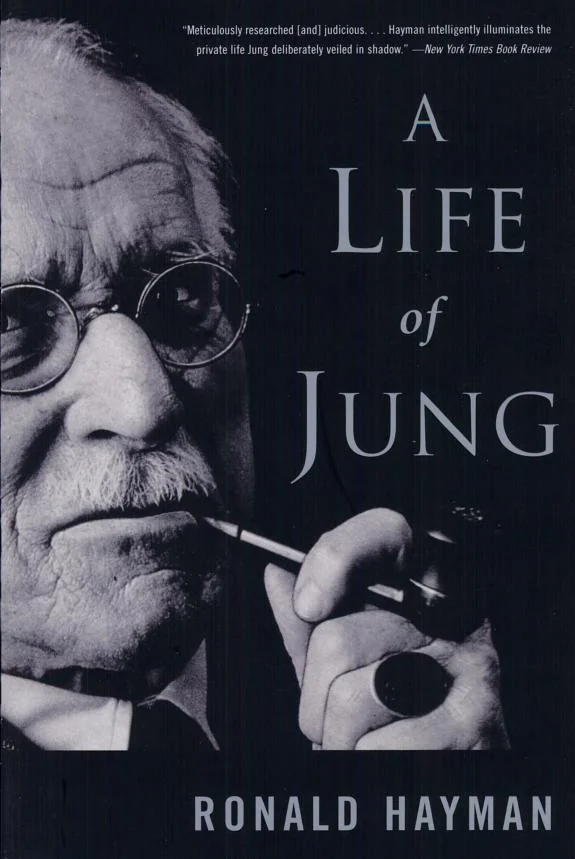
A Life of Jung
 78
78

A Life of Jung
Ronald Hayman's 'A Life of Jung' distinguishes itself by its refusal to deify or demonize its subject. Hayman skillfully navigates the contradictions inherent in Carl Jung's life and work, presenting a scholarly yet accessible account. The book’s strength lies in its meticulous research, offering specific details about Jung's interactions, such as his early correspondence with Sigmund Freud and the eventual schism between them around 1913. A particularly insightful section details Jung's retreat into the 'Red Book' period following his break with Freud, illustrating his profound personal crisis and its creative output. However, the work occasionally feels constrained by its commitment to balance, sometimes sacrificing deeper exploration of Jung's more controversial ideas for the sake of an objective tone. Despite this, Hayman provides a valuable, grounded biography for anyone seeking to understand the man behind analytical psychology.
📝 Description
78
Ronald Hayman's 2002 biography examines Carl Jung's life and work without bias.
Published in 2002, Ronald Hayman's biography offers a balanced view of Carl Jung. It avoids extreme praise or criticism, aiming instead for a clear picture of the complex psychologist. Hayman carefully researched Jung's life, covering his early work with Sigmund Freud and the later creation of analytical psychology.
The book places Jung in the intellectual climate of the early 20th century, a time of major changes in science and philosophy. It discusses Jung's important part in the growth of psychoanalysis, his split from Freud in 1913, and how his own theories, analytical psychology, then appeared. The biography looks at Jung's key ideas, such as the collective unconscious, archetypes, individuation, and the shadow. Hayman shows how Jung's personal events, travels, and interest in mythology, alchemy, and spiritual traditions shaped these concepts.
This biography situates Carl Jung within the broader intellectual currents of the early 20th century, which included a significant interest in spiritual traditions and esoteric thought. Jung's own work drew heavily on alchemy and various mythologies, seeking connections between these ancient systems and the human psyche. Hayman's examination of these influences shows how Jung attempted to integrate mystical and symbolic frameworks into his psychological theories, particularly through concepts like archetypes and the collective unconscious.
💡 Why Read This Book?
• Gain a balanced understanding of Carl Jung's life, including his complex relationship with Sigmund Freud, which ultimately led to the establishment of analytical psychology after their 1913 separation. • Explore the personal experiences that informed Jung's key concepts, such as the collective unconscious and individuation, as detailed in Hayman's biographical narrative. • Appreciate the historical context of early 20th-century psychoanalysis and how Jung's theories diverged from prevailing Freudian thought, providing unique insights into the evolution of psychological discourse.
⭐ Reader Reviews
Honest opinions from readers who have explored this book.
❓ Frequently Asked Questions
What is the main focus of Ronald Hayman's biography of Carl Jung?
Hayman's biography focuses on providing a balanced and nuanced account of Carl Jung's life and work, avoiding extreme portrayals. It explores his intellectual development, personal struggles, and the creation of analytical psychology.
When was 'A Life of Jung' by Ronald Hayman first published?
'A Life of Jung' by Ronald Hayman was first published in 2002, offering a comprehensive overview of Jung's contributions to psychology.
How does this biography handle Jung's relationship with Freud?
The biography details Jung's close early collaboration with Sigmund Freud, his presidency of the International Psychoanalytic Association, and their eventual profound break in 1913, examining the intellectual and personal reasons behind it.
What key psychological concepts are discussed in the book?
The book discusses Jung's seminal ideas, including the collective unconscious, archetypes, the process of individuation, and the concept of the shadow, linking them to his life experiences.
Is this book suitable for beginners in Jungian psychology?
Yes, as it provides a foundational biographical context for Jung's theories. It is particularly useful for those new to Jung who want to understand his life before diving into his complex theoretical works.
What makes Hayman's approach to Jung's biography unique?
Hayman's unique approach lies in his objective stance, presenting Jung's achievements and flaws without bias. He critically examines Jung's personal life and its influence on his psychological theories.
🔮 Key Themes & Symbolism
The Analyst-Patient Dynamic
Hayman's biography thoroughly examines Jung's professional relationships, most notably his formative and later contentious connection with Sigmund Freud. It details their initial collaboration, Jung's presidency of the International Psychoanalytic Association, and their eventual split in 1913. The work explores how these personal and intellectual dynamics influenced the development of both psychoanalysis and Jung's distinct school of analytical psychology, highlighting the impact of their differing views on the libido and the unconscious.
Individuation and the Self
Central to Jung's philosophy, the concept of individuation—the lifelong process of psychological differentiation leading to the integration of the conscious and unconscious aspects of personality—is explored through the lens of Jung's own life. Hayman illustrates how Jung's personal journey, including his intense period of introspection following his break with Freud, informed his understanding of the Self as the central archetype and the goal of psychological development.
The Collective Unconscious and Archetypes
This biography looks at Jung's theory of the collective unconscious, a reservoir of shared human experiences and inherited predispositions expressed through universal archetypes. Hayman connects Jung's research into mythology, religion, and comparative cultures to his formulation of these primordial images and patterns, such as the anima, animus, and the shadow, explaining how they manifest in dreams and human behavior.
Alchemy and the Psyche
Ronald Hayman investigates Jung's profound engagement with the symbolic language and processes of alchemy. The book details how Jung saw alchemical symbolism not merely as ancient chemical practices but as a powerful metaphor for the psychological transformation and individuation process. Hayman elucidates how Jung interpreted alchemical texts and imagery as expressions of the unconscious striving towards wholeness.
💬 Memorable Quotes
Direct passages from the work, attributed to the author.
“With the exception of Freud, who chose him as the first president of the International Psychoanalytic Association, no psychologist has achieved more.”
— This statement from the original blurb highlights Jung's immense stature in the field of psychology, positioning him as second only to Freud in influence and recognition, particularly given his early leadership role in the psychoanalytic movement.
“Previous biographers have either made Jung an idol or condemned him for his failings.”
— This observation from the blurb underscores the challenge of writing about Jung. It suggests that past attempts to capture his life often fell into extremes, either glorifying him or focusing solely on his perceived faults, setting the stage for Hayman's more balanced approach.
“Ronald Hayman neither ignores Jung's faults nor exaggerates them in investigating the most crucial paradoxes surrounding this enigmatic figure.”
— This interpretation emphasizes Hayman's methodological commitment to objectivity. It suggests the biography aims to present a realistic portrait by acknowledging Jung's imperfections while not letting them overshadow his significant contributions or the inherent complexities of his life.
“Hailed by Anthony Storr as 'the best biography of Jung'.”
— This excerpt, attributed to Anthony Storr, serves as a strong endorsement from a respected figure in psychology. It implies that Hayman's work is considered a definitive and superior account compared to other biographies of Carl Jung.
“Carl Jung was one of the world's most influential psychoanalysts.”
— This fundamental statement establishes Jung's significance. It immediately frames the biography's subject as a central figure whose ideas profoundly impacted the understanding of the human psyche and therapeutic practice.
🌙 Esoteric Significance
Tradition
Jung's work is deeply embedded in the Western esoteric tradition, particularly Gnosticism, Hermeticism, and Neoplatonism, though he approached them through a psychological lens. He saw alchemical symbolism and mystical experiences not as literal dogma but as symbolic representations of psychic processes. His concept of the collective unconscious and archetypes can be seen as a psychological interpretation of universal spiritual principles found across diverse mythologies and religious systems, offering a bridge between empirical psychology and traditional esoteric knowledge.
Symbolism
Key symbols explored include the 'Shadow,' representing the repressed, darker aspects of the personality that must be integrated for wholeness; the 'Anima/Animus,' the contrasexual soul-image that mediates between the ego and the unconscious, and plays an important role in relationships; and the 'Mandala,' often appearing in Jung's own drawings and client work, symbolizing the Self and the integration of the personality into a harmonious whole. These symbols function as archetypal patterns within the collective unconscious.
Modern Relevance
Contemporary thinkers in depth psychology, transpersonal psychology, and even certain strands of consciousness studies continue to draw heavily on Jung's conceptual framework. His ideas on archetypes, synchronicity, and the individuation process remain influential in therapeutic practices, spiritual exploration, and the interpretation of mythology and symbolism in literature and film. Schools dedicated to Jungian analysis and the Jung Institute continue to train practitioners worldwide, keeping his esoteric psychological insights alive.
👥 Who Should Read This Book
• Students of depth psychology: Those beginning their study of Jungian analysis or comparative psychology will find a clear, fact-based introduction to Jung's life, providing essential context for his complex theories. • Intellectual historians: Readers interested in the development of 20th-century thought, particularly the schism between Freud and Jung and the broader range of psychoanalytic and philosophical movements, will appreciate the historical grounding. • Esoteric practitioners seeking psychological parallels: Individuals exploring Hermeticism, Gnosticism, or Jung's specific interpretations of alchemy and mythology can use this biography to understand the personal experiences that shaped these psychological frameworks.
📜 Historical Context
Ronald Hayman's biography emerges in the early 21st century, reflecting on a figure who dominated early 20th-century psychological discourse. Carl Jung's work developed in parallel with, and then in opposition to, Sigmund Freud's psychoanalysis. The period following their 1913 schism was intellectually fertile but also fraught with personal and professional tension. Jung’s theories, particularly his concept of the collective unconscious and archetypes, stood in stark contrast to the more materialist focus of Freud and behaviorist schools like B.F. Skinner's emerging in America. While Jung's ideas found resonance in European intellectual circles and later influenced humanistic psychology, they were often met with skepticism or outright rejection by the more orthodox Freudian establishment. Hayman's work benefits from decades of critical analysis and access to new archival material, allowing for a more comprehensive assessment than was possible for contemporaries or earlier biographers.
📔 Journal Prompts
The schism between Jung and Freud in 1913: how might differing views on the unconscious have shaped their therapeutic approaches?
Jung's concept of individuation: how do the biographical details of his life illustrate this process?
The role of archetypes: reflecting on the collective unconscious as presented through Jung's life.
Jung's engagement with alchemy: what psychological parallels can be drawn from this historical esoteric practice?
The paradoxes of Carl Jung: exploring the tension between his personal life and his psychological theories.
🗂️ Glossary
Analytical Psychology
Carl Jung's school of psychotherapy, which differs from Freudian psychoanalysis in its emphasis on the collective unconscious, archetypes, and the process of individuation.
Collective Unconscious
A concept introduced by Jung, positing a layer of the unconscious mind shared by all humanity, containing inherited archetypes and primordial images.
Archetype
Universal, archaic patterns and images that derive from the collective unconscious and are the psychic counterpart of instinct. Examples include the Mother, the Hero, the Shadow.
Individuation
The lifelong psychological process of differentiation of the self, involving the integration of conscious and unconscious aspects of personality to achieve wholeness.
Shadow
In Jungian psychology, the Shadow represents the unconscious or repressed aspects of the personality, often perceived as negative or undesirable traits.
Synchronicity
A concept coined by Jung, referring to meaningful coincidences that appear to be causally unrelated but are experienced as having a significant connection.
Libido (Jungian)
In Jung's view, libido is not solely sexual energy (as in Freud's theory) but a generalized psychic energy or life force that fuels all psychological processes.
This book appears in 1 collection
🔮 Readers Also Liked
Browse all →








From the “Jungian Psychology” Collection
View all →





More Free Esoteric History & Biography Books
View all →