La Nuit

 76
76

La Nuit

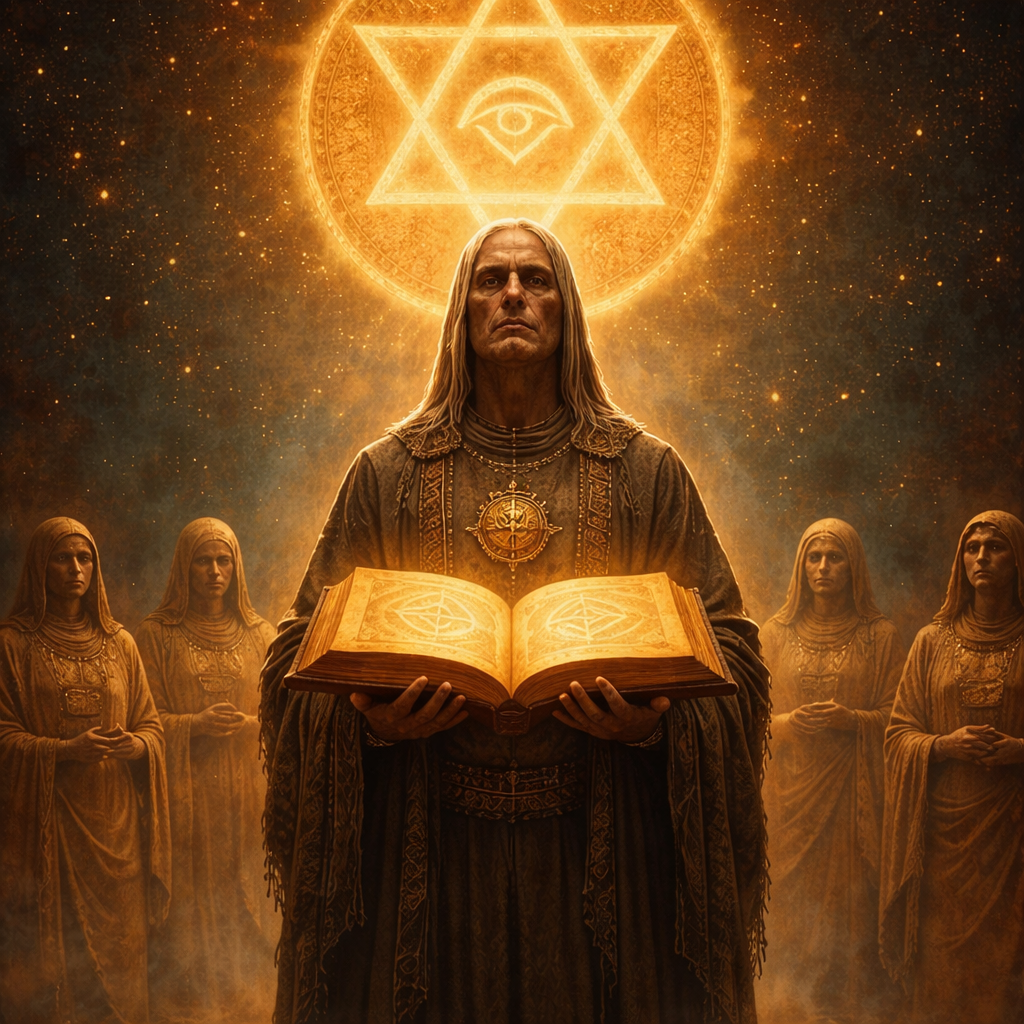

Evander Ashcroft (Alchemy & Hermeticism Editor) — 'La Nuit' is far more than a harrowing memoir; it is a profound esoteric document. Wiesel's stark prose strips away the superficial, revealing the raw spiritual core of human endurance. The narrative functions as a potent allegory for the alchemical process of transformation through fire, where the soul is refined in the crucible of suffering. The echoes of Kabbalistic concepts, particularly the concept of divine absence and the struggle to maintain faith, are palpable. This book offers crucial insights for practitioners seeking to understand the interplay of light and shadow within the human psyche and the cosmos. Its strength lies in its unflinching honesty and its ability to resonate with the deepest spiritual yearnings of the reader. Highly recommended for those on a serious path of self-discovery and spiritual inquiry.
📝 Description
76
Elie Wiesel published 'La Nuit' in 1958, recounting his experiences in Nazi concentration camps.
Elie Wiesel's 'La Nuit' (Night) recounts his experiences in Auschwitz and Buchenwald. The book details the systematic dehumanization and destruction of Jewish life during the Holocaust. Wiesel writes of his loss of faith and his struggle to reconcile his experiences with his Jewish upbringing. The narrative follows his father's decline and death, and Wiesel's own survival. The text grapples with profound questions about the nature of God, suffering, and the human capacity for both cruelty and resilience. It is a personal testimony that also speaks to a collective trauma.
The book's power lies in its stark depiction of events and Wiesel's introspective examination of his spiritual crisis. He describes the loss of innocence and the erosion of his religious beliefs as he witnesses unspeakable horrors. The memory of the crematoria and the constant threat of death shape his perspective. Yet, even in the darkest moments, the narrative touches upon the enduring human need for connection and remembrance. It is a difficult but important record of a catastrophic period in history.
While primarily a memoir, 'La Nuit' engages with spiritual questions that resonate within Jewish mystical traditions. Wiesel's internal struggle touches upon the concept of divine absence or silence during extreme suffering, a theme present in certain interpretations of Kabbalah. The text implicitly questions how one maintains connection to the divine or to tradition when confronted with absolute evil. The struggle to find meaning and remembrance, even in annihilation, echoes the Kabbalistic search for divine sparks within darkness.
💡 Why Read This Book?
Read 'La Nuit' to confront the profound existential questions of faith, doubt, and the search for meaning in the face of ultimate darkness. It offers a deeply spiritual journey through the crucible of suffering, revealing the enduring power of the human spirit and the hidden resilience of hope. Ideal for seekers of esoteric wisdom, scholars of religious experience, and practitioners of contemplative disciplines who wish to explore the depths of human consciousness and the nature of transcendence.
⭐ Reader Reviews
Honest opinions from readers who have explored this book.
❓ Frequently Asked Questions
What is the primary esoteric theme in 'La Nuit'?
The primary esoteric theme is the profound struggle for faith and the search for divine presence amidst absolute suffering and darkness, echoing Kabbalistic concepts of 'Tzimtzum' (divine contraction) and the hiddenness of God.
How does the book relate to Jewish mysticism?
It deeply engages with Jewish mystical traditions, particularly Kabbalah and Hasidism, exploring themes of spiritual exile, theodicy, and the persistent quest for connection to the divine even when it appears absent.
What symbolism is prevalent in 'La Nuit'?
Key symbols include the omnipresent darkness, the yellow badge as a mark of separation and dehumanization, the silence of God, and the Kaddish as a prayer for remembrance and spiritual continuity.
Who is the intended reader for this esoteric interpretation?
This interpretation is for readers interested in the spiritual and philosophical dimensions of suffering, Jewish mysticism, and existential exploration, including scholars, practitioners, and seekers of deeper meaning.
Does the book offer practical esoteric guidance?
While not a manual, 'La Nuit' offers profound practical guidance through its example of radical faith, resilience, and the relentless internal search for meaning and connection, demonstrating spiritual fortitude in extremis.
🔮 Key Themes & Symbolism
The Shadow of Divine Absence
Wiesel's narrative plunges into the profound existential void where the presence of God seems to recede, mirroring Kabbalistic discussions of divine concealment and the challenges of maintaining faith when confronted with overwhelming evil. The silence of the heavens in the face of atrocity forces a radical re-evaluation of spiritual tenets, pushing the boundaries of belief and questioning the very nature of divine justice. This theme invites contemplation on how one can still seek connection and meaning when the usual conduits of spiritual solace appear irrevocably broken, exploring the human capacity to find or forge light within the deepest shadows.
The Alchemical Refinement of the Soul
The crucible of the concentration camps acts as an inferno for the soul's purification. The brutal stripping away of identity, possessions, and humanity forces an internal alchemy, where the core essence of being is tested and transformed. This process parallels esoteric traditions that view extreme hardship as a catalyst for spiritual growth, breaking down the ego and egoic attachments to reveal a more resilient and authentic self. The survivor's journey becomes a proof of the soul's capacity to endure, adapt, and ultimately, to find a deeper, albeit scarred, form of spiritual integrity.
The Traces of Ancient Wisdom
Beneath the immediate horror, 'La Nuit' appeals to the ancient wisdom of Jewish mystical traditions. The fragmented whispers of prayers, the memory of Talmudic study, and the deep-seated impulse to recite the Kaddish for the departed all point to an unbroken spiritual lineage. This theme highlights how, even in the most desolate circumstances, the foundational teachings and practices of a tradition can serve as anchors, providing a framework for understanding, a source of collective memory, and a proof of the enduring power of spiritual inheritance. It underscores the idea that the deepest truths are often etched into the collective unconscious.
💬 Memorable Quotes
Direct passages from the work, attributed to the author.
“We were masters of nature, masters of the world. We had forgotten everything—death, fatigue, hunger, thirst, cold, fear.”
— A powerful statement of human hubris and the temporary, illusory sense of control that can arise even in dire circumstances, often preceding a stark confrontation with reality.
“Where He is, there is no man.”
— This profound statement reflects the perceived absence of God in the camps, a chilling paradox where human suffering is so immense that divine presence seems incompatible with it.
“I did not know that this was the end of the night.”
— A poignant expression of the uncertainty and lingering despair, where the possibility of dawn is not yet recognized, symbolizing a continued struggle for liberation and spiritual awakening.
💡 Key Ideas
Editorial paraphrase of the work's core concepts — not direct quotes.
Never shall I forget that night, the first night in camp, which has turned my life into one long night seven times sealed.
This line captures the immediate and permanent psychic scar left by the experience, framing life as a continuous descent into darkness, a profound spiritual exile.
For in every Jew there is a Jew, and in every man there is God.
This quote speaks to the indomitable spark of divinity and humanity that persists even in the face of dehumanization, a core tenet of spiritual resilience.
🌙 Esoteric Significance
Tradition
The esoteric significance of 'La Nuit' is deeply rooted in Kabbalah and Hasidism, two prominent branches of Jewish mysticism. It explores themes central to these traditions, such as the nature of evil, the hiddenness of God (Sefirah of Tzimtzum and the concept of 'Ayin' or Nothingness), the spiritual exile of the Shekhinah (divine presence), and the human struggle to maintain faith and find meaning in a world seemingly abandoned by the divine. The book acts as a practical, albeit harrowing, exploration of how spiritual principles are tested and potentially reaffirmed under the most extreme duress.
Symbolism
The book is replete with potent symbolism. The 'night' itself represents spiritual darkness, ignorance, and the apparent absence of divine light. The yellow badge symbolizes societal ostracization, dehumanization, and a mark of separation from the sacred. The silence of God in the face of suffering is a profound symbol of divine withdrawal or inscrutability. The recitation of the Kaddish, a prayer for the dead, becomes a symbol of enduring connection, remembrance, and the persistent human need to affirm life and spiritual continuity even in the face of overwhelming death.
Modern Relevance
In the modern era, 'La Nuit' remains profoundly relevant as an exploration of existentialism, theodicy, and the enduring search for meaning in a secularizing world. Its esoteric dimensions offer a framework for understanding resilience, the nature of faith in times of crisis, and the persistent human need for spiritual connection, even when faced with profound doubt. The book serves as a timeless reminder of the darkness humanity is capable of, but also of the unyielding light of the human spirit and its capacity for profound reflection and transcendence. It encourages introspection on our own capacity for empathy and our understanding of suffering.
👥 Who Should Read This Book
This work is essential for anyone seeking to understand the intersection of historical trauma and profound spiritual inquiry. Scholars of Holocaust literature and Jewish studies will find its depth of theological and mystical questioning invaluable. Seekers of esoteric wisdom will appreciate its raw exploration of faith, doubt, and the divine in the face of extreme adversity. Practitioners of contemplative disciplines can draw immense inspiration from its depiction of spiritual resilience and the persistent search for meaning. Even those new to mystical traditions will find 'La Nuit' a powerful, albeit challenging, entry point into understanding the human condition through a lens of deep spiritual struggle and enduring hope.
📜 Historical Context
Elie Wiesel's 'La Nuit' emerged from the ashes of the Holocaust, a period of exceptional barbarity in the mid-20th century. The book recounts the author's personal experiences in Nazi concentration and extermination camps, primarily Auschwitz and Buchenwald, during World War II. This era was defined by systematic persecution, genocide, and the deliberate attempt to annihilate European Jewry. The historical context is crucial for understanding the profound spiritual and existential crisis Wiesel grapples with. The widespread dissemination of the book in the late 1950s and early 1960s coincided with a growing global awareness and reckoning with the horrors of the Holocaust, making 'La Nuit' an important text in Holocaust literature and a powerful proof of the human capacity for both extreme cruelty and extraordinary endurance. Its impact resonated deeply with a world still reeling from the war's devastation.
📔 Journal Prompts
Reflect on a time you experienced a profound 'night' in your life. How did you navigate it, and what did you discover about yourself or your beliefs?
Consider the symbolism of silence in the book. What does the silence of God mean to you, and how do you find your own 'voice' or connection in moments of perceived divine absence?
How does the act of remembering, as exemplified by the Kaddish, function as an act of spiritual resistance or continuity?
Explore the concept of the 'indomitable spark' within. In what ways does Wiesel's narrative suggest that the divine or essential human spirit cannot be extinguished, even in the face of ultimate destruction?
What does 'La Nuit' teach us about the nature of faith? Is it about certainty, or about the persistent act of questioning and seeking, even without answers?
🗂️ Glossary
Kabbalah
A system of Jewish mysticism that explores the divine nature, the creation of the universe, and the relationship between God and humanity, often through symbolic interpretation of the Torah.
Hasidism
A Jewish religious movement founded in 18th-century Eastern Europe, emphasizing spiritual joy, devotion, and the immanence of God in all aspects of life, often expressed through ecstatic prayer and storytelling.
Talmud
The central text of Rabbinic Judaism, comprising legal discussions, ethical teachings, and legends compiled over centuries, serving as a foundational source of Jewish law and tradition.
Kaddish
A Jewish prayer recited in the synagogue service after the reading of the Torah and at funerals or memorial services for the dead, expressing praise to God and affirming faith.
Yellow Badge
A marking, often a yellow Star of David, imposed by Nazi Germany on Jewish people during the Holocaust to identify and segregate them from the general population.
This book appears in 1 collection
🔮 Readers Also Liked
Browse all →








More by Elie Wiesel
All books →


From the “Kabbalah” Collection
View all →








More Free Kabbalah & Jewish Mysticism Books
View all →