62
62

Kabbalah



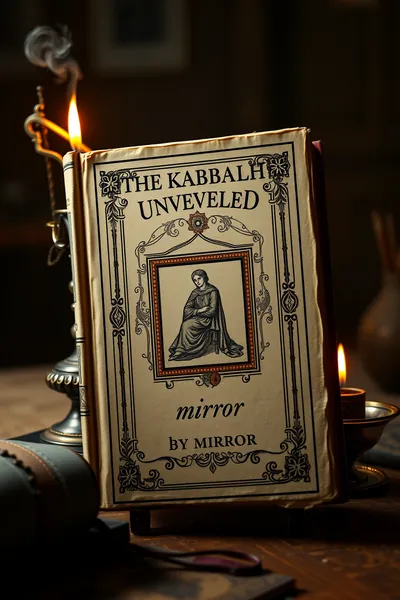
David Scott Milton's 'Kabbalah' is an essential beacon for anyone navigating the labyrinthine corridors of Jewish mysticism. Milton masterfully disentangles the complex tapestry of Kabbalistic thought, rendering its profound esoteric insights accessible without sacrificing depth. He excels in clarifying the symbolic language of the Zohar and the Sefirot, offering a framework for understanding the divine architecture of the cosmos. This work is particularly valuable for its balanced approach, appealing to both the academic who seeks rigorous exposition and the practitioner who desires practical application of these ancient teachings. A truly illuminating and indispensable resource.
📝 Description
Delve into the luminous depths of Kabbalah, a profound journey into the heart of Jewish mysticism, meticulously unveiled by David Scott Milton. This seminal work acts as a potent key, unlocking ancient secrets whispered through generations, revealing the intricate cosmic blueprint that governs existence. Milton guides the reader through the mystical pathways of the Sephirot, the Tree of Life, and the divine emanations, illuminating the hidden interplay between the mundane and the transcendent. It is a sacred exploration for the earnest seeker, the contemplative scholar, and the dedicated practitioner yearning to grasp the symbolic language of creation and connect with the Infinite. Experience the atmosphere of sacred inquiry and profound revelation as you chart a course toward spiritual understanding and gnosis. This is not merely a book; it is an invitation to participate in the eternal dialogue between the soul and the Divine.
✍️ Author
💡 Why Read This Book?
Embark on an unparalleled exploration of divine wisdom. 'Kabbalah' offers a clear yet profound entry into the esoteric heart of Jewish mysticism, revealing the symbolic language of creation. Ideal for spiritual seekers, scholars of comparative religion, and practitioners looking to deepen their understanding of the Tree of Life and its cosmic implications. Unlock hidden knowledge and elevate your spiritual consciousness.
⭐ Reader Reviews
Honest opinions from readers who have explored this book.
❓ Frequently Asked Questions
What is the central focus of Kabbalah?
The central focus of Kabbalah is to understand the nature of God, the universe, and humanity's place within the divine order, often through mystical contemplation and the study of sacred texts.
What are the Sephirot?
The Sephirot are ten divine attributes or emanations through which God, the unknowable Ein Sof, reveals Himself and interacts with creation. They form the structure of the Tree of Life.
Is this book suitable for beginners?
Yes, David Scott Milton's approach makes complex Kabbalistic concepts accessible to beginners while still offering substantial depth for those with prior knowledge.
What is the Tree of Life in Kabbalah?
The Tree of Life is a central symbolic diagram representing the structure of the universe, the path of creation, and the ascent of the soul back to its divine source.
Can Kabbalah be practiced today?
Absolutely. Kabbalistic principles and meditative practices continue to be studied and applied by individuals seeking spiritual growth and a deeper connection to the Divine.
🔮 Key Themes & Symbolism
The Tree of Life and the Sephirot
Central to Kabbalistic cosmology, the Tree of Life is a diagrammatic representation of the ten Sephirot – divine emanations or attributes – that bridge the Infinite God (Ein Sof) and the manifest universe. Each Sephirah represents a distinct aspect of divine consciousness and creative energy, and their interrelationships illustrate the process of creation, the flow of divine light, and the pathways for spiritual ascent. Understanding the Sephirot is crucial for comprehending the Kabbalistic map of reality and the nature of existence itself.
Divine Emanation and Cosmic Creation
Kabbalah posits that the universe arises not from a single act but through a continuous process of divine emanation. The Infinite, incomprehensible God projects forth divine sparks and energies, gradually condensing them into the structured reality we perceive. This concept explains the multifaceted nature of existence and the underlying unity of all things. Exploring these emanations allows for a deeper understanding of the divine will behind creation and the interconnectedness of all beings.
Symbolism and Esoteric Interpretation
Kabbalah is steeped in rich symbolism, employing letters, numbers, and mythological figures to convey profound spiritual truths that transcend literal interpretation. Ancient texts like the Zohar are encoded with layers of meaning, accessible through esoteric exegesis. This symbolic language serves as a conduit to higher realms of consciousness, allowing practitioners to engage with divine mysteries and unlock the hidden dimensions of scripture and reality.
💬 Memorable Quotes
“The light of the Infinite permeates all.”
— This quote encapsulates the Kabbalistic belief that divine presence is not separate from creation but is the very essence of all that exists.
“The Sephirot are vessels of divine wisdom.”
— This highlights the role of the ten Sephirot as channels through which divine intelligence and creative power flow into the world.
“Seek the hidden meaning within the visible.”
— A core tenet of Kabbalah, urging the reader to look beyond the surface of texts and reality for deeper, spiritual truths.
“The ascent of the soul mirrors the descent of light.”
— This suggests a reciprocal relationship between human spiritual striving and the divine creative impulse.
“Unity is the ultimate revelation.”
— Emphasizes the Kabbalistic goal of recognizing the oneness of God and all creation, transcending apparent divisions.
🌙 Esoteric Significance
Tradition
Kabbalah is the quintessential esoteric tradition within Judaism, offering a profound mystical interpretation of scripture and creation. It delves into the hidden dimensions of God, the cosmos, and the human soul, providing a framework for spiritual development and direct experience of the Divine. Its complex symbolic language and meditative practices aim to elevate consciousness and facilitate union with the Infinite.
Symbolism
Key symbols include the Tree of Life (representing divine emanations and cosmic structure), the Sephirot (ten divine attributes), Hebrew letters (seen as divine building blocks), and archetypal figures. These symbols are not mere decorations but active keys to understanding the hidden architecture of reality, the nature of divine consciousness, and the pathways of spiritual transformation.
Modern Relevance
In contemporary times, Kabbalah continues to resonate deeply, offering profound insights into consciousness, the nature of reality, and personal growth. Its emphasis on interconnectedness, divine immanence, and the pursuit of wisdom provides a powerful antidote to spiritual alienation. Modern interpreters and practitioners adapt its ancient teachings for psychological well-being, philosophical inquiry, and a deeper, more meaningful engagement with life.
👥 Who Should Read This Book
This seminal work is indispensable for a wide spectrum of readers. For the **beginner** seeking an accessible yet comprehensive introduction to Jewish mysticism, it provides a clear roadmap. **Scholars** of religion and philosophy will find a rigorous and insightful exploration of core Kabbalistic concepts. **Spiritual seekers** yearning for a deeper understanding of the divine and their place in the cosmos will discover profound wisdom and inspiration. **Practitioners** of esoteric disciplines will find invaluable keys to unlocking the symbolic language and meditative practices central to Kabbalistic attainment.
📜 Historical Context
The Kabbalah emerged primarily in medieval Provence and Spain, flourishing between the 12th and 14th centuries, a period of intense intellectual and spiritual ferment within Jewish communities. Influenced by Neoplatonism, Gnosticism, and earlier Jewish mystical traditions like Merkavah mysticism, it sought to reconcile philosophical inquiry with religious faith. The publication of the Zohar, a foundational Kabbalistic text, around the late 13th century, revolutionized the field, offering a complex allegorical interpretation of the Torah. The diaspora and periods of persecution often fueled a deep yearning for transcendent understanding, making Kabbalah a vital means of preserving Jewish identity and connecting with the divine.
📔 Journal Prompts
Reflect on the concept of divine emanation. How does it shape your understanding of creation and your own existence?
Meditate on one of the Sephirot. What qualities does it represent, and how can you integrate them into your life?
Consider the symbolic language of Kabbalah. How can you apply a deeper, symbolic interpretation to your daily experiences?
What does the Tree of Life reveal about the interconnectedness of all things, including yourself?
Explore the idea of spiritual ascent. What steps can you take to move closer to a more profound connection with the Divine?
🗂️ Glossary
Ein Sof
The Kabbalistic term for the Infinite, Unknowable God, the absolute divine essence that exists beyond all comprehension or manifestation.
Sephirot
The ten divine emanations or attributes through which God reveals Himself and creates the universe, forming the structure of the Tree of Life.
Zohar
The primary text of Kabbalah, a foundational work of Jewish mysticism offering profound allegorical interpretations of the Torah and exploring the nature of God and creation.
Tzimtzum
The Kabbalistic concept of divine contraction, a primordial withdrawal of God's light to create a 'vacant space' for creation to exist.
Kavanah
Intention or concentration, a crucial element in Jewish prayer and mystical practice, directing one's mental and spiritual focus towards God.