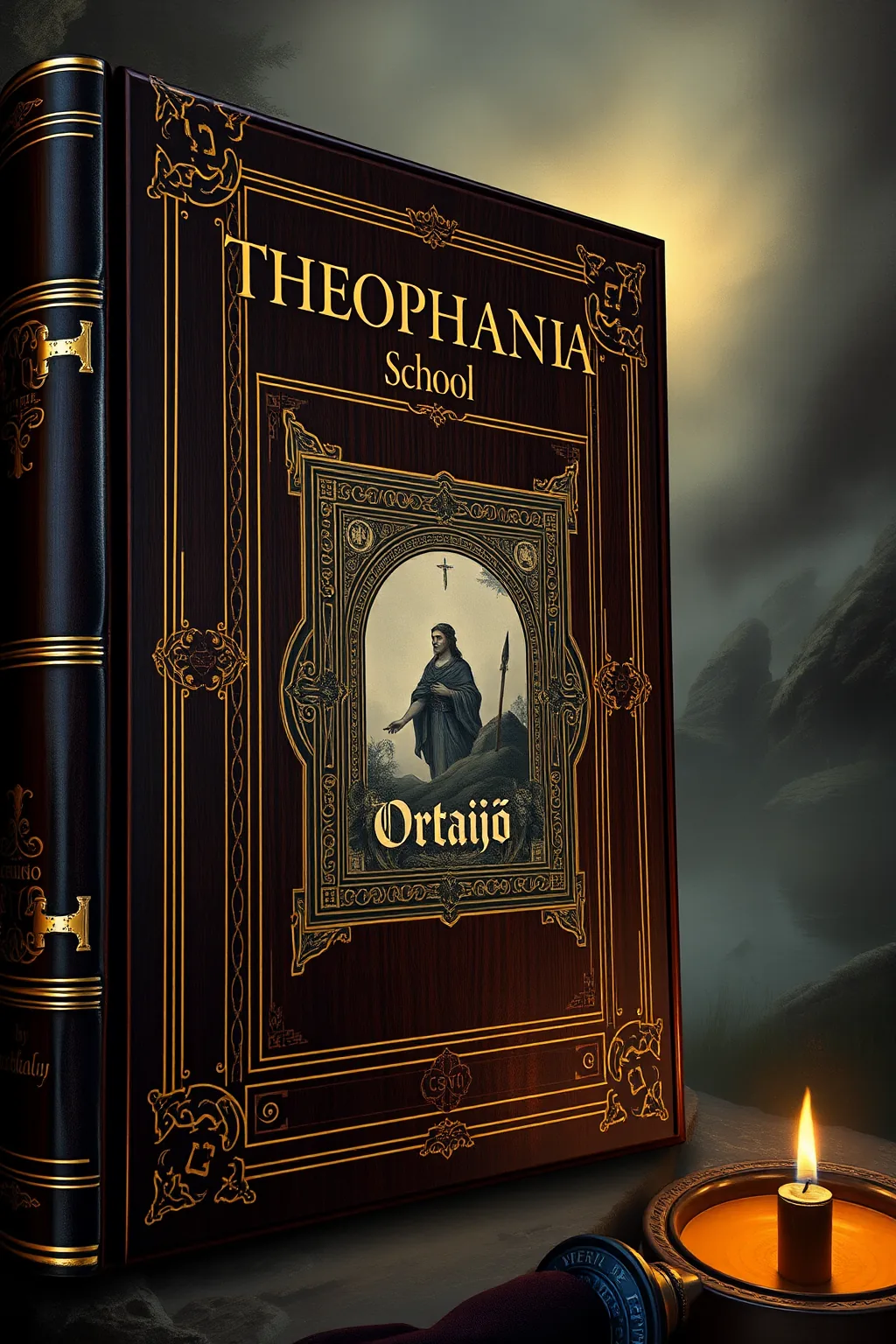
Theophaneia School
 61
61

Theophaneia School


Sophia Crane (Associate Editor) — Andrei Orlov's "Theophaneia School" is a profound and indispensable contribution to the study of Kabbalah and Jewish mysticism. Orlov's erudition shines as he deciphers complex theological concepts and unveils the symbolic language of divine manifestation. This work offers rare insights into the esoteric traditions, making accessible what was once veiled. Its strength lies in its rigorous scholarship married with an evocative exploration of the mystical experience. Ideal for advanced students of Kabbalah, comparative religion scholars, and those seeking a deeper, more intellectual engagement with Jewish esoteric thought, this book promises to illuminate the path of understanding.
📝 Description
61
Andrei Orlov's "Theophaneia School" examines Kabbalistic concepts of divine manifestation in 2011.
Andrei Orlov's "Theophaneia School" analyzes key Kabbalistic ideas concerning the divine presence. The book focuses on how God manifests in the cosmos and the symbolic language used to describe this process. Orlov discusses the soul's path toward spiritual understanding, drawing on ancient texts.
This work considers the universe as an emanation of the divine. It presents a philosophical perspective for understanding existence and humanity's role within it. The book aims to illuminate complex theological arguments and esoteric interpretations within Jewish mysticism.
This book engages with the traditions of Kabbalah, a body of Jewish mystical literature and practice. Kabbalah explores the divine nature, the creation of the universe, and the relationship between God and humanity. Orlov's work specifically addresses the concept of Theophany, the visible manifestation of God, within this mystical framework. It draws upon exegetical methods common in esoteric studies to interpret scriptural and mystical texts.
💡 Why Read This Book?
Uncover the veiled secrets of Kabbalistic cosmology and the divine emanations. "Theophaneia School" offers a profound dive into Jewish mysticism, perfect for scholars seeking rigorous analysis, practitioners yearning for deeper symbolic understanding, and seekers on a path to spiritual enlightenment. Explore the esoteric architecture of the universe and your own soul's connection to the Divine.
⭐ Reader Reviews
Honest opinions from readers who have explored this book.
❓ Frequently Asked Questions
What is the primary focus of "Theophaneia School"?
The book primarily focuses on the Kabbalistic understanding of theophany, or divine manifestation, exploring the symbolic language and esoteric doctrines through which the Divine presence is perceived and understood within Jewish mystical traditions.
Is prior knowledge of Kabbalah required?
While some familiarity with Jewish thought or mysticism is beneficial, Orlov's clear exposition makes the core concepts accessible to dedicated newcomers, though deeper engagement will be richer with foundational knowledge.
What kind of symbolism is discussed?
The book delves into a rich array of symbolism, including the Sefirot, divine names, celestial hierarchies, and the symbolic representation of the divine light and its interaction with the created realm.
Who is Andrei Orlov?
Andrei Orlov is a distinguished scholar specializing in Jewish mysticism, Kabbalah, and the history of esotericism, known for his meticulous research and insightful interpretations.
What does 'Theophaneia' mean in this context?
'Theophaneia' refers to the manifestation of God or the divine. In this work, it specifically pertains to the ways in which the divine essence is understood to reveal itself in the cosmos and through mystical experience within the Kabbalistic framework.
🔮 Key Themes & Symbolism
The Divine Emanation and Manifestation
This central theme explores the Kabbalistic concept of Ein Sof (the Infinite) and its subsequent emanation into the structured reality of the cosmos. It details the process by which the unmanifest divine becomes manifest, utilizing the intricate symbolism of the Sefirot as the divine attributes and channels through which God interacts with creation. The book illuminates how this understanding forms the bedrock of Jewish mystical thought, offering a framework for perceiving the divine immanence within all existence and the pathways for human connection.
Esoteric Symbolism and Hermeneutics
Orlov meticulously deciphers the profound and often multi-layered symbolism inherent in Kabbalistic texts. This theme examines the hermeneutical approaches employed by mystics to unlock hidden meanings within scripture and ritual, revealing how abstract theological concepts are translated into visual and conceptual symbols. From the mystical significance of Hebrew letters to the archetypal imagery of celestial realms, the book demonstrates how this symbolic language serves as a bridge between the human and the divine, facilitating a deeper, experiential understanding of spiritual realities.
The Ascent of the Soul and Gnosis
A significant thread woven throughout the work is the concept of the human soul's journey towards spiritual realization and union with the Divine. The book examines the Kabbalistic understanding of the soul's structure and its potential for ascent through purification, contemplation, and mystical practice. It highlights the pursuit of gnosis—direct, intuitive knowledge of the divine—as a paramount goal, outlining the stages and challenges involved in this transformative process, and the ultimate aim of achieving a state of divine awareness.
💬 Memorable Quotes
Direct passages from the work, attributed to the author.
“The veil is thin where the heart is pure.”
— This aphorism suggests that spiritual perception, the ability to perceive divine realities, is directly proportional to one's inner purity and sincerity of intention.
“Every letter is a vessel of divine light.”
— This highlights the Kabbalistic reverence for the Hebrew alphabet, viewing each letter not just as a linguistic symbol but as a conduit for divine energy and meaning.
“The cosmos is a mirror reflecting the Divine.”
— This speaks to the immanence of God in creation, suggesting that the universe itself holds reflections and clues to the nature of the Divine for those with the eyes to see.
“Ascent is not distance, but depth.”
— This suggests that spiritual progress is achieved through inner exploration and deepening of consciousness, rather than through physical or geographical movement.
“Silence is the language of the Infinite.”
— This points to the ineffable nature of the ultimate Divine, suggesting that true understanding often transcends verbal expression and is found in contemplative stillness.
🌙 Esoteric Significance
Tradition
This work is deeply rooted in the Kabbalistic tradition, a central pillar of Jewish mysticism. It explores the esoteric dimensions of Judaism, focusing on the hidden meanings within scripture, the divine emanations (Sefirot), angelology, and the nature of the divine presence in the cosmos. It offers insights into practices and philosophies aimed at achieving a direct experience of the Divine, a core tenet of Kabbalistic pursuit.
Symbolism
The symbolism explored in "Theophaneia School" is vast and intricate, encompassing the Tree of Life, divine names, the interplay of masculine and feminine divine principles, and the cosmic significance of Hebrew letters and words. These symbols are not mere decorative elements but are understood as vital keys to unlocking the structure of reality and the pathways of spiritual ascent, serving as mnemonic devices and conceptual maps for the mystic's journey.
Modern Relevance
In an era often characterized by existential questioning and a search for deeper meaning, the esoteric teachings within "Theophaneia School" offer profound relevance. The Kabbalistic exploration of interconnectedness, divine immanence, and the potential for human transformation speaks to contemporary spiritual seekers. The work provides a sophisticated framework for understanding consciousness, the nature of reality, and the individual's role within a divinely ordered universe, offering tools for personal growth and spiritual insight.
👥 Who Should Read This Book
This book is essential for serious students of Kabbalah and Jewish mysticism, offering advanced insights into complex theological and symbolic systems. Scholars of comparative religion and esoteric traditions will find Orlov's meticulous scholarship invaluable. Spiritual seekers yearning for a deeper, intellectual engagement with the mysteries of the Divine and the universe will find it profoundly informative. Practitioners of contemplative traditions may also benefit from its exploration of consciousness, symbolism, and the pursuit of divine knowledge.
📜 Historical Context
"Theophaneia School" emerges from a rich intellectual and spiritual heritage, drawing heavily upon the medieval Kabbalistic renaissance in Provence and Spain. This period, roughly from the 12th to the 15th centuries, witnessed the codification of major Kabbalistic texts like the Zohar and the development of complex theological systems that sought to reconcile Jewish law with mystical experience. The intellectual climate was one of profound engagement with Neoplatonism, Gnosticism, and scriptural exegesis, all of which profoundly influenced the development of Kabbalistic thought. The work situates itself within this lineage, exploring concepts that were debated and refined by luminaries such as Moses de León, Isaac Luria, and Abraham Abulafia, reflecting a continuous tradition of esoteric inquiry into the nature of God, creation, and the human soul's relationship to the divine.
📔 Journal Prompts
Reflect on the concept of divine manifestation: how do you perceive God's presence in your daily life?
Consider a symbol from the book that speaks to you. How does its meaning relate to your personal journey?
Explore the idea of 'ascent' as 'depth.' What does this mean for your inner growth?
Meditate on the idea that 'every letter is a vessel of divine light.' How can you approach language and text with this reverence?
What does the silence between words or thoughts reveal about the ineffable?
🗂️ Glossary
Ein Sof
The Kabbalistic term for the Infinite, the primordial, unknowable essence of God that exists beyond all comprehension and description before any manifestation occurs.
Sefirot
Ten divine emanations or attributes through which God reveals Himself and interacts with creation, often depicted as a mystical Tree of Life.
Theophany
The manifestation of God or a divine being in physical form, or the apprehension of the divine presence in the created world.
Gnosis
Spiritual knowledge or insight, particularly the intuitive, direct apprehension of divine truth, often a central goal in mystical traditions.
Kabbalah
A system of Jewish mysticism that seeks to understand the nature of God and the universe through esoteric interpretation of scripture and tradition, emphasizing divine emanations and the hidden structure of reality.
This book appears in 1 collection
🔮 Readers Also Liked
Browse all →








From the “Kabbalah” Collection
View all →







More Free Kabbalah & Jewish Mysticism Books
View all →