Saadia Gaon: Selected Essays

 61
61

Saadia Gaon: Selected Essays

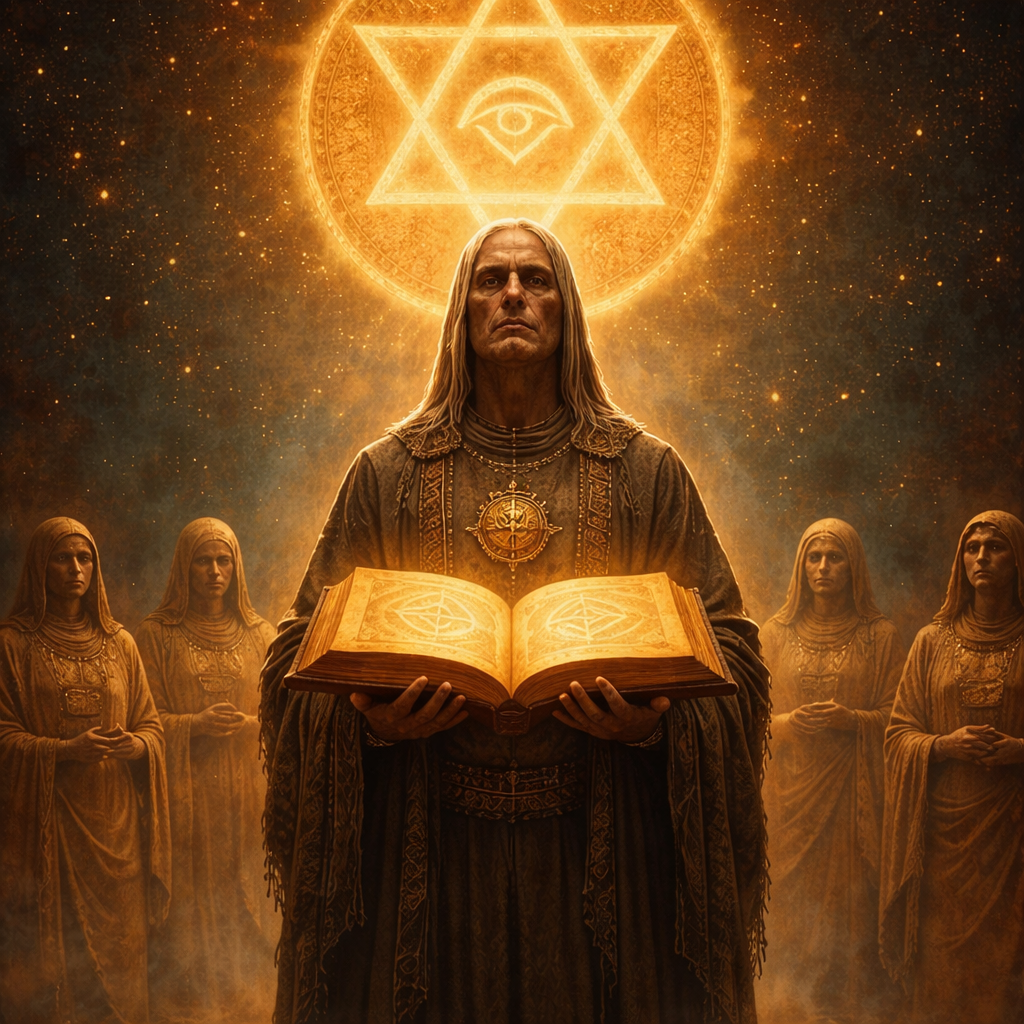

Steven Katz's 'Saadia Gaon: Selected Essays' is a luminous beacon for students of Jewish mysticism and philosophy. Katz possesses a rare gift for rendering complex theological arguments accessible without sacrificing their esoteric depth. He expertly navigates Gaon's philosophical innovations, revealing the Neoplatonic currents and symbolic interpretations that underpin his thought. This collection offers a compelling exposition of Gaon's unique synthesis of reason and revelation, providing invaluable insights into the evolution of Kabbalistic antecedents. For scholars and practitioners alike, these essays serve as a crucial bridge to understanding the foundational texts and concepts of Jewish esoteric traditions. A truly essential work.
📝 Description
61
Steven Katz's essays illuminate Saadia Gaon's philosophical and theological innovations, including his Neoplatonic influences.
This collection presents Steven Katz's essays on Saadia Gaon, a significant figure in medieval Jewish thought. Katz examines Gaon's philosophical and theological contributions, particularly his engagement with Neoplatonic philosophy and his efforts to reconcile religious faith with rational inquiry. The essays uncover esoteric elements within Gaon's work that often remain obscured by traditional scholarly interpretations.
Readers will find detailed discussions on Gaon's views regarding divine attributes, the nature of creation, and the spiritual journey of the soul. Katz also addresses the esoteric interpretations of scripture that Gaon employed. The collection provides a close look at an intellectual framework that influenced subsequent centuries of Jewish spiritual and philosophical development. It is written for those interested in understanding the deeper metaphysical dimensions of early Jewish thought.
Saadia Gaon's work emerged during a period when Jewish thought was interacting with broader philosophical currents, including Neoplatonism. This engagement allowed for the development of more complex theological and metaphysical systems within Judaism. Gaon's writings, as analyzed by Katz, reveal an interest in concepts such as emanation and the soul's relationship to the divine, which are common features in esoteric traditions. These ideas represent a departure from purely literal readings of scripture, incorporating symbolic and mystical layers to understand the divine and the cosmos.
💡 Why Read This Book?
Uncover the hidden esoteric dimensions of Saadia Gaon's revolutionary thought. Steven Katz offers a scholarly yet accessible exploration of mystical concepts and symbolic interpretations within Gaon's philosophy. Ideal for students of Jewish mysticism, scholars of ancient philosophy, and anyone seeking to understand the roots of esoteric traditions. This book provides a profound intellectual journey into the heart of medieval Jewish metaphysical inquiry.
⭐ Reader Reviews
Honest opinions from readers who have explored this book.
❓ Frequently Asked Questions
What is the primary focus of Steven Katz's essays on Saadia Gaon?
The essays primarily focus on the philosophical and theological innovations of Saadia Gaon, with a particular emphasis on their esoteric, mystical, and symbolic dimensions, and their Neoplatonic influences.
Is prior knowledge of Jewish philosophy required to understand this book?
While some familiarity with philosophical concepts is beneficial, Katz's clear prose and insightful explanations make the material accessible to dedicated newcomers interested in the esoteric aspects of Jewish thought.
What makes Saadia Gaon significant in the context of Jewish mysticism?
Gaon is significant for his early attempts to systematize Jewish theology and his engagement with philosophical ideas, which laid groundwork for later mystical developments and provided a framework for interpreting scripture symbolically.
How do these essays connect Saadia Gaon to Neoplatonism?
Katz meticulously traces the influence of Neoplatonic concepts, such as emanation and the hierarchy of being, within Gaon's understanding of God, creation, and the human soul, revealing a subtle but profound integration.
What kind of reader would most benefit from this collection?
This collection is ideal for scholars of religion and philosophy, students of Kabbalah and Jewish mysticism, and spiritual seekers interested in the intellectual and esoteric foundations of Jewish tradition.
🔮 Key Themes & Symbolism
Neoplatonic Influx in Gaonian Thought
This theme explores the profound yet often subtle integration of Neoplatonic philosophical concepts within Saadia Gaon's theological framework. Katz meticulously dissects how ideas of emanation, the One, and the hierarchy of being influenced Gaon's understanding of the divine, creation, and the nature of the soul. It reveals Gaon not just as a rationalist philosopher but as a thinker deeply engaged with abstract, mystical cosmologies that were circulating in the intellectual milieu of his time.
The Symbolic Interpretation of Scripture
Katz highlights Gaon's sophisticated approach to scriptural exegesis, emphasizing his use of allegory and symbolic interpretation to uncover deeper, esoteric meanings beyond the literal text. This theme studies how Gaon viewed the Torah as a repository of divine secrets, requiring a contemplative and philosophical lens to fully appreciate its profound messages. It connects Gaon’s methods to later mystical traditions that sought hidden truths within the sacred texts.
The Nature of Divine Attributes and Creation
This section examines Gaon's intricate discussions on the nature of God's attributes and the process of creation. Katz illuminates Gaon's efforts to reconcile the transcendence of the divine with its immanence in the created world, often employing symbolic language to describe the ineffable. The essays explore Gaon's cosmological theories and his views on how the universe manifests from the divine essence, offering insights into early Jewish metaphysical speculation.
💬 Memorable Quotes
Direct passages from the work, attributed to the author.
“The wisdom of Gaon whispers from the veiled chambers of thought.”
— This evokes the hidden, profound nature of Gaon's intellectual contributions, suggesting that his deepest insights are not immediately apparent but require dedicated exploration to uncover.
“Reason and revelation dance in his philosophical synthesis.”
— Highlights Gaon's remarkable ability to integrate logical inquiry with divine scripture, creating a harmonious and profound theological system.
“Each essay, a key to forgotten corridors of the soul.”
— Suggests that reading Katz's analysis of Gaon offers a pathway to understanding deeper spiritual truths and personal introspection.
“Symbolism is the language of the divine intellect.”
— Emphasizes Gaon's belief that symbolic representation is crucial for conveying the ineffable nature of God and the cosmos.
“A bridge to the luminous origins of esoteric thought.”
— Positions Gaon's work, as interpreted by Katz, as foundational and useful for understanding the development of mystical traditions.
🌙 Esoteric Significance
Tradition
These essays illuminate the esoteric underpinnings of Saadia Gaon's thought, revealing him as a crucial precursor to the development of Kabbalah and Jewish mysticism. While not a Kabbalist in the later sense, Gaon's philosophical framework, deeply influenced by Neoplatonism, introduced concepts of emanation, divine intermediaries, and the symbolic interpretation of scripture that became foundational elements for subsequent esoteric traditions seeking to understand the divine nature and cosmic order.
Symbolism
Gaon's work is rich with symbolic meaning, particularly in his discussions of creation and divine attributes. He employed symbolic language to describe abstract concepts, such as the 'Intellect' and the 'Soul of the World,' echoing Neoplatonic cosmology. The essays explore how Gaon saw the physical world as a reflection of divine realities and how scripture itself contains layers of symbolic meaning accessible through philosophical inquiry, prefiguring later Kabbalistic methods of textual interpretation.
Modern Relevance
In an age often characterized by fragmentation, Gaon's attempt to synthesize reason and faith, philosophy and revelation, offers a powerful model for contemporary seekers. His exploration of the soul's journey, the nature of consciousness, and the hidden order of the universe resonates deeply with modern spiritual and philosophical inquiries. Understanding Gaon through Katz's lens provides essential context for appreciating the historical trajectory of esoteric thought and its enduring relevance to the human quest for meaning.
👥 Who Should Read This Book
This collection is essential for scholars specializing in Jewish philosophy, theology, and the history of Kabbalah, offering a nuanced understanding of an important figure. Students of comparative religion and philosophy will find it useful for its exploration of inter-faith intellectual exchange and Neoplatonic influences. Spiritual seekers and practitioners of Jewish mysticism will gain useful insights into the roots of their traditions, understanding the intellectual foundations that paved the way for later Kabbalistic concepts. Even those new to these subjects but possessing intellectual curiosity will find the essays accessible and deeply rewarding.
📜 Historical Context
Saadia Gaon (882/892 – 942 CE) lived during an important era in Jewish history, known as the Geonic period, a time when the centers of Jewish learning in Babylonia flourished. This was a period of significant intellectual ferment, marked by the rise of Arabic philosophy and the interactions between Jewish scholars and their intellectual environment. Gaon's work, particularly his 'Book of Beliefs and Opinions,' emerged in this context, seeking to provide a rational and philosophical foundation for Jewish faith in response to challenges from Karaites and other intellectual currents. His synthesis of biblical tradition with Hellenistic philosophy, particularly Neoplatonism, was groundbreaking and profoundly influenced subsequent Jewish thought, laying crucial groundwork for the development of Kabbalah and medieval Jewish mysticism.
📔 Journal Prompts
How does Saadia Gaon's concept of divine attributes challenge or align with your personal understanding of God?
Reflect on a moment in your life where you experienced a 'symbolic interpretation' of an event or text that revealed deeper meaning.
Consider the tension between faith and reason in your own life. How might Gaon's approach offer a framework for navigating this?
Imagine you are a student of Saadia Gaon. What questions would you pose to him about the nature of the soul's ascent?
How can the idea of the physical world as a reflection of divine realities influence your perception of everyday experiences?
🗂️ Glossary
Neoplatonism
A philosophical system originating in the 3rd century CE, heavily influenced by Plato, emphasizing a transcendent, unknowable 'One' from which all reality emanates in a hierarchical structure.
Emanation
In Neoplatonic philosophy, the process by which reality flows or 'emanates' from a divine source, often described as a series of descending levels or hypostases.
Theology
The study of the nature of God and religious belief; the systematic study of the nature of God and, more generally, of the supernatural.
Esoteric
Intended for or likely to be understood by only a small number of people with a specialized knowledge or interest; relating to the occult or mystical.
Exegesis
Critical explanation or interpretation of a text, especially of scripture; the process of drawing out the meaning of a text.
This book appears in 1 collection
🔮 Readers Also Liked
Browse all →









More by Steven Katz
All books →



From the “Kabbalah” Collection
View all →









More Free Kabbalah & Jewish Mysticism Books
View all →