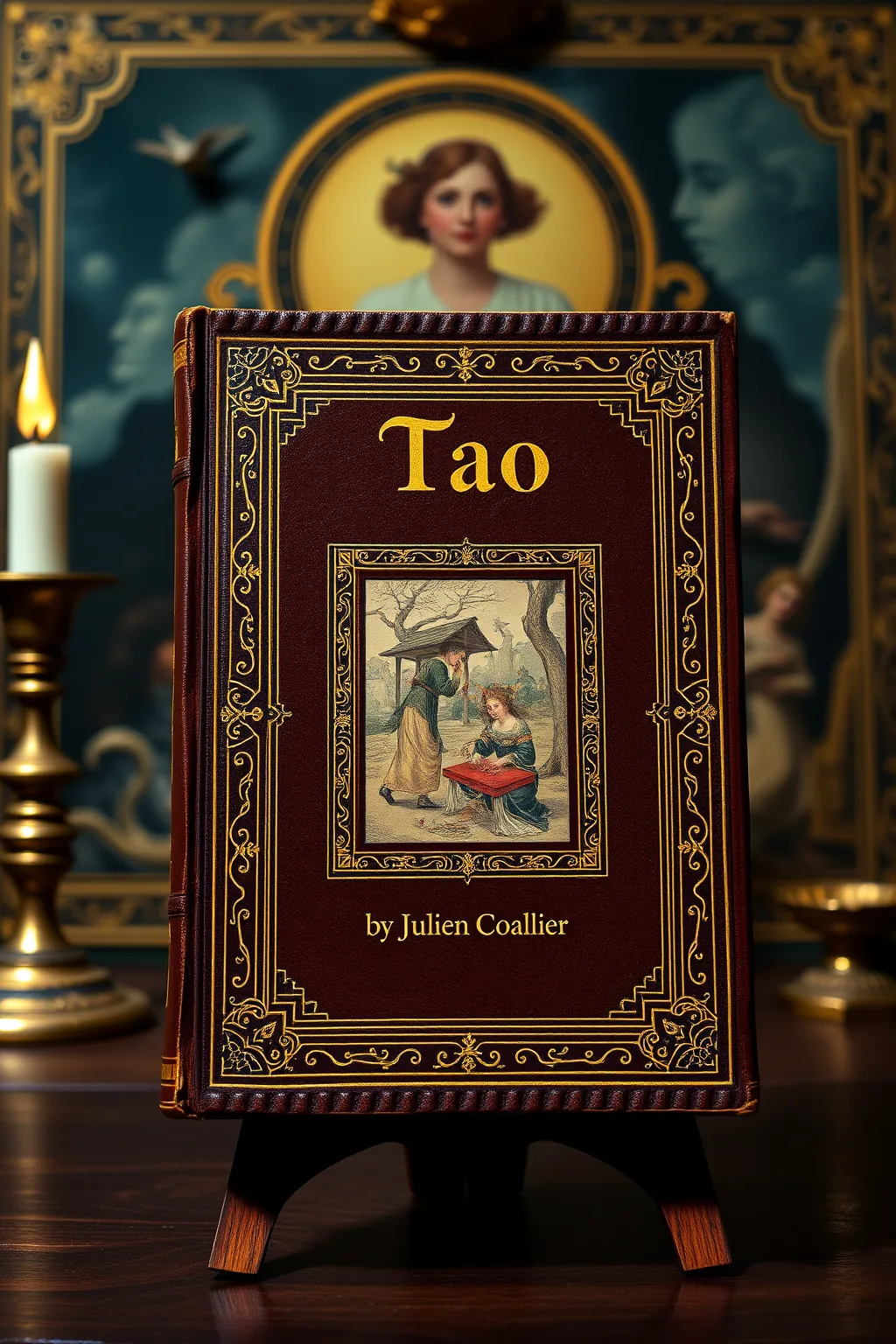
Tao
 61
61

Tao

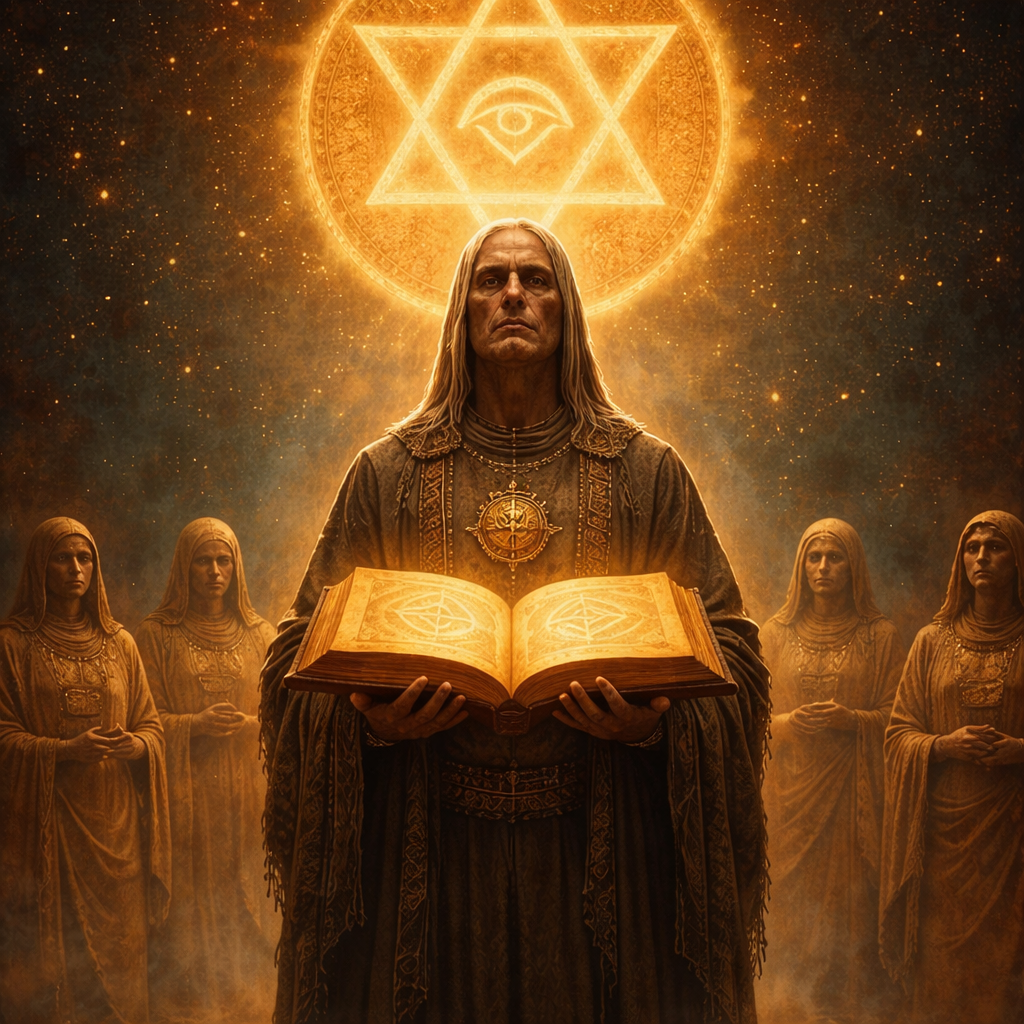

Isolde Whitaker, Sacred Texts Editor — Julien Coallier's "Tao" is a remarkable exposition of Kabbalistic principles, presented with clarity and profound esoteric insight. Coallier possesses a rare gift for articulating complex mystical concepts, making the dense symbolism of Jewish mysticism accessible without sacrificing its depth. The book excels in its exploration of the interconnectedness of spiritual realms and the practical application of these ancient teachings. It serves as an invaluable resource for those seeking a deeper understanding of the soul's journey and the hidden order of the universe. "Tao" is a compelling invitation to engage with the profound wisdom of the Kabbalah, particularly for students and practitioners of esoteric traditions.
📝 Description
61
Julien Coallier's 'Tao' (2023) examines Kabbalistic thought through the lens of universal symbolism.
Published in 2023, Julien Coallier's 'Tao' focuses on the mystical aspects of Kabbalah. The book examines correspondences and ancient symbols within Jewish mysticism, linking them to broader spiritual concepts. Coallier presents these ideas in a way that encourages contemplation on the structure of existence and the connections between all things.
The work is written for those who seriously study contemplative traditions. It aims to foster introspection and a deeper awareness of subtle energies. The author draws parallels between ancient Hebrew wisdom and the perceived cosmic order, suggesting pathways to spiritual understanding.
This book sits within the tradition of Kabbalistic studies, a body of esoteric Jewish mysticism. It engages with themes of divine emanations, symbolic interpretation of scripture, and the hidden order of the universe. Coallier's approach appears to connect these specific Jewish mystical concepts to more general ideas about cosmic flow and interconnectedness, a common practice in comparative esoteric literature.
💡 Why Read This Book?
Uncover the veiled secrets of Kabbalah and its profound connection to universal mystical currents. "Tao" offers a unique lens through which to view ancient Jewish mysticism, revealing its practical applications for modern spiritual seekers. Ideal for those drawn to esoteric studies, philosophical inquiry, and the pursuit of hidden knowledge, this book promises to deepen your understanding of the cosmos and your place within it.
⭐ Reader Reviews
Honest opinions from readers who have explored this book.
❓ Frequently Asked Questions
What is the primary focus of "Tao"?
"Tao" primarily focuses on the esoteric and mystical dimensions of Kabbalah and Jewish mysticism, exploring its symbolism, philosophy, and spiritual applications.
Is this book suitable for beginners in mysticism?
While it delves into complex subjects, Coallier's clear prose makes "Tao" accessible to dedicated beginners, provided they approach it with an open mind and a desire for deep learning.
What are the key esoteric concepts explored?
Key concepts include the Tree of Life, divine emanations, gematria, the nature of the soul, and the interconnectedness of the macrocosm and microcosm.
How does this book relate to other mystical traditions?
The book often draws parallels and highlights universal themes shared with other esoteric traditions, offering a broader perspective on spiritual wisdom.
Can "Tao" be used for practical spiritual development?
Yes, the book aims to provide not just theoretical knowledge but also practical insights and contemplative exercises for personal spiritual growth and transformation.
🔮 Key Themes & Symbolism
The Kabbalistic Tree of Life
The Tree of Life is presented not merely as a diagram, but as a dynamic blueprint of creation and consciousness. Coallier meticulously unpacks the ten Sephiroth, informative their divine attributes, symbolic meanings, and interconnected pathways. This section examines the energetic flow between these divine emanations, offering a profound understanding of the divine structure and its manifestation in the material world. It's a guide to working through the celestial realms and understanding the archetypal forces at play in both the cosmos and the human soul.
Divine Emanations and Cosmic Order
This theme explores the concept of divine emanation, the process by which the Infinite manifests into the finite universe. Coallier guides the reader through the intricate layers of creation, revealing how the divine essence permeates all existence. The focus is on understanding the underlying order and harmony that governs the cosmos, emphasizing the interconnectedness of all beings and phenomena. It’s a contemplation of the divine will and its unfolding through the grand set of reality, offering a framework for perceiving the sacred in the mundane.
Symbolism and Esoteric Interpretation
"Tao" is rich with esoteric symbolism, drawing from Hebrew letters, gematria, and ancient mystical narratives. Coallier deciphers these symbols, revealing their hidden meanings and their role in unlocking deeper spiritual truths. The text encourages a symbolic way of reading reality, urging the reader to look beyond the literal to perceive the profound messages embedded within sacred texts and the natural world. This exploration of symbolism serves as a key to accessing a higher order of understanding and a more profound connection to the divine.
💬 Memorable Quotes
Direct passages from the work, attributed to the author.
“Within the quietude of the soul lies the echo of creation's first breath.”
— This suggests that inner contemplation and introspection are pathways to connecting with the fundamental essence of existence and the primordial divine energy.
“Each letter of the sacred tongue is a key to unlocking a hidden chamber of the cosmos.”
— Emphasizes the profound power and mystical significance attributed to the Hebrew alphabet and language within Kabbalistic tradition.
“The path of wisdom is not found in accumulation, but in the elegant shedding of illusion.”
— This points to the importance of discernment and spiritual discipline, suggesting that true understanding comes from releasing superficial perceptions.
“To know the Tao is to understand the dance between the hidden and the manifest.”
— Connects the concept of the Tao (the Way) with Kabbalistic principles, framing spiritual understanding as the recognition of the interplay between the unseen divine and its worldly expression.
💡 Key Ideas
Editorial paraphrase of the work's core concepts — not direct quotes.
The universe is a whisper of the divine, encoded in the language of symbols.
This quote highlights the book's central thesis: that reality itself is a symbolic manifestation of a higher divine source, requiring esoteric interpretation to understand.
🌙 Esoteric Significance
Tradition
"Tao" is deeply embedded within the esoteric tradition of Kabbalah, specifically focusing on its mystical and contemplative aspects. It explores the Neoplatonic influences and Hermetic principles that have historically intertwined with Jewish mysticism, offering a holistic view of spiritual cosmology. The work examines the theoretical and practical dimensions of Kabbalistic ascent, emphasizing the soul's journey and its relationship with the divine emanations.
Symbolism
The book unpacks a complex array of Kabbalistic symbols, including the Tree of Life, Hebrew letters, numerical values (gematria), and archetypal imagery. Each symbol is treated as a key to understanding divine principles and the architecture of creation. The significance lies in revealing how these symbols are not merely decorative but are active conduits of spiritual energy and knowledge, providing a language for comprehending the ineffable.
Modern Relevance
In an age often characterized by materialism and spiritual seeking, "Tao" offers a profound anchor to ancient wisdom. Its emphasis on interconnectedness, inner transformation, and the search for meaning resonates deeply with contemporary individuals. The book provides tools for working through the complexities of modern life by offering a framework for understanding one's place in the cosmos and cultivating a more profound spiritual awareness and purpose.
👥 Who Should Read This Book
This profound exploration of Kabbalah is essential for serious students of Jewish mysticism and comparative esotericism. Scholars will find rigorous analysis and insightful interpretations, while practitioners of meditation and spiritual disciplines will discover invaluable guidance for deepening their contemplative work. Seekers yearning for a more profound understanding of the universe, its origins, and their own spiritual path will be richly rewarded. Beginners with a genuine curiosity for hidden knowledge and a willingness to engage with complex ideas will also find "Tao" an informative, albeit challenging, introduction to a vast and ancient wisdom tradition.
📜 Historical Context
Julien Coallier's "Tao" emerges from a rich tradition of Kabbalistic scholarship and esoteric interpretation that has flourished for centuries. Rooted in medieval Jewish mysticism, Kabbalah experienced significant revivals and reinterpretations throughout history, particularly during the Renaissance and Enlightenment periods, influencing figures across philosophical and mystical circles. The late 19th and early 20th centuries saw a surge in Western esoteric interest, where Kabbalistic texts and concepts were often synthesized with other mystical traditions. Coallier's work can be seen as contributing to this ongoing exploration, offering a contemporary perspective that bridges ancient wisdom with modern spiritual inquiry. The book reflects a lineage of thinkers who sought to decode the divine blueprint of the universe through symbolic language and contemplative practice, making its themes relevant to both historical inquiry and contemporary spiritual seeking.
📔 Journal Prompts
Reflect on a personal symbol that holds deep meaning for you. How might its 'esoteric' interpretation connect to broader universal principles?
Consider the concept of divine emanation. In what areas of your life do you perceive the subtle influence of a higher order?
How does the idea of 'shedding illusion' apply to your current life circumstances? What illusions might you be holding onto?
Explore the interconnectedness of your own thoughts, emotions, and actions with the wider world. How does this awareness influence your perspective?
If the universe is a 'whisper of the divine,' what 'language of symbols' might you be learning to understand in your daily life?
🗂️ Glossary
Sephirah (plural: Sephirot)
The ten divine emanations or attributes through which the Infinite (Ein Sof) reveals itself and creates the universe, forming the structure of the Kabbalistic Tree of Life.
Ein Sof
The Kabbalistic term for the 'Infinite' or 'Without End,' referring to God in His absolute, unknowable essence before any manifestation or emanation.
Gematria
A system of Jewish mysticism that assigns numerical values to Hebrew letters, used to interpret the deeper meanings of words and phrases in sacred texts and to find hidden connections.
Tikkun
The concept of 'rectification' or 'correction,' referring to the spiritual work of repairing the world and restoring divine harmony through human actions and spiritual practice.
Malkuth
The tenth and final Sephirah on the Tree of Life, representing the Kingdom, the physical world, and the manifest reality where divine energy is most concentrated and accessible.
This book appears in 1 collection
🔮 Readers Also Liked
Browse all →







More by Julien Coallier
All books →





From the “Kabbalah” Collection
View all →







More Free Kabbalah & Jewish Mysticism Books
View all →