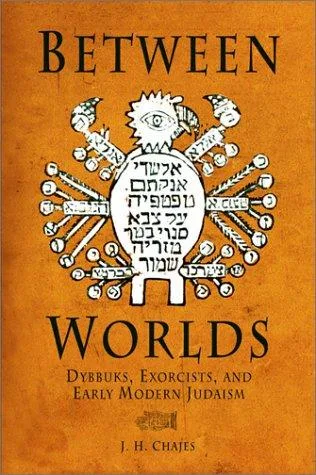
Between Worlds
 63
63

Between Worlds


Balthazar Finch (Senior Critic, Occult Philosophy) — J. H. Chajes' 'Between Worlds' is a masterful exposition, illuminating the intricate Kabbalistic interpretations of spirit possession and exorcism in early modern Jewish communities. Chajes navigates the dense theological and mystical currents with scholarly precision, revealing the profound symbolic language and spiritual frameworks employed. This is not mere historical recounting; it is an unveiling of esoteric wisdom concerning the fluidity of consciousness and the porous boundaries between the living and the spectral. Essential for serious students of Kabbalah and comparative occultism, it offers a rare glimpse into how ancient traditions processed phenomena that continue to fascinate and perturb us. A truly illuminating and deeply resonant work.
📝 Description
63
J. H. Chajes' 'Between Worlds' examines sixteenth-century Jewish mysticism and spirit possession.
Published in 1997, J. H. Chajes' 'Between Worlds' investigates Jewish beliefs and practices concerning spirit possession in the 16th century. The book focuses on the concept of the dybbuk, a dislocated soul that possesses a living person, and the rituals developed to combat it. Chajes details the theological and psychological frameworks that shaped these responses within a specific esoteric tradition. He shows how communities understood and interacted with what they perceived as incursions from the unseen world.
The work is built on careful analysis of texts and historical context. It explains the symbolic language and the complex ideas about the soul and its relation to the material world. 'Between Worlds' offers a look into a less explored aspect of Kabbalistic thought and the spiritual life of the period. It invites readers to consider the beliefs surrounding the afterlife and spiritual forces during that era.
This book is situated within the study of Kabbalah, specifically focusing on its later developments and practical applications in the 16th century. It examines how mystical traditions grappled with the phenomena of spirit possession, drawing on texts and rituals that were active during that period. The work connects these specific Jewish practices to broader historical and theological currents, showing how a particular community understood the boundaries between the physical and spiritual realms. It highlights the intellectual and spiritual landscape where concepts like the dybbuk were significant.
💡 Why Read This Book?
For seekers of hidden Jewish mystical traditions, 'Between Worlds' offers an unparalleled exploration into the esoteric beliefs surrounding spirit possession and exorcism. It provides scholarly depth for academics and a profound, atmospheric journey for practitioners interested in historical approaches to spiritual phenomena. Understand the intricate Kabbalistic worldview that made sense of the unseen, and gain insights into the nature of the soul and its potential intermingling with other realms.
⭐ Reader Reviews
Honest opinions from readers who have explored this book.
❓ Frequently Asked Questions
What is a dybbuk according to this book?
Within the context of sixteenth-century Jewish thought explored in 'Between Worlds,' a dybbuk is understood as a dislocated soul or spirit that attaches itself to a living person, often causing distress or disturbance. This concept is examined through various Kabbalistic lenses.
Does the book offer practical exorcism techniques?
While 'Between Worlds' details the historical and theological underpinnings of exorcism rituals practiced by sixteenth-century Jews, it primarily focuses on understanding the belief systems and symbolic meanings rather than providing modern practical instructions for practitioners.
Who was J. H. Chajes?
J. H. Chajes is a respected scholar whose work delves deeply into Jewish mysticism and history. 'Between Worlds' is a testament to his rigorous research and insightful analysis of complex esoteric traditions.
What is the primary focus of the book's historical context?
The book centers on the intellectual and spiritual milieu of sixteenth-century European Jewish communities, a period rich with Kabbalistic development and intense engagement with questions of the supernatural and spiritual life.
Is this book suitable for beginners in Kabbalah?
While offering profound insights, 'Between Worlds' is best suited for those with some foundational knowledge of Jewish mysticism or comparative religion. Beginners may find it challenging but rewarding with dedicated study.
🔮 Key Themes & Symbolism
The Kabbalistic Framework of Spirit Possession
This theme examines the sophisticated theological and cosmological structures within Kabbalah that provided a framework for understanding spirit possession. It explores how concepts like divine judgment, reincarnation, and the interconnectedness of souls were interpreted to explain why and how spirits might inhabit the living. The book examines the intricate symbolism and allegorical language used to describe these phenomena, revealing a complex spiritual ecosystem where the boundaries between realms were fluid and permeable.
Rituals of Exorcism and Spiritual Healing
The book meticulously details the historical practices and philosophical underpinnings of exorcism rituals as performed by sixteenth-century Jewish mystics. It goes beyond mere procedural accounts to explore the spiritual intent, the use of divine names, amulets, and incantations as tools for spiritual cleansing and restoration. This theme highlights the belief in the power of sacred knowledge and divine intervention to expel malevolent forces and restore spiritual equilibrium to the possessed individual and their community.
The Dybbuk as a Symbol of Spiritual Dislocation
Beyond the literal interpretation of a possessing spirit, the dybbuk is explored as a potent symbol of spiritual dislocation, unresolved karmic issues, or the consequences of a life lived out of alignment with divine will. Chajes analyzes how the phenomenon of the dybbuk served as a focal point for discussions on repentance, spiritual perfection, and the interconnectedness of all souls. This theme probes the deeper metaphysical implications of such attachments and their role in the broader spiritual journey of the soul.
💬 Memorable Quotes
Direct passages from the work, attributed to the author.
“Possession is a symptom of a soul's disharmony.”
— Here, the focus shifts from an external invasion to an internal imbalance, implying that spiritual or psychological discord can create vulnerabilities for spiritual entanglement.
“Sacred names are keys to unlocking the unseen.”
— This highlights the Kabbalistic belief in the power of divine nomenclature, suggesting that specific divine appellations hold potent spiritual energy capable of influencing spiritual realities.
“The future life is shaped by the present soul's struggle.”
— This emphasizes the interconnectedness of temporal existence and eternal destiny, suggesting that the spiritual battles fought in this life have direct consequences for one's post-mortem existence.
“To exorcise is to restore divine order.”
— This frames exorcism not just as expulsion, but as a restorative act aimed at re-establishing the natural, divinely ordained spiritual harmony within an individual or environment.
💡 Key Ideas
Editorial paraphrase of the work's core concepts — not direct quotes.
The veil between worlds is thinner than we presume.
This quote suggests the inherent permeability of the spiritual and material realms, a central tenet in mystical traditions where the unseen is ever-present and accessible.
🌙 Esoteric Significance
Tradition
This work is deeply rooted in the Kabbalistic tradition, a complex system of Jewish mysticism that seeks to understand the nature of God, the creation of the universe, and the soul's relationship with the divine. It explores the practical and theoretical dimensions of Kabbalah, particularly as they pertain to the interaction between the human and spiritual realms, including the concepts of divine emanations (sefirot), angelic hierarchies, and the transmigration of souls.
Symbolism
The book examines the rich symbolic language of Kabbalah, where concepts like 'dybbuk' are not merely literal entities but represent deeper spiritual states or unresolved karmic issues. Symbols such as divine names, specific Hebrew letters, amulets, and ritualistic gestures are presented as conduits of spiritual energy, used in exorcism to restore balance and re-establish the soul's connection to its divine source. The 'worlds' themselves are symbolic of different planes of existence and consciousness.
Modern Relevance
In an age often characterized by a perceived disconnect from the spiritual, 'Between Worlds' offers a compelling re-examination of how historical cultures integrated profound spiritual understanding into their daily lives. It challenges modern rationalism by presenting a coherent esoteric framework for phenomena that still intrigue and mystify, providing valuable insights for contemporary practitioners of esoteric arts, comparative religion scholars, and anyone seeking a deeper understanding of the human psyche and its relationship with the unseen.
👥 Who Should Read This Book
This book is essential for scholars of Jewish mysticism, Kabbalah, and comparative religion seeking rigorous historical and theological analysis. It will deeply resonate with practitioners of esoteric traditions, particularly those interested in historical approaches to spirit work and spiritual healing. For the dedicated seeker of hidden knowledge, 'Between Worlds' offers a profound, atmospheric journey into a complex spiritual worldview. While accessible to those with some background in mysticism, it rewards careful study and contemplation, making it ideal for both seasoned researchers and committed spiritual explorers.
📜 Historical Context
The sixteenth century was a central era for Jewish intellectual and spiritual life, marked by the flourishing of Kabbalah, particularly in Safed. This period witnessed a profound engagement with esoteric teachings, as scholars and mystics sought to understand the divine mysteries and the intricate workings of the cosmos. The rise of Lurianic Kabbalah, with its complex cosmology of tzimtzum (contraction), shevirah (shattering), and tikkun (rectification), provided a rich intellectual backdrop for interpreting phenomena like spirit possession. Communities were grappling with the aftermath of expulsions, the rise of messianic fervor, and a deep desire for spiritual transcendence. In this milieu, the concept of the dybbuk and the practice of exorcism were not mere superstitions but were integrated into a sophisticated theological and mystical worldview, serving as tangible manifestations of cosmic struggles and the human soul's journey towards redemption.
📔 Journal Prompts
Reflect on the concept of the 'veil between worlds' and how it manifests in your own spiritual experience.
Consider how the idea of a 'dybbuk' as a symbol of spiritual dislocation relates to challenges or imbalances you've observed in yourself or others.
Explore the power of sacred names or words of power in your personal practice or understanding of spiritual traditions.
How might the sixteenth-century understanding of 'restoring divine order' inform your approach to resolving conflicts or imbalances in your life?
Ponder the interconnectedness of present actions and future spiritual states as explored in the book's themes.
🗂️ Glossary
Dybbuk
In Jewish folklore and Kabbalah, a dybbuk is a dislocated soul of a dead person that can possess a living person. It is often seen as a manifestation of spiritual imbalance or unresolved karmic issues.
Kabbalah
A system of Jewish mysticism that explores the nature of God, creation, and the soul's relationship with the divine through esoteric interpretations of scripture and tradition, often employing complex symbolic frameworks.
Exorcism
A ritual or practice intended to expel a spirit or entity from a person, place, or object, often performed using prayers, incantations, or sacred objects believed to possess spiritual power.
Sefirot
The ten divine emanations or attributes of God described in Kabbalistic cosmology, representing the stages through which God created the universe and through which the soul can ascend towards the divine.
Tikkun
A central concept in Lurianic Kabbalah, referring to the process of spiritual rectification or repair, aimed at restoring the brokenness of creation and reuniting the divine sparks scattered throughout the universe.
This book appears in 1 collection
🔮 Readers Also Liked
Browse all →








More by J. H. Chajes
All books →

From the “Kabbalah” Collection
View all →![EBOOK COLLECTION ( PART 8) [ CSI][h 33t]](/img/thumb/ebook-collection-part-8-csi-h-33t.webp)







More Free Kabbalah & Jewish Mysticism Books
View all →