The Kabbalah And Talmud - Pamphlet

 61
61

The Kabbalah And Talmud - Pamphlet

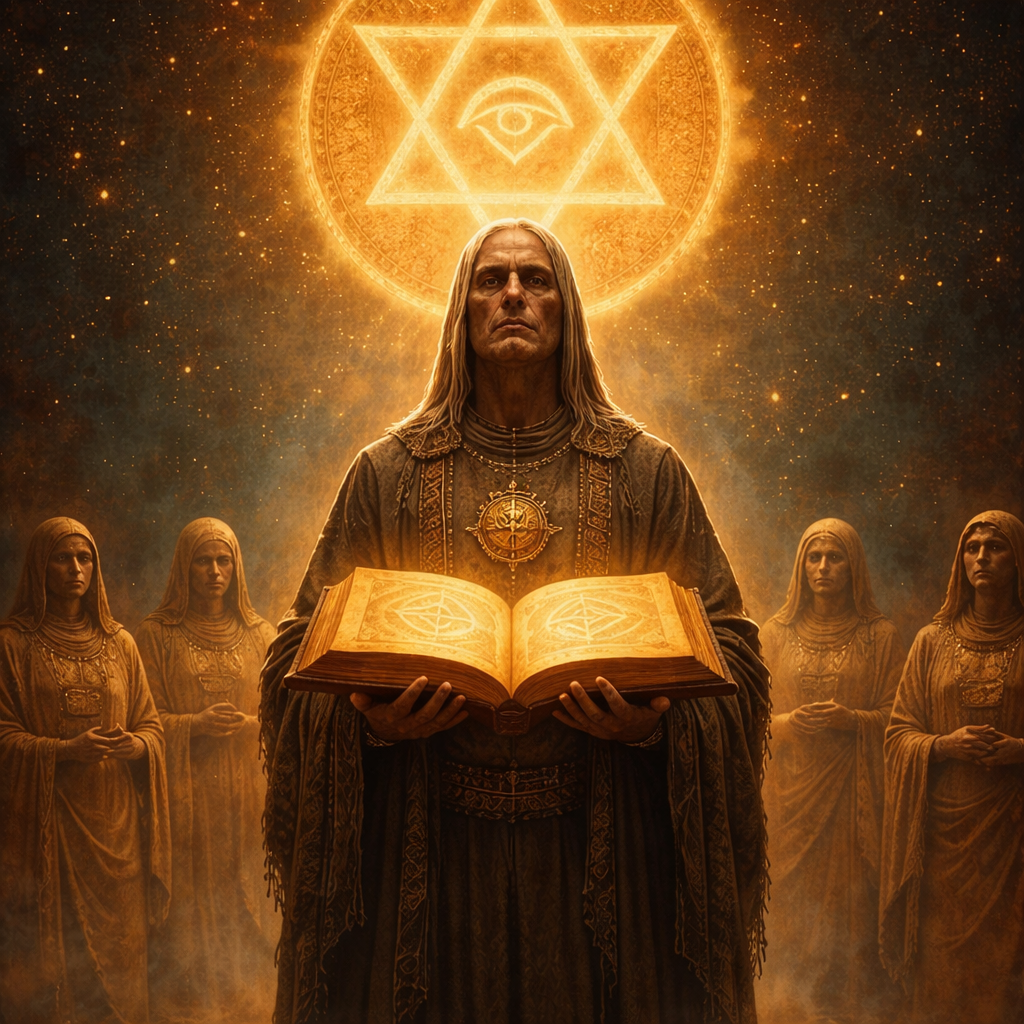

By Marcus Thorne (Esoteric Sciences Reviewer) — Arthur Edward Waite, a titan of occult scholarship, presents a masterful distillation of Kabbalistic and Talmudic thought in this concise pamphlet. His unique ability to translate arcane concepts into comprehensible language makes this an invaluable resource for anyone seeking a foundational understanding of Jewish mysticism. Waite illuminates the core tenets of these traditions, emphasizing their profound symbolic language and spiritual implications. This work is particularly potent for those drawn to the Western esoteric tradition, offering a direct lineage to the roots of much occult philosophy. A truly insightful primer for the dedicated student.
📝 Description
61
Arthur Edward Waite published "The Kabbalah And Talmud - Pamphlet" to introduce esoteric Jewish mysticism.
Arthur Edward Waite's pamphlet aims to make the complex ideas of Jewish mysticism accessible. He focuses on Kabbalah and the Talmud, explaining their symbolic language and deeper meanings. The author breaks down philosophical and theological concepts, making them understandable for a wider audience.
This work covers specific elements like the Tree of Life and the idea of divine emanations. It also touches on the spiritual path described in these traditions. Waite intended the pamphlet for both newcomers to the subject and those already familiar with esoteric thought. It presents a view of the divine and the structure of the cosmos as understood through these teachings. The text touches on core ideas that have influenced esoteric practices and philosophy over time.
Arthur Edward Waite was a prominent figure in Western esotericism, known for his work on the Hermetic Order of the Golden Dawn and his extensive writings on occultism and mysticism. This pamphlet places his interest within the broader historical context of Kabbalah's influence on Western esoteric traditions, which began in earnest during the Renaissance and continued through various occult revivals. Waite sought to interpret these ancient Jewish mystical systems for a Western audience, connecting them to concepts familiar within occult circles.
💡 Why Read This Book?
Embark on a condensed yet potent journey into the heart of Jewish mysticism. "The Kabbalah And Talmud - Pamphlet" by Arthur Edward Waite is ideal for seekers of esoteric knowledge, scholars of comparative religion, and practitioners looking to deepen their understanding of ancient wisdom traditions. Discover foundational Kabbalistic concepts and their Talmudic underpinnings in an accessible format, perfect for initial exploration or a quick, insightful refresher.
⭐ Reader Reviews
Honest opinions from readers who have explored this book.
❓ Frequently Asked Questions
What is Kabbalah?
Kabbalah is a complex system of Jewish mysticism that explores the divine nature, the creation of the universe, and the relationship between God and humanity through esoteric interpretations of the Torah.
What is the Talmud?
The Talmud is a central text of Rabbinic Judaism, comprising legal discussions, ethical teachings, and legendary narratives compiled over centuries, offering a vast repository of Jewish wisdom.
Who was Arthur Edward Waite?
Arthur Edward Waite was a prolific scholar and occultist, renowned for his extensive work on Freemasonry, the Tarot, and various esoteric traditions, including the Kabbalah.
Is this pamphlet suitable for beginners?
Yes, Waite's clear exposition makes this pamphlet an excellent starting point for those new to Kabbalah and Talmudic studies, offering a foundational understanding without overwhelming complexity.
What esoteric themes are explored?
The pamphlet touches upon divine emanations, the structure of the cosmos, the path of spiritual ascent, and the symbolic language inherent in these ancient Jewish mystical traditions.
🔮 Key Themes & Symbolism
The Tree of Life and Divine Emanations
This pamphlet meticulously guides the reader through the fundamental concept of the Kabbalistic Tree of Life, a symbolic map of creation and divine consciousness. Waite elucidates the ten Sephiroth, the divine emanations that flow from the unknowable Ein Sof, detailing their individual characteristics and their interconnectedness. Understanding these emanations is crucial for grasping the Kabbalistic cosmology and the intricate pathways of spiritual development, offering a framework for comprehending the macrocosm and the microcosm.
Symbolic Language and Esoteric Interpretation
Fundamentally, this work highlights the profound importance of symbolic language within the Kabbalah and Talmud. Waite demonstrates how seemingly simple narratives and laws within these texts conceal deeper, mystical meanings accessible only through esoteric interpretation. The pamphlet serves as an introduction to the hermeneutic methods employed by Kabbalists to unlock the hidden wisdom encoded within scripture, revealing a universe of spiritual significance that transcends literal understanding and invites contemplative engagement.
The Path of Spiritual Ascent
Waite's exposition subtly guides the reader toward understanding the Kabbalistic concept of spiritual ascent. The Tree of Life is not merely a cosmological diagram but also a map for the soul's journey back to its divine source. The pamphlet offers insights into the challenges and transformations involved in this process, emphasizing the pursuit of gnosis and the integration of divine principles into one's being. It presents Kabbalah as a practical path for spiritual growth and self-realization.
💬 Memorable Quotes
Direct passages from the work, attributed to the author.
“The Kabbalah is the esoteric tradition of Israel.”
— This statement succinctly defines Kabbalah's core identity as the hidden, mystical wisdom originating from and preserved within the Jewish people.
“The Talmud contains the seeds of divine wisdom.”
— This highlights the Talmud's role not just as a legal or ethical text, but as a profound source of spiritual knowledge waiting to be unearthed.
“Symbolism is the language of the soul.”
— This emphasizes the crucial role of symbolic interpretation in accessing the deeper, spiritual truths often veiled in esoteric literature.
“The Tree of Life maps the journey of the soul.”
— This points to the Kabbalistic diagram as a practical guide for understanding and navigating one's own spiritual development and return to the divine.
“Hidden meanings await the diligent seeker.”
— This serves as an encouragement, suggesting that the effort invested in studying these texts will yield useful insights and revelations.
🌙 Esoteric Significance
Tradition
This pamphlet is deeply rooted in the Western Esoteric Tradition, specifically drawing from the collection of Jewish Mysticism known as Kabbalah. It serves as an essential primer for understanding the foundational concepts that have influenced numerous occult and philosophical systems across Europe and beyond, including Hermeticism and Rosicrucianism. Its significance lies in presenting these ancient Jewish teachings in a manner accessible to non-Jewish practitioners and scholars within the broader esoteric community.
Symbolism
Central to the esoteric significance of this work is its exploration of strong symbolism. The Kabbalah's primary symbolic system, the Tree of Life, is presented as a multidimensional map of creation, consciousness, and spiritual evolution. Waite likely touches upon the symbolic meaning of Hebrew letters, divine names, and scriptural narratives, demonstrating how these elements are not merely linguistic but are potent vehicles for conveying profound spiritual truths and facilitating esoteric understanding.
Modern Relevance
Even in its pamphlet form, Waite's work retains significant modern relevance for seekers of spiritual wisdom. It provides a concise yet potent introduction to concepts that continue to inform contemporary esoteric thought, meditation practices, and philosophical discussions. For those interested in comparative mysticism, interfaith dialogue, or the historical roots of Western occultism, this pamphlet offers an accessible entry point into complex traditions that offer timeless insights into the human condition and the nature of reality.
👥 Who Should Read This Book
This pamphlet is an indispensable resource for a diverse audience. **Beginners** seeking an accessible introduction to the profound world of Kabbalah and Talmudic thought will find Waite's clear exposition invaluable. **Scholars** of comparative religion and esoteric history will appreciate its concise distillation of key concepts. **Spiritual seekers** drawn to ancient wisdom traditions and the mystical dimensions of Judaism will discover a potent starting point. **Practitioners** of esoteric arts looking to understand the roots of Western mysticism will benefit from its foundational insights into these influential texts and traditions.
📜 Historical Context
Published during a period of burgeoning interest in occultism and comparative religion in the late 19th and early 20th centuries, Arthur Edward Waite's "The Kabbalah And Talmud - Pamphlet" emerged from a rich intellectual milieu. This era saw scholars and mystics actively seeking to synthesize ancient esoteric traditions with contemporary thought. Waite himself was a key figure in this revival, contributing significantly to the popularization and academic study of Western Esotericism. The pamphlet reflects the era's desire to understand the foundational texts of various spiritual paths, offering a bridge between academic inquiry and personal spiritual exploration, and situating Kabbalah and Talmudic thought within the broader field of world mysticism.
📔 Journal Prompts
Reflect on the concept of divine emanations as presented by Waite. How might these relate to your own understanding of creation and consciousness?
Consider the role of symbolism in your own spiritual or personal journey. How do symbols communicate meaning beyond literal interpretation?
Meditate on the Tree of Life diagram. What does each Sephirah represent to you on a personal level?
How does the idea of spiritual ascent resonate with your current life path and aspirations?
What questions arise for you after reading this pamphlet regarding the Kabbalah or Talmud?
🗂️ Glossary
Kabbalah
An esoteric system of Jewish mysticism that seeks to understand the divine nature, creation, and the relationship between God and humanity through symbolic interpretation of sacred texts.
Talmud
A central compilation of Rabbinic Jewish law, ethics, philosophy, customs, and history, serving as a major source of Jewish religious and intellectual life.
Sephiroth
The ten divine emanations or attributes described in Kabbalah, forming the structure of the Tree of Life and representing stages of divine revelation.
Ein Sof
The Kabbalistic term for the Infinite or the Absolute Godhead, considered unknowable and beyond all description or comprehension.
Gnosis
Spiritual knowledge or insight, particularly the direct experiential knowledge of the divine, often sought through esoteric practices.
This book appears in 1 collection
🔮 Readers Also Liked
Browse all →








More by Arthur Edward Waite
All books →
From the “Kabbalah” Collection
View all →







More Free Kabbalah & Jewish Mysticism Books
View all →