Fluch und Gebet
 75
75

Fluch und Gebet
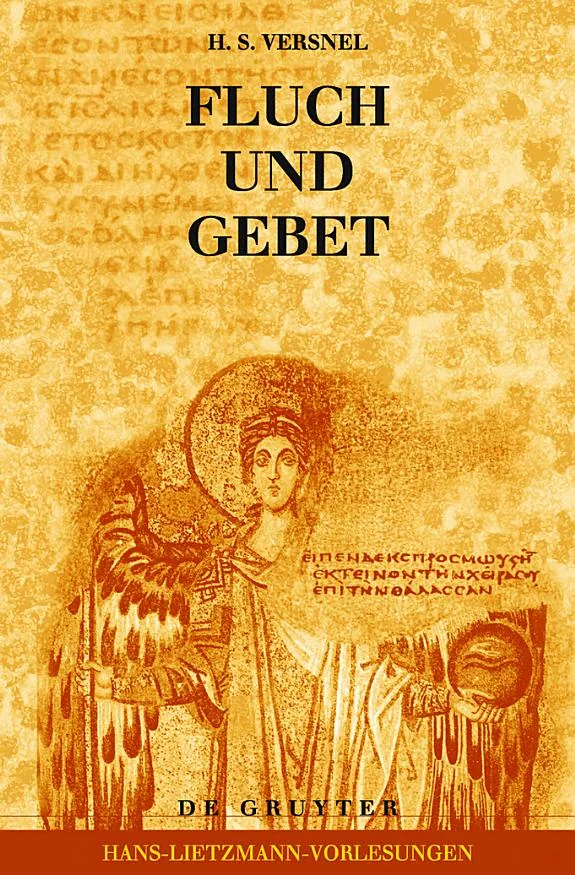
H. S. Versnel’s Fluch und Gebet provides a much-needed scholarly dissection of ancient imprecatory practices, moving beyond sensationalism to offer a nuanced understanding of curse tablets. The strength of the work lies in its precise categorization of defixiones, allowing for a clearer delineation of intent and function within the broader spectrum of ancient ritual. Versnel’s detailed readings of individual tablets, such as those found in the Athenian Agora, are particularly illuminating, showcasing the practical, often intensely personal, applications of these curses. A limitation, however, is the dense academic prose, which, while accurate, can make the text less accessible to a general audience. The book’s exploration of how curses were used to bind or inflict harm upon rivals offers a stark contrast to prayers for favor, highlighting the dual nature of supplication in antiquity. Fluch und Gebet is an essential, if demanding, resource for serious students of ancient magic and religion.
📝 Description
75
H. S. Versnel's 2009 study Fluch und Gebet examines ancient curse tablets.
Fluch und Gebet (Curse and Prayer) by H. S. Versnel presents a detailed analysis of ancient Greek and Latin curse tablets. Published in 2009, the book challenges the idea that magic declined as religion grew. Versnel meticulously categorizes these artifacts, distinguishing between binding curses, known as defixiones, and other forms of imprecation. This research is part of a larger scholarly discussion about the separation between magic and religion in the Greco-Roman world.
The book investigates the social and psychological roles these practices played. It looks at how individuals used curses to influence rivals, enemies, or even deities. Versnel examines the specific language, rituals, and physical objects involved in these ancient magical acts. The study uses the curse tablets themselves as concrete evidence, moving beyond simple superstition to understand these historical beliefs and actions.
This work engages with the historical study of magical practices within ancient Mediterranean cultures. It situates the use of curse tablets within the broader context of Greco-Roman religious and social systems. By examining these artifacts, the book addresses how individuals sought to enact change through ritualized invocation and imprecation, a persistent element across many historical traditions.
💡 Why Read This Book?
• Gain a precise understanding of 'defixiones' by examining Versnel's detailed analysis of their function and context in ancient Greek and Latin curse tablets, moving beyond generalized notions of 'magic'. • Appreciate the complex interplay between religious belief and magical practice through Versnel's scholarly distinctions, especially concerning the use of imprecations in the ancient world around the common era. • Understand the historical application of binding rituals as a means of social and personal control, as detailed in Versnel's examination of case studies from antiquity.
⭐ Reader Reviews
Honest opinions from readers who have explored this book.
❓ Frequently Asked Questions
What is the primary distinction made in Fluch und Gebet regarding ancient curses?
H. S. Versnel distinguishes between 'binding curses' (defixiones), intended to restrain or immobilize a target, and other forms of imprecation, offering a more detailed classification of ancient magical practices.
What types of primary sources does H. S. Versnel analyze?
The book primarily analyzes ancient Greek and Latin curse tablets, which are inscribed artifacts used for imprecatory purposes, providing direct evidence of magical and religious practices.
What historical period does Fluch und Gebet focus on?
The study concentrates on the Greco-Roman period, examining practices and artifacts from antiquity where the lines between magic and religion were often blurred.
How does Versnel's work challenge common assumptions about magic?
Versnel challenges the notion that magic was in decline or unimportant in antiquity by demonstrating its persistent and complex role alongside formal religion, particularly through the analysis of curse tablets.
What is the significance of the term 'defixiones' in the book?
'Defixiones' refers specifically to binding curses, a key category Versnel uses to differentiate types of imprecations and understand their specific intent to impede or control individuals.
Who would benefit most from reading Fluch und Gebet?
Academics in classics, ancient history, and religious studies, as well as serious occult practitioners interested in the scholarly grounding of ancient magical practices, will find this book valuable.
🔮 Key Themes & Symbolism
Defixiones and Binding Curses
The central theme revolves around the category of 'defixiones,' or binding curses, as meticulously analyzed by Versnel. These artifacts represent a specific intent to restrain or incapacitate rivals, enemies, or even lovers. The book explores the linguistic formulas, ritualistic actions, and material forms of these tablets, demonstrating how ancient individuals sought to exert control over others through powerful invocations and symbolic acts.
Magic and Religion in Antiquity
Versnel confronts the often-problematic distinction between magic and religion in classical studies. The work argues that these were not always separate spheres but often intertwined practices. By examining curse tablets alongside more conventional religious offerings, the study reveals the continuous presence and adaptability of magical thinking and ritual across different social strata and contexts in the ancient world.
Social Function of Imprecation
Beyond their ritualistic aspects, the curse tablets reveal the social dynamics of the ancient world. They offer glimpses into personal disputes, legal frustrations, and competitive rivalries. Versnel's analysis explores how imprecations served as a means for individuals to address grievances, seek justice (or vengeance), and navigate complex social relationships when formal institutions were insufficient or inaccessible.
The Power of the Spoken and Written Word
A recurring motif is the belief in the inherent power of words, particularly when inscribed on durable materials like lead tablets and directed towards divine or chthonic powers. The act of writing down a curse, often accompanied by binding rituals, was believed to give it potency and permanence. Versnel examines this connection between language, intent, and efficacy in ancient belief systems.
💬 Memorable Quotes
Direct passages from the work, attributed to the author.
“Distinction between binding curses (defixiones) and other categories is possible through precise reading.”
— This captures Versnel's methodological approach, emphasizing the importance of detailed textual analysis of curse tablets to move beyond broad generalizations and identify specific types of magical intent and function.
“Curse tablets reveal how individuals attempted to bind opponents or rivals.”
— This points to the practical, often adversarial, application of ancient magic, illustrating how these inscribed objects were tools used in personal conflicts and social competition.
“The study examines the persistent presence of magical thinking alongside formal religious structures.”
— This interpretation underscores the book's contribution to understanding the fluid boundaries between magic and religion, showing their co-existence and mutual influence in the ancient Mediterranean world.
“Ancient Greek and Latin curse tablets are key primary sources.”
— This highlights the foundational evidence Versnel utilizes, emphasizing the direct, tangible nature of these artifacts in understanding ancient beliefs and practices concerning curses.
💡 Key Ideas
Editorial paraphrase of the work's core concepts — not direct quotes.
The complicated relationship between magic and religion stubbornly resists a decline in meaning and interest.
This paraphrased concept highlights Versnel's central argument: despite scholarly attempts to relegate magic to a primitive past, its influence and significance persisted, intertwined with religious practice, throughout antiquity.
🌙 Esoteric Significance
Tradition
While Versnel's work is primarily historical and philological, it significantly informs esoteric traditions by grounding magical practices in documented ancient realities. It provides a scholarly counterpoint to purely speculative or Neopagan interpretations of ancient magic, emphasizing the historical context and social utility of spells and curses. For practitioners seeking to understand the roots of Western magical traditions, this work offers a critical look at the lineage of imprecatory and binding rituals.
Symbolism
The curse tablets themselves are potent symbols of focused intent and the desire to exert control. The act of inscription, often on lead or clay, and the invocation of deities (often chthonic or vengeful ones) or spirits, symbolize the channeling of psychic energy. The binding element—physically binding the tablet or the target symbolically—represents the desire to constrain and immobilize an adversary, a powerful motif in many magical systems.
Modern Relevance
Contemporary practitioners of sympathetic magic, ritual workers, and those interested in applied psychology within esoteric frameworks can draw from Versnel's analysis. The study’s detailed examination of how ancient individuals framed their intentions and directed their energies provides models for understanding modern spellcraft, particularly in areas of binding, protection, and adversarial work. Thinkers in the field of magical theory continue to cite such historical analyses to validate or refine contemporary practices.
👥 Who Should Read This Book
• Scholars of Classical Antiquity and Religious Studies seeking a detailed, source-based analysis of ancient imprecatory practices and the magic-religion nexus. • Practicing occultists and ceremonial magicians interested in the historical origins and specific applications of binding spells and curse rituals documented in primary sources. • Students of ancient history and social history looking to understand the practical ways individuals sought to influence social dynamics and personal conflicts in the Greco-Roman world.
📜 Historical Context
Published in 2009, H. S. Versnel's *Fluch und Gebet* emerged during a period of continued scholarly engagement with the boundaries between magic and religion in the ancient world. The late 20th and early 21st centuries saw a move away from simplistic evolutionary models that placed 'magic' as a precursor to 'religion,' with scholars like Fritz Graf and Sarah Iles Johnston emphasizing the complex and often overlapping nature of these practices. Versnel's work builds upon this nuanced understanding, specifically through its detailed analysis of curse tablets (defixiones). These inscribed artifacts, found across the Greco-Roman Mediterranean, provided concrete evidence for the persistent use of imprecatory magic. While contemporaries like Pierre Bourdieu were exploring the sociology of ritual and belief, Versnel focused on the philological and historical specifics of these spells, offering a rigorous examination that contributed to the ongoing debate on the social and psychological functions of ancient ritualistic practices.
📔 Journal Prompts
Analysis of 'defixiones' and their purpose.
The persistence of magic and religion in ancient belief systems.
Social dynamics revealed through ancient curse tablets.
Written word as a tool of magical efficacy in antiquity.
Comparing ancient binding rituals to modern intent-focused practices.
🗂️ Glossary
Defixiones
Latin term for binding curses or tablets of curse, specifically designed to restrain, harm, or immobilize a person or persons.
Imprecation
A spoken or written curse; an invocation of evil or harm upon someone or something.
Curse Tablet
An inscribed tablet, usually of lead, clay, or stone, used in ancient times for the purpose of casting spells or curses upon an individual or object.
Greco-Roman Period
The historical era encompassing the influence of Greek culture and Roman civilization, roughly from the Hellenistic period (c. 323 BCE) through the Roman Empire (c. 476 CE).
Magic and Religion
In the context of antiquity, these terms often describe overlapping sets of beliefs and practices concerning the supernatural, with 'magic' frequently referring to more personalized, goal-oriented rituals and 'religion' to more communal, institutionalized worship.
Philology
The study of language in oral and written historical sources; it is the intersection of textual criticism, literary criticism, history, and linguistics.
Chthonic Deities
Gods and goddesses associated with the underworld, the earth, and fertility, often invoked in curse rituals due to their perceived power over the dead and the hidden realms.
This book appears in 1 collection
🔮 Readers Also Liked
Browse all →







From the “Incantations” Collection
View all →




More Free Esoteric History & Biography Books
View all →