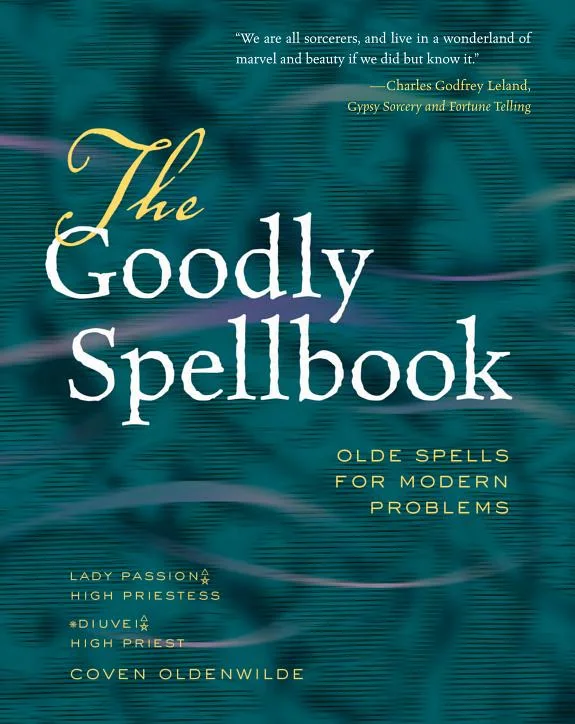
The Goodly Spellbook
 72
72

The Goodly Spellbook
Dixie Deerman and Steve Rasmussen's *The Goodly Spellbook* offers a straightforward collection of practical magic, a welcome antidote to overly academic or obscurantist texts. Its strength lies in its accessible presentation of spells, clearly adapted from older forms. For instance, the section on "Binding Spells" provides clear, actionable steps that bypass the dense allegorical interpretations sometimes found in similar works. However, the book's brevity means it occasionally sacrifices depth. While it presents many spells, the theoretical underpinnings or detailed historical lineage of each could be further explored. The absence of extensive discussion on the ethical implications of certain spells might also be a limitation for some readers. Ultimately, *The Goodly Spellbook* serves as a functional grimoire for the contemporary witch or wizard.
📝 Description
72
Published in March 2008, The Goodly Spellbook adapts historical magical practices for contemporary use.
Dixie Deerman and Steve Rasmussen compiled The Goodly Spellbook in 2008, presenting a collection of spells, incantations, and rituals drawn from historical sources. The book aims to make older magical traditions accessible to modern practitioners by translating archaic language and ritual components into clear, actionable instructions. It focuses on the practical application of magic, emphasizing the practitioner's intent and focus as key to a spell's success. This volume is for those interested in practical occultism and folk magic who may find original grimoires difficult to approach. It offers a functional, direct method for spellcasting, bypassing extensive theoretical discussions.
The book emerged during a period of renewed interest in practical magic in the early 21st century. It seeks to broaden access to older magical forms, which were often transmitted orally or through limited circulation. Deerman and Rasmussen adapt these long-standing traditions for a generation accustomed to readily available printed and digital resources. The spells are presented not just as historical artifacts but as functional tools designed for effectiveness in the modern world.
The Goodly Spellbook sits within a long tradition of practical magical texts, echoing the lineage of grimoires and common magical formularies that have circulated for centuries. Unlike purely academic or ceremonial magical texts, this book prioritizes direct, functional application. It adapts older forms, often preserved through oral transmission or limited manuscript circulation, for individuals engaging with magic in the 21st century. The work reflects a contemporary desire to connect with historical magical practices in a tangible, usable way, bridging the gap between past traditions and present-day needs.
💡 Why Read This Book?
• Learn to perform practical enchantments using adapted historical spells, gaining direct experience with techniques like those found in the "Protection Charms" section, offering tangible results. • Understand the process of translating ancient magical practices into modern contexts, as demonstrated by the adaptation of rituals for contemporary use, fostering a deeper connection to historical magical traditions. • Develop focused intent and visualization skills through the clear instructions for spellcasting, enabling more effective personal magical work beyond what theoretical texts alone can provide.
⭐ Reader Reviews
Honest opinions from readers who have explored this book.
❓ Frequently Asked Questions
What is the primary focus of The Goodly Spellbook?
The book focuses on presenting a collection of ancient spells and incantations that have been adapted for modern times, emphasizing practical application and accessibility for contemporary practitioners.
Who are the authors of The Goodly Spellbook?
The authors are Dixie Deerman and Steve Rasmussen. The book was first published in March 2008.
Does The Goodly Spellbook require prior knowledge of occultism?
While prior knowledge can enhance understanding, the book is designed for accessibility, adapting historical spells for modern use. It's suitable for those new to practical magic but interested in historical spellcraft.
What kind of spells can be found in The Goodly Spellbook?
The book contains a variety of spells and incantations adapted for modern practitioners, covering different aims such as protection, binding, and other folk magic applications.
Where can I find more information about the historical context of these spells?
While The Goodly Spellbook adapts spells for modern use, further research into historical grimoires and scholarly works on folk magic from the 17th and 18th centuries can provide deeper context.
Is The Goodly Spellbook a theoretical or practical guide?
It is primarily a practical guide, offering actionable instructions for performing spells and rituals rather than extensive theoretical discussions.
🔮 Key Themes & Symbolism
Adaptation of Ancient Magic
This theme centers on the book's core mission: making historical spellcraft accessible. It examines how ancient incantations and ritualistic components, perhaps originating from 17th-century folk traditions or earlier, are recontextualized for contemporary life. This involves updating language, materials, and even the underlying conceptual framework to align with the realities faced by modern practitioners, ensuring the spells retain their efficacy despite the passage of centuries and societal changes.
Practical Efficacy
The emphasis here is on function. Unlike purely academic studies of magic, The Goodly Spellbook prioritizes spells that are intended to work. This theme explores the direct, actionable nature of the instructions provided. It highlights how the authors focus on the practitioner's intent, visualization, and the precise execution of ritual steps as key factors in achieving desired outcomes, reflecting a pragmatic approach to the magical arts.
Folk Magic Traditions
This theme looks at the roots of the spells presented, often drawing from vernacular or folk magic systems that developed outside formal religious or ceremonial structures. The book taps into a lineage of practical magic passed down through generations, often found in handwritten notebooks or oral traditions. It connects the contemporary reader to a broader, less documented history of everyday magical practices used for common concerns.
Modern Practitioner's Needs
The book directly addresses the challenges and opportunities faced by individuals practicing magic in the 21st century. This theme considers how factors like modern living, technological environments, and contemporary psychological understanding might influence magical practice. The adaptations made in the book reflect an understanding of these modern constraints and possibilities, aiming to make the ancient arts relevant and effective now.
💬 Memorable Quotes
Direct passages from the work, attributed to the author.
“Spells adapted for contemporary life.”
— This highlights the book's central premise: bridging the gap between historical magical texts and the practical needs of today's practitioners, ensuring ancient methods remain viable.
“Practical application of ancient incantations.”
— This suggests the book provides direct, usable instructions for performing magical workings, moving beyond theoretical exploration to hands-on ritual and spellcasting.
“Accessible ritual components.”
— This implies that the materials and steps required for the spells are readily available or easily substituted, making the magical practices feasible for the average person.
“Bridging historical and modern magical practice.”
— This succinctly captures the book's aim to connect users with older forms of magic by making them understandable and actionable within a contemporary framework.
💡 Key Ideas
Editorial paraphrase of the work's core concepts — not direct quotes.
Focus on intent for spell success.
This paraphrased concept emphasizes a core principle in many magical traditions, including those likely referenced in the book, where the practitioner's mental and emotional energy is crucial for manifesting results.
🌙 Esoteric Significance
Tradition
This work aligns with the broader Western Esoteric Tradition, particularly drawing from folk magic and practical grimoire practices that have roots stretching back centuries, possibly influenced by Renaissance hermeticism and later popular magical texts. It departs from highly codified ceremonial systems by focusing on direct, often simple, applications intended for personal use, reflecting a lineage of vernacular magic that often existed parallel to more formalized traditions.
Symbolism
While specific symbols are not extensively detailed, the implied symbolism relates to the act of transformation and manifestation. Common motifs in such spellcraft might include protective circles (representing containment and sacred space), specific herbs or elements (representing natural forces and correspondences), and the use of personal items (representing sympathetic magic and connection). These symbols function not just aesthetically but as conduits for focused magical intent.
Modern Relevance
Contemporary practitioners of eclectic witchcraft, chaos magic, and those interested in historical witchcraft revival movements find relevance in *The Goodly Spellbook*. Its approach to adapting older forms speaks to modern magical practitioners who seek to build personalized systems from diverse historical and cultural sources, valuing practical results and accessible methodologies over strict adherence to any single tradition.
👥 Who Should Read This Book
• Aspiring practitioners of folk magic seeking accessible, historically-informed spells without the density of original grimoires. • Hobbyists interested in the practical application of historical occult practices, looking for actionable rituals they can perform at home. • Students of comparative religion and magic interested in how ancient spellcraft is adapted and maintained for contemporary relevance.
📜 Historical Context
The early 21st century, specifically around the 2008 publication date of *The Goodly Spellbook*, witnessed a burgeoning interest in practical, non-denominational spirituality and occultism. This period saw a reaction against the more abstract or dogmatic forms of esoteric thought, with many seeking tangible, personal magical experiences. The work emerged in a landscape populated by diverse approaches to witchcraft and paganism, from Wicca's ceremonial roots to the resurgence of animistic and folk magic practices. While figures like Doreen Valiente had already popularized accessible witchcraft in the mid-20th century, the 2000s saw a further democratization and diversification. *The Goodly Spellbook* fit within this trend by offering adapted historical spells, potentially drawing from grimoires that circulated widely in manuscript form from the 17th century onwards, making them palatable for a modern audience often wary of overly archaic language or ritualistic complexity, contrasting with the more academically rigorous, yet less practically oriented, works on grimoire magic appearing concurrently.
📔 Journal Prompts
The adaptation of historical incantations for modern efficacy.
Practitioner intent in spellcasting as described in the book.
The translation of archaic ritual components into accessible forms.
Personal experience with a protection charm from the text.
Ethical considerations when applying folk magic techniques.
🗂️ Glossary
Incantation
A series of words said in a ritual or spell, believed to have magical power. In this context, they are adapted from older forms for contemporary use.
Spellcraft
The practice and art of casting spells. This book focuses on the practical application of spellcraft derived from historical sources.
Ritual
A sequence of activities involving gestures, words, and objects, performed according to a set sequence. The book presents adapted rituals for magical aims.
Folk Magic
Magical practices originating from traditional beliefs and customs within a community or region, often passed down orally or through informal means.
Sympathetic Magic
A type of magic based on the principle that like produces like, or that a cause affects only like effects. It involves using objects that resemble or have been associated with the target.
Correspondences
The system of associating elements, planets, herbs, colors, etc., with each other in magical practice, used to enhance spell efficacy through symbolic alignment.
Grimoire
A textbook of magic, typically containing instructions on how to create magical objects, perform rituals, and cast spells. This book adapts content from such traditions.
This book appears in 1 collection
🔮 Readers Also Liked
Browse all →








From the “Incantations” Collection
View all →





More Free Occult Philosophy Books
View all →