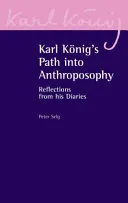
Path Into Anthroposophy
 81
81

Path Into Anthroposophy
Peter Selg’s curation of Karl König’s diaries, *Path Into Anthroposophy*, offers a rare glimpse into the formative inner life of a significant 20th-century esoteric thinker. The strength of this volume lies in its raw, unvarnished presentation of König’s spiritual journey. We witness his struggles, his breakthroughs, and his persistent efforts to grapple with Rudolf Steiner's complex ideas. A particularly striking aspect is König's early engagement with what he termed "spiritual research," presented not as abstract theory but as a lived, often challenging, practice. However, the book’s intense focus on König’s internal world, while its primary strength, can sometimes make it less accessible to readers unfamiliar with the broader landscape of anthroposophy. The dense personal reflections, though authentic, may require significant prior knowledge to fully contextualize. Selg’s editorial hand is judicious, allowing König’s voice to dominate, which is commendable. This is an essential, albeit demanding, text for those devoted to understanding anthroposophy from its roots.
📝 Description
81
Peter Selg's 2008 book traces Karl König's spiritual journey through his diaries.
This volume examines the life and thought of Karl König, drawing heavily from his private journals. It follows König's intellectual and spiritual development from his early years to his later life. The book is not a standard biography but rather a depiction of one individual's search for understanding during a time of significant global change. It details König's growing involvement with spiritual science and his efforts to apply these ideas practically.
Individuals interested in the personal roots of anthroposophy will find this book valuable. Readers who want to understand the personal growth of important figures in spiritual traditions will appreciate König's diary entries. The book also appeals to those studying the history of movements like Waldorf education or biodynamic farming, fields König helped shape. Anyone curious about how personal spiritual experiences connect with the formation of broader philosophical and educational concepts will find this work useful.
Published in 2008, *Path Into Anthroposophy* engages with the modern academic and spiritual study of figures central to esoteric and counter-cultural movements. Karl König (1902-1965) lived through periods of great turmoil, including Nazism and World War II, which influenced his spiritual and social outlook. His work in anthroposophy, a spiritual philosophy from Rudolf Steiner, was a significant current in early 20th-century European spiritual thought, interacting with movements like Theosophy and various materialistic philosophies.
💡 Why Read This Book?
• Gain direct insight into Karl König's personal spiritual research methods, as detailed in his diaries, offering a unique perspective on translating esoteric principles into daily practice. • Understand the historical development of anthroposophy through the eyes of a key early proponent, examining his engagement with Rudolf Steiner's work during the turbulent mid-20th century. • Explore the genesis of practical anthroposophical initiatives, such as those in education and social therapy, by tracing König's evolving thoughts and motivations from his early years.
⭐ Reader Reviews
Honest opinions from readers who have explored this book.
❓ Frequently Asked Questions
What is the primary source material for *Path Into Anthroposophy*?
The book primarily draws from the personal diaries of Karl König, offering an intimate and direct account of his spiritual journey and intellectual development from his early years.
Who was Karl König and what was his connection to Rudolf Steiner?
Karl König (1902-1965) was an Austrian physician and anthroposopher. He was a significant student and interpreter of Rudolf Steiner's spiritual philosophy, applying its principles to areas like education and social therapy.
When was *Path Into Anthroposophy* first published?
The book, edited by Peter Selg, was first published in 2008, bringing Karl König's diary writings to a wider audience.
What is 'spiritual research' as discussed in the book?
Spiritual research, as pursued by König and rooted in Rudolf Steiner's work, refers to a disciplined, meditative, and observational method for investigating the spiritual dimensions of reality.
Does this book explain the core tenets of anthroposophy?
While it doesn't serve as a primary introduction, the book illuminates how one individual, Karl König, came to understand and internalize anthroposophical concepts through his personal spiritual quest.
What historical period does König's diary entries cover?
König's diaries span much of his life, encompassing periods of significant historical upheaval in Europe, including the rise of Nazism and World War II, which influenced his spiritual and social outlook.
🔮 Key Themes & Symbolism
The Personal Quest for Spiritual Knowledge
This theme centers on Karl König's individual journey to understand the spiritual world, as meticulously documented in his diaries. It highlights his persistent efforts to bridge the gap between theoretical anthroposophical concepts, stemming from Rudolf Steiner, and his own lived experience. The entries reveal a process of intense contemplation, inner struggle, and gradual insight, emphasizing that spiritual development is an active, personal endeavor rather than passive reception of doctrine. König's approach underscores the importance of direct, inner perception in grasping higher realities.
Anthroposophy in Practice
The book illustrates how foundational anthroposophical ideas were translated into concrete actions and initiatives by Karl König. It explores his thinking regarding the practical application of spiritual insights to social, educational, and therapeutic contexts. Readers can trace the development of König's ideas that would later inform movements like biodynamic agriculture and Waldorf education, for which he was a significant proponent. This theme showcases the outward manifestation of inner spiritual work, demonstrating its potential to shape the material world.
Spiritual Research as Method
A core element is König's dedication to 'spiritual research'—a concept central to anthroposophy. The diaries depict his disciplined approach to cultivating faculties for perceiving spiritual realities, often requiring rigorous inner work and self-observation. This section examines the challenges and rewards of this path, presenting it as an empirical science of the spirit. König’s writings emphasize that such research is not about fantasy but about developing verifiable inner faculties, akin to scientific observation in the physical realm.
Historical Consciousness and Social Renewal
König's spiritual journey unfolds against the backdrop of significant 20th-century European history, including the rise of Nazism and World War II. The book touches upon how these external events impacted his inner life and his understanding of humanity's spiritual trajectory. His diaries reflect a deep concern for social renewal, viewing spiritual development as essential for overcoming societal crises. This theme connects personal spiritual evolution with broader historical consciousness and the urgent need for transformative social approaches.
💬 Memorable Quotes
Direct passages from the work, attributed to the author.
“König's early writings show a deep wrestling with Rudolf Steiner's concepts.”
— This interpretation points to the intellectual and spiritual effort König invested in understanding Steiner's complex philosophical system, indicating it was not an easy or immediate assimilation.
“König sought to apply spiritual insights to practical social and educational challenges.”
— This interpretation reflects König's commitment to translating abstract spiritual understanding into tangible improvements in human life, particularly in community and learning environments.
💡 Key Ideas
Editorial paraphrase of the work's core concepts — not direct quotes.
The diaries reveal a constant striving to perceive the spiritual in the everyday.
This paraphrased concept highlights König's persistent effort to find and engage with the spiritual dimensions of ordinary life, a key practice within anthroposophy.
The work emphasizes the necessity of inner discipline for spiritual perception.
This paraphrased concept underscores König's belief that developing the capacity to perceive spiritual realities requires dedicated inner training and self-mastery, not mere intellectual agreement.
The diaries document a life lived in conscious dialogue with the spiritual world.
This paraphrased concept captures the essence of König's diary entries, portraying his life as one where communication and interaction with spiritual realities were a constant, conscious endeavor.
🌙 Esoteric Significance
Tradition
This work is firmly rooted in the tradition of Anthroposophy, a spiritual philosophy initiated by Rudolf Steiner in the early 20th century. Anthroposophy draws from diverse esoteric streams, including Gnosticism, Hermeticism, and Kabbalah, but synthesizes them into a unique cosmology and epistemology. *Path Into Anthroposophy* showcases how König engaged with and developed Steiner's specific contributions, particularly concerning spiritual science, human evolution, and the practical application of these insights in social and therapeutic fields.
Symbolism
While the book is primarily biographical and philosophical, key symbolic motifs emerge from König's journey. The 'path' itself symbolizes the individual's spiritual progression, marked by effort and discovery. The 'diary' functions as a symbolic vessel for inner exploration, representing the mapping of the soul's terrain. Furthermore, König's engagement with concepts like 'spiritual research' points to the symbolic representation of developing inner faculties to perceive realities beyond the physical senses, a central theme in many esoteric traditions.
Modern Relevance
Karl König's work continues to influence contemporary anthroposophical practice, particularly in the fields of curative education and social therapy. Thinkers and practitioners involved with organizations like the Camphill communities, which König helped found, draw inspiration from his approach. Modern proponents of biodynamic agriculture and Waldorf education also engage with the foundational ideas König explored and applied. His emphasis on the conscious development of spiritual perception remains relevant for contemporary seekers exploring inner development and its societal implications.
👥 Who Should Read This Book
• Students of Anthroposophy seeking to understand the personal genesis of its practical applications, particularly in curative education and social therapy. • Researchers of 20th-century spiritual movements interested in the lived experience of key figures grappling with esoteric philosophies amidst historical upheaval. • Individuals drawn to introspective spiritual journeys who wish to explore the process of translating abstract spiritual concepts into daily life and action.
📜 Historical Context
Published in 2008, *Path Into Anthroposophy* emerges from a renewed scholarly and public interest in the figures who shaped 20th-century esoteric movements. Karl König (1902-1965) developed his work within the vibrant, yet often contentious, milieu of anthroposophy, founded by Rudolf Steiner in the early 20th century. Steiner's ideas offered a distinct spiritual path that sought to address modern life through a scientifically-grounded, yet spiritually-oriented, worldview. König's diaries provide a personal lens through which to view the reception and application of these ideas during a period marked by profound global conflict and ideological shifts, including the rise of Nazism which deeply impacted spiritual movements in Europe. While anthroposophy itself was a significant intellectual current, it existed alongside and sometimes in dialogue with other spiritual and philosophical explorations, such as Theosophy and various forms of humanism and materialism.
📔 Journal Prompts
König's spiritual research: What inner faculties require discipline for their development?
The path into anthroposophy: How does one's personal history shape spiritual understanding?
Social renewal through spiritual insight: What practical steps can bridge inner development and societal change?
Rudolf Steiner's concepts: How can they be approached with both intellectual rigor and inner openness?
The diary as a spiritual tool: What patterns emerge from recording one's inner journey?
🗂️ Glossary
Anthroposophy
A spiritual philosophy founded by Rudolf Steiner, positing a spiritual dimension to reality accessible through disciplined inner perception and research, aiming to provide a balanced view of the spiritual, natural, and social worlds.
Spiritual Research
A core anthroposophical method involving the cultivation of specific meditative and observational faculties to gain direct knowledge of spiritual beings and processes, distinct from religious dogma or abstract speculation.
Karl König
Austrian physician and anthroposopher (1902-1965) known for his work in curative education and social therapy, co-founding the Camphill movement based on Rudolf Steiner's principles.
Rudolf Steiner
Austrian philosopher, esotericist, and social reformer (1861-1925) who founded anthroposophy, developing ideas on spiritual science, education (Waldorf), biodynamic agriculture, and eurythmy.
Curative Education
An anthroposophical approach to special needs education, viewing children with disabilities as having unique spiritual and developmental paths requiring individualized, holistic support.
Social Therapy
An anthroposophical approach to fostering healthy social relationships and community structures, emphasizing the spiritual nature of human connection and mutual understanding.
Diaries
Personal, often private, records of thoughts, experiences, and reflections, serving in this context as a primary source for understanding Karl König's internal spiritual development.