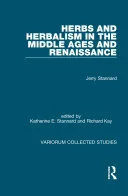
Herbs and Herbalism in the Middle Ages and Renaissance
 83
83

Herbs and Herbalism in the Middle Ages and Renaissance
Stannard's scholarly apparatus, even in these collected fragments, is formidable. The breadth of classical and medieval sources he marshals is exceptional, particularly his deep engagement with the transmission of knowledge from antiquity through to the 17th century. A notable strength lies in his detailed analysis of specific plant entries in early herbals, revealing layers of interpretation and application. However, the volume’s structure, dictated by the posthumous compilation of articles, can feel somewhat fragmented. The absence of Stannard's intended overarching synthesis leaves the reader occasionally wanting for a more unified narrative thread. A particularly illuminating section discusses the allegorical interpretations of plants in medieval bestiaries, showcasing the intersection of botany and symbolic thought. It is a valuable resource, albeit one that demands a reader accustomed to scholarly collections. The work serves as a vital, if incomplete, monument to Stannard's scholarship.
📝 Description
83
Jerry Stannard's extensive research on herbalism from Homer to Linnaeus is presented in this volume.
This book collects significant articles and studies by the late historian Jerry Stannard, focusing on the historical development of herbalism and botanical knowledge. It presents Stannard's unfinished work, originally planned as a larger synthesis.
The collection is valuable for scholars of medieval and Renaissance medicine and botany, as well as those interested in the intellectual history of plant use in Western traditions. Researchers studying the evolution of scientific thought will find its examination of plant knowledge particularly relevant.
Stannard's research covers the period from ancient Greek accounts to early modern botanical classification. His work engages with the shift from Galenic humoral theory and folk traditions toward more empirical observation and taxonomic systems that predated Linnaeus.
While not strictly occult, this book situates herbalism within a historical and intellectual framework that touches upon traditions often considered esoteric. It examines how plants were understood not just for their physical properties but also for their symbolic and philosophical significance in medieval and Renaissance thought. The work traces the lineage of botanical knowledge from ancient philosophical systems and folk practices to the beginnings of scientific classification, revealing a continuity of inquiry into the deeper nature and power of plants that resonates with esoteric perspectives.
💡 Why Read This Book?
• Understand the evolution of botanical classification from ancient texts to the pre-Linnaean era, gaining insight into the foundational methodologies Stannard analyzes. • Explore the symbolic and spiritual dimensions of plant use in medieval and Renaissance Europe, moving beyond purely medicinal applications. • Access the scholarly groundwork laid by Jerry Stannard, a recognized authority, on the history of botany, offering a perspective distinct from modern herbal traditions.
⭐ Reader Reviews
Honest opinions from readers who have explored this book.
❓ Frequently Asked Questions
What historical periods does Jerry Stannard's work cover regarding herbs?
Stannard's research encompasses a vast timeline, beginning with ancient Greek and Roman sources like Homer and extending through the Middle Ages and into the Renaissance, preceding the work of figures like Linnaeus.
What is the relationship between 'Herbs and Herbalism in the Middle Ages and Renaissance' and 'Pristina Medicamenta'?
Both volumes are companion works, bringing together Jerry Stannard's significant articles and studies on the history of botany and herbalism. 'Pristina Medicamenta' likely focuses on earlier or foundational aspects of medicinal plants.
Who was Jerry Stannard in the field of botanical history?
Jerry Stannard was a highly respected historian of botany, acknowledged for his incomparable mastery of the subject, with a comprehensive collection of materials spanning from antiquity to Linnaeus.
How did classical authors influence medieval herbalism according to Stannard's work?
The work explores the critical role of classical authors, such as Dioscorides, whose texts were copied, translated, and interpreted, forming the bedrock of botanical knowledge transmitted through the Middle Ages.
Does this book discuss the magical or occult uses of herbs?
While primarily a historical and scholarly work on botany and medicine, it touches upon the symbolic and allegorical meanings plants held, which often intersected with occult or folk beliefs of the periods discussed.
What makes Stannard's collection unique for historians?
Stannard's unique contribution lies in his synthesis of classical, medieval, and Renaissance botanical traditions, tracing the lineage of plant knowledge and classification methods over centuries.
🔮 Key Themes & Symbolism
Transmission of Ancient Knowledge
This work meticulously traces how botanical knowledge, codified by ancient Greek and Roman authors like Dioscorides, was preserved, copied, and reinterpreted throughout the Middle Ages and Renaissance. It highlights the critical role of monastic scribes and early printing presses in disseminating these foundational texts, ensuring that classical understanding of plants, their properties, and uses persisted and evolved. The book details the challenges and transformations inherent in this long-distance scholarly transmission, revealing how original meanings were sometimes altered or layered with new interpretations.
Medicinal and Symbolic Plant Roles
Beyond their therapeutic applications, the book studies the rich symbolic and allegorical meanings attributed to plants during the medieval and Renaissance periods. It examines how flora was integrated into religious iconography, bestiaries, and philosophical discourse, reflecting a worldview where plants held spiritual significance. This exploration moves beyond a purely scientific or medical perspective to reveal the holistic way in which plants were perceived, understood as imbued with specific virtues or correspondences.
Evolution of Botanical Classification
A central theme is the gradual shift in how plants were understood and categorized. Stannard’s research illustrates the transition from reliance on classical authorities and descriptive accounts to the beginnings of more systematic observation and taxonomic efforts that characterized the Renaissance. The work explores the development of herbals, the increasing use of vernacular names, and the challenges faced by scholars aiming to create a stable classification system prior to the Linnaean revolution.
The Herbalist's Craft and Knowledge
This collection illuminates the practices and intellectual world of herbalists, physicians, and apothecaries across centuries. It examines the sources of their knowledge—whether ancient texts, empirical observation, or folk traditions—and how this knowledge was applied in daily life and medical practice. The book underscores the vital role of herbalism as a primary form of medicine and a significant aspect of agrarian and domestic economies during these eras.
💬 Memorable Quotes
Direct passages from the work, attributed to the author.
“Stannard's work traces botanical knowledge from Homer to Linnaeus.”
— This statement expresses the vast chronological scope of Stannard's intended main work, highlighting his ambition to chart the entire lineage of Western botanical understanding across millennia.
“The companion volume is Pristina Medicamenta.”
— This factual detail points to a related body of work by Stannard, suggesting a deeper exploration of foundational or earlier medicinal plant traditions that complements the broader historical survey.
“His mastery of the field was acknowledged as incomparable.”
— This highlights Stannard's esteemed reputation among his peers and scholars in the history of botany, underscoring the authority and depth of his research presented in these collected writings.
“His work was sadly cut short by his death.”
— This poignant observation explains the posthumous nature of this publication, framing the collected articles as fragments of a larger, unfulfilled scholarly vision.
“This volume brings together his important output in articles and studies.”
— This clarifies the nature of the book itself: a curated collection of previously published or prepared scholarly pieces, rather than a single, continuously authored narrative.
🌙 Esoteric Significance
Tradition
While not explicitly aligned with a single esoteric lineage like Hermeticism or Kabbalah, Stannard's work provides essential historical context for understanding the roots of Western herbalism, which often intertwined with folk magic, alchemy, and early forms of natural philosophy that contained esoteric dimensions. His detailed examination of medieval and Renaissance plant lore offers a scholarly foundation for appreciating how these traditions perceived and utilized the natural world, often imbuing plants with spiritual or magical properties.
Symbolism
The book implicitly explores the symbolism inherent in plants, a key aspect of many esoteric traditions. For instance, the allegorical interpretations of plants in medieval bestiaries, mentioned in the context of the work, represent a symbolic language where flora conveyed moral, spiritual, or even occult meanings beyond their physical properties. The very act of cataloging and understanding plants was often tied to a divine order or cosmic sympathy, a concept prevalent in Hermetic thought.
Modern Relevance
Contemporary practitioners of traditional herbalism, historical reenactors, and scholars of Western esotericism draw heavily on the foundational research presented in works like Stannard's. His rigorous historical analysis provides a crucial corrective and context for modern interpretations of ancient plant lore, helping to distinguish historical practices from later magical or New Age appropriations. Thinkers exploring the history of pharmacopeia and the philosophical underpinnings of natural magic find his scholarship invaluable.
👥 Who Should Read This Book
• Scholars of the History of Medicine and Botany: Gain access to foundational research and detailed analysis of primary sources concerning plant knowledge from antiquity through the Renaissance. • Students of Medieval and Renaissance Intellectual History: Understand the role of botanical studies within the broader range of medieval and Renaissance thought, science, and culture. • Serious Herbalism Practitioners and Historians: Access the scholarly context behind traditional herbal practices, exploring the historical transmission and interpretation of plant lore.
📜 Historical Context
Jerry Stannard's research positions itself within the robust field of the history of science and medicine, specifically focusing on the period between antiquity and the Enlightenment. His work engaged with the intellectual currents that saw the gradual shift from reliance on classical authorities like Dioscorides and Galen to the emergence of empirical observation and systematic classification in botany. This era witnessed the proliferation of printed herbals, such as those by Otto Brunfels and Leonhart Fuchs, who began incorporating detailed woodcut illustrations and local observations, challenging purely textual traditions. Stannard's scholarship addresses this key transition, examining how botanical knowledge was transmitted, debated, and transformed. His meticulous approach placed him in dialogue with scholars like Arthur O. Lovejoy and Lynn Thorndike, who were similarly charting the history of ideas and scientific thought, though Stannard’s focus remained sharply on the botanical realm.
📔 Journal Prompts
The transmission of classical botanical texts through the Middle Ages.
The dual role of plants as medicinal agents and symbolic figures.
The evolution of plant classification systems before Linnaeus.
The influence of specific authors like Dioscorides on Renaissance herbals.
The perceived virtues and correspondences of plants in medieval Europe.
🗂️ Glossary
Dioscorides
A Greek physician, pharmacologist, and botanist who wrote De Materia Medica, a five-volume encyclopedia that was the primary source of medicinal information for over 1500 years, heavily influencing medieval and Renaissance herbalism.
Linnaeus
Carl Linnaeus, the Swedish botanist who formalized binomial nomenclature and is often called the 'father of modern taxonomy.' His work in the 18th century revolutionized the classification of plants and animals.
Herbals
Books primarily focused on the identification, cultivation, and medicinal uses of plants. Medieval and Renaissance herbals varied in scope, from transcriptions of ancient texts to detailed observations and illustrations.
De Materia Medica
The important work by Dioscorides, detailing hundreds of medicinal plants and their properties. It served as the authoritative text on pharmacology and botany throughout antiquity and the Middle Ages.
Vernacular Names
The common names of plants used in everyday language, as opposed to their formal scientific or Latinate names. The increasing use of vernacular names marked a shift towards more accessible botanical knowledge.
Humoral Theory
An ancient medical doctrine, most famously articulated by Galen, that health was determined by the balance of four bodily fluids (humors): blood, phlegm, yellow bile, and black bile. Plant properties were often understood in relation to these humors.
Taxonomy
The scientific field concerned with the classification, naming, and identification of organisms. In the context of Stannard's work, it refers to the historical development of systems for organizing and categorizing plants.