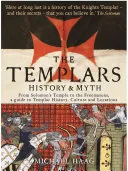
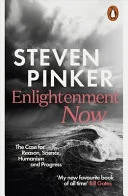
Enlightenment Now
 72
72

Enlightenment Now
Steven Pinker’s *Enlightenment Now* is an ambitious, data-heavy argument for optimism, challenging the pervasive narrative of decline. The book’s strength lies in its meticulous compilation of evidence, demonstrating tangible progress across various global metrics since the 18th century. Pinker’s systematic dismantling of pessimistic arguments, particularly his engagement with figures like Thomas Piketty regarding inequality, is compelling. However, the sheer volume of data can sometimes feel overwhelming, and the author’s assured tone, while persuasive to believers, might alienate those already skeptical of technocratic optimism. A particularly striking section details the dramatic reduction in violence, a counter-intuitive point for many.
Ultimately, *Enlightenment Now* serves as a powerful, albeit dense, manifesto for reason and progress in an era often dominated by fear.
📝 Description
72
Steven Pinker's 2019 book argues humanity has made unprecedented progress.
Published in 2019, Enlightenment Now presents a vigorous defense of human advancement and the Enlightenment principles that support it. Steven Pinker systematically challenges prevailing views of societal decline by examining global trends over the long term. He contends that despite widespread negative headlines, humans have seen remarkable improvements in health, safety, wealth, and knowledge. The book is intended for intellectually curious individuals who doubt current anxieties about the world's condition. It appeals to readers interested in data-backed arguments, the philosophy of progress, and the intellectual history of the Enlightenment. Those looking to counter narratives of despair and adopt a more hopeful, evidence-based perspective will find significant material within its pages. Pinker's work engages directly with criticisms of modernity and globalization, positioning itself within ongoing discussions about secularism, reason, and humanism. It stands as a counterpoint to thinkers who focus on existential risks and societal collapse.
While categorized as esoteric, Enlightenment Now is more accurately placed within the tradition of rational humanism and secular progressivism. It draws heavily on Enlightenment ideals of reason, science, and humanism, advocating for their continued application to solve human problems. The book aligns with thinkers who emphasize empirical evidence and historical data to demonstrate improvements in human well-being, often citing statistics on life expectancy, poverty reduction, and violence. This perspective sees advancements not as random events, but as direct outcomes of applying rational and humanitarian principles. It engages with contemporary debates by offering a data-supported argument for optimism.
💡 Why Read This Book?
• Learn how to counter societal doom-mongering with empirical data, understanding specific metrics like the decline in global poverty rates since 1990. • Grasp the core Enlightenment ideals of reason, science, and humanism, and see how Pinker connects them to concrete improvements in human well-being. • Discover the historical context of progress, recognizing how advancements in areas like public health, spurred by figures like Jonas Salk, have fundamentally altered human existence.
⭐ Reader Reviews
Honest opinions from readers who have explored this book.
❓ Frequently Asked Questions
What are the main Enlightenment values Steven Pinker discusses?
Pinker emphasizes reason, science, humanism, and progress. He argues these values, originating from the 18th-century Enlightenment, are crucial drivers of the improvements seen in human well-being globally.
Does Steven Pinker acknowledge any problems in the modern world?
Yes, while advocating for progress, Pinker acknowledges persistent problems like climate change and inequality. However, he frames them as challenges to be solved using the same Enlightenment tools of reason and science, rather than as evidence of systemic failure.
What evidence does Pinker use to support his claims of progress?
He cites extensive data on metrics such as increased life expectancy, reduced poverty and violence, greater literacy, and expanded freedoms, often comparing current global averages to historical figures from the 18th century onwards.
Who are some thinkers Steven Pinker engages with?
Pinker discusses and often refutes the arguments of contemporary pessimists and critics of modernity. He also draws on the work of Enlightenment thinkers and modern proponents of progress, referencing figures like Hans Rosling.
Is 'Enlightenment Now' a political book?
While rooted in political philosophy and societal trends, its primary focus is on the intellectual underpinnings of progress and human well-being, using empirical evidence to support its arguments for reason and humanism.
How does the book define 'progress'?
Progress is defined not as a utopia, but as a measurable improvement in human well-being across various domains: life, health, prosperity, safety, knowledge, and happiness, driven by reason and empirical inquiry.
🔮 Key Themes & Symbolism
The Power of Reason
Central to Pinker's thesis is the enduring efficacy of human reason and scientific inquiry. The book argues that the Enlightenment's commitment to evidence-based understanding, rather than dogma or superstition, has been the primary engine of global improvement. It posits that through rational thought, humanity has been able to identify problems, develop solutions, and systematically enhance quality of life, from medical breakthroughs to technological advancements, showcasing reason as the ultimate tool for overcoming adversity.
Quantifiable Human Progress
This theme focuses on the empirical evidence demonstrating humanity's advancement. Pinker meticulously presents data illustrating significant increases in life expectancy, reductions in extreme poverty and violence, and expansion of knowledge and freedoms worldwide. This quantitative approach serves to counter pervasive negative biases in media and public perception, offering a data-driven case for optimism by highlighting concrete, measurable improvements over centuries.
The Enlightenment Project
Pinker champions the ideals of the 18th-century Enlightenment—reason, science, humanism, and progress—as a coherent value system that has driven positive change. He argues that these ideals are not outdated but remain the most effective framework for understanding the world and improving the human condition. The book presents these values as a continuous project, advocating for their continued application to tackle contemporary challenges.
Countering Existential Pessimism
A significant portion of the book is dedicated to challenging narratives of impending doom and societal collapse. Pinker systematically debunks common fears about environmental catastrophe, technological unemployment, and social fragmentation, contextualizing these anxieties within a broader historical arc of progress. He argues that while risks exist, they are manageable and should not overshadow the profound, evidence-based improvements already achieved.
💬 Memorable Quotes
Direct passages from the work, attributed to the author.
“The assumption that the present is a horror and the past was a paradise is a cognitive distortion.”
— Pinker uses this to critique the human tendency towards negativity bias, suggesting that our perception of the present is often skewed by focusing on problems while overlooking historical improvements and the gradual nature of progress.
“Progress is not inevitable, but it is possible.”
— This highlights a nuanced view: progress isn't guaranteed, but it is achievable through sustained effort and adherence to the principles of reason and humanism, a call to action rather than a passive observation.
“The long-term trend is overwhelmingly positive.”
— A recurring theme, this phrase emphasizes Pinker's reliance on long-term data analysis to counter short-term anxieties and media sensationalism, asserting that a dispassionate look at history reveals significant improvement.
“The Enlightenment values are the tools that allow us to measure and improve our condition.”
— This statement underscores the instrumental role of Enlightenment principles, positioning them as practical methodologies for understanding and enhancing human well-being, rather than abstract philosophical concepts.
💡 Key Ideas
Editorial paraphrase of the work's core concepts — not direct quotes.
The forces of Enlightenment—reason, science, and humanism—are responsible for the greatest project in human history: the assault on violence, poverty, ignorance, and disease.
This quote captures Pinker's core argument, framing the Enlightenment not just as an intellectual movement but as an active, ongoing project that has demonstrably improved the human condition across multiple critical domains.
🌙 Esoteric Significance
Tradition
While not explicitly an esoteric text, *Enlightenment Now* draws heavily from the intellectual lineage of the Enlightenment, which itself contains proto-esoteric undercurrents focused on human potential and liberation from ignorance. Its emphasis on reason, empirical observation, and universal humanism aligns with certain rationalist branches of Western esotericism, particularly those influenced by secular philosophies that seek knowledge and betterment through human intellect rather than divine revelation alone. It departs from traditional esotericism by grounding its optimism firmly in verifiable, material progress.
Symbolism
The book’s primary symbolic thrust lies in the concept of 'progress' itself, often visualized as an upward-trending graph – a symbol of continuous improvement and overcoming limitations. The 'Enlightenment' acts as a symbolic dawn, dispelling the darkness of superstition and ignorance. The 'humanist' ideal symbolizes the elevation of human dignity and potential, replacing older hierarchies with a focus on universal well-being and the application of rational methods.
Modern Relevance
Pinker's work is highly relevant to contemporary 'rationalist' and 'effective altruist' communities, who often cite his data to support their focus on evidence-based solutions to global problems. Thinkers and organizations prioritizing data-driven approaches to societal improvement, such as those analyzing global health metrics or poverty reduction strategies, implicitly or explicitly engage with the framework Pinker defends. His arguments also inform discussions on secularism and the role of science in public life.
👥 Who Should Read This Book
['• Skeptics of progress narratives: Individuals troubled by pervasive pessimism who seek evidence-based arguments for optimism and a data-driven understanding of global trends.', '• Students of intellectual history: Readers interested in the Enlightenment, its enduring impact, and its role in shaping modern thought and societal development.', '• Data enthusiasts and critical thinkers: Those who appreciate rigorous analysis, statistical evidence, and a systematic approach to evaluating claims about the state of the world.']
📜 Historical Context
Published in 2019, *Enlightenment Now* entered a global discourse often dominated by anxieties about climate change, political instability, and the perceived failures of globalization. This period saw a rise in pessimistic narratives, amplified by social media and 24-hour news cycles. Pinker’s work directly confronted thinkers like Yuval Noah Harari, whose *Sapiens* and *Homo Deus* explored humanity’s potentially bleak future, and responded to critiques from figures like Paul Krugman who focused heavily on contemporary economic woes. The book’s reception was polarized; while lauded by many as a vital defense of reason and progress, it also drew criticism for what some perceived as an overly optimistic dismissal of genuine global threats. It arrived decades after the initial wave of post-modern skepticism and the rise of environmentalism, offering a robust, data-backed counter-argument to prevailing cultural pessimism.
📔 Journal Prompts
The data on global life expectancy increases since 1700.
The role of reason in countering contemporary anxieties.
The definition of 'progress' presented in the book.
Applying Enlightenment values to a personal challenge.
Evidence for the decline of violence over centuries.
🗂️ Glossary
Enlightenment
An 18th-century intellectual and cultural movement emphasizing reason, individualism, skepticism of tradition, and the pursuit of knowledge and human betterment through science and secular philosophy.
Humanism
A philosophical stance that emphasizes the value and agency of human beings, individually and collectively, advocating for a focus on human welfare, reason, and ethical principles over supernatural beliefs.
Progress
In Pinker's context, this refers to measurable improvements in human well-being across various domains such as health, safety, prosperity, knowledge, and freedom, driven by reason and empirical inquiry.
Reason
The capacity for consciously making sense of things, establishing and verifying facts, and applying logic. Pinker champions it as the primary tool for understanding the world and solving problems.
Science
A systematic enterprise that builds and organizes knowledge in the form of testable explanations and predictions about the universe. Pinker views it as a core part of Enlightenment progress.
Negativity Bias
The cognitive tendency for humans to pay more attention to, and give more weight to, negative experiences or information than to positive ones, often leading to a skewed perception of reality.
Trendlines
Long-term patterns and trajectories observed in data over extended periods, contrasted with short-term fluctuations or headline-grabbing events, used by Pinker to demonstrate historical progress.
This book appears in 1 collection
🔮 Readers Also Liked
Browse all →








From the “Enlightenment” Collection
View all →









More Free Esoteric History & Biography Books
View all →