Roman Republican Augury
 72
72

Roman Republican Augury
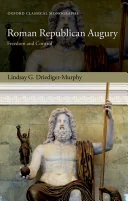
Lindsay G. Driediger-Murphy's "Roman Republican Augury: Freedom and Control" offers a refreshing departure from conventional analyses of Roman divination. Rather than cataloging the legal ramifications or socio-political functions of augury, Driediger-Murphy probes its very essence as a communicative act between humans and the divine, specifically Jupiter. The author compellingly argues that augury was not merely a passive reception of divine omens but an active process where Roman elites could interpret, and arguably influence, the divine will. The examination of "augural agency" is particularly astute, revealing the sophisticated rhetorical and political strategies embedded within the ritual. A potential limitation is the academic density; the book demands a foundational knowledge of Roman history and religious studies, which might pose a barrier for casual readers. However, for those invested in the subject, the meticulous scholarship and original thesis provide substantial reward. Driediger-Murphy's work significantly advances our understanding of how Romans perceived their relationship with the gods.
📝 Description
72
Lindsay G. Driediger-Murphy's 2021 book re-examines Roman Republican augury not as a mere formality, but as a dynamic tool for divine communication.
This study moves beyond simple descriptions of Roman augury to analyze its active role in statecraft. Driediger-Murphy argues that Roman officials used augural rituals to both understand and shape divine will, especially that of Jupiter. The book situates augury within the Roman Republic, a time of significant political maneuvering and shifting religious practices. It acknowledges that augury was not a fixed ritual but was applied flexibly.
The research introduces the concept of 'augural agency,' suggesting that magistrates and elites actively interpreted, and at times guided, the divine messages received through established procedures. This challenges the idea that divine pronouncements were always fixed, emphasizing the human role in consulting Jupiter. The work examines the balance between the freedom to interpret and strategically use augural signs, and the control exerted by the augural college's established framework.
This book engages with the esoteric tradition of understanding ritualized communication and its perceived connection to divine forces. It situates Roman augury within a broader historical interest in how ancient societies interpreted signs and omens to guide their actions. By focusing on the human element in interpreting divine will, it touches upon themes found in various traditions that explore the intersection of human agency and supernatural influence, particularly within structured religious practice.
💡 Why Read This Book?
• You will learn how Roman elites actively interpreted and influenced divine will through augury, moving beyond a passive reception of omens, as detailed in the analysis of "augural agency." • You will gain a new perspective on the Roman Republic's political decision-making, understanding augury not just as a legal formality but as a tool for strategic communication, particularly concerning Jupiter. • You will discover how the tension between "freedom" of interpretation and "control" within established ritual frameworks shaped Roman religious practice, as explored in the book's core arguments.
⭐ Reader Reviews
Honest opinions from readers who have explored this book.
❓ Frequently Asked Questions
What is the primary focus of Lindsay G. Driediger-Murphy's book on Roman Republican Augury?
The book focuses on understanding augury as a dynamic process of communication with Jupiter, emphasizing the agency of Roman interpreters rather than solely its legal or structural effects.
How does this book differ from previous scholarly work on Roman augury?
It shifts the focus from legal-constitutional effects or social perpetuation to the active interpretation and potential influence of divine will by Roman elites during the Republic.
What is 'augural agency' as discussed in the book?
Augural agency refers to the concept that Roman magistrates and elites actively interpreted, and perhaps even shaped, the pronouncements of the gods through established augural procedures.
Which Roman god was primarily consulted through augury?
The primary deity consulted through the practice of augury in the Roman Republic was Jupiter.
Who would benefit most from reading 'Roman Republican Augury: Freedom and Control'?
Scholars and students of Roman religion, politics, and cultural history, as well as those interested in the phenomenology of ancient divination and the interplay of belief and power.
What is the central tension explored in the book regarding augury?
The book explores the tension between the 'freedom' of interpretation available to augurs and the 'control' exerted by the established institutional framework and procedures of the augural college.
🔮 Key Themes & Symbolism
Augural Agency
This theme centers on the active role of Roman elites in interpreting and interacting with divine will through augury. Driediger-Murphy posits that augury was not a passive reception of divine messages but a performative act where human agents could shape understanding and influence outcomes. The work explores how magistrates and priests utilized the established rituals to engage with Jupiter, suggesting a sophisticated interplay between human decision-making and perceived divine guidance during the Roman Republic.
Freedom vs. Control
The book examines the inherent tension within Roman augury between the potential for interpretive 'freedom' and the need for institutional 'control.' While the augural college operated within strict procedural guidelines, the interpretation of omens (signs from the gods) allowed for a degree of flexibility. This dynamic shaped how augury was used in political and religious contexts, providing a mechanism for both consensus-building and strategic maneuvering within the Roman state.
Consulting Jupiter
A core element of the study is the specific focus on how Romans sought to consult Jupiter, the king of the gods, through augury. This practice was fundamental to state decision-making, impacting everything from the timing of military campaigns to the legitimacy of political assemblies. The work elucidates the theological and political significance of this divine consultation, moving beyond simplistic notions of superstition to reveal a complex system of divine-human dialogue.
Phenomenology of Divination
Driediger-Murphy engages with the experiential and cognitive aspects of Roman divination. The book considers what it might have been like for Roman officials to participate in and interpret augural signs. This approach seeks to understand the subjective experience and the cognitive frameworks that underpinned the practice, offering insights into how belief, ritual, and perception intersected in the Roman world.
💬 Memorable Quotes
Direct passages from the work, attributed to the author.
“Augury was not merely a passive reception of divine will but an active process of consultation and interpretation.”
— This highlights the book's central argument that Romans were not simply told what Jupiter thought, but actively engaged in a dialogue, using established procedures to understand and potentially influence divine favor.
“The tension between freedom and control defined the practice of Roman augury.”
— This expresses the core analytical framework, suggesting that the established rules of augury (control) paradoxically allowed for significant interpretive latitude (freedom) in understanding divine signs.
“The consultation of Jupiter was central to Roman statecraft.”
— This emphasizes the profound political and religious importance of augury, positioning it as a critical mechanism for legitimizing decisions and seeking divine sanction in the Roman Republic.
“Elites employed augury to perceive and shape divine intentions.”
— This interpretation underscores the agency of Roman leaders, suggesting they used augural practices not just to understand the gods' wishes but also to strategically align events with their own political aims.
“The study moves beyond legal effects to the communicative function of augury.”
— This points to the methodological shift in the book, prioritizing the analysis of augury as a form of communication and ritual performance over its purely institutional or constitutional implications.
🌙 Esoteric Significance
Tradition
While not strictly an esoteric text in the vein of Hermeticism or Kabbalah, this work touches upon the esoteric by exploring the hidden knowledge and specialized practices employed by Roman elites to access divine communication. It aligns with traditions that study divination and sacred knowledge as means of understanding cosmic order and influencing worldly affairs. The focus on interpreting divine signs positions augury within a broader category of practices aimed at uncovering hidden truths or divine intentions, relevant to many esoteric lineages.
Symbolism
The primary symbol is the 'sign' or 'omen' itself, interpreted through established augural procedures. The flight of birds (auspices), thunder, lightning, and animal entrails were all considered symbolic communications from Jupiter. The book explores how these natural or unnatural phenomena were imbued with meaning within the specific ritualistic context, transforming ordinary occurrences into potent messages guiding state actions. The ritual framework itself, the 'templum' or sacred space, also acts as a symbolic container for this divine-human exchange.
Modern Relevance
Contemporary interest in divination, ritual studies, and the psychology of belief systems speaks to Driediger-Murphy's analysis. Thinkers and practitioners exploring the intersection of psychology, ritual, and belief, or those studying comparative religious practices, can draw on this work. It informs modern discussions on how societies construct meaning, legitimize power through perceived divine sanction, and navigate uncertainty using structured interpretive systems, offering a historical case study for understanding symbolic communication and agency in belief systems.
👥 Who Should Read This Book
• Scholars of Roman history and religion seeking a deeper understanding of divination practices beyond their legalistic implications. • Students of comparative religion interested in the mechanics of ancient state cults and the phenomenology of religious experience. • Individuals fascinated by the interplay of power, belief, and ritual in ancient societies, particularly concerning how perceived divine communication influenced political decision-making. • Researchers exploring the concept of agency within established religious frameworks and interpretive traditions.
📜 Historical Context
Lindsay G. Driediger-Murphy's "Roman Republican Augury: Freedom and Control" emerges from a rich tradition of scholarship on Roman religion and politics, yet it carves a distinct path. Published in 2019, it engages with debates surrounding Roman ritual practice that have occupied historians for decades. Unlike earlier studies that might have focused on the juristic aspects of augury or its role in maintaining social order, this work emphasizes the agency and interpretive strategies of Roman elites. The book implicitly dialogues with scholars like Fritz Graf and John North, who have explored Roman religious sensibilities, by focusing on the active role of individuals within the ritual framework. While not directly engaging with contemporary figures in the way one might see in studies of, say, the Renaissance, Driediger-Murphy’s contribution addresses the enduring question of how ancient societies perceived and interacted with the divine, offering a nuanced view of the Roman Republic's intellectual and religious landscape.
📔 Journal Prompts
The concept of 'augural agency' in Roman Republican Augury.
Interpreting divine signs: How might the 'freedom and control' dynamic apply to modern decision-making?
The specific consultation of Jupiter through augury.
Reflecting on the 'phenomenology of divination' in your own belief system.
The tension between 'freedom' and 'control' within established rituals.
🗂️ Glossary
Augury
A practice in ancient Rome by which priests (augurs) interpreted the will of the gods, particularly Jupiter, by observing natural phenomena such as bird flight, thunder, and lightning.
Jupiter
The king of the gods in Roman mythology, equivalent to the Greek Zeus. Augury was primarily a means of consulting his will for state affairs.
Augural Agency
The concept that Roman elites actively interpreted and potentially shaped the divine messages received through augury, rather than passively receiving them.
Templum
In augury, the consecrated space marked out by the augur, within which observations were made and interpreted. It was a conceptual division of the sky or ground.
Omens
Signs or events believed to portend future occurrences, interpreted by augurs as messages from the gods, especially Jupiter.
State Divination
Religious practices used by the state to ascertain the will of the gods before undertaking important public actions, such as going to war or holding elections.
Magistrates
Elected officials in the Roman Republic who held various levels of authority and often consulted augurs before performing official duties.
This book appears in 1 collection
🔮 Readers Also Liked
Browse all →









From the “Augury” Collection
View all →









More Free Esoteric History & Biography Books
View all →