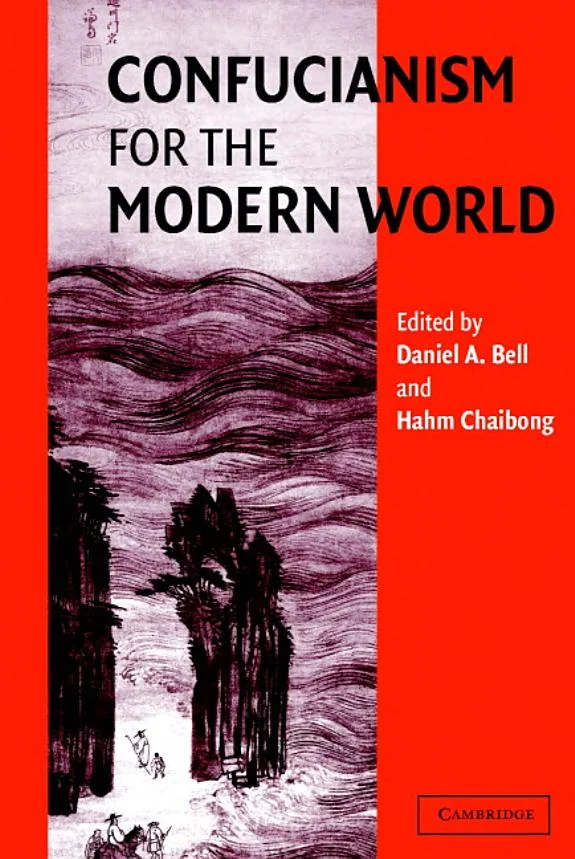
Confucianism for the Modern World
 75
75

Confucianism for the Modern World
Bell and Ham's collection, Confucianism for the Modern World, tackles the considerable challenge of translating ancient ethical frameworks into practical modern applications. The strength of this volume lies in its scholarly rigor; contributors engage with specific institutions and practices, avoiding vague platitudes. A particularly compelling section details the potential for meritocratic selection processes, echoing imperial examination systems, within contemporary public administration. However, the collection occasionally falters by assuming a degree of familiarity with Confucian terminology that may alienate less specialized readers. The discussion around filial piety, while nuanced, could have benefited from more direct engagement with Western critiques of hierarchical family structures. Ultimately, it serves as a vital, if demanding, resource for understanding Confucianism's contemporary potential.
📝 Description
75
Published in 2003, Confucianism for the Modern World scrutinizes Confucian principles for contemporary society.
This 2003 collection of essays examines the practical application of Confucian ideas in today's world. It moves beyond abstract philosophy to look at concrete institutional and ethical structures. The contributors discuss how core Confucian concepts can shape modern governance, social organization, and individual behavior. The volume addresses the continuing influence of Confucian thought and aims to connect its historical background to the challenges of the twenty-first century.
Academics, students, and serious practitioners of philosophy, political science, and comparative religion will find this work useful. It appeals to those interested in how classical thought confronts modern issues, particularly those wanting to grasp the lasting importance of East Asian philosophical traditions. Readers who are wary of simple applications of tradition and seek a careful, critical look at Confucianism's role in a globalized world will appreciate its depth. It speaks to those who believe older wisdom can provide practical answers for current problems.
In the early 2000s, there was renewed interest in non-Western political philosophies as alternatives to dominant liberal democratic models. Confucianism, with its focus on social order, structured relationships, and merit, presented a significant case study. This book emerged during a time when thinkers were debating the future of political systems, and various visions for societal organization were being explored. The contributors engaged with contemporary political theorists, positioning Confucianism as a complex but viable framework for organizing society amidst globalization and changing political ideas.
💡 Why Read This Book?
• Learn how Confucian concepts like 'li' (ritual propriety) can be reinterpreted to structure social interactions and institutions in the 21st century, offering alternatives to modern individualism. • Understand the historical context of Confucianism's revival in political discourse around the year 2003, examining its role as a counterpoint to Western liberal thought. • Discover concrete proposals for implementing meritocratic principles, inspired by the imperial examination system, within contemporary educational and governmental frameworks.
⭐ Reader Reviews
Honest opinions from readers who have explored this book.
❓ Frequently Asked Questions
What is the primary focus of 'Confucianism for the Modern World'?
The book's primary focus is on examining the practical application of Confucian ideals and institutions in contemporary society, moving beyond abstract philosophy to concrete ethical and political frameworks for the modern era.
Who are the main contributors to this volume?
The contributors are described as internationally renowned philosophers, lawyers, historians, and social scientists, all engaged in the effort to articulate the relevance of Confucianism for the contemporary world.
When was 'Confucianism for the Modern World' first published?
The book was first published on September 8, 2003, reflecting a period of renewed interest in non-Western political philosophies.
Does the book discuss specific Confucian practices or only abstract ideas?
The book specifically aims to discuss concrete Confucian practices and institutions, addressing a perceived gap in the literature regarding their suitability for the modern era.
What is the significance of Confucianism for political actors mentioned in the blurb?
The blurb suggests that Confucian ideals continue to inspire political actors, and this volume seeks to provide them with detailed, modern interpretations of these principles for contemporary governance.
Is this book suitable for beginners in Confucian studies?
While it offers valuable insights, the book delves into complex academic discussions and may be best suited for those with some prior knowledge of Confucian philosophy or related fields.
🔮 Key Themes & Symbolism
Reinterpreting Ritual Propriety (Li)
This theme centers on the concept of 'li,' often translated as ritual or propriety. The book explores how these ancient norms of social conduct and ceremony can be adapted to foster social harmony and ethical behavior in contemporary settings. It moves beyond mere etiquette to consider 'li' as a framework for structuring social interactions, governing institutions, and cultivating virtuous citizens. The essays examine the challenges of applying these traditional forms in a globalized world that often prioritizes individualism, offering nuanced arguments for their enduring relevance in shaping a more ordered and ethical society.
Meritocracy and Governance
A significant thread in the collection is the examination of Confucian meritocratic ideals within modern governance. Drawing parallels with historical imperial examination systems, the authors investigate how principles of competence, virtue, and ethical leadership can be integrated into contemporary political structures. This theme addresses the selection and training of public officials, aiming to create a system where governance is based on moral cultivation and demonstrated ability rather than solely on popular election or hereditary privilege. The work scrutinizes the feasibility and desirability of such systems in the face of modern democratic expectations.
Filial Piety in a Global Age
'Xiao,' or filial piety, is explored not just as a family duty but as a foundational virtue with broader societal implications. The essays grapple with how this concept, emphasizing respect for elders and ancestors, can be understood and practiced in modern nuclear families and aging societies. It considers the tension between traditional familial obligations and the mobility and individualism characteristic of contemporary life. The contributors seek to articulate a modern understanding of filial piety that preserves its ethical core while adapting to the realities of diverse family structures and societal norms.
Benevolence (Ren) as a Social Imperative
The concept of 'ren,' often translated as benevolence or humaneness, is presented as a crucial ethical ideal for modern social and political life. The book examines how 'ren' can serve as the guiding principle for creating just and compassionate institutions. It discusses the cultivation of empathy, mutual respect, and care for the well-being of others as essential components of a functioning society. This theme addresses the perennial challenge of fostering genuine human connection and ethical responsibility in a world often perceived as increasingly impersonal and transactional.
💬 Memorable Quotes
Direct passages from the work, attributed to the author.
“Discussions of concrete Confucian practices and institutions appropriate for the modern era have been conspicuously absent from the literature.”
— This statement highlights the central problem the volume aims to solve: the lack of practical, actionable interpretations of Confucianism for contemporary life, setting the stage for the book's detailed explorations.
“The contributors to this book... argue for feasible Confucian alternatives to liberal democracy.”
— This indicates a core argument within the collection: that Confucian thought offers not just ethical guidance but potentially viable political and social models that differ from dominant Western paradigms.
“Confucianism for the Modern World seeks to spell out in meticulous detail the relevance of Confucianism for the contemporary world.”
— This emphasizes the volume's commitment to thoroughness and specificity, aiming to provide a comprehensive and detailed account of how ancient Confucianism can be applied today.
“The work engages with internationally renowned philosophers, lawyers, historians, and social scientists.”
— This points to the interdisciplinary and high-caliber nature of the scholarship presented, suggesting a robust and complex examination of the subject matter.
“The book addresses the gap between Confucian ideals and the demands of twenty-first-century life.”
— This captures the book's ambition to bridge historical philosophical traditions with the practical challenges and realities faced in the modern era, offering a relevant and forward-looking perspective.
🌙 Esoteric Significance
Tradition
While Confucianism is primarily a socio-political and ethical philosophy, its emphasis on self-cultivation, harmony with the cosmos (as understood through natural order), and the pursuit of virtue places it adjacent to certain esoteric traditions focused on inner transformation and societal well-being. Its lineage is distinct from Western Hermeticism or Kabbalah, but it shares a common concern with aligning individual conduct with universal principles for the sake of order and flourishing, echoing Taoist and Buddhist ideas of living in accordance with the Way (Dao).
Symbolism
Key symbols in Confucianism, though often secular in presentation, carry wide implications. The concept of the 'Junzi' (gentleman or noble person) symbolizes the ideal of cultivated moral character and leadership. The metaphor of the 'ordered cosmos' reflects the belief that human society should mirror the harmony and balance found in nature, a common theme in many esoteric cosmologies. The emphasis on proper ritual ('li') itself functions symbolically, representing the correct ordering of social relationships and the maintenance of cosmic and social equilibrium.
Modern Relevance
Contemporary relevance lies in its critique of hyper-individualism and consumerism, offering a framework for communal responsibility and ethical governance. Thinkers and policymakers interested in communitarianism, ethical leadership, and alternative models of social organization often draw upon Confucian concepts. It informs discussions on the role of virtue in public life and provides a philosophical basis for societies seeking to balance tradition with modernity, influencing discourse on political legitimacy and social cohesion in East Asia and beyond.
👥 Who Should Read This Book
• Students of comparative philosophy and religion: To grasp how a major East Asian tradition can be critically examined for modern relevance, moving beyond historical study. • Political scientists and policymakers: To explore alternative frameworks for governance and social organization that prioritize ethical leadership and societal harmony over pure individualism. • Individuals seeking ethical guidance: To understand how ancient philosophical concepts like benevolence and ritual propriety can inform personal conduct and societal structures in the 21st century.
📜 Historical Context
Published in 2003, 'Confucianism for the Modern World' emerged during a period of significant global intellectual reorientation. The preceding decade had witnessed debates surrounding Francis Fukuyama's 'End of History' thesis, prompting many scholars to explore alternative political and social models beyond liberal democracy. This volume positioned Confucianism as a prominent contender, offering a rich philosophical tradition with established principles of social order, governance, and ethics. The contributors engaged with contemporary thinkers in political theory and comparative philosophy, seeking to demonstrate Confucianism's viability in the face of globalization. While other scholars like Alasdair MacIntyre were reviving virtue ethics, Bell and Ham's work focused specifically on institutionalizing Confucian principles. The reception saw it cited in academic circles discussing East Asian political thought and modernization, presenting Confucianism as a distinct philosophical framework rather than a mere historical curiosity.
📔 Journal Prompts
The concept of 'li' as a framework for social order.
Reinterpreting 'xiao' (filial piety) in contemporary family structures.
The ethical implications of Confucian meritocracy for modern governance.
Cultivating 'ren' (benevolence) in a globalized, individualistic society.
Confucianism's potential as an alternative to liberal democratic ideals.
🗂️ Glossary
Ren (仁)
Often translated as benevolence, humaneness, or goodness. It is a core Confucian virtue representing the ideal relationship between people, emphasizing empathy, compassion, and care for others' well-being.
Li (禮)
Encompasses ritual propriety, etiquette, ceremony, and social norms. It guides conduct in social interactions, political affairs, and religious rites, aiming to cultivate virtue and maintain social harmony.
Xiao (孝)
Filial piety, the virtue of respect for one's parents, elders, and ancestors. It is considered a foundational virtue in Confucianism, extending to broader duties of loyalty and care within society.
Junzi (君子)
Literally 'son of a ruler,' but translated as 'gentleman,' 'noble person,' or 'superior person.' It refers to the ideal moral exemplar in Confucianism, characterized by wisdom, integrity, and virtuous conduct.
Meritocracy
A social system, principle, or country in which important positions are held by people chosen according to their ability. The book explores Confucian precedents for this concept in governance.
Harmony (He 和)
A central aim in Confucian thought, referring to the ideal state of balance and accord within society, between individuals, and between humanity and the cosmos. It is achieved through adherence to 'li' and cultivation of 'ren'.
Rectification of Names (Zhengming 正名)
The Confucian concept that names and titles should correspond to reality. For example, a ruler should act like a ruler, a minister like a minister. This ensures social order and ethical conduct.
This book appears in 1 collection
🔮 Readers Also Liked
Browse all →





From the “Confucianism” Collection
View all →




More Free Esoteric History & Biography Books
View all →