The complete I ching
 62
62

The complete I ching



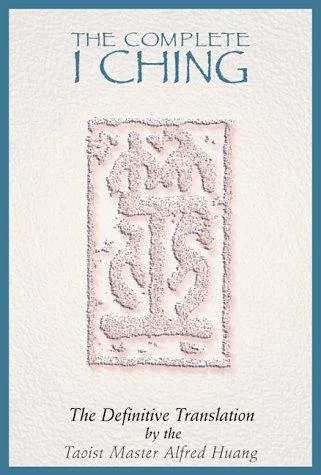
Alfred Huang's "The Complete I Ching" stands as a monumental achievement, offering Western readers direct access to the soul of this ancient Chinese divination classic. As a native scholar, Huang transcends the cultural barriers that have historically obscured the text's true esoteric power. His translation illuminates the original ideographs with a clarity and reverence rarely seen, revealing the profound philosophical and spiritual insights embedded within each hexagram. This edition is an indispensable resource for serious students of divination, comparative religion, and Eastern philosophies. It eschews superficial interpretations for a deep dive into the symbolic language and cosmic principles that have guided generations. For anyone seeking authentic wisdom and a direct connection to the archetypal forces of change, this is the definitive translation.
📝 Description
62
Alfred Huang's 1998 translation presents the I Ching with unparalleled clarity, honoring its original Chinese context.
Alfred Huang, a Chinese scholar, translated the I Ching in 1998, aiming for an authentic rendering of the ancient text. This translation focuses on the archaic ideographs, seeking to bypass the filters of earlier Western interpretations. Huang's work allows readers to engage directly with the original language and philosophy of the "Book of Changes."
The book covers the interplay of Yin and Yang, the structure of the 64 hexagrams, and the philosophical ideas embedded within the text. It is presented not just as a tool for divination but as a philosophical work that addresses the cyclical patterns of the universe and human existence. This edition is suited for those interested in Chinese mystical thought and its broader applications.
The I Ching, or "Book of Changes," is one of the oldest Chinese classic texts, dating back over three millennia. It serves as a system of divination and a philosophical guide, rooted in the principles of Taoism. Its core is the arrangement of 64 hexagrams, each a combination of six lines representing either Yin (broken) or Yang (solid). These hexagrams are interpreted to offer guidance on situations and predict future developments, reflecting a worldview where change is constant and everything is interconnected.
💡 Why Read This Book?
Embark on a journey into the heart of ancient wisdom with "The Complete I Ching." This translation offers an unparalleled, authentic connection to the original ideographs, revealing the I Ching's profound divinatory and philosophical secrets. Ideal for scholars, spiritual seekers, and practitioners of esoteric arts, it provides a direct conduit to the timeless wisdom that has shaped Eastern thought for millennia, offering guidance and profound self-understanding.
⭐ Reader Reviews
Honest opinions from readers who have explored this book.
❓ Frequently Asked Questions
What makes Alfred Huang's translation unique?
Huang's translation is unique because it's the first by an eminent Chinese scholar, directly translating the original ideographs without Western cultural biases, offering unparalleled authenticity and depth.
Is the I Ching only a divination tool?
While renowned for divination, the I Ching is also a profound philosophical treatise, offering insights into cosmic principles, change, and the human condition.
Who is the intended audience for this book?
This book is for serious students of divination, philosophy, Eastern spirituality, and anyone seeking a deeper, authentic understanding of this ancient classic.
How can I use the I Ching for personal guidance?
Consult the text with a sincere question, cast the yarrow stalks or coins, and interpret the resulting hexagram and its changing lines using Huang's nuanced explanations.
What is the significance of the ideographs in the I Ching?
The ideographs are the foundational symbolic language of the I Ching, carrying layers of meaning that reveal the dynamic interplay of natural forces and human experience.
🔮 Key Themes & Symbolism
The Nature of Cosmic Change
The I Ching fundamentally explores the ceaseless flow of transformation that governs the universe. It posits that change is the only constant, a dynamic process driven by the interplay of Yin and Yang. Each hexagram represents a specific phase or tendency within this cosmic flux, offering insights into how to navigate life's ever-shifting currents with wisdom and foresight. Understanding these patterns allows individuals to align themselves with the Tao, fostering harmony and opportune action, thus becoming active participants in the unfolding of destiny rather than passive observers.
The Principle of Yin and Yang
At the core of the I Ching lies the profound duality of Yin and Yang, the primordial forces that give rise to all phenomena. Yin embodies receptivity, darkness, and the feminine, while Yang represents activity, light, and the masculine. Their dynamic interaction, constant movement, and mutual transformation create the ten thousand things. The hexagrams, composed of broken (Yin) and unbroken (Yang) lines, visually represent these forces and their myriad combinations, revealing the underlying structure of reality and guiding practitioners towards balance and integration within themselves and their environment.
Divination as a Path to Self-Knowledge
Beyond mere fortune-telling, the I Ching serves as a potent tool for self-reflection and spiritual development. The process of consulting the oracle encourages introspection, prompting individuals to clarify their intentions and confront their inner states. The hexagrams act as mirrors, reflecting not just external circumstances but also the hidden dynamics of the querent's psyche. By engaging with the I Ching's wisdom, one gains useful insights into their motivations, potential pitfalls, and the auspicious paths forward, fostering a deeper connection to their authentic self and their role in the cosmic order.
💬 Memorable Quotes
Direct passages from the work, attributed to the author.
“In stillness, wisdom is found; in action, destiny is forged.”
— This highlights the balance between contemplation and decisive action, essential for reading through the cycles of change presented by the I Ching.
“The hexagrams are maps of the soul's journey.”
— This emphasizes the I Ching's role not just in predicting external events, but in informative the inner field of the individual.
“Harmony arises from the balanced dance of opposites.”
— This refers to the core concept of Yin and Yang, suggesting that true equilibrium and effectiveness come from integrating opposing forces.
“To know the Tao is to flow with the river of existence.”
— This profound statement suggests that alignment with the natural order, the Tao, leads to effortless and harmonious living.
💡 Key Ideas
Editorial paraphrase of the work's core concepts — not direct quotes.
Change is the constant, the only true unchanging principle.
This quote expresses the I Ching's central philosophy: the universe is in perpetual motion, and understanding this flux is key to wisdom.
🌙 Esoteric Significance
Tradition
The I Ching is a foundational text within the Taoist and Confucian philosophical traditions, deeply intertwined with Chinese esoteric practices and cosmology. It represents a potent branch of ancient Chinese divination and metaphysical thought, offering a symbolic language for understanding the universe's dynamic processes. Its principles are integral to Feng Shui, Traditional Chinese Medicine, and various forms of I Ching-based geomancy and spiritual cultivation, making it a comprehensive system for aligning oneself with the natural order.
Symbolism
The core symbolism revolves around the sixty-four hexagrams, each formed by six lines (broken for Yin, solid for Yang). These symbols represent archetypal situations, natural phenomena, and human interactions. The trigrams (three-line combinations) further distill these concepts, symbolizing elements like Heaven, Earth, Thunder, and Water. The interplay of these symbols creates a rich, multi-layered symbolic language that allows for nuanced interpretation of life's complexities, serving as a cosmic map for navigating existence.
Modern Relevance
In the modern era, the I Ching continues to offer profound relevance as a tool for mindfulness, decision-making, and spiritual growth. Its emphasis on adaptability, understanding cyclical patterns, and the interconnectedness of all things resonates deeply in a rapidly changing world. For individuals seeking to understand themselves better, navigate uncertainty, or find a deeper sense of purpose, the I Ching provides timeless wisdom. Its principles offer a framework for ethical living, fostering balance, and cultivating resilience in the face of contemporary challenges.
👥 Who Should Read This Book
This definitive translation of "The Complete I Ching" is essential for a broad spectrum of readers. For **beginners** in Eastern philosophy and divination, it offers a clear, authentic starting point, clarifying the text's profound depths. **Scholars** of comparative religion, philosophy, and sinology will find Huang's scholarly approach important for rigorous study. **Spiritual seekers** will discover a powerful oracle and a guide to self-understanding, connecting with universal truths. **Practitioners** of esoteric arts, from tarot readers to energy healers, will find a rich source of archetypal wisdom and divinatory techniques to integrate into their practice.
📜 Historical Context
The I Ching, or 'Book of Changes,' emerged from the mystical traditions of ancient China, with its origins stretching back to the Shang Dynasty (c. 1600–1046 BCE) and further formalized during the Zhou Dynasty (c. 1046–256 BCE). For millennia, it served as a central to Chinese cosmology, philosophy, and governance. Its influence permeated every stratum of society, from emperors consulting it for state decisions to commoners seeking guidance in personal matters. Over centuries, it was revered as one of the Five Classics of Confucianism, solidifying its status as a repository of profound wisdom. Its transmission to the West in the modern era sparked fascination, leading to numerous translations, each attempting to capture its elusive essence and profound symbolic language, positioning it as a globally recognized esoteric text.
📔 Journal Prompts
Reflect on a recent significant change in your life. How might the I Ching's principles of transformation apply?
Consider the interplay of Yin and Yang in your personal relationships. Where can you find greater balance?
What question about your current path would you ask the I Ching, and why?
How does the concept of 'fate' as presented in the I Ching differ from your own understanding?
Explore a hexagram that speaks to your current circumstances. What specific guidance does it offer?
🗂️ Glossary
Hexagram
A figure composed of six stacked horizontal lines, each line being either solid (Yang) or broken (Yin). There are 64 unique hexagrams in the I Ching, representing archetypal situations and cosmic principles.
Trigram
A figure composed of three stacked horizontal lines, either solid (Yang) or broken (Yin). There are eight basic trigrams (Pa Kua), each symbolizing fundamental elements and concepts like Heaven, Earth, and Water.
Yin
The passive, receptive, dark, feminine principle in Chinese philosophy, often represented by broken lines in the I Ching.
Yang
The active, creative, light, masculine principle in Chinese philosophy, often represented by solid lines in the I Ching.
Tao (Dao)
The fundamental principle of the universe in Chinese philosophy; the Way. It represents the natural order, the source of all things, and the path of harmonious living.
This book appears in 3 collections
🔮 Readers Also Liked
Browse all →






More by Alfred Huang
All books →

From the “Tarot” Collection
View all →






More Free Divination & Tarot Books
View all →