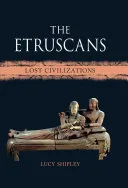
The Etruscans
 74
74

The Etruscans
Lucy Shipley's "The Etruscans" is a welcome corrective to the common perception of this ancient people as mere historical footnotes or impenetrable enigmas. Shipley effectively argues for their agency and significant cultural impact, challenging the notion that their civilization is irretrievably lost. A particular strength lies in her detailed examination of Etruscan interactions with the Greek world, providing concrete examples of cultural exchange that belie their supposed isolation. However, the book occasionally feels constrained by its introductory nature, leaving the reader wishing for deeper dives into specific areas, such as the nuances of Etruscan religious practices. The discussion of their language, while informative, highlights the persistent scholarly challenges rather than offering definitive solutions. Shipley’s work provides a solid foundation, making a compelling case for the Etruscans as central players in ancient Mediterranean history.
📝 Description
74
Lucy Shipley's 2023 book examines the Etruscans beyond their enigmatic reputation.
Lucy Shipley's "The Etruscans" moves past the idea of this ancient Italian civilization as an unknowable mystery. Instead, the book presents them as active participants in the wider Mediterranean world. Shipley details their interactions with Greek culture, their unique language, and the social structures that underpinned their significant regional power.
Flourishing in Italy from around the 8th century BCE until their assimilation by Rome in the 1st century BCE, the Etruscans significantly influenced Roman culture. This impact is visible in areas like religion, art, and government. Despite their importance, much of their written record, including their distinct language, remains only partially understood, which adds to their mystique. Shipley places the Etruscans within their active historical context, recognizing their trade links with Magna Graecia and the Near East.
While not overtly a text of occult practices, "The Etruscans" engages with esoteric traditions by addressing a civilization often shrouded in mystery and speculation. The Etruscans' partially deciphered language and their unique religious beliefs, particularly as inferred from tomb paintings and funerary rites, have long fascinated those interested in pre-classical European spirituality and hidden histories. Shipley's work provides a scholarly grounding for understanding the material culture and historical context that inform these enduring questions, offering a foundation for deeper contemplation of their worldview.
💡 Why Read This Book?
• Gain a nuanced understanding of Etruscan societal structure and their interactions with Greek colonies, as detailed through their trade networks and artistic exchanges, moving beyond the "mysterious people" trope. • Explore the complexities of the Etruscan language and writing system, including the adaptation of the Greek alphabet, and understand the challenges scholars face in decipherment. • Appreciate the significance of Etruscan art and funerary customs, as depicted in their vibrant frescoes and detailed metalwork, which offer tangible links to their beliefs and daily life.
⭐ Reader Reviews
Honest opinions from readers who have explored this book.
❓ Frequently Asked Questions
What is the primary argument Lucy Shipley makes about the Etruscans?
Shipley argues against the common portrayal of Etruscans as an unknowable people. Instead, she presents them as an influential civilization actively engaged with the wider Mediterranean world, particularly through trade with Greece and the development of their unique culture.
When did the Etruscan civilization exist?
The Etruscan civilization flourished in ancient Italy roughly from the 8th century BCE until its absorption into the Roman Republic by the 1st century BCE, leaving a significant cultural legacy.
What challenges exist in understanding the Etruscan language?
The Etruscan language is not Indo-European and remains only partially deciphered. While scholars can read the Etruscan alphabet, which is derived from Greek script, the meaning of many texts is still debated, posing a significant hurdle.
How did the Etruscans influence Roman culture?
Etruscan influence on Roman culture was substantial, particularly in religious practices, artistic styles, and even elements of urban planning and political organization. Their presence laid important groundwork for Roman development.
What are some key aspects of Etruscan art and culture discussed in the book?
The book highlights Etruscan funerary practices, as revealed through tomb paintings and artifacts, and their distinctive artistic conventions, especially in metalwork and frescoes, which showcase their sophisticated craftsmanship and worldview.
Is "The Etruscans" by Lucy Shipley suitable for beginners?
Yes, "The Etruscans" is well-suited for beginners. It provides a clear introduction to a complex civilization, presenting historical and cultural information accessibly without sacrificing scholarly depth.
🔮 Key Themes & Symbolism
Etruscan Autonomy and Influence
Shipley's work challenges the perception of the Etruscans as a passive or mysterious people. Instead, it emphasizes their active role as traders and cultural innovators in the ancient Mediterranean. The book details their significant interactions with Greek colonies and other contemporary cultures, demonstrating how they shaped and were shaped by their environment. This perspective highlights their autonomy and the profound influence they exerted on subsequent Italian civilizations, including Rome, particularly in religious and artistic spheres.
The Etruscan Language Enigma
A central theme is the unique and challenging nature of the Etruscan language. Unlike most ancient European languages, it is not Indo-European. The book discusses the Etruscan alphabet, adapted from Greek script, and the ongoing scholarly efforts to fully decipher their texts. This linguistic puzzle contributes to their mystique but also offers a unique window into their thought processes and cultural identity, as scholars work to unlock the meaning behind inscriptions found on tombs and artifacts.
Art, Ritual, and the Afterlife
The book looks at Etruscan material culture, particularly their elaborate funerary practices and vibrant art. Through analyses of tomb frescoes and sarcophagi, Shipley explores Etruscan beliefs about death and the afterlife, revealing a society deeply concerned with commemoration and the continuity of life. These artistic expressions are not merely decorative but serve as crucial sources for understanding their social structures, daily life, and spiritual cosmology, providing tangible connections to their worldview.
Etruscan Identity and Origins
Shipley addresses the enduring questions surrounding Etruscan origins and identity. While ancient sources debated whether they migrated from the East or were indigenous to Italy, modern scholarship acknowledges a complex interplay of factors. The book examines the evidence from archaeology, linguistics, and genetics to present a nuanced picture of a civilization that developed its distinct character through both internal evolution and external contact, contributing a unique thread to the human story.
💬 Memorable Quotes
Direct passages from the work, attributed to the author.
“Shipley writes of a people who traded with Greece and shaped th”
— This excerpt emphasizes Lucy Shipley's central argument: the Etruscans were not isolated or unknowable, but actively engaged participants in the ancient Mediterranean economy and cultural exchange, significantly influencing their neighbors.
“The Etruscans are often portrayed as mysterious—a strange and unknowable people whose language and culture have largely vanished.”
— This highlights the prevailing historical narrative that Shipley's book seeks to reframe. It acknowledges the challenges posed by the Etruscan language and the fragmented nature of their cultural record, setting the stage for a revised interpretation.
“Shipley’s The Etruscans presents a different picture.”
— This concise statement signals the book's primary objective: to offer a revised and more nuanced understanding of Etruscan civilization, moving beyond sensationalism and mystery to a more grounded historical portrayal.
“But despite their prominence, the Etruscans are often portrayed as mysterious”
— This highlights the paradox Shipley addresses: the Etruscans were clearly a powerful and prominent civilization, yet their distinctiveness and the partial loss of their language have led to them being shrouded in an aura of mystery.
💡 Key Ideas
Editorial paraphrase of the work's core concepts — not direct quotes.
Their civilization is marked by an influential civilization in ancient Italy.
This paraphrased concept underscores the substantial impact the Etruscans had on the development of ancient Italy. It serves as a foundational assertion for the book's exploration of their political, cultural, and artistic contributions.
🌙 Esoteric Significance
Tradition
While not explicitly aligned with a single esoteric lineage like Hermeticism or Gnosticism, "The Etruscans" touches upon themes relevant to Western esotericism through its exploration of ancient belief systems, divination practices, and the symbolic language of art and ritual. The Etruscans' sophisticated understanding of omens and their intricate relationship with the divine can be seen as precursors to later divinatory arts that found their way into esoteric traditions. The book provides a historical grounding for practices that sought hidden meanings in natural phenomena, a common thread in esoteric thought.
Symbolism
The Etruscans' elaborate funerary art, particularly the vivid frescoes found in tombs, is rich with symbolism relevant to esoteric interpretation. Motifs like banquets, dances, and processions often symbolize the continuation of life in the afterlife and the soul's journey. The depiction of mythological scenes and deities speaks to a complex cosmology. Furthermore, their practices of augury and haruspicy, the interpretation of bird flight and animal entrails for divine will, represent ancient forms of seeking hidden knowledge and divine guidance, aligning with esoteric quests for understanding.
Modern Relevance
Contemporary practitioners of Western esotericism, particularly those interested in ancient Mediterranean cultures and pre-Christian European traditions, find value in works like Shipley's. It offers a more scholarly and less mythologized view of a civilization whose practices, such as divination and ancestor veneration, echo in modern esoteric systems. Thinkers and groups exploring earth-based spirituality, ancient mystery traditions, or comparative religion may draw on the historical context provided by "The Etruscans" to inform their understanding of ritual, symbolism, and the human relationship with the divine.
👥 Who Should Read This Book
• Students of ancient Mediterranean civilizations seeking a clear, concise overview of Etruscan culture beyond Roman accounts. • Researchers of comparative religion and mythology interested in pre-Indo-European belief systems and early European spiritual practices. • Enthusiasts of ancient languages and epigraphy who wish to understand the challenges and current state of Etruscan script decipherment.
📜 Historical Context
Published in 2023, Lucy Shipley's "The Etruscans" enters a field with a long history of scholarship, often dominated by speculation due to the challenges of the Etruscan language. The book engages with the ongoing academic discourse that seeks to place the Etruscans within their broader Italic and Mediterranean context, moving beyond earlier theories of purely Eastern origins. This work arrives at a time when archaeological findings continue to illuminate Etruscan society, complementing linguistic studies. It implicitly responds to earlier popularizations that leaned heavily on the 'mysterious' aspect, offering a more evidence-based approach. While specific reception events like censorship are unlikely for a modern introductory work, its contribution lies in synthesizing current research for a wider audience, potentially contrasting with more specialized monographs that might focus solely on epigraphy or art history.
📔 Journal Prompts
Etruscan funerary frescoes and their depictions of the afterlife.
The adaptation of the Greek alphabet for the Etruscan language.
The influence of Etruscan trade on their cultural development.
The Etruscan practice of augury and its potential esoteric connections.
Comparing Etruscan social structures with those of their Greek and Roman neighbors.
🗂️ Glossary
Augury
The practice of interpreting omens, particularly the flight of birds, to ascertain divine will or predict future events. This was a significant practice among the Etruscans.
Haruspicy
A form of divination practiced by the Etruscans (and later the Romans), involving the examination of the entrails of sacrificed animals, especially the liver, to interpret divine messages.
Magna Graecia
The coastal areas of Southern Italy and Sicily where Greek colonies were established from the 8th century BCE onwards. The Etruscans had significant interactions with these Greek settlements.
Etruscan Alphabet
A writing system adapted from the Greek alphabet, used by the Etruscans. While the letters are recognizable, the language itself is not Indo-European and remains partially undeciphered.
Sarcophagus
A stone coffin, often elaborately decorated. Etruscan sarcophagi, particularly the lids depicting the deceased, provide crucial insights into their art, beliefs, and social customs.
Tomb Frescoes
Wall paintings found in Etruscan tombs, depicting scenes from daily life, mythology, and the afterlife. These vibrant artworks are primary sources for understanding Etruscan culture.
Indo-European Language Family
A large family of languages spoken by hundreds of millions of people, including most European languages, Indo-Iranian languages, and some languages of Western Asia. Etruscan is not classified within this family.