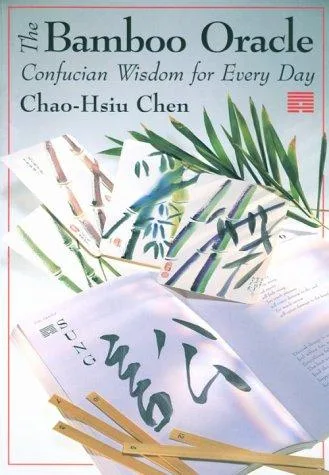
The Bamboo Oracle
 62
62

The Bamboo Oracle



By Balthazar Finch (Senior Critic, Occult Philosophy) — Chao-Hsiu Chen's 'The Bamboo Oracle' is a masterful exposition of a truly unique divinatory art. Chen elegantly bridges the practical application of oracular insight with the deep philosophical underpinnings of Eastern wisdom traditions. The symbolism is both accessible and profoundly layered, offering practitioners a rich vocabulary for introspection and guidance. Its strength lies in its ability to foster self-actualization, moving beyond simple prognostication to encourage genuine personal transformation. This work is indispensable for those seeking a more nuanced and spiritually resonant form of divination, particularly those drawn to the philosophies of Confucianism and the principles of Yin and Yang.
📝 Description
62
Chao-Hsiu Chen's 'The Bamboo Oracle' presents a divination system rooted in nature's energies and Chinese philosophy.
This volume details a unique divination method developed by Chao-Hsiu Chen. It connects natural elements with core concepts from Confucianism and the principles of Yin and Yang. The system aims to be more than a simple fortune-telling tool; it encourages self-reflection and personal growth.
Each card within the oracle carries symbolic meaning intended to offer insight into one's life. The book encourages a quiet, thoughtful approach, helping readers find clarity and a better understanding of their spiritual selves. It is written for those interested in a detailed and authentic method of divination that supports personal development and spiritual awareness.
The Bamboo Oracle is situated within the tradition of East Asian divination practices, which often integrate natural observation with philosophical frameworks. Unlike systems solely focused on prediction, this method emphasizes introspection, drawing parallels between the physical world and inner states. Its connection to Confucianism suggests an ethical and social dimension to the divinatory process, encouraging harmony and balance in personal life.
💡 Why Read This Book?
Uncover the subtle wisdom of the East through a captivating divination system. 'The Bamboo Oracle' offers a unique lens for self-reflection, blending ancient philosophy with practical guidance. Ideal for seekers of spiritual depth, students of Eastern traditions, and practitioners looking to expand their divinatory toolkit beyond conventional tarot. It promises not just answers, but profound insights into self-actualization.
⭐ Reader Reviews
Honest opinions from readers who have explored this book.
❓ Frequently Asked Questions
What is the core philosophy behind The Bamboo Oracle?
The Bamboo Oracle is rooted in Taoist principles and Confucian ethics, emphasizing balance, harmony, and the interconnectedness of all things. It draws upon the cyclical nature of the universe and the symbolic power of the bamboo itself to offer insights for living a balanced and meaningful life.
Is The Bamboo Oracle similar to Tarot?
While both are divinatory tools, 'The Bamboo Oracle' offers a distinct approach. It uses unique imagery and symbolism derived from nature and Eastern philosophy, focusing on inner growth and wisdom rather than strictly predictive outcomes.
Who is the intended audience for this book?
This book is ideal for individuals interested in Eastern philosophies, self-discovery, and alternative divination methods. It caters to both beginners seeking a gentle introduction and experienced practitioners looking for new perspectives.
What are the benefits of using The Bamboo Oracle?
Using the oracle can lead to enhanced self-awareness, improved decision-making, a deeper understanding of life's challenges, and the cultivation of inner peace and wisdom through contemplative practice.
Does the book provide instructions on how to use the oracle?
Yes, the book offers comprehensive guidance on interpreting the cards, performing readings, and integrating the oracle's wisdom into daily life for personal growth and spiritual development.
🔮 Key Themes & Symbolism
The Symbolism of Bamboo
The bamboo, a central motif, embodies resilience, flexibility, and uprightness – virtues deeply revered in Eastern cultures. In 'The Bamboo Oracle,' its hollow core symbolizes emptiness and receptivity, essential for divine connection and intuitive understanding. Its segmented structure reflects the stages of growth and the cyclical nature of existence. The book explores how the bamboo's inherent strength and graceful movement serve as potent metaphors for navigating life's adversities with equanimity and wisdom, encouraging readers to cultivate these qualities within themselves.
Confucian Ethics and Inner Harmony
Chao-Hsiu Chen masterfully integrates the ethical framework of Confucianism into the divinatory practice. This theme explores the importance of moral cultivation, social harmony, and the pursuit of the 'Junzi' (noble person). The oracle's guidance encourages readers to examine their actions and intentions through the lens of filial piety, righteousness, propriety, wisdom, and trustworthiness. The aim is not merely to predict the future but to foster a virtuous character, leading to a life of balance, integrity, and profound inner peace, aligning personal aspirations with universal principles.
The Dance of Yin and Yang
Central to the oracle's interpretation is the profound concept of Yin and Yang, the fundamental dualistic forces that govern the universe. 'The Bamboo Oracle' illustrates how these complementary energies, representing principles like light and dark, active and passive, masculine and feminine, are in constant interplay. The readings guide the user to recognize the presence and balance of these forces within themselves and their situations, fostering an understanding of how to embrace both aspects of existence. This leads to a more holistic perspective, promoting adaptability and acceptance of life's inherent dualities.
💬 Memorable Quotes
Direct passages from the work, attributed to the author.
“The hollow heart of the bamboo receives the whispers of the cosmos.”
— This poetic line highlights the oracle's capacity to channel universal wisdom, suggesting that inner receptivity is key to divine communication.
“To know oneself is the beginning of all true divination.”
— This aphorism underscores the book's emphasis on introspection and self-awareness as the primary tools for understanding oneself and the world.
💡 Key Ideas
Editorial paraphrase of the work's core concepts — not direct quotes.
True wisdom lies not in knowing the future, but in understanding the present.
This quote emphasizes the oracle's focus on present awareness and inner reflection as the foundation for navigating life, rather than solely seeking predictive outcomes.
Like the bamboo, bend but do not break.
A powerful metaphor for resilience, this quote encourages adaptability and inner strength in the face of adversity, drawing parallels to the natural world.
Harmony is not the absence of storms, but the skill to dance in the rain.
This quote reframes the concept of harmony, suggesting it's about skillful navigation and acceptance of life's challenges, rather than their complete eradication.
🌙 Esoteric Significance
Tradition
The esoteric tradition of 'The Bamboo Oracle' is deeply embedded within the framework of Chinese metaphysical philosophy, particularly drawing from Taoism and Confucianism. It aligns with practices that seek to understand the interconnectedness of the human realm with the cosmic order through symbolic interpretation and intuitive insight. This tradition emphasizes the cultivation of inner virtue and balance as the pathway to spiritual enlightenment and harmonious living.
Symbolism
The core symbolism revolves around the bamboo itself, representing flexibility, resilience, and inner emptiness conducive to spiritual receptivity. The Yin and Yang principle is fundamental, illustrating the dynamic interplay of opposing forces and the pursuit of equilibrium. Other symbols likely derive from natural elements and philosophical concepts, each offering layers of meaning to facilitate self-reflection and understanding of life's patterns, guiding the user toward greater awareness.
Modern Relevance
In a contemporary world often characterized by rapid change and superficiality, 'The Bamboo Oracle' offers a potent antidote. Its emphasis on mindful reflection, ethical conduct, and harmonious living resonates deeply with modern seekers of authenticity and balance. The oracle provides a tangible tool for navigating personal challenges with wisdom and grace, fostering self-actualization and a deeper connection to universal principles, making ancient wisdom accessible and applicable to the complexities of 21st-century life.
👥 Who Should Read This Book
This clear text is a treasure for a diverse range of readers. **Beginners** seeking an accessible yet profound entry into Eastern divination will find its clear guidance invaluable. **Scholars** of comparative religion, philosophy, and cultural studies will appreciate its rich integration of Confucian and Taoist thought. **Spiritual seekers** yearning for tools that foster self-awareness and inner peace will discover a powerful ally. **Practitioners** of tarot and other divination arts will find a unique and complementary system that expands their interpretive capabilities and deepens their understanding of symbolic language.
📜 Historical Context
Emerging from a body of Chinese philosophical and spiritual traditions, 'The Bamboo Oracle' finds its roots in a civilization that has long revered nature's symbolism and sought useful insights through contemplative practices. The text likely draws inspiration from the enduring legacy of Confucianism, which shaped societal ethics and personal conduct for millennia, and Taoism, with its emphasis on natural flow and cosmic harmony. The development of various divinatory systems, including methods involving natural elements like bamboo, has a long and complex history in China, often intertwined with governance, personal guidance, and spiritual seeking. This work can be seen as a modern articulation of these ancient wisdom streams, offering a bridge between historical practices and contemporary desires for self-understanding and spiritual connection in an increasingly complex world.
📔 Journal Prompts
Reflect on the qualities of bamboo that you most admire and wish to cultivate in your own life. How can you embody flexibility and resilience more fully?
Consider a current challenge you are facing. How might the principles of Yin and Yang offer a new perspective on its resolution?
In what ways does your current life reflect the virtues emphasized in Confucianism (e.g., righteousness, propriety, wisdom)? Where can you strengthen these areas?
The oracle suggests receptivity is key to wisdom. What are you currently 'empty' of, and what wisdom might flow into that space?
How can you bring more balance and harmony into the 'storms' of your daily life, rather than seeking to eliminate them?
🗂️ Glossary
Yin and Yang
The fundamental Taoist concept of complementary, interconnected, and interdependent forces that govern the natural world. Yin represents passive, dark, feminine qualities, while Yang represents active, light, masculine qualities.
Confucianism
An ethical and philosophical system developed from the teachings of Confucius, emphasizing moral cultivation, social harmony, and the importance of virtuous conduct in personal and public life.
Self-actualization
In psychology, the process of fulfilling one's potential and becoming the best version of oneself, often involving personal growth, creativity, and the pursuit of meaningful experiences.
Oracle
A divine communication or prophecy, often delivered through a person or object believed to be a medium for divine revelation. In this context, a system for divining wisdom and guidance.
Junzi
A term from Confucian philosophy referring to a noble person, an ideal individual characterized by moral integrity, self-cultivation, and adherence to ethical principles.
This book appears in 1 collection
🔮 Readers Also Liked
Browse all →






More by Chao-Hsiu Chen
All books →

From the “Divination” Collection
View all →









More Free Divination & Tarot Books
View all →