✍️ Author Biography
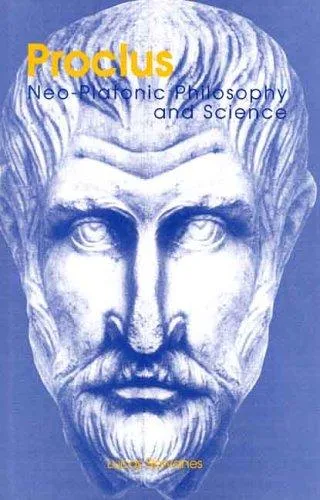
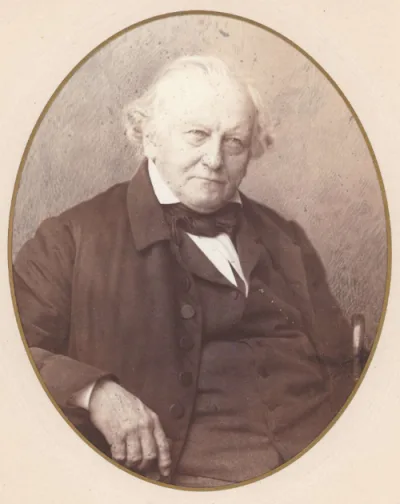
Lucas Siorvanes
📅 1225 – 1274
🌍 German
📚 2 free books
Neoplatonism, a philosophical system originating in the 3rd century AD, profoundly influenced Western thought and religion.
Neoplatonism represents a significant development within Platonic philosophy, emerging in the 3rd century AD against the backdrop of Hellenistic intellectual traditions. It is characterized by a series of thinkers rather than a rigid set of doctrines, though a central tenet is monism, the idea that all reality stems from a singular principle known as 'the One'. The movement's origins are traced to Ammonius Saccas and his student Plotinus, extending through influential figures like Porphyry and Iamblichus, and culminating in the flourishing academies of Alexandria and Athens in the 5th and 6th centuries.
This philosophical school exerted a deep and lasting impact on subsequent Western philosophy and religious thought. During the Middle Ages, its ideas were explored by Christian, Jewish, and Muslim scholars, with prominent thinkers in the Islamic world, such as al-Farabi and Avicenna, integrating Neoplatonic concepts into their own work. Later, figures like Thomas Aquinas, Meister Eckhart, Marsilio Ficino, and Giovanni Pico della Mirandola also engaged with and were influenced by Neoplatonism, demonstrating its enduring relevance through various historical periods and spiritual movements.
Origins and Key Figures
Neoplatonism, a modern term used to distinguish later Platonic interpretations from Plato's original writings, began with Ammonius Saccas and his most famous student, Plotinus, around the 3rd century AD. The tradition evolved through several distinct phases, including the work of Plotinus's student Porphyry, followed by Iamblichus and his school. The final phase saw the prominence of the academies in Alexandria and Athens during the 5th and 6th centuries. These thinkers synthesized various philosophical and religious ideas, drawing from Middle Platonists, Neopythagoreans, and Hellenized Jewish thought. While the term 'Neoplatonism' implies a significant departure from earlier Platonic thought, some scholars debate the extent of its novelty compared to immediate predecessors.
Core Tenets and Influence
A central concept in Neoplatonism is monism, the belief that all existence can be traced back to a single, ultimate principle, referred to as 'the One'. This One is described as being beyond all categories of existence, utterly transcendent and undivided. Plotinus, considered the father of Neoplatonism, articulated this concept, stating that 'the One' is prior to all existing things and cannot be described by any attribute derived from worldly experience. The influence of Neoplatonism extended far beyond its initial period, shaping Christian, Jewish, and Islamic philosophical and mystical traditions throughout the Middle Ages and continuing to inspire thinkers and spiritual movements into the modern era.
Later Developments and Synthesis
Following Plotinus, later Neoplatonists like Porphyry and Iamblichus further developed the system. Porphyry, known for his commentaries and biographical work on Plotinus, also engaged with mathematics and was an opponent of Christianity. Iamblichus expanded the Neoplatonic cosmology to include a vast hierarchy of divine beings and emphasized the practice of 'theurgy'—divine-working—as a means for the soul to achieve salvation and return to the divine realm. The study of Aristotle's works also became integrated into the Platonic curriculum, with commentaries seeking to harmonize Plato, Aristotle, and Stoic ideas, particularly in the later academies of Athens and Alexandria.
Key Ideas
- Monism: The doctrine that all reality derives from a single principle, 'the One'.
- The One: A supreme, transcendent principle beyond being and non-being, the source of all reality.
- Theurgy: A practice of divine-working, often involving rites and offerings, aimed at spiritual ascent.