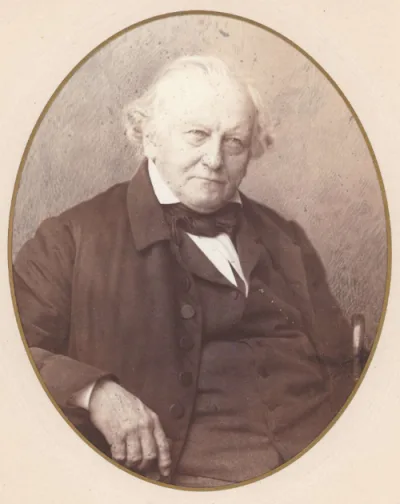
Charles Bigg
Charles Bigg, a researcher involved in Titanic iceberg studies, co-authored work questioning the significance of celestial alignments on iceberg calving.
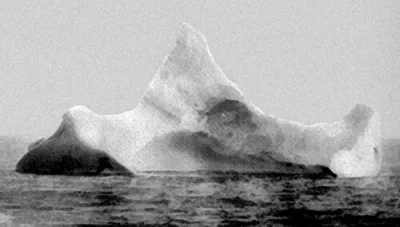
Charles Bigg, alongside Wilton, explored the origins and journey of the iceberg that sank the Titanic. They utilized computer simulations to propose a potential path for the iceberg, suggesting it likely originated from southwest Greenland and traveled south along the "Iceberg Alley." Their research also addressed the timing and conditions that might have contributed to the iceberg's formation and movement.
Bigg and Wilton specifically examined theories linking the Titanic disaster to astronomical events, such as a rare spring tide in January 1912. However, they expressed skepticism regarding the direct impact of such celestial alignments on the specific iceberg's calving, suggesting that factors like sea surface temperature in the Labrador Sea were more plausible influences. Their work aimed to provide a more grounded scientific perspective on the iceberg's history and the circumstances surrounding the tragedy.
Research on the Titanic Iceberg's Origin
Charles Bigg, in collaboration with Wilton, investigated the potential origins and trajectory of the iceberg that caused the Titanic disaster. They employed computer simulations to model the iceberg's path, positing that it likely originated from the southern or southwestern regions of Greenland. This contrasts with some modern theories that place the origin further northwest. Their simulations suggested the iceberg traveled south, following the Labrador Current along the Canadian coast, a route commonly known as "Iceberg Alley." Bigg and Wilton also considered that the iceberg might have been sighted during systematic observations conducted at the time, even prior to the establishment of the official Ice Patrol.
Skepticism Regarding Celestial Influences
Bigg and Wilton critically examined the hypothesis that a specific astronomical alignment, namely a spring tide coinciding with the Moon's proximity to Earth on January 4, 1912, played a significant role in the iceberg's calving. They voiced doubts about the substantial impact of this particular celestial configuration, arguing that a few days around this event would not be sufficiently influential. Furthermore, they noted that winter conditions often block fjords with sea ice, potentially hindering iceberg formation. Instead, Bigg and Wilton leaned towards environmental factors, such as the surface water temperature of the Labrador Sea, as more probable drivers for iceberg calving.
Iceberg Journey and Visibility Factors
The research by Bigg and Wilton also touched upon the conditions that influenced the iceberg's visibility and its journey. They noted that the weather patterns in the North Atlantic leading up to the disaster, including a high-pressure area that ensured calm seas and clear skies, contributed to the iceberg being difficult to spot at night. The warm and wet conditions of 1908 were also considered as a factor that could have facilitated the formation of a large iceberg in the autumn of 1911. Their work aimed to reconstruct the iceberg's likely path and the environmental context surrounding its collision with the Titanic.
Books by Charles Bigg
6 free public domain books · Read online or download