Leendert Gerrit Westerink
Zagreus is an ancient Greek underworld deity, later identified with an Orphic Dionysus who was dismembered and reborn.
Zagreus is an ancient Greek god primarily associated with the underworld. Early mentions link him with Gaia as the "highest" god, potentially within the chthonic realm, and Aeschylus connects him with Hades, possibly as his son or even Hades himself. The name "Zagreus" is etymologically linked by scholars like Martin Litchfield West to "zagre," meaning a pit for catching animals or offerings, suggesting a "god of pitfalls" or a "hunter." This has led to interpretations of him as a master of animals or a hunter deity.
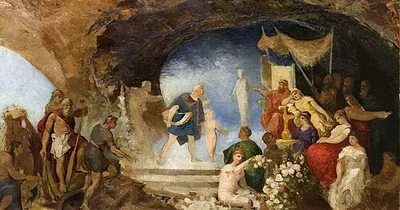
Later traditions, particularly those associated with Orphism, identify Zagreus with a specific version of Dionysus. This Orphic Dionysus Zagreus is depicted as the son of Zeus and Persephone who, as an infant, was dismembered by the Titans but subsequently reborn. This myth, involving the sparagmos (dismemberment) and rebirth, is central to Orphic theology and explores themes of divine suffering and human origins from the Titans' ashes. The process of his dismemberment and consumption by the Titans, followed by his rebirth from his heart, is a complex narrative with various ancient interpretations.
Origins and Etymology of Zagreus
The name "Zagreus" has several proposed etymologies, none definitively agreed upon. Martin Litchfield West suggests the most plausible derivation is from "zagre," an ancient Greek word for a pit used for trapping animals or making chthonic offerings, thus rendering Zagreus the "god of pitfalls." This interpretation aligns with Karl Kerényi's view of Zagreus as a "hunter who catches living animals." While the word "zagre" appears in Hesychius with an Ionic ending, suggesting an Ionian origin, other scholars point to linguistic features that might indicate a Doric or Northwest Greek homeland. Alternative theories propose connections to "great hunter" (though rejected by West and Kerényi) or even the Zagros Mountains, with Michael C. Astour suggesting a Ugaritic origin related to "the Young One."
Zagreus in Early Greek Religion and Mythology
Early references to Zagreus, found in fragments of lost works, consistently place him within the context of the Greek underworld. The earliest known mention, from the epic "Alcmeonis," pairs him with Gaia as the "highest of all the gods," possibly signifying the supreme deity of the underworld. The playwright Aeschylus further associates Zagreus with Hades, either as Hades' son or as an alternative identity for Hades himself. Euripides' lost play "Cretans" describes initiates participating in nocturnal rites involving "night-ranging Zagreus" and ritualistic feasts of raw flesh, linking him to the cult of Zeus on Mount Ida and suggesting his role in mystery rites with a claimed Cretan origin.
The Orphic Dionysus Zagreus and the Sparagmos Myth
A significant development in the understanding of Zagreus is his identification with an Orphic version of Dionysus. This Dionysus Zagreus is portrayed as the son of Zeus and Persephone who, in his infancy, was attacked and dismembered by the Titans. Although not explicitly named "Zagreus" in all Orphic texts, the myth of his sparagmos (dismemberment) and subsequent rebirth is considered a pivotal Orphic narrative. The story details how the Titans, incited by Hera, tore the infant god apart, consumed parts of him, but Athena saved his heart, enabling Zeus to orchestrate his rebirth from Semele. This myth is often seen as foundational to Orphic beliefs about divine suffering and the origin of humanity from the Titans' ashes.
Dismemberment, Consumption, and Rebirth Narratives
The myth of Dionysus Zagreus' dismemberment and rebirth is recounted with variations across ancient sources. Some accounts describe the Titans boiling and even eating parts of the infant god, with Plutarch mentioning they "tasted his blood" and Olympiodorus stating they ate "his flesh." The recovery of his heart by Athena is a crucial element, serving as the catalyst for his rebirth. Different traditions attribute the reassembly and resurrection to various deities, including Rhea, Demeter, or Apollo. Later accounts, like Hyginus', suggest Zeus himself incorporated the heart into a potion given to Semele, leading to Dionysus' second birth. The parallel between the Dionysus Zagreus myth and the Egyptian Osiris myth, both involving dismemberment and resurrection, is also noted.
Key Ideas
- Zagreus as an underworld deity
- Etymological interpretations of the name Zagreus
- Association with Hades
- Identification with an Orphic Dionysus
- The myth of the sparagmos (dismemberment) of Dionysus Zagreus
- Themes of divine suffering, death, and rebirth
- Connection to mystery cults and chthonic rites
Notable Quotes
“Mistress Earth [Gaia], and Zagreus highest of all the gods.”
“night-ranging Zagreus, performing his feasts of raw flesh; and raising torches high to the mountain Mother among the Curetes,”
Books by Leendert Gerrit Westerink
2 free public domain books · Read online or download