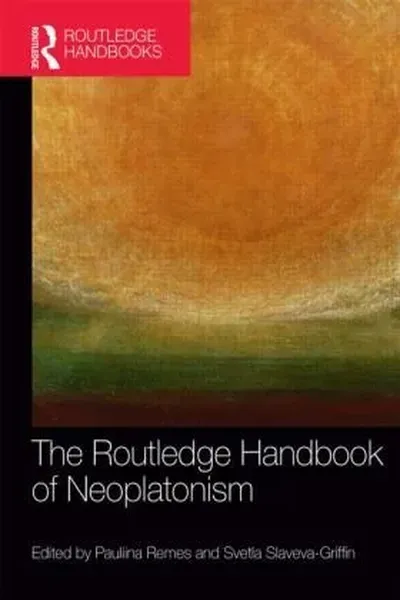
Pauliina Remes
Neoplatonism, a philosophical system originating in the 3rd century AD, posits a single ultimate principle and profoundly influenced Western thought.
Neoplatonism is a philosophical school that emerged in the 3rd century AD, building upon the ideas of Plato. While not a single set of doctrines, it is characterized by thinkers who shared common themes, most notably monism – the belief that all of reality stems from a singular, ultimate principle often referred to as "the One." This system began with Ammonius Saccas and his student Plotinus and continued through several centuries, influencing academies in Alexandria and Athens.
The term "Neoplatonism" itself is a modern label used to distinguish these later Platonic interpretations from Plato's original philosophy and from earlier Middle Platonism. The influence of Neoplatonic thought extended far beyond its historical period, impacting Christian, Jewish, and Muslim thinkers in the Middle Ages, and continuing to resonate in Renaissance philosophy and modern spirituality. Key figures like Porphyry, Iamblichus, and later thinkers like Thomas Aquinas and Marsilio Ficino engaged with and propagated Neoplatonic ideas, shaping the course of Western intellectual and religious history.
Origins and Core Tenets
Neoplatonism represents a significant development in Platonic philosophy, emerging in the 3rd century AD within the broader context of Hellenistic thought and religion. It is less a unified doctrine and more a designation for a series of influential philosophers from a specific historical epoch. A central tenet often found in Neoplatonic thought is monism, the concept that the entirety of existence can be traced back to a single, ultimate source or principle, known as "the One." This foundational idea posits a reality that is unified and ultimately derivable from this singular origin. The movement's origins are commonly attributed to Ammonius Saccas and his most prominent student, Plotinus, with its intellectual lineage extending through the 6th century AD.
Historical Development and Key Figures
Following Plotinus, Neoplatonism evolved through distinct phases. The first phase involved the work of Plotinus's student, Porphyry, who was a prolific writer on various subjects including philosophy and mathematics, and notably authored a biography of Plotinus. The subsequent period saw the contributions of Iamblichus, whose philosophical system elaborated on the divine hierarchy and the path to salvation through ritualistic practices known as theurgy. The final period of classical Neoplatonism, from the 5th to 6th centuries, was marked by the flourishing of academies in Alexandria and Athens, where thinkers like Hypatia taught philosophy, mathematics, and astronomy, and where Aristotelian works also became integrated into the Platonic curriculum.
Enduring Influence and Legacy
The impact of Neoplatonism on subsequent intellectual and spiritual traditions is profound and far-reaching. During the Middle Ages, its ideas were a subject of intense study and debate among Christian, Jewish, and Muslim scholars. Thinkers across these traditions incorporated Neoplatonic concepts into their own theological and philosophical frameworks, with translations of Neoplatonic texts circulating in Arabic and Persian. Figures such as Thomas Aquinas and the German mystic Meister Eckhart show direct engagement with Neoplatonic thought, influencing Christian mysticism and theology. Furthermore, Neoplatonism played a crucial role in shaping the Renaissance, notably through the work of Marsilio Ficino and Giovanni Pico della Mirandola, and its influence continues to be observed in various forms of modern spirituality.
Key Ideas
- Monism: The doctrine that all reality can be derived from a single principle, 'the One'.
- The One: A supreme, transcendent principle beyond being and non-being.
- Theurgy: Ritualistic practices aimed at divine communion or salvation.
Notable Quotes
“The gods have proclaimed Christ to have been most pious, but the Christians are a confused and vicious sect.”
Books by Pauliina Remes
7 free public domain books · Read online or download