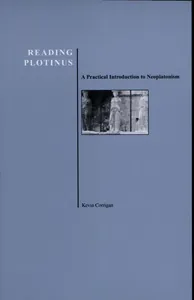
Reading Plotinus

 63
63

Reading Plotinus



Review by Marcus Thorne (Esoteric Sciences Reviewer) — 'Reading Plotinus' by Kevin Corrigan stands as a beacon for those delving into the arcane realms of Neoplatonism. Corrigan's work is a treasure trove of esoteric insights, providing a clear and accessible path through the labyrinthine thought of Plotinus. The book's strengths lie in its ability to bridge ancient wisdom with modern understanding, making it an invaluable resource for both seasoned scholars and curious seekers. Corrigan's deep familiarity with Plotinus' texts shines through, offering readers a comprehensive guide to the mystical and philosophical underpinnings of Neoplatonism. This book is a must-read for anyone interested in the hidden knowledge and symbolic richness of Plotinus' teachings.
📝 Description
63
Kevin Corrigan's 'Reading Plotinus' examines the philosopher's core ideas in 2015.
This book approaches Plotinus, the third-century Alexandrian philosopher, by focusing on his primary texts. Corrigan aims to make Plotinus's complex thought accessible to a modern audience, moving beyond secondary interpretations. The work breaks down Plotinus's concepts, such as the One, the Intellect, and the Soul, explaining their relationships and significance.
It addresses how Plotinus synthesized Platonic and Aristotelian philosophy with a distinct mystical outlook. The book encourages readers to engage directly with Plotinus's writings, pointing out symbolic meanings and underlying structures. Corrigan's analysis is presented with academic care, yet it remains open to those interested in the philosophical and spiritual dimensions of Plotinus's work. The aim is to show the continued relevance of these ideas within broader mystical thought.
Plotinus is a central figure in Neoplatonism, a philosophical system that significantly influenced later esoteric traditions. His ideas on divine emanation, the ascent of the soul, and the ineffable One provided a framework for many mystical schools in both the West and the East. This book situates Plotinus's work within that lineage, showing how his philosophical speculations became a source for contemplative practices and esoteric doctrines for centuries, affecting Gnosticism, Hermeticism, and later mystical Christian, Jewish, and Islamic thought.
💡 Why Read This Book?
Read 'Reading Plotinus' to uncover the esoteric wisdom of one of the most influential philosophers in history. This book is ideal for seekers of spiritual enlightenment, scholars of ancient philosophy, and practitioners of esoteric traditions. It offers a practical guide to understanding Plotinus' profound insights, making it an essential addition to any mystic's library.
⭐ Reader Reviews
Honest opinions from readers who have explored this book.
❓ Frequently Asked Questions
What is the significance of Plotinus in esoteric traditions?
Plotinus' thought has deeply influenced Christian, Jewish, and Islamic theology, as well as Eastern mystical traditions. His ideas on the One, the Soul, and the Intellect are foundational to many esoteric practices.
Is this book suitable for beginners?
While 'Reading Plotinus' provides a practical guide, it is best suited for those with some background in philosophy or esoteric studies. Beginners may find it challenging but rewarding.
How does Plotinus' philosophy relate to modern esoteric practices?
Plotinus' ideas on the ascent of the soul and the nature of the divine have been integrated into various modern esoteric traditions, influencing practices in Hermeticism, Kabbalah, and other mystical paths.
What languages did Plotinus write in?
Plotinus wrote in Greek, but his influence spans multiple languages and cultures, making his works accessible to a global audience of seekers and scholars.
Can I read this book online?
For the best reading experience, it is recommended to purchase a physical copy or an eBook. However, some excerpts and reviews may be available online.
🔮 Key Themes & Symbolism
The One and the Many
Plotinus' concept of the One is central to his philosophy, representing the ultimate source of all existence. This theme explores the mystical union of the One with the many, symbolizing the interconnectedness of all things.
The Ascent of the Soul
Plotinus teaches that the soul can ascend to higher states of consciousness through contemplation and spiritual practices. This theme studies the esoteric methods and symbolism associated with this spiritual journey.
The Intellect and the Divine
The Intellect, or Nous, is another key theme in Plotinus' thought, representing the divine mind that emanates from the One. This theme examines the mystical significance of the Intellect and its role in understanding the divine.
💬 Memorable Quotes
Direct passages from the work, attributed to the author.
“The One is beyond being and non-being.”
— This enigmatic statement highlights the ineffable nature of the ultimate reality in Plotinus' philosophy.
“The ascent of the soul is a journey to the source of all light.”
— This metaphorical description captures the mystical quest for divine union.
“The soul's true home is in the divine.”
— This statement reflects Plotinus' view of the soul's eternal connection to the divine realm.
💡 Key Ideas
Editorial paraphrase of the work's core concepts — not direct quotes.
The soul that contemplates the divine becomes divine.
This quote underscores Plotinus' belief in the transformative power of spiritual contemplation.
The Intellect is the mirror of the divine.
This quote emphasizes the reflective nature of the Intellect in Plotinus' cosmology.
🌙 Esoteric Significance
Tradition
Plotinus' teachings belong to the Hermetic tradition, which emphasizes the unity of all things and the transformative power of spiritual contemplation. His ideas have been integrated into various esoteric practices, including Kabbalah and Gnosticism.
Symbolism
Key symbols in Plotinus' philosophy include the One, the Soul, and the Intellect. The One represents the ultimate source of all existence, the Soul symbolizes the individual's spiritual journey, and the Intellect embodies the divine mind. These symbols are rich with esoteric meaning, inviting seekers to explore their mystical depths.
Modern Relevance
Plotinus' ideas continue to influence modern esoteric practices and spiritual seekers. His teachings on the ascent of the soul and the nature of the divine are integral to contemporary Hermeticism and other mystical paths. Practitioners today draw on his insights to deepen their spiritual understanding and transformative practices.
👥 Who Should Read This Book
Beginners in esoteric studies will find 'Reading Plotinus' challenging but rewarding, as it provides a comprehensive introduction to Neoplatonism. Scholars of ancient philosophy will appreciate Corrigan's deep analysis and historical context. Spiritual seekers will benefit from the book's exploration of mystical themes and practices. Practitioners of esoteric arts will find valuable insights into the symbolic and transformative power of Plotinus' teachings.
📜 Historical Context
Plotinus, born in third-century Alexandria, lived during a time of great cultural and intellectual exchange. His philosophy emerged from a body of Greek thought, particularly Plato and Aristotle, and was deeply influenced by the mystical traditions of the East. 'Reading Plotinus' by Kevin Corrigan provides a practical guide to understanding this profound thinker's works, which have had a lasting impact on Western and Eastern theology and philosophy. Plotinus' ideas on the One, the Soul, and the Intellect have resonated through the ages, shaping the development of esoteric and mystical traditions.
📔 Journal Prompts
Reflect on your understanding of the One and its significance in your spiritual journey.
How does the concept of the ascent of the soul resonate with your personal experiences?
Explore the role of the Intellect in your spiritual practices and contemplations.
Consider the symbolic meanings of the Soul and the Intellect in your mystical pursuits.
How do Plotinus' teachings influence your view of the divine and its relationship to the world?
🗂️ Glossary
The One
The ultimate source of all existence in Plotinus' philosophy, representing the divine and ineffable reality.
The Soul
The individual's spiritual essence that can ascend to higher states of consciousness through contemplation.
The Intellect
The divine mind that emanates from the One, representing the highest level of spiritual understanding.
Neoplatonism
A philosophical and mystical tradition that builds upon the ideas of Plato, emphasizing the unity of all things and the ascent of the soul.
Hermeticism
An esoteric tradition that seeks to unite the wisdom of ancient cultures with spiritual practices, emphasizing the transformative power of contemplation.
This book appears in 8 collections
🔮 Readers Also Liked
Browse all →








More by Kevin Corrigan
All books →




From the “Remote Viewing” Collection
View all →








More Free Alchemy & Hermeticism Books
View all →