Arlo Bates
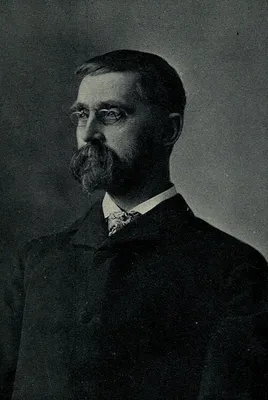
Arlo Bates was an American author, educator, and newspaperman known for his novels and poetry.
Arlo Bates, born in East Machias, Maine, on December 16, 1850, led a multifaceted career as an author, educator, and journalist. After graduating from Bowdoin College in 1876, he embarked on a career in journalism, serving as the editor of the Boston Sunday Courier from 1880 to 1893. Following his tenure in newspaper editing, Bates transitioned to academia, accepting a position as a professor of English at the Massachusetts Institute of Technology. His academic and literary contributions were recognized with his election as a Fellow of the American Academy of Arts and Sciences in 1900. Bates passed away on August 25, 1918. Throughout his life, he produced a notable body of literary work, including several novels and collections of poetry, as well as critical essays on writing and literature.
Literary Career
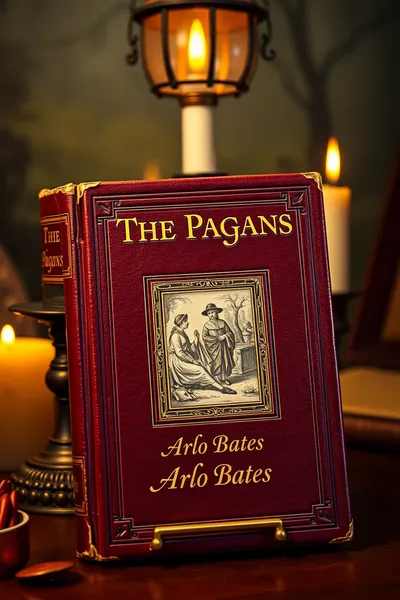
Arlo Bates established himself as a prolific author, with a diverse literary output encompassing novels, poetry, and critical essays. His novels, such as 'The Pagans' (1884), 'The Wheel of Fire' (1885), and 'The Philistines' (1888), explored various themes and narratives. In the realm of poetry, Bates published collections like 'Berries of the Brier' (1886) and 'Sonnets in Shadow' (1887), showcasing his lyrical talents. He also contributed to literary criticism with works like 'Talks on Writing English' (1897) and 'Talks on the Study of Literature' (1898), offering insights into the craft of writing and literary analysis. His collected stories were later published as 'The Intoxicated Ghost' in 1908.
Academic and Editorial Contributions
Beyond his creative writing, Arlo Bates played a significant role in both journalism and education. His extensive experience as an editor for the Boston Sunday Courier from 1880 to 1893 provided him with a deep understanding of the media landscape. This practical background informed his later academic career, where he served as a professor of English at the Massachusetts Institute of Technology. His engagement with literature extended to educational contexts, as evidenced by his 'Talks on Teaching Literature' published in 1906. Bates's commitment to intellectual pursuits was further acknowledged by his election as a Fellow of the American Academy of Arts and Sciences in 1900.
Books by Arlo Bates
2 free public domain books · Read online or download