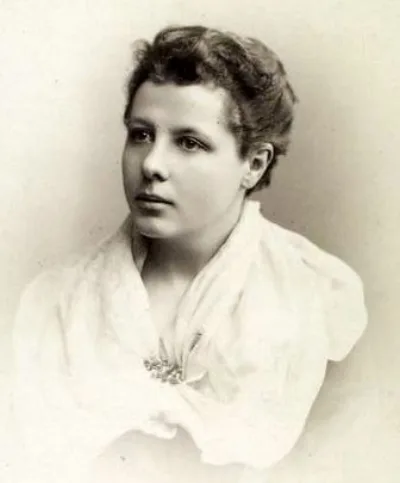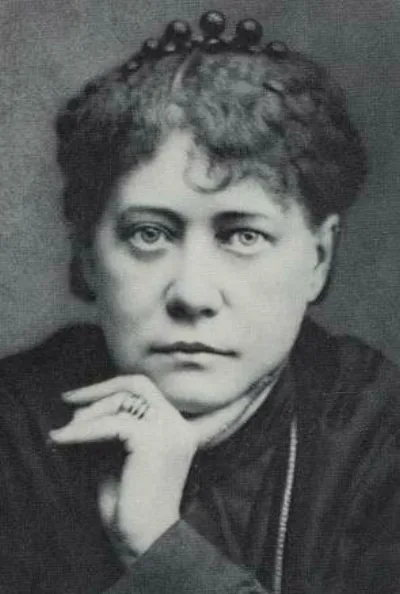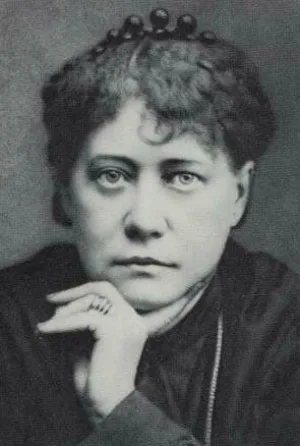
Helena Blavatsky co-founded the Theosophical Society, promoting a synthesis of science, religion, and philosophy, and influencing Western esotericism.
Helena Petrovna Blavatsky, born into Russian aristocracy in 1831, became a prominent mystic and writer. She is primarily known as a co-founder of the Theosophical Society in 1875 and the principal architect of Theosophy as a belief system. Blavatsky claimed extensive world travels and training by spiritual adepts in Tibet, though some biographers dispute these accounts, suggesting she spent more time in Europe. She was involved in the Spiritualist movement, distinguishing her views from mainstream beliefs about contacting spirits of the dead. Relocating to the United States, she co-founded the Theosophical Society with Henry Steel Olcott and William Quan Judge, publishing her foundational work, "Isis Unveiled," in 1877, which presented Theosophy as a revival of ancient wisdom.
Her later years saw her move to India, where Theosophy gained traction despite opposition and internal controversies regarding alleged paranormal phenomena. Blavatsky returned to Europe, continuing to write and establish the Blavatsky Lodge in London. Her major works, including "The Secret Doctrine," "The Key to Theosophy," and "The Voice of the Silence," further elaborated her complex philosophical and spiritual system. Blavatsky remained a controversial figure throughout her life, viewed by supporters as a sage and by critics as a charlatan. Her teachings significantly impacted the dissemination of Eastern religious and philosophical ideas in the West and contributed to the development of various esoteric movements.
Early Life and Esoteric Influences
Helena Petrovna Hahn von Rottenstern was born into an aristocratic family in Yekaterinoslav, Russian Empire, in 1831. Her childhood involved frequent moves across the empire due to her father's military career, potentially shaping her later nomadic lifestyle. She received a broad education in subjects like music, art, and languages. Blavatsky's early exposure to Tibetan Buddhism occurred during visits to Kalmyk communities. A significant influence was the library of her maternal great-grandfather, which contained esoteric texts, fueling her interest in the occult. She later claimed to have met a "Mysterious Indian" figure in visions during this period, which some interpret as her first encounter with the spiritual "Masters" who would feature prominently in her later teachings. Her early life is challenging to reconstruct accurately due to conflicting accounts she provided later in life.
Founding Theosophy and World Travels
In 1849, Blavatsky began a period of extensive world travels, which she claimed included visits to Europe, the Americas, and India, and training with spiritual adepts in Tibet. However, critics and some biographers suggest these travels may have been exaggerated or largely fictitious, with her spending this time in Europe. By the early 1870s, she was involved in the Spiritualist movement in the United States, though she diverged from mainstream beliefs about communicating with spirits of the dead. In 1873, she relocated to the U.S., where she met Henry Steel Olcott. This period saw her gain public attention as a spirit medium, though she also faced accusations of fraud. Her claimed encounters with spiritual teachers and her extensive travels formed a foundational narrative for her subsequent teachings.
The Theosophical Society and Major Works
In 1875, Blavatsky, alongside Olcott and William Quan Judge, established the Theosophical Society in New York City. Her seminal work, "Isis Unveiled" (1877), laid out the core tenets of Theosophy, which she described as a synthesis of science, religion, and philosophy, aiming to revive a universal "Ancient Wisdom." In 1880, she and Olcott moved to India, seeking to connect with local reform movements. Despite opposition from British colonial authorities, Theosophy spread in India. However, controversies arose, including accusations of fraudulent psychic phenomena. Blavatsky returned to Europe in 1885, where she authored "The Secret Doctrine," "The Key to Theosophy," and "The Voice of the Silence," further articulating her complex spiritual philosophy.
Key Ideas
- Theosophy as a synthesis of science, religion, and philosophy
- Revival of an "Ancient Wisdom" underlying all religions
- The existence of spiritual "Masters of the Ancient Wisdom" who guide humanity
Books by
2 free public domain books · Read online or download