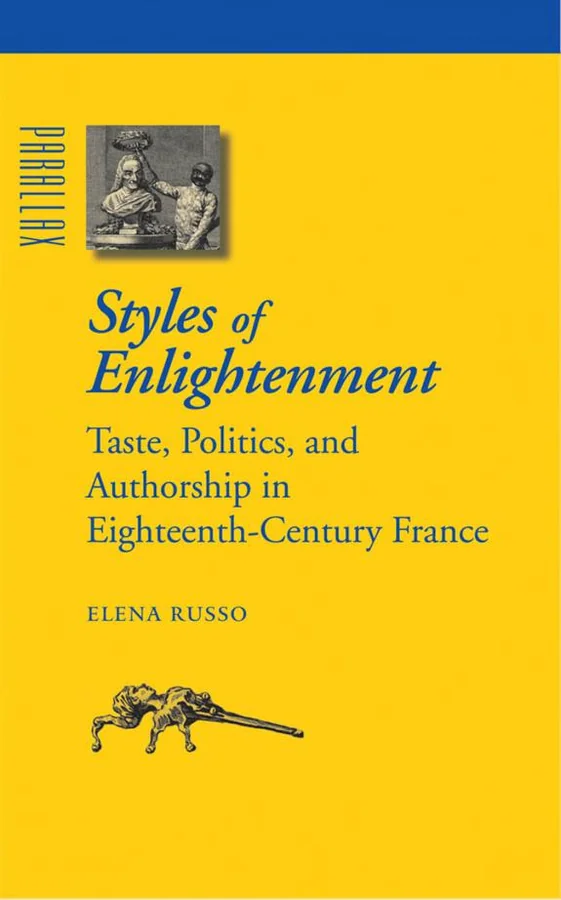
Styles of Enlightenment
 83
83

Styles of Enlightenment
Elena Russo’s "Styles of Enlightenment" offers a commendable attempt to map the varied terrain of spiritual realization. Its strength lies in its systematic categorization, presenting enlightenment not as a monolithic peak but as a spectrum of experiences and methodologies. Russo meticulously details distinct approaches, such as the 'path of integration' versus the 'path of detachment', providing clarity on how different traditions conceptualize ultimate goals. A particularly insightful section discusses the 'illusory self' as perceived through various lenses, from Buddhist anatman to certain Gnostic doctrines.
However, the book occasionally suffers from a certain academic dryness that may alienate readers seeking a more experiential engagement. While the analysis is thorough, the prose can become dense, requiring sustained attention. Despite this, the work serves as an invaluable reference for those who wish to understand the intellectual architecture behind diverse spiritual disciplines. Russo’s contribution is significant for providing a comparative framework that illuminates common threads and unique expressions of the human quest for transcendence.
📝 Description
83
Elena Russo's 2007 book classifies diverse historical paths to higher consciousness.
Elena Russo's "Styles of Enlightenment" categorizes the varied historical approaches individuals have taken to achieve higher consciousness. It moves past a single definition of spiritual attainment, presenting a comparative study of methods from different traditions. The work highlights both the commonalities and the divergences in these spiritual journeys.
This book is for serious students of comparative spirituality, philosophy, and mysticism. Readers who want to understand the complex nature of spiritual development, rather than a step-by-step guide, will find it valuable. It also appeals to those interested in how concepts of enlightenment have evolved historically and how they are applied practically.
Russo's work emerged in 2007, a time when non-Western spiritual traditions gained more attention in academia and popular culture. The early 21st century saw many attempts to synthesize esoteric studies. "Styles of Enlightenment" offers a structured analysis that contrasts with more anecdotal or purely theoretical discussions of consciousness.
Published in 2007, "Styles of Enlightenment" fits within a tradition of comparative mysticism and esoteric scholarship that gained traction in the late 20th and early 21st centuries. This period saw a growing academic and popular interest in synthesizing diverse spiritual traditions, moving beyond Western philosophical frameworks. Russo's work contributes to this by systematically contrasting different paths to enlightenment, such as those emphasizing inner transformation versus cosmic unity, and the specific practices that support them. It stands as an analytical response to more generalized or anecdotal treatments of spiritual development.
💡 Why Read This Book?
• Gain a structured understanding of diverse enlightenment paths, differentiating between 'Immanent Revelation' and 'Transcendent Ascent' as explored in chapter 2. • Discover how different esoteric traditions, like those discussed in Russo's analysis of 20th-century Theosophy, conceptualize the nature of spiritual attainment. • Identify practical applications for personal practice by examining the specific methods detailed for achieving states of consciousness outlined by Russo.
⭐ Reader Reviews
Honest opinions from readers who have explored this book.
❓ Frequently Asked Questions
What is the primary focus of Elena Russo's "Styles of Enlightenment"?
The book primarily focuses on classifying and analyzing the different historical and philosophical approaches to achieving spiritual enlightenment across various traditions. It moves beyond a singular definition to explore diverse pathways.
When was "Styles of Enlightenment" first published?
The book was first published on January 19, 2007, positioning it within early 21st-century scholarship on comparative spirituality and esoteric studies.
Does Russo offer practical exercises for enlightenment?
While the book analyzes methods and conceptual frameworks, its primary aim is analytical and comparative. It discusses practices historically employed but does not present itself as a direct 'how-to' guide for personal practice.
What kind of traditions does "Styles of Enlightenment" cover?
The work explores a broad spectrum, referencing concepts and practices found in Western esotericism, Eastern philosophies, and various mystical traditions, drawing connections and distinctions between them.
Is this book suitable for beginners in spiritual studies?
It is best suited for those with some existing background in philosophy or comparative religion due to its analytical depth. Beginners might find the academic tone challenging but could benefit from its structured overview.
What distinguishes Russo's approach from other books on enlightenment?
Russo's approach is characterized by its systematic categorization of 'styles' of enlightenment, offering a comparative framework that highlights both divergences and convergences in human spiritual pursuits, grounded in specific historical and philosophical contexts.
🔮 Key Themes & Symbolism
Spectrum of Attainment
Russo posits enlightenment not as a single destination but a range of achieved states and realized potentials. The work delineates distinct 'styles' of spiritual realization, such as the 'Immanent Revelation' where the divine is found intrinsically within, and the 'Transcendent Ascent,' focused on reaching a higher, external source. This framework allows for a more nuanced appreciation of the varied goals and experiences reported across different mystical traditions and philosophical systems.
Methodological Diversity
The book meticulously details the varied practices and philosophical underpinnings that characterize each style of enlightenment. It examines how disciplines like contemplative prayer, yogic asana, philosophical dialectic, and ritualistic magic serve as distinct vehicles for spiritual progress. Russo highlights how the chosen methodology is intrinsically linked to the conceptualization of the ultimate goal, illustrating the 'form follows function' principle in esoteric development.
Comparative Esotericism
"Styles of Enlightenment" functions as a critical comparative study within the field of esoteric studies. By analyzing texts and traditions from various epochs and cultures, Russo identifies cross-cultural resonances and unique developments in the human quest for ultimate knowledge or liberation. The work engages with the intellectual currents that shaped esoteric thought from the Renaissance through to the early 21st century.
The Nature of the Self
A significant thread woven through Russo's analysis concerns the varying conceptions of the self in relation to enlightenment. Whether viewed as an illusion to be dissolved (as in some Buddhist interpretations), a divine spark to be reawakened (Hermeticism), or a facet of a universal consciousness (some New Age thought), the book explores how the understanding of 'self' dictates the path and the nature of the awakened state.
💬 Memorable Quotes
Direct passages from the work, attributed to the author.
“The path chosen profoundly shapes the nature of the destination.”
— This interpretation underscores the relationship between practice and realization. Russo suggests that the specific methods and philosophical frameworks one adopts (the path) directly influence the kind of spiritual awakening or understanding one achieves (the destination).
“Immanent Revelation contrasts with Transcendent Ascent.”
— This highlights two key conceptual categories Russo uses. It suggests a fundamental difference between finding the sacred within oneself versus seeking it in an external, higher realm, a distinction explored throughout the book.
“The concept of 'no-self' presents unique challenges and insights.”
— This refers to the philosophical and practical implications of doctrines like Anatman (no-self) in Buddhism. It points to how understanding the nature of the ego or personal identity is crucial and varies significantly across spiritual styles.
💡 Key Ideas
Editorial paraphrase of the work's core concepts — not direct quotes.
Enlightenment is not a singular peak, but a varied landscape.
This paraphrased concept highlights Russo's central thesis: that spiritual attainment is not uniform. It emphasizes the diversity of experiences and goals that fall under the umbrella term 'enlightenment', encouraging a broader, less dogmatic view.
Historical texts reveal evolving frameworks for consciousness.
This paraphrased concept emphasizes the dynamic nature of spiritual thought. Russo's work suggests that understandings of enlightenment and the self are not static but have been reinterpreted and transformed over centuries.
🌙 Esoteric Significance
Tradition
Russo's work engages broadly with Western Esotericism and Eastern philosophical traditions, particularly Vedanta and Buddhism, without strictly adhering to a single lineage. It departs from traditional, often lineage-bound teachings by creating a meta-framework for understanding diverse spiritual aims. The book synthesizes concepts, drawing parallels between seemingly disparate paths, thereby offering a pan-traditional perspective that is characteristic of post-modern esoteric scholarship.
Symbolism
While not heavily focused on symbolic exegesis, the work implicitly addresses symbols through its conceptual categories. For instance, the 'Transcendent Ascent' often involves symbols of ascension, light, or celestial realms, pointing towards an external divine. Conversely, 'Immanent Revelation' might relate to symbols of the microcosm, the divine spark within, or the interconnectedness of all things, reflecting an internalized sacred.
Modern Relevance
Contemporary thinkers in consciousness studies and comparative psychology, as well as modern practitioners of integrated spiritual disciplines, draw upon Russo's classificatory system. Her framework aids in understanding diverse therapeutic approaches that incorporate spiritual elements and provides a conceptual tool for those exploring hybrid spiritual paths that blend elements from multiple traditions, reflecting a modern trend towards personalized spirituality.
👥 Who Should Read This Book
• Advanced students of comparative religion and philosophy seeking a systematic framework for understanding diverse spiritual goals and practices. • Esoteric practitioners interested in contextualizing their own path within a broader historical and conceptual landscape, comparing their methods to others. • Academics researching the history of consciousness studies and the evolution of spiritual thought from the Renaissance to the present day.
📜 Historical Context
Elena Russo's "Styles of Enlightenment," published in 2007, emerged within a fertile period for comparative spirituality and esoteric studies. The early 21st century saw a growing Western appetite for synthesizing Eastern and Western mystical traditions, a trend influenced by figures like Mircea Eliade and the continuation of Theosophical inquiries. Russo’s work contributed to this milieu by offering a structured, academic approach to categorizing diverse spiritual goals and methods. It stands in contrast to more devotional or purely experiential accounts. While not subject to major censorship, its academic rigor positioned it as a scholarly contribution rather than a popular spiritual manual. Contemporaries like Huston Smith, though more focused on religious history, explored similar cross-cultural spiritual themes, providing a broader intellectual landscape within which Russo's specific taxonomy could be appreciated.
📔 Journal Prompts
Reflect on the contrast between 'Immanent Revelation' and 'Transcendent Ascent' in your own spiritual or philosophical leanings.
Analyze a spiritual practice you are familiar with through the lens of Russo's 'Methodological Diversity'.
Consider how the concept of the 'illusory self' appears in your understanding of personal identity.
Map the historical trajectory of a specific spiritual concept discussed by Russo, noting its evolution.
Identify which 'style of enlightenment' most closely aligns with your current aspirations and why.
🗂️ Glossary
Immanent Revelation
A style of enlightenment emphasizing the discovery of the divine or ultimate truth as existing intrinsically within the individual or the material world, rather than in an external, transcendent realm.
Transcendent Ascent
A spiritual pathway focused on moving beyond the ordinary material world to attain union with or realization of a higher, external divine principle or cosmic order.
Anatman
A core Buddhist doctrine signifying 'non-self' or 'no-soul', asserting that there is no permanent, unchanging self or essence in living beings. This concept is central to understanding certain styles of enlightenment focused on egolessness.
Theosophy
A mystical and philosophical movement originating in the late 19th century, seeking to understand the divine nature of reality and humanity's place within it through esoteric interpretation of religions and philosophies. Russo references its contributions to comparative spiritual thought.
Microcosm
The concept that the human being (or a smaller system) reflects or contains the essential characteristics of the larger universe (the macrocosm). Often used in Hermetic and Kabbalistic traditions.
Egolessness
A state of spiritual realization characterized by the dissolution or transcendence of the individual ego or sense of separate self. Central to many paths seeking union or liberation.
Comparative Spirituality
An academic and personal approach that studies and contrasts the beliefs, practices, and philosophies of different religious and spiritual traditions to find commonalities, differences, and universal themes.
This book appears in 1 collection
🔮 Readers Also Liked
Browse all →




From the “Enlightenment” Collection
View all →




More Free Esoteric History & Biography Books
View all →