Nirvana
 81
81

Nirvana
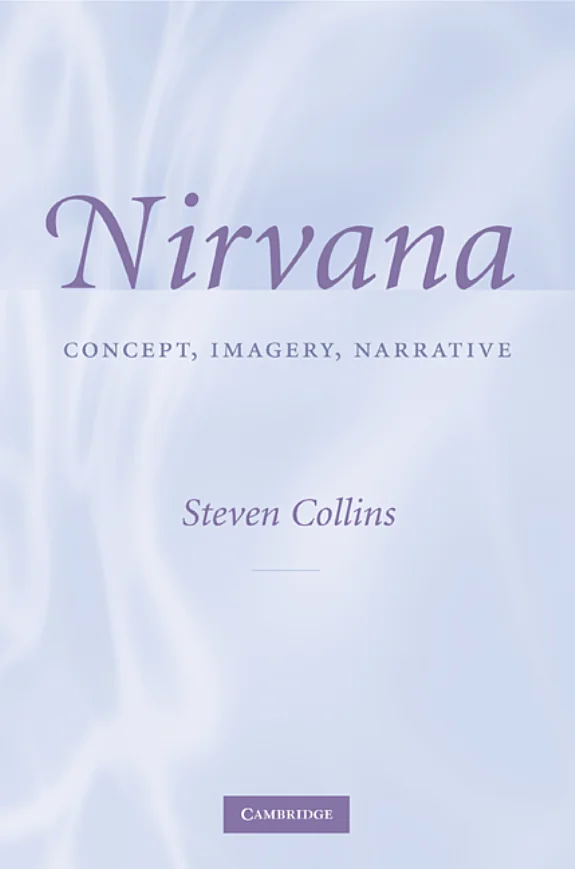
Steven Collins’ "Nirvana" attempts to chart a course through a concept so vast it has occupied thinkers for millennia. The book’s strength lies in its commitment to clear language, translating complex Pali and Sanskrit terms into digestible prose for a non-specialist audience. Collins’ interpretation of the cessation of suffering, particularly as it relates to the dissolution of the ego-construct, offers a compelling perspective. However, the work occasionally simplifies nuanced debates within Buddhist scholarship, particularly regarding the varying interpretations of nirvana across different schools of Buddhism. A passage discussing the "unconditioned" nature of nirvana, while aiming for clarity, might leave seasoned practitioners wanting more depth. Nonetheless, for its intended audience, "Nirvana" provides a valuable and often illuminating overview of a central spiritual aspiration.
📝 Description
81
Steven Collins' 2010 book 'Nirvana' explains a core Buddhist concept without academic jargon.
Steven Collins' "Nirvana," published in 2010, works to clarify a central Buddhist idea for a general audience. The book translates and interprets key Buddhist texts, aiming to make the concept of liberation accessible to readers unfamiliar with specialized scholarship. It explains nirvana not as simple peace or happiness, but as the cessation of suffering, a primary goal in Buddhist thought.
This work is intended for intellectually curious individuals new to Eastern philosophy or comparative religion. It offers a clear introduction to Buddhist esotericism, bypassing dense academic commentaries. Practitioners of contemplative traditions may also find value in its articulated approach to ultimate spiritual aims.
Published in 2010, 'Nirvana' engages with a concept central to Buddhist traditions, particularly Mahayana and Theravada schools. While figures like D.T. Suzuki had previously introduced Zen ideas, Collins' book focuses directly on nirvana itself. Its release coincided with growing Western interest in Buddhist philosophy, mindfulness, and psychology, placing it within a continuing dialogue about these subjects in academic and popular spheres.
💡 Why Read This Book?
• Gain a precise understanding of nirvana beyond popular notions of peace, directly from Collins' interpretations of foundational Buddhist texts and his translation of key terms. • Grasp the practical implications of the Three Marks of Existence (anicca, dukkha, anatta) as presented by Collins, and how they function as a gateway to understanding liberation. • Distinguish between the concept of nirvana attained in life and the final cessation of existence (parinirvana) as explained in the book's detailed textual analysis.
⭐ Reader Reviews
Honest opinions from readers who have explored this book.
❓ Frequently Asked Questions
What is the primary goal of the Buddhist concept of nirvana as explained by Steven Collins?
Steven Collins explains nirvana as the ultimate goal in Buddhism: the cessation of suffering and the extinguishing of the fires of greed, hatred, and delusion, leading to liberation from the cycle of rebirth (samsara).
Who is Steven Collins and what is his background in writing about Buddhism?
Steven Collins is an author who has written introductory texts on Buddhist philosophy. His work "Nirvana," first published in 2010, aims to present complex Buddhist ideas in an accessible manner for a general readership.
What historical Buddhist texts does Steven Collins reference in his book "Nirvana"?
The book references foundational Buddhist texts, including sutras and commentaries, offering new translations and interpretations for non-specialist readers to understand concepts like anicca, dukkha, and anatta.
How does "Nirvana" by Steven Collins differentiate itself from academic studies of Buddhism?
Collins' "Nirvana" prioritizes accessibility, using simplified language and direct interpretations of texts, distinguishing itself from dense scholarly works by focusing on clarity for readers new to Buddhist philosophy.
What is the significance of the year 2010 for Steven Collins' book "Nirvana"?
The year 2010 marks the original publication date of Steven Collins' "Nirvana," positioning it within contemporary discussions and popular interest in Buddhist concepts and practices in the Western world.
Does Steven Collins' "Nirvana" discuss the difference between nirvana and enlightenment?
Yes, the book explores the concept of nirvana as the ultimate state of liberation, often synonymous with enlightenment, focusing on the cessation of suffering and the end of the cycle of rebirth.
🔮 Key Themes & Symbolism
The Cessation of Suffering
The book's central theme is the Buddhist concept of nirvana as the ultimate cessation of dukkha (suffering). Collins interprets this not as a mere absence of pain, but as the extinguishing of the fundamental causes of suffering: greed, hatred, and delusion. This state is achieved through understanding and realizing the impermanent and selfless nature of existence, ultimately leading to liberation from samsara, the endless cycle of birth, death, and rebirth.
Anicca, Dukkha, Anatta
Collins frames the understanding of the Three Marks of Existence—anicca (impermanence), dukkha (suffering), and anatta (no-self)—as crucial prerequisites for apprehending nirvana. The work explores how deeply ingrained our perception of a permanent, independent self is, and how recognizing its illusory nature is key to dismantling the attachments that perpetuate suffering. This analytical path is presented as a direct route to spiritual awakening.
Interpretations of Nirvana
The book studies various interpretations of nirvana, distinguishing between the experience of nirvana within this lifetime and the final parinirvana upon the death of an enlightened being. Collins offers his own translations and analyses of key Pali and Sanskrit terms, aiming to clarify potential misconceptions and provide a coherent understanding of this profound spiritual attainment for a modern audience.
Liberation from Samsara
A significant focus is placed on nirvana as the ultimate escape from samsara. Collins explains how the cycle of rebirth is driven by karma, which is generated by volitional actions rooted in ignorance and attachment. By eradicating these roots, one achieves nirvana, thereby breaking free from the conditioned existence and its inherent dissatisfactions, a concept central to Buddhist cosmology.
💬 Memorable Quotes
Direct passages from the work, attributed to the author.
“Nirvana is the cessation of craving.”
— This concise statement captures the Buddhist understanding of nirvana as the end of desire, which is identified as the root cause of suffering and the driving force behind the cycle of existence.
“The self is an illusion.”
— Collins highlights the doctrine of anatta (no-self), interpreting it to mean that there is no permanent, unchanging, independent entity that can be identified as a 'self' or 'soul'.
“Liberation means freedom from the cycle of rebirth.”
— This interpretation connects the concept of nirvana directly to its soteriological significance – the escape from samsara, the endless process of birth, death, and reincarnation.
“Understanding the Four Noble Truths is essential.”
— Collins underscores the foundational nature of the Four Noble Truths, presenting them as the bedrock upon which any genuine understanding of suffering and its cessation, nirvana, must be built.
💡 Key Ideas
Editorial paraphrase of the work's core concepts — not direct quotes.
All compounded things are impermanent.
This paraphrase emphasizes the concept of anicca, suggesting that everything that arises is subject to change and decay, a fundamental observation that underpins the understanding of suffering.
🌙 Esoteric Significance
Tradition
While "Nirvana" primarily engages with orthodox Buddhist philosophy, its exploration of liberation from conditioned existence and the dissolution of the ego-construct aligns with broader esoteric goals. Many Western esoteric traditions, such as certain branches of Theosophy or Hermeticism, also posit states of transcendence or gnosis that involve overcoming ordinary sensory perception and the personal ego. Collins' work provides an accessible Buddhist framework that can be seen as a parallel or complementary path to these Western esoteric aims.
Symbolism
The primary symbolic concept is the "blowing out" or "quenching" inherent in the term nirvana, representing the extinguishing of the fires of greed, hatred, and delusion. The cycle of samsara itself functions symbolically as a wheel of suffering and illusion from which escape is sought. The path to nirvana is often symbolized by a journey or a crossing, signifying the transition from a state of bondage to one of ultimate freedom and peace.
Modern Relevance
Collins' work remains relevant for contemporary thinkers and practitioners interested in the philosophical underpinnings of mindfulness and meditation. It speaks to modern anxieties about suffering and the search for meaning, offering a Buddhist perspective that is both ancient and adaptable. Modern schools of secular Buddhism and contemplative science often draw upon the core concepts of nirvana and the cessation of suffering that Collins elucidates, making his book a valuable resource for understanding these evolving practices.
👥 Who Should Read This Book
• Beginning students of Eastern philosophy or comparative religion seeking a clear, jargon-free introduction to the concept of nirvana. • Individuals interested in the philosophical underpinnings of mindfulness and meditation practices who want to understand the ultimate goal they aim towards. • Readers exploring non-Western paths to liberation and spiritual fulfillment, looking for an accessible guide to one of Buddhism's most central and profound doctrines.
📜 Historical Context
Steven Collins' "Nirvana," published in 2010, emerged within a Western intellectual landscape long familiar with Buddhist thought, thanks to pioneers like D.T. Suzuki who introduced Zen concepts in the mid-20th century. However, Collins’ work focuses specifically on the core concept of nirvana, a subject often debated and interpreted differently across Mahayana and Theravada traditions. The book’s accessible approach sought to clarify these nuances for a general audience, coinciding with a surge in popular interest in mindfulness and Buddhist psychology. While academic Buddhism continued its rigorous scholarly analysis, Collins’ book aimed for a broader reach, clarifying a concept that had previously been the subject of more specialized discourse, and sometimes esoteric interpretations. Its publication occurred in a period where comparative religion and Eastern spirituality were increasingly integrated into mainstream philosophical and self-help discussions.
📔 Journal Prompts
The concept of anatta and its implications for personal identity.
The extinguishing of the fires of greed, hatred, and delusion.
The distinction between nirvana in life and parinirvana.
The role of dukkha as a catalyst for seeking nirvana.
The freedom from samsara as presented in the text.
🗂️ Glossary
Nirvana
The ultimate spiritual goal in Buddhism; the cessation of suffering, greed, hatred, and delusion, leading to liberation from the cycle of rebirth (samsara).
Samsara
The continuous cycle of birth, death, and rebirth, characterized by suffering and impermanence, from which nirvana offers release.
Anicca
The Buddhist concept of impermanence, acknowledging that all conditioned phenomena are in a constant state of flux and change.
Dukkha
A Pali term often translated as suffering, dissatisfaction, or stress, considered an inherent characteristic of existence within samsara.
Anatta
The doctrine of 'no-self' or 'non-ego', asserting that there is no permanent, unchanging, independent self or soul.
Parinirvana
Final nirvana, attained upon the death of an enlightened being, marking the complete cessation of existence and the end of the cycle of rebirth.
Craving (Tanha)
The insatiable desire or thirst that fuels suffering and attachment, identified in Buddhism as a primary cause of dukkha.
This book appears in 1 collection
🔮 Readers Also Liked
Browse all →







From the “Nirvana” Collection
View all →









More Free Esoteric History & Biography Books
View all →