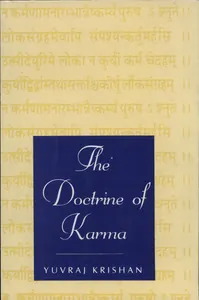
The Eye of the I
 74
74

The Eye of the I
David R. Hawkins's "The Eye of the I" attempts to map the terrain of advanced spiritual consciousness with an almost cartographical precision. The book's strength lies in its ambitious attempt to systematize the ineffable, presenting Enlightenment not as a mystical accident but as a consequence of specific energetic states and mental disciplines. Hawkins's scale of consciousness, a central tenet, offers a framework for understanding spiritual progression that is both intellectually stimulating and practically applicable for self-assessment. However, the sheer density of the material and the author's unwavering certainty can, at times, feel prescriptive rather than purely descriptive. The section detailing the nonlinear perception of time by the enlightened sage, while explained with remarkable clarity for such a complex topic, still requires a significant leap of faith for the uninitiated reader. Ultimately, "The Eye of the I" serves as a challenging, often revelatory, but demanding guide for those committed to exploring the highest reaches of human awareness.
📝 Description
74
David R. Hawkins's 2001 book, 'The Eye of the I,' explains advanced spiritual states and the path to Enlightenment.
'The Eye of the I,' published in 2001, by David R. Hawkins, addresses advanced spiritual states and the path to Enlightenment. Hawkins aims to clarify the spiritual process for the logical mind, drawing from conversations with students at various levels of spiritual growth. He articulates the subjective experience of these elevated states, making the non-linear reality of an enlightened person more accessible.
This book is for serious spiritual truth seekers prepared for advanced consciousness concepts. It will appeal to those already involved with contemplative practices or philosophical questions about reality. Individuals interested in how spiritual realization works, the subjective experience of higher consciousness, and understanding the spiritual process from a non-dual viewpoint will find it valuable. It is especially pertinent for students of consciousness and metaphysics.
The book systematically explains the levels of consciousness, quantified on a scale from 1 to 1000, a core concept introduced by Hawkins. It details the energetic
Published in 2001, 'The Eye of the I' arrived during a time of growing Western interest in consciousness studies and Eastern spiritual philosophies. Following the popularization of practices like meditation, Hawkins's work provided a structured and detailed account of the spiritual path. It built upon earlier research and teachings in consciousness, serving as a link between esoteric traditions and modern psychological thought. The book's charting of spiritual levels matched the era's interest in personal growth literature.
💡 Why Read This Book?
• Gain a structured understanding of consciousness levels, as detailed in Hawkins's logarithmic scale, to assess your own spiritual position and potential. • Comprehend the subjective experience of advanced spiritual states, including the nonlinear perception of time, as described through dialogues with students worldwide. • Learn the practical application of spiritual principles to dissolve the ego and realize the Self, moving beyond theoretical knowledge to applied spiritual mechanics.
⭐ Reader Reviews
Honest opinions from readers who have explored this book.
❓ Frequently Asked Questions
What is the primary focus of David R. Hawkins's 'The Eye of the I'?
The book primarily focuses on describing advanced states of consciousness and the path to spiritual Enlightenment, offering a systematic explanation of the spiritual process.
When was 'The Eye of the I' first published?
The book was first published on July 1, 2001.
What unique concept does 'The Eye of the I' introduce for understanding consciousness?
It introduces a logarithmic scale of consciousness, quantifying spiritual and emotional states from 1 to 1000, to provide a framework for spiritual progression.
Who are the dialogues in the book with?
The dialogues are with both beginning and advanced spiritual students from around the world, offering diverse perspectives on the spiritual journey.
How does the book make advanced spiritual concepts accessible?
It simplifies the spiritual process by describing the nature of consciousness in terms that make the nonlinear reality of enlightened sages comprehensible to the reasoning mind.
What is the scope of the spiritual report in 'The Eye of the I'?
The scope is immense, including detailed subjective reports of very advanced states of consciousness and the mechanics of spiritual realization.
🔮 Key Themes & Symbolism
Levels of Consciousness
A central theme is the quantification of consciousness on a logarithmic scale from 1 to 1000. Hawkins posits that each level has a distinct energetic signature, influencing perception and reality. Progressing through these levels, from shame (20) and guilt (30) to peace (600) and Enlightenment (1000), involves transcending lower vibrational states. This framework provides a diagnostic tool for spiritual development, allowing individuals to identify their current position and the energetic shifts required for advancement.
The Nature of the 'I'
The book scrutinizes the concept of the 'I,' or ego, as a fabricated construct that obscures true identity. Hawkins explains that the spiritual journey involves the dissolution of this false self to realize the underlying, non-dual Self, which is pure consciousness. This process is not about self-improvement but about realizing what one already is. The dialogues explore the challenges and breakthroughs associated with this profound reorientation of identity.
Nonlinear Reality
Hawkins describes the experience of enlightened individuals as perceiving reality nonlinearly, a stark contrast to the linear, sequential experience of the ordinary mind. This non-linear perspective implies an awareness beyond time and space, where past, present, and future coexist. The book endeavors to make this advanced perceptual mode comprehensible, suggesting it is a natural consequence of transcending the limitations of the ego and achieving higher states of consciousness.
Spiritual Process Mechanics
Rather than presenting spiritual realization as a matter of faith or chance, 'The Eye of the I' details the underlying mechanics. It outlines the energetic principles and psychological shifts necessary for awakening. The book emphasizes that spiritual growth is an observable, reproducible process that can be understood and navigated. This approach explains Enlightenment, presenting it as an achievable state through dedicated practice and understanding of consciousness's energetic laws.
💬 Memorable Quotes
Direct passages from the work, attributed to the author.
“The Eye of the I is the Eye of God.”
— This statement equates the individual's ultimate, true self with the divine perspective. It suggests that by realizing one's innermost essence, one aligns with the omniscient and omnipotent nature of God.
“The spiritual path is a process of surrender, not striving.”
— This highlights a core principle of spiritual advancement: letting go of egoic ambition and control. True progress comes from yielding to a higher power or truth, rather than forcing outcomes through personal effort.
“All power is within; all energy flows from within.”
— This suggests that external circumstances and perceived limitations are less significant than one's internal state. True strength and the ability to effect change originate from within the individual's consciousness.
💡 Key Ideas
Editorial paraphrase of the work's core concepts — not direct quotes.
Enlightenment is the realization of what is already true.
This paraphrased concept emphasizes that spiritual awakening is not about acquiring something new, but about recognizing the inherent, ever-present reality of one's true nature and the universe.
The purpose of life is the expansion of consciousness.
This paraphrased concept posits that the fundamental reason for existence is the growth and broadening of awareness, moving towards higher states of understanding and being.
🌙 Esoteric Significance
Tradition
Hawkins's work can be seen as a modern synthesis, drawing heavily from Advaita Vedanta's non-dual philosophy and elements of Christian mysticism, particularly its emphasis on the Divine presence within. It departs from traditional lineages by presenting a quantifiable, energetic model of spiritual progress, a concept less emphasized in classical esoteric texts which often rely on allegory and direct transmission. The scale of consciousness functions as a unique interpretive lens for understanding spiritual texts and practices across various traditions.
Symbolism
The 'I' itself functions as a primary symbol, representing both the illusory ego and the ultimate, divine Self. The 'Eye' in the title symbolizes perception, awareness, and the divine gaze. Hawkins frequently uses the metaphor of light and darkness to represent higher and lower states of consciousness, with higher levels characterized by illumination and clarity, and lower levels by confusion and obstruction.
Modern Relevance
Contemporary thinkers and practitioners in fields such as positive psychology, consciousness studies, and energy healing often reference Hawkins's scale of consciousness. His work provides a framework for understanding emotional well-being and spiritual development that is accessible to a broad audience, influencing self-help methodologies and therapeutic approaches that focus on shifting energetic states and cultivating higher awareness.
👥 Who Should Read This Book
• Dedicated spiritual seekers ready to engage with advanced concepts of consciousness and the mechanics of Enlightenment. • Students of comparative spirituality interested in a systematic, non-dual framework for understanding spiritual progression across traditions. • Individuals practicing meditation or contemplative disciplines seeking a deeper theoretical and practical understanding of consciousness states and energetic calibration.
📜 Historical Context
Published in 2001, "The Eye of the I" arrived during a period when Western spiritual discourse was increasingly integrating Eastern concepts with psychological frameworks. This era saw a surge in interest in consciousness research, with figures like Stanislav Grof exploring altered states and the transpersonal. Hawkins's work, with its systematic scale of consciousness, offered a unique, seemingly empirical approach that resonated with a public seeking structured paths to spiritual growth. It positioned itself apart from more purely philosophical or devotional traditions, aligning with a contemporary desire for verifiable, practical spiritual technologies. While not directly engaging in public debates with specific contemporaries like Ken Wilber, Hawkins's work occupied a similar intellectual space exploring stages of development and consciousness, albeit with a distinct focus on energetic calibration and the direct experience of the Divine.
📔 Journal Prompts
The concept of the 'I' as an illusion and its dissolution.
Reflecting on the energetic signatures of your dominant emotions and their impact on your spiritual level.
The nature of nonlinear time as experienced by the enlightened.
Identifying specific thoughts or beliefs that anchor you to lower states of consciousness.
The subjective experience of surrender versus striving in your spiritual practice.
🗂️ Glossary
Consciousness Calibration
The process of assessing and adjusting one's energetic state to align with higher levels of consciousness, moving from negative emotions towards truth and love.
The 'I'
In this context, the 'I' refers to the ego, the false sense of self constructed from personal history and societal conditioning, which must be transcended.
Enlightenment
The ultimate state of spiritual realization, characterized by the complete transcendence of the ego and the realization of one's true identity as pure consciousness or God.
Nonlinear Reality
A state of perception, characteristic of enlightened beings, where time and space are not experienced sequentially but as an eternal present.
Logarithmic Scale of Consciousness
Hawkins's system for quantifying consciousness, ranging from 1 to 1000, where each increment represents a significant energetic shift and a higher level of truth and power.
Spiritual Process
The systematic journey of transcending the ego and realizing the true Self, involving specific energetic and psychological shifts.
Truth vs. Power
Hawkins distinguishes between 'Power,' associated with force and ego-driven action at lower consciousness levels, and 'Truth,' associated with love and non-duality at higher levels.
This book appears in 1 collection
🔮 Readers Also Liked
Browse all →









From the “Enlightenment” Collection
View all →







More Free Occult Philosophy Books
View all →