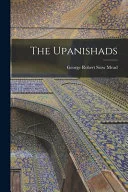
The Upanishads
 81
81

The Upanishads
George Robert Stow Mead's translation of The Upanishads offers a serviceable entry point into these complex philosophical texts. Mead, known for his work with the Theosophical Society, approaches the material with a scholarly yet accessible style. The strength of this edition lies in its preservation of the original philosophical inquiry, allowing the reader to grapple with concepts like Atman and Brahman directly. However, the translation, while competent, occasionally lacks the poetic resonance found in some other renderings, which can make the profound dialogues feel somewhat dry. A particularly illuminating passage is the exploration of Maya in the Brihadaranyaka Upanishad, which Mead renders with clarity, though without the full mystical weight that the concept often carries. The work is an important artifact of early 20th-century esoteric scholarship, but readers seeking a more spiritually charged translation might look elsewhere. It serves best as a foundational text for serious study.
📝 Description
81
George Robert Stow Mead translated The Upanishads, a collection of Sanskrit texts from around the 8th to 5th centuries BCE.
The Upanishads are a foundational layer of Hindu philosophical and spiritual thought, presenting a collection of Sanskrit texts that form the theoretical basis of Vedanta. These dialogues and discourses examine the nature of reality, consciousness, and the self (Atman) in relation to the ultimate principle (Brahman). They are introspective inquiries into existence, seeking to understand the fundamental unity underlying all phenomena.
This edition, translated by George Robert Stow Mead, makes these ancient Indian scriptures accessible to a modern audience while preserving their philosophical rigor. It is recommended for students of comparative religion, philosophy of mind, and anyone interested in the origins of non-dualistic thought. Readers drawn to contemplative practices, meditation, and the exploration of consciousness will find significant material within these pages. The work also serves scholars of ancient Indian languages and texts as a primary source for academic study.
Composed between the 8th and 5th centuries BCE, The Upanishads represent a shift from earlier Vedic ritualism to metaphysical speculation. They are a core text in Hindu philosophy, particularly for the Vedanta schools, and explore concepts of the individual self (Atman) being identical with the universal consciousness (Brahman). This inquiry into the fundamental nature of existence and the path to liberation or self-knowledge has resonated through centuries of Indian spiritual traditions and influenced various contemplative practices.
💡 Why Read This Book?
• Understand the core concepts of Atman and Brahman, the foundational principles of Vedanta philosophy, as detailed in texts like the Mundaka Upanishad, providing a unique lens on consciousness. • Explore the concept of Maya, presented as the veil of illusion that obscures ultimate reality, offering a distinct framework for analyzing perception and existence. • Grasp the significance of Jnana Yoga (the path of knowledge) as the primary means to Moksha (liberation), a concept central to the Upanishads' spiritual teachings and distinct from ritualistic practices.
⭐ Reader Reviews
Honest opinions from readers who have explored this book.
❓ Frequently Asked Questions
When were the Upanishads originally composed?
The Upanishads were composed over a significant period, generally estimated to be between the 8th and 5th centuries BCE, reflecting a crucial transition in ancient Indian thought.
What is the central philosophical tenet of the Upanishads?
The central tenet is the non-dualistic understanding that the individual soul (Atman) is identical with the ultimate reality (Brahman), a concept explored extensively throughout the texts.
Who was George Robert Stow Mead and why is his translation significant?
George Robert Stow Mead was a prominent translator and scholar associated with the Theosophical Society in the early 20th century. His translation aims for scholarly accuracy and accessibility for a Western audience.
Are the Upanishads religious scriptures or philosophical texts?
They are considered both. They form the philosophical and spiritual core of Hinduism (specifically Vedanta) and are revered as sacred scriptures, offering profound metaphysical inquiries.
What does the concept of 'Maya' refer to in the Upanishads?
Maya refers to the cosmic illusion or deceptive appearance that veils the true nature of reality (Brahman), leading individuals to perceive multiplicity where there is ultimate unity.
Is this translation of The Upanishads in the public domain?
Yes, this specific edition, published by George Robert Stow Mead, is in the public domain in the United States and potentially other nations, allowing for free distribution and reproduction.
🔮 Key Themes & Symbolism
The Unity of Atman and Brahman
This is the central doctrine, positing that the individual consciousness (Atman) is indistinguishable from the universal consciousness (Brahman). The Upanishads explore various analogies and dialogues to illustrate this profound identity, asserting that liberation (Moksha) comes from the direct realization of this unity. This concept challenges the perceived separation between the self and the cosmos, offering a monistic worldview that has profoundly influenced Indian spirituality and philosophy.
The Nature of Maya
Maya is presented as the principle of illusion or creative power that makes the singular Brahman appear as the manifold world of phenomena. It is the veil that obscures the true, unified reality, causing beings to perceive duality and impermanence. Understanding Maya is crucial for recognizing the illusory nature of the empirical world and for starting the path of spiritual discernment towards ultimate truth.
Jnana as the Path to Liberation
The Upanishads strongly advocate for Jnana, the path of knowledge and wisdom, as the principal means to achieve Moksha (liberation from the cycle of birth and death). This knowledge is not mere intellectual accumulation but a direct, intuitive apprehension of the truth of Atman's identity with Brahman. The texts describe rigorous intellectual inquiry, meditation, and guidance from a guru as essential components of this path.
The Cycle of Samsara and Karma
While not as detailed as in later Buddhist or Hindu texts, the Upanishads lay the groundwork for the concepts of Samsara (the continuous cycle of reincarnation) and Karma (the law of cause and effect governing actions and their consequences). These ideas explain the conditions of existence and suffering, motivating the quest for liberation from this endless cycle through spiritual realization.
💬 Memorable Quotes
Direct passages from the work, attributed to the author.
“Where there is duality, there one sees another, one smells another, one tastes another, one speaks another, one hears another, one thinks another, one touches another, one understands another. Where everything has become one's Self, then by what should one see another? By what should one smell another?”
— This highlights the Upanishadic view of non-dual perception. In the state of realizing Brahman, the distinction between the perceiver and the perceived dissolves, rendering external observation impossible as there is no 'other' to perceive.
“As a caterpillar, having moved to the tip of a blade of grass, and by laying hold of another part of the body, moves from thence forward, so the Self, having thrown off this body, and having moved from thence forward, and by laying hold of another part of the body, moves forward.”
— This is a vivid analogy for the process of reincarnation or transmigration of the soul. It illustrates how the individual consciousness moves from one physical form to another, akin to a caterpillar progressing to a new leaf.
“Verily, the world is Brahman. Let a man meditate on this.”
— This concise statement from the Brihadaranyaka Upanishad emphasizes the fundamental monistic perspective. It is a direct instruction to contemplate the ultimate reality of Brahman as the underlying substance of all perceived existence.
💡 Key Ideas
Editorial paraphrase of the work's core concepts — not direct quotes.
The Self is all this, whatsoever is here. He who knows this, with the text 'the Self is all this', becomes all this.
This passage captures the Upanishadic assertion of non-duality. It suggests that by truly understanding the Self (Atman) as the fundamental essence of all existence, one merges with and becomes that universal reality (Brahman).
He who is the best among the doers of good deeds, let him perform the prescribed duties. Let him not desire to be praised by others. Let him not desire to be praised by others.
This quote, likely from a section on conduct or ethical living, suggests detachment from external validation and focus on righteous action. It points towards an inner motivation for good deeds, aligning with the pursuit of spiritual purity.
🌙 Esoteric Significance
Tradition
The Upanishads are foundational to Vedanta, one of the six orthodox schools of Hindu philosophy, and consequently, a reference for many esoteric traditions originating from or influenced by India. While not exclusively 'Hermetic' or 'Gnostic' in the Western sense, their exploration of inner consciousness, the nature of the soul, and the ultimate reality aligns with the contemplative and mystical aims found across various esoteric lineages. The Theosophical Society, for instance, widely disseminated Upanishadic ideas as ancient wisdom.
Symbolism
Key symbols include the 'Atman' (the individual self), often depicted as a spark of the divine fire, and 'Brahman' (the ultimate reality), sometimes symbolized by the vastness of space or an infinite ocean. The 'Om' (Aum) syllable is a potent mantra representing the totality of existence and the primordial sound of creation. The 'lotus' flower, though more prominent in later Buddhism, also appears as a symbol of purity and spiritual unfolding, representing consciousness emerging from the waters of primordial chaos.
Modern Relevance
Contemporary esoteric thinkers, New Age movements, and Western schools of meditation and yoga frequently draw upon Upanishadic concepts. Philosophers and psychologists exploring consciousness, such as Carl Jung with his theories on the collective unconscious and archetypes, found parallels with Upanishadic ideas of universal consciousness. Modern Vedanta practitioners and scholars continue to interpret and apply these ancient teachings to contemporary spiritual and philosophical challenges.
👥 Who Should Read This Book
• Students of comparative philosophy and religion seeking the origins of non-dualistic thought, who will gain direct access to the source texts of Vedanta. • Aspiring practitioners of meditation and mindfulness interested in exploring the nature of consciousness, who will find detailed introspective techniques and philosophical underpinnings. • Scholars of ancient Indian languages and history looking for primary source material on early Indian metaphysical inquiry, providing foundational texts for academic research.
📜 Historical Context
Composed between roughly 800 and 500 BCE, the Upanishads emerged during a dynamic period in ancient Indian intellectual history. This era witnessed the flourishing of the Vedic tradition, but also the rise of new philosophical movements, including early Buddhism and Jainism, which offered critical perspectives on Vedic authority and ritualism. The Upanishadic seers, often associated with forest hermitages and scholarly Brahmin families, began to shift focus from external sacrifices to internal contemplation and metaphysical inquiry. Their work represented a significant departure from the earlier Brahmanas, which emphasized ritual efficacy. Contemporaries might include early proponents of philosophical systems that would later evolve into the six orthodox Darshanas (schools of Indian philosophy). While direct engagement or censorship by specific movements is not widely documented for this period, the philosophical debates laid the groundwork for centuries of intellectual discourse, with thinkers like Adi Shankara later codifying and debating Upanishadic thought in the 8th century CE.
📔 Journal Prompts
The concept of Atman, as presented in the Upanishads, invites contemplation on the nature of the individual self.
Reflect on the Upanishadic depiction of Maya and its implications for perceived reality.
Consider the relationship between Karma and Moksha as described in these ancient texts.
The 'tat tvam asi' ('thou art that') teaching offers a unique perspective on self-realization.
Explore the role of Jnana, or wisdom, in achieving liberation from suffering.
🗂️ Glossary
Atman
The individual soul or self; the innermost essence of a being, believed in Upanishadic philosophy to be identical with Brahman.
Brahman
The ultimate, unchanging reality or universal consciousness that underlies all existence; the Absolute.
Maya
Cosmic illusion or deceptive appearance that veils the true nature of reality, making the world of multiplicity seem real.
Moksha
Liberation or release from the cycle of birth, death, and rebirth (Samsara); spiritual enlightenment.
Jnana
Knowledge, wisdom, or spiritual insight, particularly the direct realization of the identity of Atman and Brahman.
Samsara
The cycle of birth, death, and reincarnation, driven by Karma, from which liberation (Moksha) is sought.
Om (Aum)
A sacred syllable representing the ultimate reality, Brahman, and the sound of creation; used as a mantra in meditation.