Jung
 75
75

Jung
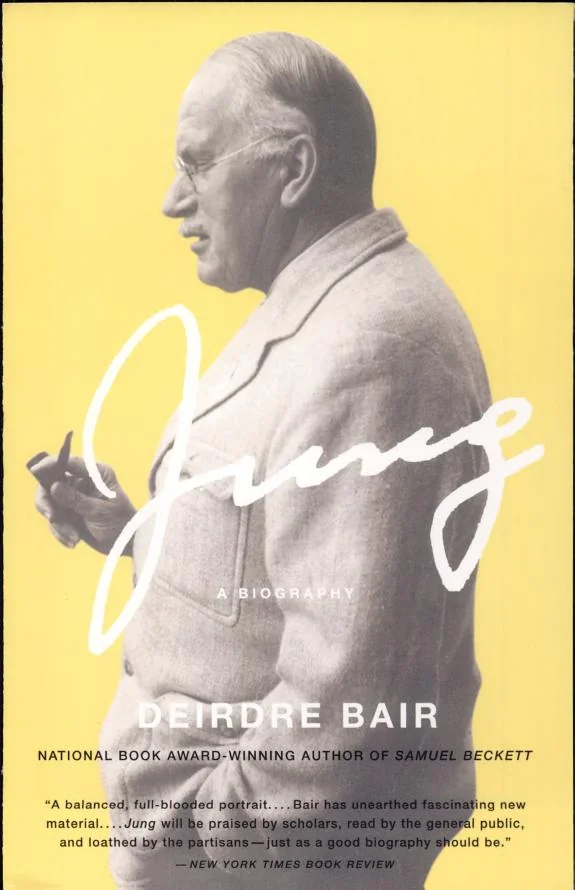
Deirdre Bair's 'Jung' offers a comprehensive, almost forensic, account of the psychiatrist whose ideas reshaped our understanding of the inner world. Bair excels at detailing the biographical minutiae, presenting a clear chronological progression from Jung's early life in Basel to his later years. The meticulous research is evident, particularly in mapping Jung's complex relationships, including his controversial professional partnership and eventual estrangement from Sigmund Freud in 1913. A particular strength lies in Bair's ability to connect Jung's personal life events, such as his profound mid-life crisis, to the development of his seminal theories. However, the sheer volume of detail can sometimes overwhelm the theoretical exposition, making the psychological concepts feel secondary to the biographical narrative. While the book acknowledges Jung's engagement with esoteric traditions like alchemy, it tends to ground these more in biographical context than in their direct hermeneutic significance. It provides a solid, fact-based foundation for understanding the man, if not always a deep dive into the esoteric currents he tapped.
Bair's biography is an indispensable, if dense, resource for grasping the life that fathered analytical psychology.
📝 Description
75
Deirdre Bair's 2004 biography details Carl Jung's life from Swiss childhood to his impact on psychology.
This biography by Deirdre Bair covers the life and intellectual path of Carl Gustav Jung. It begins with his childhood in Switzerland and follows his rise to a key figure in modern psychology. The book examines his professional relationships, especially his significant collaboration and later separation from Sigmund Freud.
Bair's work is for readers interested in the early thinkers of analytical psychology and how ideas about the human mind developed. It offers a look at Jung's personal growth alongside his professional accomplishments, including his theories on archetypes and the collective unconscious. The biography places Jung within the intellectual climate of early 20th-century Europe, noting his engagement with psychoanalysis and his own creation of analytical psychology. It also touches on his writings that influenced mythology and religious studies, showing the scientific and philosophical discussions of his time.
The book discusses Jung's main ideas, such as the collective unconscious, archetypes (including the Shadow and Anima/Animus), individuation, and the importance of dreams and symbols. It shows how these concepts grew from his own experiences, his therapy practice, and his studies in mythology, alchemy, and world religions.
Bair's biography situates Carl Jung's work within the broader context of early 20th-century intellectual currents, which included not only psychoanalysis but also a deep engagement with mythology, alchemy, and comparative religion. Jung's exploration of the collective unconscious and archetypes drew heavily from these less conventional sources, positioning his analytical psychology as a discipline that sought to understand the psyche through symbols and patterns found in ancient traditions and dreams. This book examines how these esoteric influences shaped his unique psychological theories.
💡 Why Read This Book?
• Learn about the pivotal 1913 break with Sigmund Freud, understanding the intellectual schism that allowed Jung to develop his own distinct psychological framework, analytical psychology. • Gain insight into Jung's personal exploration of the 'collective unconscious' by examining the biographical events and studies that informed this concept. • Understand the biographical roots of Jung's theory of 'individuation' by seeing how his own life experiences, including his mid-life crisis, shaped this developmental process.
⭐ Reader Reviews
Honest opinions from readers who have explored this book.
❓ Frequently Asked Questions
What was Carl Jung's relationship with Sigmund Freud?
Initially, Jung was Freud's protégé and heir apparent. However, significant theoretical disagreements, particularly regarding the nature of the libido and the unconscious, led to a rupture in their relationship around 1913.
When did Carl Jung develop his concept of the collective unconscious?
The foundations for Jung's concept of the collective unconscious were laid during the period following his break with Freud, roughly between 1913 and the 1920s, as he explored universal patterns in myths and dreams.
What is 'individuation' in Jungian psychology?
Individuation, a central concept in Jung's work, refers to the psychological process of integrating the conscious and unconscious aspects of the personality to achieve wholeness and self-realization.
Did Jung believe in the supernatural?
Jung's work often touched upon phenomena that bordered on the supernatural, such as synchronicity and archetypal imagery. He approached these not necessarily as literal supernatural events, but as expressions of deep psychological patterns.
Where was Carl Jung born and raised?
Carl Gustav Jung was born in Kesswil, Switzerland, on July 26, 1875, and spent most of his childhood and later life in Switzerland.
What are Jung's major contributions to psychology?
Jung's key contributions include analytical psychology, the concepts of the collective unconscious, archetypes, individuation, the Myers-Briggs Type Indicator (based on his personality typology), and the study of synchronicity.
🔮 Key Themes & Symbolism
The Split with Freud
The biography details the intellectual and personal schism between Carl Jung and Sigmund Freud, a central event occurring around 1913. This separation allowed Jung to diverge significantly from Freudian psychoanalysis, leading to the development of his own school of thought: analytical psychology. The work explores the core theoretical disagreements concerning the nature of psychic energy (libido) and the structure of the unconscious, marking a crucial turning point in 20th-century psychological thought.
Archetypes and the Collective Unconscious
Bair's narrative traces the emergence of Jung's concepts of archetypes and the collective unconscious. It examines how Jung integrated his studies of mythology, comparative religion, and alchemy with his clinical observations to posit a universal, inherited layer of the psyche containing fundamental patterns of human experience. The book illustrates how figures like the Shadow, Anima, and Animus manifest across cultures and time.
Individuation as a Life Path
The biography illuminates Jung's concept of individuation – the lifelong process of becoming a whole, integrated self. It portrays this as Jung's central thesis for psychological development, moving beyond mere symptom reduction to a quest for meaning and self-realization. The work connects this theoretical framework to Jung's own personal journey, particularly his profound mid-life introspection and exploration of his inner world.
The Role of Myth and Symbol
Jung's profound engagement with myth, alchemy, and esoteric traditions is presented as integral to his psychological theories. The biography highlights how these symbolic systems were not mere historical curiosities for Jung, but living expressions of the collective unconscious and essential tools for understanding the human psyche. His work demonstrates a unique synthesis of empirical psychology and symbolic interpretation.
💬 Memorable Quotes
Direct passages from the work, attributed to the author.
“Jung's break with Freud occurred around 1913.”
— This specific date marks the definitive end of their collaboration and mentorship, signifying Jung's independent theoretical trajectory and the birth of analytical psychology.
“The concept of the collective unconscious posits a shared psychic inheritance.”
— This refers to Jung's idea that beneath the personal unconscious lies a deeper, universal layer containing archetypal patterns common to all humanity.
“Individuation is the process of psychological integration.”
— Jung viewed this as the primary developmental task of life, involving the conscious integration of all aspects of the self to achieve wholeness.
“Jung studied alchemy and comparative mythology extensively.”
— These studies were not peripheral but central to his work, providing symbolic material and frameworks for understanding the unconscious mind.
“His work significantly influenced fields beyond psychology.”
— Jung's theories found resonance in literature, art, religious studies, and anthropology, demonstrating the broad applicability of his psychological insights.
🌙 Esoteric Significance
Tradition
Jung's work stands as a bridge between modern academic psychology and ancient esoteric traditions, particularly alchemy and Gnosticism. While not a practicing occultist, Jung saw these traditions as profound expressions of the human psyche's unconscious dynamics. His analytical psychology, especially its concepts of archetypes and the collective unconscious, draws heavily from the symbolic language and transformative processes described in alchemical texts and Gnostic cosmology, reinterpreting them through a psychological lens.
Symbolism
Key symbols explored include the 'ouroboros', representing cyclicality and wholeness, often found in alchemical imagery and reflecting Jung's ideas on psychic integration. The 'anima' and 'animus' are archetypal symbols of the contra-sexual aspect of the psyche, crucial for individuation. Jung also extensively analyzed the symbolic imagery of mandalas, seeing them as universal representations of the self and the ordering of psychic totality, often emerging spontaneously in dreams and visions.
Modern Relevance
Contemporary thinkers in depth psychology, spirituality, and even fields like literary criticism continue to engage with Jung's concepts. His ideas on archetypes inform modern narrative theory and the study of myth. Practices like dream analysis and active imagination are still employed. Furthermore, Jung's exploration of the 'collective unconscious' speaks to contemporary discussions about shared human experiences, cultural patterns, and the search for meaning in a fragmented world, influencing new schools of thought on consciousness and spirituality.
👥 Who Should Read This Book
• Students of analytical psychology and C.G. Jung's foundational theories seeking a detailed biographical account of his life and intellectual development. • Researchers in comparative mythology, religious studies, and the history of esoteric traditions interested in Jung's synthesis of psychological insights with ancient symbolic systems. • Individuals exploring their own psychological development and the process of individuation, looking for context on Jung's concepts of the self and the unconscious.
📜 Historical Context
Deirdre Bair's biography of Carl Jung emerges from the intellectual field of the early 21st century, offering a comprehensive look back at the early 20th century's psychological revolution. Jung's work developed against the backdrop of burgeoning psychoanalysis, championed by his one-time mentor, Sigmund Freud. Their professional split in 1913 was a defining moment, allowing Jung to forge his own path with analytical psychology, distinct from Freud's theories on libido and the unconscious. Contemporaries like Alfred Adler also offered alternative psychodynamic frameworks during this fertile period. Jung's engagement with mythology, Gnosticism, and alchemy positioned his work at the intersection of empirical science and esoteric traditions, a perspective that sometimes met with skepticism from the more orthodox scientific establishment of his time. The book situates Jung's extensive writings and theories within this dynamic era of psychological exploration and philosophical debate.
📔 Journal Prompts
The 1913 break with Freud and its impact on Jung's theories.
Archetypal patterns observed in personal experiences or cultural narratives.
The process of individuation and its challenges.
Jung's interpretation of alchemical symbolism.
The significance of dreams and the collective unconscious.
🗂️ Glossary
Analytical Psychology
C.G. Jung's school of psychology, distinct from Freudian psychoanalysis, focusing on the integration of conscious and unconscious aspects of the psyche and the concept of individuation.
Collective Unconscious
A theoretical layer of the human psyche containing inherited, universal archetypes and instincts shared by all humanity, discovered through Jung's studies of myths and dreams.
Archetypes
Universal, archaic patterns and images that derive from the collective unconscious and are the psychic counterpart of instinct. Examples include the Shadow, Anima, Animus, and the Self.
Individuation
The lifelong psychological process of integrating the conscious and unconscious elements of the self to achieve wholeness and a fully developed personality.
Synchronicity
The occurrence of meaningful coincidences that appear causally unrelated but are experienced as having a significant connection, a concept explored by Jung.
Libido
In Jungian psychology, libido is generalized psychic energy, not solely sexual energy as emphasized by Freud, driving various psychological functions.
Shadow
The unconscious, repressed aspects of the personality, often containing primitive instincts and unacceptable desires, which must be confronted for individuation.
This book appears in 1 collection
🔮 Readers Also Liked
Browse all →







From the “Jungian Psychology” Collection
View all →








More Free Esoteric History & Biography Books
View all →