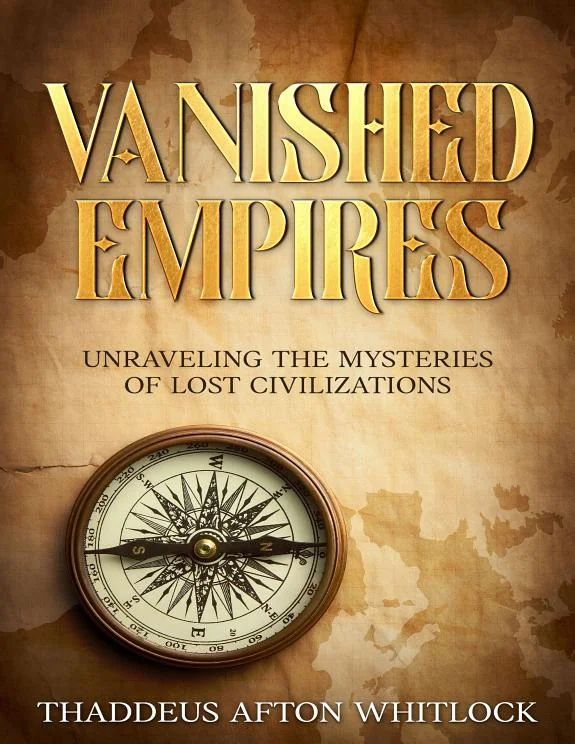
Vanished Empires
 80
80

Vanished Empires
Thaddeus Afton Whitlock’s "Vanished Empires" offers a compelling, if sometimes overly enthusiastic, exploration of lost civilizations. The strength of the work lies in its synthesis of disparate archaeological findings and its willingness to entertain unconventional hypotheses. Whitlock’s discussion of the Indus Valley Civilization’s eventual decline, for instance, moving beyond simple climate models to consider societal fragmentation, is particularly illuminating. However, the book occasionally falters by leaning too heavily on anecdotal evidence when discussing more fringe theories. A notable passage details the supposed pre-diluvian knowledge attributed to cultures predating the accepted timeline of human development, which, while intriguing, lacks robust empirical support. Despite this tendency, the book serves as a valuable primer for those seeking to expand their understanding beyond conventional historical narratives.
📝 Description
80
Thaddeus Afton Whitlock's "Vanished Empires" examines societal collapses from the late 19th and early 20th centuries.
Published by Thaddeus Afton Whitlock, "Vanished Empires" investigates the disappearance of ancient civilizations, a subject that occupied scholars during the late 19th and early 20th centuries. The book looks at archaeological findings, such as those from the Minoan civilization at Knossos, and early work on Egyptian hieroglyphs to anchor its more speculative ideas. It considers how societies vanish from historical records, posing questions about human progress and the idea of permanence.
Whitlock’s central concept is 'cultural amnesia,' where entire societies disappear without clear historical traces. He considers possible reasons for these collapses, including environmental disasters like the Bronze Age collapse around 1200 BCE, internal societal breakdown, and the potential influence of forgotten esoteric knowledge systems. The book is aimed at historians, archaeologists, and those interested in comparative mythology, ancient cosmology, and the cyclical nature of civilizations.
This work engages with the esoteric traditions that flourished during the period of its inquiry, a time when occult and spiritual interpretations of ancient history gained traction. It touches upon ideas about forgotten wisdom and hidden cycles of civilization that were popular in groups like the Theosophical Society. The book's focus on the unexplained aspects of societal disappearances aligns with esoteric interests in hidden histories and non-material causes for historical events.
💡 Why Read This Book?
• Gain an understanding of the 'cultural amnesia' concept, learning how societies can disappear from historical records, as exemplified by the mysterious decline of the Minoan civilization around 1450 BCE. • Explore potential causes for societal collapse beyond conventional theories, examining Whitlock’s analysis of factors like ecological shifts and internal societal decay. • Discover the esoteric interpretations of ancient societal structures and their possible links to forgotten cosmologies, offering a unique perspective on pre-classical cultures.
⭐ Reader Reviews
Honest opinions from readers who have explored this book.
❓ Frequently Asked Questions
What specific lost civilizations does "Vanished Empires" focus on?
The book extensively examines civilizations such as the Maya, the Indus Valley Civilization, and offers speculative insights into cultures potentially predating recorded history, often linking their demise to environmental or esoteric factors.
Does the book present scientific evidence for its theories on vanished empires?
Whitlock integrates archaeological findings and established historical data as a foundation, but also explores more speculative theories, including those related to esoteric knowledge and non-conventional causality for societal collapse.
What makes "Vanished Empires" relevant to occult philosophy?
The book connects the disappearance of ancient societies to potential hidden knowledge, forgotten cosmologies, and the cyclical nature of power, aligning with occult philosophies that seek deeper, often hidden, truths about human existence and history.
Is "Vanished Empires" suitable for beginners in history or esotericism?
While it requires some engagement with historical concepts, the book's narrative style makes it accessible. Beginners interested in the mysteries of the past and esoteric interpretations will find it a stimulating introduction.
What is the primary 'mystery' addressed in "Vanished Empires"?
The central mystery is the abrupt and often unexplained disappearance of entire complex civilizations, prompting inquiry into the underlying causes and the potential for lost knowledge or catastrophic events beyond standard historical explanations.
What historical periods or events are referenced in the book?
The work references periods surrounding the decline of the Minoan civilization (circa 1450 BCE), the Bronze Age collapse (around 1200 BCE), and the sophistication of ancient Maya cities and the Indus Valley Civilization.
🔮 Key Themes & Symbolism
The Enigma of Sudden Disappearance
The work grapples with the phenomenon of entire civilizations vanishing without clear historical transition. It posits that beyond environmental factors or conquest, there may lie explanations rooted in forgotten esoteric principles or societal ruptures so profound they erase collective memory. The book examines how the archaeological silence following the flourishing of the Indus Valley Civilization, for instance, invites speculation on causes beyond simple migration or climate change.
Elements of Lost Knowledge
A central theme is the possibility that these vanished empires possessed advanced knowledge, perhaps esoteric or spiritual, which was lost to subsequent ages. Whitlock explores how their monumental architecture and complex societal structures might point to sophisticated understandings of cosmology or the natural world that are no longer accessible. This theme touches upon the idea of cyclical history and the potential for lost wisdom to re-emerge.
Cyclical Nature of Civilizations
The book implicitly and explicitly discusses the cyclical rise and fall of human societies. By analyzing the collapse of cultures like the Minoans, it suggests that patterns of growth, complexity, and eventual dissolution are inherent to civilization itself. This perspective encourages a re-evaluation of progress and permanence, hinting that understanding these cycles might hold keys to contemporary societal challenges.
The Limits of Conventional History
Whitlock challenges the reader to consider the limitations of purely materialistic or archaeological explanations for historical events. He suggests that aspects of human experience, particularly those involving belief systems, spiritual practices, and collective consciousness, may have played crucial roles in the trajectory and ultimate fate of ancient societies, roles often overlooked by traditional historiography.
💬 Memorable Quotes
Direct passages from the work, attributed to the author.
“The greatest monuments often mark not triumphs, but silences.”
— This aphorism suggests that the enduring physical remnants of lost civilizations speak more powerfully about their absence and the mysteries surrounding their demise than about their achievements.
“We excavate stone, but we seek elements of consciousness.”
— This statement highlights the book's approach: moving beyond mere physical artifacts to explore the lost mental landscapes, belief systems, and spiritual understandings of ancient peoples.
“The end of an empire is often the beginning of a myth.”
— This suggests that when a civilization disappears from history, its memory often transforms into legend and myth, becoming fertile ground for speculation and esoteric interpretation.
“Progress is not a line, but a spiral, with each turn a rediscovery.”
— This interpretation frames historical development not as linear advancement but as a cyclical process where humanity repeatedly encounters similar challenges and opportunities, potentially rediscovering lost wisdom.
“To understand their end, we must first grasp their 'why'.”
— This emphasizes the need to comprehend the core motivations, beliefs, and worldview of a civilization before attempting to explain its ultimate disappearance.
🌙 Esoteric Significance
Tradition
The work draws heavily from a syncretic esoteric tradition, blending elements of ancient wisdom, cyclical history theories, and a fascination with lost Atlantean or pre-diluvian civilizations. It aligns with the Theosophical concept of Root Races and the cyclical unfolding of human spiritual evolution, suggesting that vanished empires represent critical, often forgotten, stages in this grand cosmic process.
Symbolism
Key symbols include monumental architecture (pyramids, megalithic structures) representing humanity's attempt to connect with cosmic order or divine principles, and the 'void' or 'silence' left by vanished peoples, symbolizing lost knowledge and the cyclical nature of existence. The serpent motif, often associated with wisdom and transformation in ancient cultures, also appears as a symbol of cyclical renewal and hidden truths.
Modern Relevance
Contemporary thinkers and practitioners in fields like archaeoastronomy, consciousness studies, and certain branches of New Age spirituality often reference the ideas presented in works like "Vanished Empires." The book's exploration of societal collapse and lost knowledge continues to inform discussions on sustainability, collective consciousness, and the potential for rediscovering ancient wisdom to navigate modern crises.
👥 Who Should Read This Book
• Students of comparative mythology and ancient religions seeking frameworks to understand recurring patterns and potential lost cosmologies across disparate cultures. • Researchers and enthusiasts of fringe history and archaeology interested in theories that challenge conventional historical narratives and explore the 'unexplained' aspects of antiquity. • Individuals drawn to esoteric philosophy and the concept of cyclical history, looking to explore how ancient societal collapses might inform a deeper understanding of human spiritual evolution.
📜 Historical Context
Published in 2024, "Vanished Empires" emerges in an era of renewed interest in ancient mysteries and alternative historical narratives, a milieu influenced by figures like Graham Hancock. Whitlock's work builds upon the speculative traditions of early 20th-century thinkers such as Helena Blavatsky and Ignatius Donnelly, who sought lost civilizations and forgotten epochs. The book engages with the archaeological discoveries of the early 20th century, such as the decipherment of Mayan hieroglyphs and the excavations at sites like Teotihuacan, but it often pushes beyond the consensus view. While conventional archaeology focuses on material culture and documented events, Whitlock's approach aligns with esoteric traditions that posit hidden spiritual or cosmological reasons for societal shifts. The reception of such works often polarizes scholars, with mainstream historians generally dismissing their more speculative claims, yet they resonate with a public drawn to the enduring allure of the unexplained past.
📔 Journal Prompts
The concept of 'cultural amnesia' in relation to the Indus Valley Civilization.
Reflecting on the symbolic meaning of monumental ruins left by vanished empires.
Considering the potential for lost esoteric knowledge in pre-classical societies.
Analyzing the cyclical patterns of rise and fall presented in the book.
The connection between societal collapse and the emergence of mythic narratives.
🗂️ Glossary
Cultural Amnesia
The phenomenon where entire societies disappear from historical records and collective memory without clear transitional explanations, leaving behind enigmatic ruins and unanswered questions about their fate.
Cosmic Order
In esoteric thought, the belief in a fundamental, divinely ordained structure and harmony governing the universe, often reflected in the architecture and philosophy of ancient civilizations.
Pre-Diluvian Civilizations
Hypothetical advanced societies believed to have existed before a great flood or cataclysm, often associated with myths of Atlantis or Lemuria, possessing sophisticated knowledge now lost.
Cyclical History
The philosophical concept that history does not progress linearly but moves in cycles of rise, decline, and renewal, often involving the reappearance of similar patterns or archetypes.
Esoteric Knowledge
Hidden or secret wisdom, often spiritual or mystical in nature, not typically accessible to the general public and passed down through select traditions or initiations.
Bronze Age Collapse
A period of widespread societal breakdown and decline in the Eastern Mediterranean, Aegean, and Near East around the end of the Late Bronze Age (c. 1200 BCE), marked by destruction, depopulation, and the cessation of major trade routes.
Minoan Civilization
A Bronze Age Aegean civilization centered on Crete, known for its advanced art, architecture (like the Palace of Knossos), and script (Linear A and B), which mysteriously declined around 1450 BCE.
This book appears in 1 collection
🔮 Readers Also Liked
Browse all →






From the “Lost Civilizations” Collection
View all →







More Free Esoteric History & Biography Books
View all →