The Pyramids
 74
74

The Pyramids
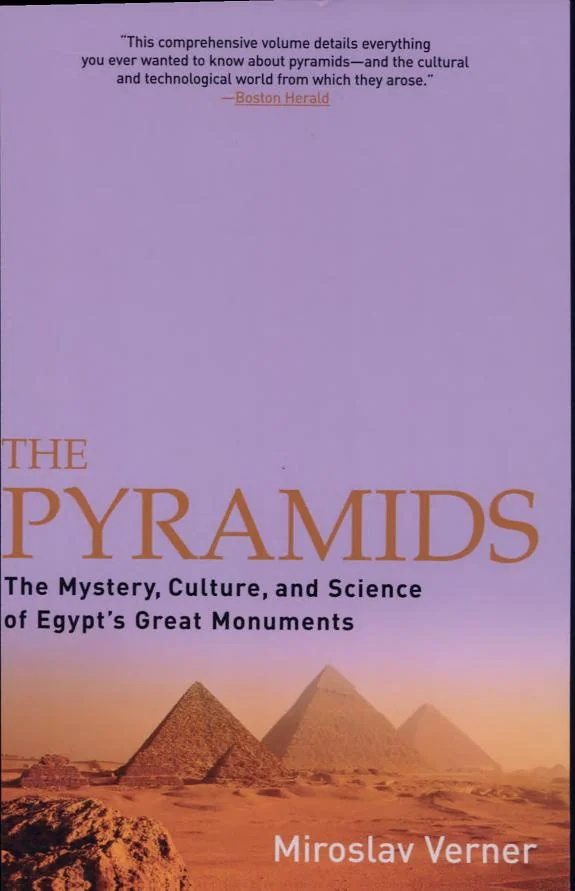
Miroslav Verner's "The Pyramids" offers a grounded examination of these iconic structures, steering clear of sensationalism. The strength lies in its detailed exposition of construction logistics and the socio-political environment that facilitated such ambitious projects. Verner presents a compelling case for the pyramids as expressions of state power and religious doctrine, particularly in his discussion of the Giza plateau's development. A limitation, however, is that the sheer density of archaeological detail might prove challenging for the casual reader unfamiliar with Egyptological terminology. The section detailing the workers' village at Giza, for instance, provides invaluable context on the human element behind the stone, revealing the organized, albeit hierarchical, society that sustained this monumental effort. This book serves as a vital corrective to purely mystical interpretations, grounding the reader in the tangible realities of ancient Egyptian ambition.
📝 Description
74
Miroslav Verner’s 1997 book examines the pyramids as state projects, not just tombs.
Miroslav Verner’s "The Pyramids" scrutinizes the monumental structures of ancient Egypt, moving past basic descriptions to consider their societal and cultural roles. The book details construction methods, labor organization, and the deep religious convictions that supported these enormous projects. Verner argues the pyramids were complex state undertakings, tied to the cosmology and political ideas of their era, rather than solely pharaonic burials.
The author uses extensive archaeological findings and hieroglyphic texts to reconstruct the lives and beliefs of the people who built them. This volume is for serious students of Egyptology, ancient history, and comparative religion. It will also interest readers curious about large-scale ancient construction and the socio-political systems that made it possible. Individuals looking for an understanding of the pyramids' practical and symbolic importance, separate from speculative theories, will find Verner’s research valuable. The work is suited for those who value careful scholarship based on material evidence and textual study.
While Verner's work is primarily archaeological and historical, its focus on the pyramids as expressions of divine kingship and cosmic order touches upon esoteric traditions. The book addresses the deep religious beliefs and symbolic weight associated with these structures, which have long been subjects of mystical interpretation. By grounding these interpretations in material evidence and textual analysis, Verner provides a scholarly counterpoint to purely speculative esoteric readings, yet still illuminates the profound spiritual and ideological dimensions that make the pyramids resonate with esoteric thought.
💡 Why Read This Book?
• Learn about the organizational strategies employed by the Old Kingdom state to mobilize thousands of workers for projects like the Giza pyramids, as detailed in Verner's analysis of labor force management. • Understand the evolution of pyramid construction techniques from early mastabas to the monumental structures of the Fourth Dynasty, as described through specific architectural phases and royal commissions. • Gain insight into the religious and cosmological beliefs that informed pyramid design and placement, such as the alignment of the Great Pyramid with cardinal directions and celestial bodies.
⭐ Reader Reviews
Honest opinions from readers who have explored this book.
❓ Frequently Asked Questions
What is the primary focus of Miroslav Verner's "The Pyramids"?
The book focuses on the pyramids of ancient Egypt, exploring their construction, the civilization that built them, and the societal and religious context surrounding these monumental structures, moving beyond mere architectural descriptions.
What evidence does Verner use to discuss pyramid construction?
Verner draws on extensive archaeological findings, including the analysis of workers' settlements, tools, and material sourcing, alongside hieroglyphic texts and inscriptions that shed light on administrative practices and beliefs.
When were the most significant pyramids built?
The most iconic pyramids, including those at Giza, were primarily constructed during Egypt's Old Kingdom, a period generally dated from approximately 2686 to 2181 BCE.
Does the book discuss the purpose of the pyramids?
Yes, it discusses their primary role as royal tombs and focal points for the mortuary cult of the pharaoh, integral to beliefs about divine kingship and the afterlife, as well as their function as symbols of state power.
Is "The Pyramids" by Miroslav Verner suitable for beginners?
While comprehensive, the book is best suited for readers with an interest in Egyptology or ancient history, as it presents detailed archaeological and textual analysis. Beginners might benefit from prior general knowledge of ancient Egypt.
What does the book reveal about the civilization that built the pyramids?
It reveals a highly organized society with sophisticated administrative capabilities, a strong belief system centered on divine kingship and the afterlife, and the capacity for large-scale project management, as evidenced by the construction itself.
🔮 Key Themes & Symbolism
State Power and Monumental Architecture
The book rigorously examines how the construction of the pyramids, particularly during the Old Kingdom (c. 2686–2181 BCE), served as a potent manifestation of centralized state authority. Verner details the immense logistical and organizational feats required, from quarrying massive stone blocks to feeding and housing thousands of laborers. This wasn't merely a religious endeavor but a profound display of the pharaoh's power and the state's capacity to command resources, reflecting a sophisticated bureaucracy and a unified national project aimed at securing cosmic order and royal divinity.
Cosmology and Royal Divinity
Verner connects the physical form and orientation of the pyramids to ancient Egyptian cosmology. He explores how the structures were aligned with celestial bodies and cardinal points, reflecting a worldview where the pharaoh was a divine intermediary. The pyramids acted as a bridge between the earthly realm and the afterlife, designed to facilitate the king's ascension and ensure the continuation of cosmic harmony (Ma'at). The book interprets architectural elements as symbolic representations of this spiritual journey and the pharaoh's eternal role.
Labor Organization and Daily Life
A significant contribution of Verner's work is its focus on the human element behind the monumental construction. By analyzing archaeological evidence from workers' villages, such as those discovered near the pyramids, the book provides concrete insights into the lives of the laborers, artisans, and administrators. It debunks the myth of slave labor for pyramid construction, presenting evidence of a well-organized, compensated workforce, and offers a glimpse into the daily routines, diet, and social structure that sustained these colossal ancient projects.
Evolution of Pyramid Building
The text traces the development of pyramid construction over time, beginning with early mastaba tombs and progressing through revolutionary designs like Djoser's Step Pyramid at Saqqara. Verner meticulously documents the architectural innovations and stylistic changes that led to the smooth-sided, true pyramids, culminating in the magnificent structures at Giza. This chronological approach highlights the gradual refinement of techniques and the evolving architectural and religious ambitions of successive dynasties.
💬 Memorable Quotes
Direct passages from the work, attributed to the author.
“The pyramids are a manifestation of the Old Kingdom's administrative and economic power.”
— This interpretation highlights the book's emphasis on the pyramids not just as religious monuments but as complex state-sponsored projects, underscoring the sophisticated organization and resource management capabilities of the ancient Egyptian civilization.
“Archaeological evidence from workers' settlements reveals a structured society, not one built on mass enslavement.”
— This interpretation underscores the book's contribution to understanding the human aspect of pyramid construction, presenting a view of a well-organized, possibly compensated labor force rather than the common misconception of widespread slave labor.
“The evolution from Djoser's Step Pyramid to the Giza pyramids shows significant architectural and ideological progression.”
— This highlights Verner's detailed analysis of the historical development of pyramid architecture, illustrating how design and purpose transformed over successive dynasties, reflecting changing beliefs and technical capabilities.
“These structures were integral to the pharaoh's mortuary cult and the maintenance of cosmic order.”
— This interpretation emphasizes the profound religious and political function of the pyramids, positioning them as crucial elements in ensuring the pharaoh's eternal life and the stability of the Egyptian cosmos (Ma'at).
💡 Key Ideas
Editorial paraphrase of the work's core concepts — not direct quotes.
The alignment of the Great Pyramid reflects an advanced understanding of astronomy and a desire to connect with the cosmos.
This paraphrased concept points to Verner's exploration of the symbolic and cosmological significance embedded within the pyramids' design, suggesting a deliberate connection to celestial movements and a profound engagement with the universe.
🌙 Esoteric Significance
Tradition
While Verner's work is primarily archaeological and historical, it touches upon themes resonant within esoteric traditions that view ancient Egypt as a source of profound wisdom. Within Hermeticism and related Western esoteric schools, the pyramids are often seen as symbolic repositories of ancient knowledge, representing cosmic principles, spiritual ascension, and the secrets of creation. Verner's factual approach provides the empirical grounding that esotericists often seek to reconcile with their symbolic interpretations, positioning the structures as physical manifestations of a complex worldview.
Symbolism
The pyramidal form itself is a potent symbol across many traditions, often representing ascent, stability, and the connection between the earthly and divine. In the context of Verner's work, the specific alignments of the pyramids with celestial phenomena (like the circumpolar stars) and their cardinal orientation suggest a deep symbolic language related to the Egyptian concept of Ma'at (cosmic order) and the pharaoh's journey to the afterlife, linking the physical structure to metaphysical aspirations.
Modern Relevance
Contemporary esoteric thinkers and practitioners continue to draw inspiration from ancient Egypt, and Verner's detailed, evidence-based descriptions of the pyramids offer a vital counterpoint to purely speculative theories. His work provides a framework for understanding the actual context of these structures, allowing for a more nuanced integration of historical fact with esoteric symbolism. Modern schools of thought focusing on sacred geometry, ancient cosmology, and the power of intention in monumental building can find substantial material for reflection within his analyses.
👥 Who Should Read This Book
• Students of ancient Egyptian history and archaeology seeking a comprehensive, evidence-based overview of pyramid construction and its societal context. • Readers interested in comparative religion and mythology who wish to understand the foundational beliefs that shaped ancient Egyptian monumental architecture. • Individuals fascinated by large-scale ancient engineering and the organizational capabilities of early civilizations, looking for factual insights beyond popular speculation.
📜 Historical Context
Miroslav Verner's "The Pyramids," first published in 2001, arrives in a field long dominated by Egyptology, yet it brings a contemporary synthesis of decades of fieldwork and analysis. The era of pyramid construction itself, the Old Kingdom (c. 2686–2181 BCE), was a formative period for Egyptian civilization, characterized by strong centralized rule and the development of a complex bureaucracy. This period saw the transition from mastaba tombs to the iconic true pyramids, a process Verner meticulously outlines. In intellectual circles, while speculative theories about pyramids often captured public imagination, scholarly discourse, influenced by figures like Flinders Petrie and later Zahi Hawass, increasingly focused on archaeological evidence and textual interpretation. Verner's work engages with this rigorous tradition, offering a detailed examination of construction methods, labor organization, and the socio-religious ideology that underpinned these projects, thereby contributing to a more grounded understanding compared to earlier, less empirically driven narratives.
📔 Journal Prompts
The Old Kingdom's state power as reflected in pyramid construction.
The symbolic meaning embedded in the architectural alignments of the pyramids.
The daily lives of laborers involved in pyramid building.
The evolution from Djoser's Step Pyramid to the Giza structures.
The pharaoh's role as a divine intermediary and its connection to pyramid purpose.
🗂️ Glossary
Mastaba
An early form of Egyptian tomb, characterized by a rectangular, flat-topped structure with sloping sides built over a burial chamber. These preceded the development of true pyramids.
Old Kingdom
The period of ancient Egyptian history (c. 2686–2181 BCE) during which the most famous pyramids, including those at Giza, were constructed. It is known for its strong centralized government and cultural achievements.
Pharaoh
The title given to the rulers of ancient Egypt, considered to be divine or semi-divine intermediaries between the gods and the people. Their tombs and mortuary complexes were central to Egyptian belief.
Ma'at
An ancient Egyptian concept representing truth, balance, order, harmony, law, morality, and justice. It was personified as a goddess and was central to the pharaoh's role in maintaining cosmic stability.
Mortuary Cult
Religious practices and rituals performed after a ruler's death to ensure their continued well-being in the afterlife and maintain their divine status, often centered around their tomb and associated temples.
Hieroglyphics
The formal writing system used in ancient Egypt, combining logographic, syllabic, and alphabetic elements. Hieroglyphic inscriptions are crucial sources of information about Egyptian religion, history, and daily life.
Cosmology
The study or theory of the origin and development of the universe. In ancient Egypt, cosmology was deeply intertwined with religion and explained the structure and functioning of the cosmos.
This book appears in 1 collection
🔮 Readers Also Liked
Browse all →







From the “Pyramids” Collection
View all →




More Free Esoteric History & Biography Books
View all →