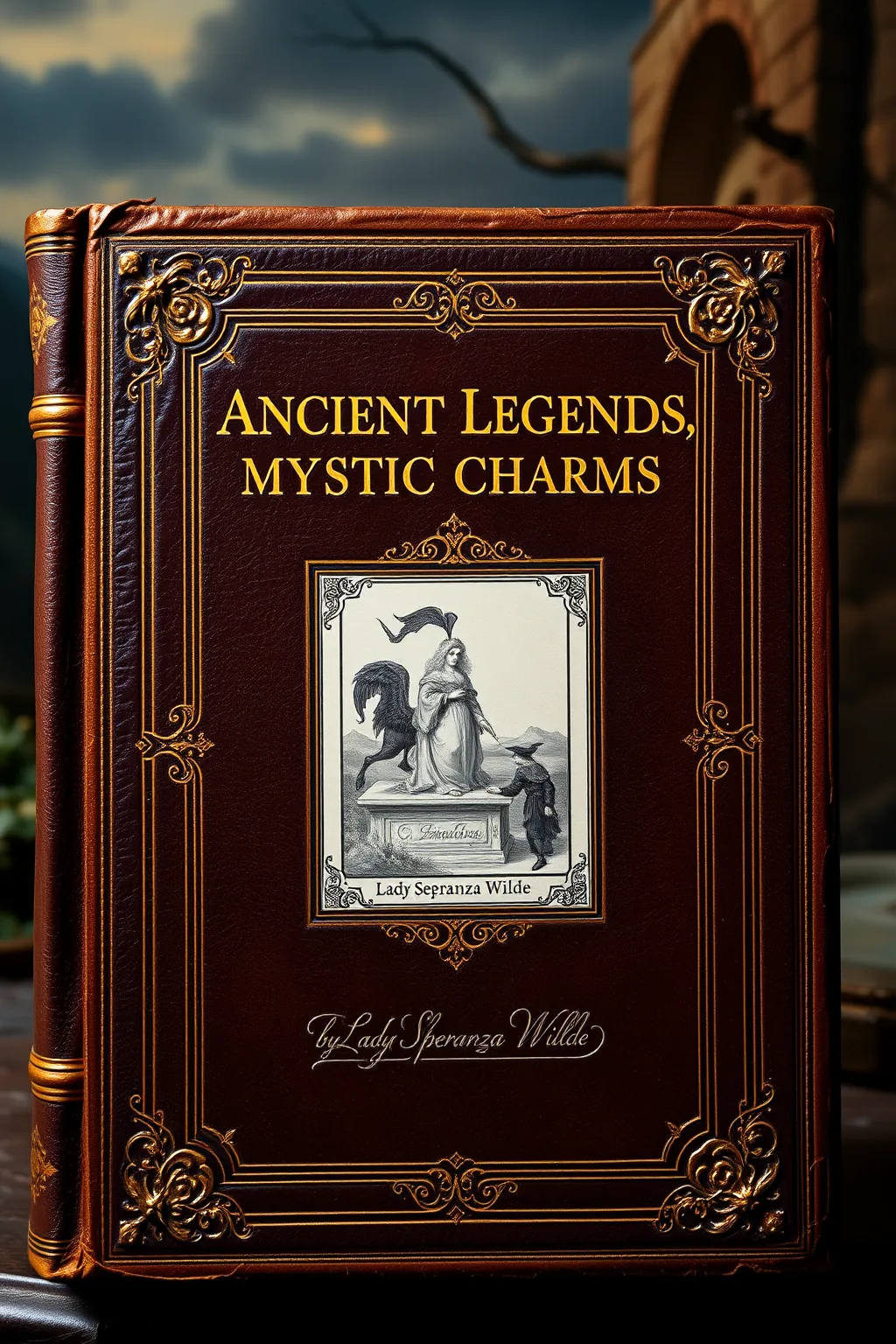
Ancient Legends, Mystic Charms, and Superstitions of Ireland
 80
80

Ancient Legends, Mystic Charms, and Superstitions of Ireland


Silas Hawthorne (Hermetic Studies Editor) — Lady Speranza Wilde's 'Ancient Legends, Mystic Charms, and Superstitions of Ireland' stands as a cornerstone for anyone exploring the depths of Celtic esotericism. Wilde's meticulous compilation, drawn from the very pulse of Irish oral tradition, offers an unparalleled glimpse into a worldview saturated with potent symbolism and elemental magic. The strength of this work lies in its authentic representation of folk belief, revealing the underlying metaphysical principles that informed daily life. It is an indispensable resource for scholars of comparative mythology, practitioners of folk magic, and seekers drawn to the raw, untamed spiritual energies of the British Isles.
📝 Description
80
Lady Speranza Wilde published 'Ancient Legends, Mystic Charms, and Superstitions of Ireland' in 1887.
This 1887 book collects Irish folklore, focusing on charms and superstitions. Lady Speranza Wilde gathered accounts of fairy enchantments, rural traditions, and beliefs that influenced the Irish people. The text details figures like the Sidhe, leprechauns, and the phouka, alongside stories of shape-shifters.
It examines the lasting influence of folklore and the beliefs that shaped daily life. The book aims to decode the symbolic meanings within these old stories. It presents a look at the magic and wisdom still present in Ireland's history.
Published in the late 19th century, a period of renewed interest in folklore and occult studies, this work aligns with the era's fascination with national mythologies and hidden spiritual currents. Lady Wilde's collection contributes to the broader esoteric movement by documenting traditions often dismissed by mainstream scholarship. It frames these beliefs not merely as quaint stories, but as expressions of a deeper, often forgotten, connection to the natural and supernatural world.
✍️ Author
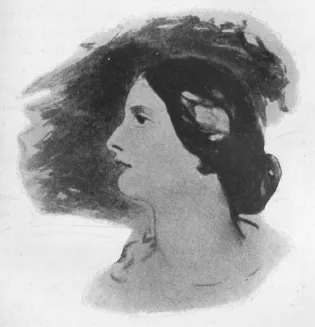
Lady Speranza Wilde
Jane Francesca Agnes Wilde, Lady Wilde (née Elgee; 27 December 1821 – 3 February 1896) was an Irish poet who wrote under the pen name Speranza and supporter of the nationalist movement. Lady Wilde had a special interest in Irish folktales, which she helpe…
💡 Why Read This Book?
Immerse yourself in the authentic magical currents of Ireland. This book is for seekers of hidden knowledge, scholars of folklore and esotericism, and practitioners looking to connect with ancient Celtic spiritual traditions. Uncover the symbolic language of charms, understand the archetypal figures of Irish myth, and feel the resonance of a land deeply intertwined with the mystical.
⭐ Reader Reviews
Honest opinions from readers who have explored this book.
❓ Frequently Asked Questions
What makes this book 'esoteric'?
Its esoteric nature lies in its exploration of hidden knowledge, symbolic meanings within folklore, and the underlying spiritual principles governing ancient Irish beliefs and practices, beyond simple storytelling.
Is this book suitable for beginners?
Absolutely. While rich in detail, its accessible narrative makes it an excellent starting point for those new to Irish folklore and esoteric studies.
What types of charms are discussed?
The book details various protective, healing, and fortune-invoking charms, often rooted in natural elements and ancient rituals, reflecting the practical application of folk magic.
Does it cover the fairy realm?
Yes, extensively. It delves into the nature, habits, and lore surrounding fairies, leprechauns, and other enchanted beings central to Irish mythology.
Can this book be used for modern practice?
Many find inspiration for modern magical and spiritual practices by studying the archetypes, symbols, and belief systems presented, adapting them to contemporary contexts.
🔮 Key Themes & Symbolism
The Enchanted Range of Ireland
This book paints Ireland not merely as a geographical location, but as a living, breathing entity imbued with potent magic. It explores how the very land—its hills, bogs, rivers, and ancient stones—is believed to be inhabited by unseen forces and spirits. The folklore presented reveals a deep symbiosis between the people and their environment, where natural phenomena are interpreted through a mystical lens, and the earth itself is a source of power and wonder. This theme invites readers to perceive the world as a sacred space, alive with hidden energies and ancient pacts.
The Unseen Inhabitants: Fairy Lore and Elemental Spirits
Central to the book is the wide range of fairy lore, detailing the various races of the Sidhe, their realms, and their interactions with humanity. It goes beyond simple tales, offering insights into the complex nature of these beings—their capricious moods, their powerful enchantments, and the rituals and taboos observed by those who lived in their proximity. This section illuminates the ancient belief in elemental spirits and nature deities, revealing a worldview where the human and the supernatural are inextricably linked, and the boundaries between worlds are permeable and fluid.
The Power of Charms and Folk Magic
This theme studies the practical application of belief through charms and superstitions. It showcases a vast array of folk remedies, protective rituals, and divination practices that were woven into the fabric of daily life. The book illustrates how ordinary objects, words, and actions could be imbued with magical intent, offering a glimpse into a pre-modern understanding of causality and the manipulation of unseen forces. It highlights the inherent belief in sympathetic magic and the power of intention to shape reality, providing a fascinating study of historical magical systems.
💬 Memorable Quotes
Direct passages from the work, attributed to the author.
“The veil between worlds is thin in Ireland.”
— This phrase expresses the pervasive belief in the proximity of the supernatural, suggesting a constant interplay between the mundane and the mystical.
“Fairies have their own laws, and we must respect them.”
— Highlights the ancient wisdom of living in harmony with nature and unseen forces, emphasizing caution and reverence towards the fairy realm.
“Every stone has a story, every shadow a spirit.”
— Underscores the animistic worldview where the natural world is imbued with sentience and spiritual significance, a core tenet of ancient Celtic belief.
“A charm whispered is a prayer answered.”
— Illustrates the potent belief in the efficacy of spoken spells and intentions, linking folk magic directly to the power of focused will and divine intervention.
“Superstition is the echo of ancient knowledge.”
— Suggests that seemingly simple superstitions are often remnants of deeper, forgotten wisdom and spiritual understanding from past eras.
🌙 Esoteric Significance
Tradition
This work is deeply rooted in the Celtic esoteric tradition, particularly its emphasis on animism, the interconnectedness of all life, and the power of the natural world. It aligns with shamanic practices of spirit communication and the understanding of liminal spaces where the mundane and the sacred converge. The folklore presented acts as a symbolic language for understanding elemental forces, archetypal energies, and the cyclical nature of existence, offering a unique perspective on ancient pagan and pre-Christian spiritual systems.
Symbolism
The symbolism within the book is rich and multilayered. Fairy beings represent archetypal forces, elemental spirits, and the unconscious mind. Charms and rituals often employ natural elements (water, fire, earth, air) and symbolic objects (stones, herbs, knots) to harness specific energies or achieve desired outcomes. Shape-shifting tales explore themes of transformation, hidden potential, and the fluidity of identity. The landscape itself is imbued with symbolic meaning, with sacred sites and natural formations acting as conduits for spiritual power and ancient wisdom.
Modern Relevance
In an era often characterized by disconnection from nature and spiritual traditions, 'Ancient Legends, Mystic Charms, and Superstitions of Ireland' offers a vital reconnection. It provides a framework for understanding the enduring power of belief, the significance of symbolism in daily life, and the importance of respecting the unseen forces that shape our reality. For modern practitioners, it serves as a rich sourcebook for inspiration, offering archetypes, rituals, and a worldview that can be adapted to contemporary spiritual paths, fostering a deeper appreciation for the magic inherent in the world around us.
👥 Who Should Read This Book
This book is a treasure for a diverse readership. **Beginners** in folklore and esoteric studies will find an accessible and captivating introduction to Irish mysticism. **Scholars** of mythology, anthropology, and comparative religion will appreciate its ethnographic value and rich detail. **Seekers** drawn to the magic of the natural world and ancient spiritual traditions will discover a profound connection to the earth's hidden energies. **Practitioners** of folk magic, paganism, and Celtic spirituality will find inspiration for rituals, spellcraft, and a deeper understanding of ancestral practices.
📜 Historical Context
Published in 1887, 'Ancient Legends, Mystic Charms, and Superstitions of Ireland' emerged during a period of intense cultural revival and nationalist sentiment in Ireland. The late Victorian era was a time when many scholars and writers sought to document and preserve fading oral traditions, seeing them as vital components of national identity. Lady Speranza Wilde, a prominent figure in Dublin society and a fervent supporter of Irish culture, was deeply immersed in this movement. Her work reflects a growing interest in folklore as a repository of historical memory, spiritual belief, and a counterpoint to the encroaching industrialization and Anglicization of the time. The book’s compilation of fairy tales, charms, and superstitions served not only as an ethnographic record but also as a evidence of the enduring mystical consciousness of the Irish people, offering a rich source of inspiration for artists, writers, and mystics.
📔 Journal Prompts
Reflect on a personal experience where you felt the veil between worlds was thin. What was the setting? What did you perceive?
Choose one fairy creature from the book. Imagine you are to meet it; what precautions would you take? What offerings would you present?
Consider a common superstition you hold. What might be its ancient, esoteric root or meaning?
If you were to create a modern charm based on the principles described, what would it be for and what elements would you include?
How does the concept of the 'enchanted landscape' resonate with your own perception of the natural world?
🗂️ Glossary
Sidhe
In Irish folklore, the Sidhe (pronounced 'shee') are supernatural beings, often associated with fairies or the inhabitants of the 'otherworld.' They are believed to reside in mounds, hills, or ancient burial sites and possess magical powers.
Phouka
A mischievous and often shape-shifting spirit in Irish folklore, capable of appearing as a horse, goat, or human. Phoukas can be helpful or malevolent, often playing tricks on unsuspecting mortals.
Leprechaun
A solitary fairy creature from Irish folklore, typically depicted as a small, mischievous shoemaker who hoards gold. They are known for their cunning and their elusive nature.
Charm
A spoken spell or an object believed to possess magical properties, used for protection, healing, fortune-telling, or to influence events. In this context, charms are often rooted in folk tradition and belief.
Superstition
A belief or practice that is unfounded, irrational, or based on tradition rather than scientific evidence. In folklore, superstitions often represent ancient understandings of the world and its unseen forces.
This book appears in 7 collections
🔮 Readers Also Liked
Browse all →








From the “Transcendental Meditation” Collection
View all →
![CIA Reading Room cia-rdp84-00022r000200150084-5: ORIENTATION COURSE LECTURE ON 'SERVICES OF [ ] [ ]'](/img/thumb/cia-reading-room-cia-rdp84-00022r000200150084-5-orientation-course-lecture-on-services-of-cia-reading-room.webp)



More Free Esoteric History & Biography Books
View all →