Apocalypses
 75
75

Apocalypses
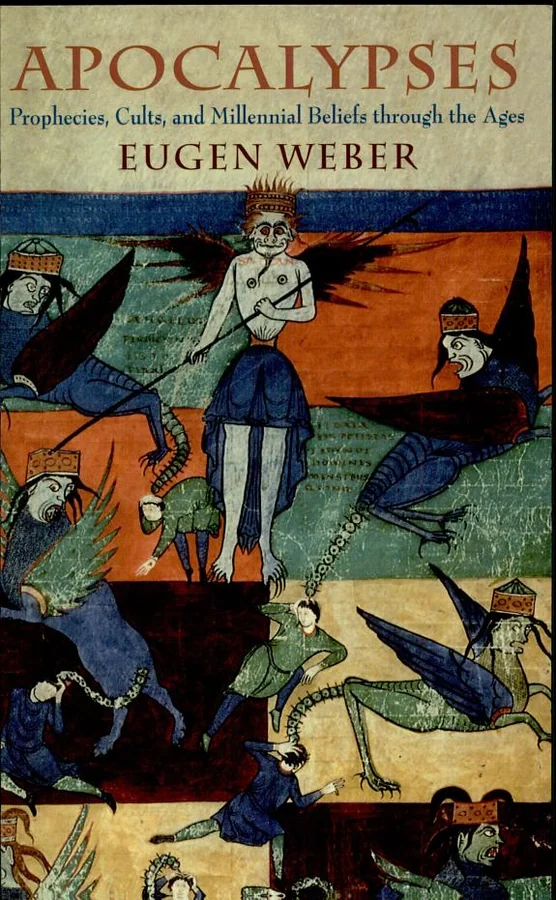
Eugen Weber's Apocalypses offers a formidable survey of end-times thinking, beginning its sweep with Zoroastrianism and moving forward through millennia. The book's strength lies in its erudite cataloging of diverse apocalyptic motifs, demonstrating their pervasive presence from ancient Persia to more recent centuries. Weber meticulously details how the idea of a final battle between good and evil surfaces in varied cultural expressions. However, the sheer breadth of the subject matter can sometimes lead to a density that challenges accessibility for the casual reader. A particular passage detailing the influence of Manichaean dualism on later Christian heresies underscores the work's academic rigor, though it also highlights the book's tendency towards comprehensive, rather than narrative, exposition. While invaluable for its scholarly depth, it demands sustained attention. Apocalypses stands as a significant scholarly compilation of eschatological thought.
📝 Description
75
Eugen Weber's 1999 book, 'Apocalypses,' examines the historical concept of the end of days.
Published in 1999, Eugen Weber's 'Apocalypses' offers a scholarly survey of end-of-the-world beliefs across history. The book traces the idea of final judgment and cosmic renewal from ancient Western and Eastern traditions to more recent manifestations. Weber details how visions of a decisive conflict between good and evil have appeared in various cultures and eras, illustrating humanity's enduring fascination with such concepts.
The work is suited for those with a serious interest in comparative religion, the history of ideas, and the philosophical foundations of apocalyptic thought. Academics, theology students, and individuals seeking a thorough understanding of how narratives about the world's end have influenced human societies and belief systems will find it valuable. Readers investigating the psychological and sociological origins of millenarianism will encounter substantial information.
Weber begins his analysis in antiquity, discussing Zoroastrianism's dualistic cosmology and its impact on later apocalyptic traditions. He also covers Greek, Roman, early Christian, and Jewish eschatology. The book places these ancient beliefs within their historical and philosophical contexts, showing that ideas of a final end and divine intervention were common in ancient thought and affected later movements and interpretations.
While 'Apocalypses' engages with historical and religious texts, its focus on the pervasive human preoccupation with ultimate ends and cosmic renewal places it within a broader study of human eschatological imagination. The book analyzes how these ideas, often framed by dualistic conflicts, manifest through symbolic language and narrative structures across diverse traditions. It examines the historical development of these concepts, from ancient religious systems to philosophical frameworks, without necessarily endorsing any specific esoteric doctrine.
💡 Why Read This Book?
• Gain a comprehensive understanding of Zoroastrianism's dualistic framework, a foundational concept in many subsequent apocalyptic traditions, as detailed in the book's early chapters. • Analyze how millenarian beliefs evolved across distinct historical periods, such as the early Christian era, by examining specific theological shifts discussed by Weber. • Identify recurring symbolic patterns in end-of-world narratives, like the final confrontation between good and evil, to better interpret contemporary or historical movements.
⭐ Reader Reviews
Honest opinions from readers who have explored this book.
❓ Frequently Asked Questions
What ancient civilizations does Eugen Weber examine in Apocalypses?
Eugen Weber's "Apocalypses" begins by exploring ancient traditions including Zoroastrianism, ancient Greek philosophy, and early Jewish and Christian eschatology, laying the groundwork for subsequent end-times narratives.
What is the primary focus of Eugen Weber's book 'Apocalypses'?
The primary focus is the historical and cross-cultural examination of apocalyptic visions and prophecies, tracing the concept of the end of time and the final battle between good and evil across various eras and belief systems.
When was Eugen Weber's book 'Apocalypses' first published?
Eugen Weber's "Apocalypses" was first published in 1999, offering a scholarly perspective on end-of-the-world concepts at the close of the 20th century.
Does the book cover modern apocalyptic movements?
While the book's primary focus is historical, tracing concepts from antiquity to yesterday, it provides the historical and philosophical context necessary to understand the evolution and potential manifestations of modern apocalyptic thought.
What is the significance of Zoroastrianism in the context of this book?
Zoroastrianism is significant as Weber identifies its dualistic cosmology, involving a cosmic battle between good and evil, as an early and influential precursor to many later apocalyptic traditions examined in the book.
Is 'Apocalypses' suitable for a general audience or more academic readers?
Given its scholarly approach and comprehensive historical scope, 'Apocalypses' is best suited for academic readers, students of history and religion, and those with a serious, in-depth interest in eschatological studies.
🔮 Key Themes & Symbolism
Cosmic Dualism
The book extensively explores the concept of dualism, particularly the eternal struggle between forces of good and evil. This theme, notably present in Zoroastrianism, serves as a recurring motif throughout history, shaping expectations of a final, decisive conflict that will resolve the cosmic order. Weber illustrates how this binary opposition permeates various religious and philosophical systems, from ancient Persian beliefs to later Gnostic and Christian interpretations, providing a framework for understanding ultimate judgment and world transformation.
Prophetic Narratives
Central to apocalyptic thought are prophetic visions and pronouncements concerning the end of the world. 'Apocalypses' examines the nature of these narratives, how they are constructed, and their societal impact. From ancient oracles to medieval visions, Weber analyzes how these accounts often function to provide meaning, offer solace, or incite action during times of crisis. The book highlights the diverse forms these prophecies take, from detailed timelines of future events to symbolic revelations about divine intervention.
Historical Evolution of Eschatology
Weber meticulously traces the historical trajectory of eschatological ideas, demonstrating their adaptation and transformation across different cultures and epochs. The work moves from the ancient West and Orient to more recent expressions, showing how the fundamental belief in an end-time has been reinterpreted. This includes shifts in emphasis, from cyclical views of destruction and rebirth to linear narratives of final judgment and salvation, influenced by specific theological developments and socio-historical contexts.
Societal Impact of End-Times Beliefs
Beyond theological exposition, the book implicitly addresses the societal and psychological impact of apocalyptic beliefs. By cataloging widespread adherence to these visions, Weber highlights their role in shaping collective consciousness, motivating social movements, and providing frameworks for understanding historical upheaval. The persistent presence of such beliefs across millennia suggests a deep-seated human need to grapple with mortality, meaning, and the ultimate destiny of the world.
💬 Memorable Quotes
Direct passages from the work, attributed to the author.
“An absolute belief in the end of time, when good would do final battle with evil, was omnipresent.”
— This interpretation highlights the book's central thesis: the pervasive and enduring nature of eschatological thinking across diverse human societies and historical periods, framing it as a fundamental aspect of collective consciousness.
“The work begins with the ancients of the West and the Orient.”
— This indicates the book's broad historical scope, signaling an intention to establish the deep roots of apocalyptic thought by examining foundational traditions from both Western and Eastern philosophical and religious lineages.
“Apocalyptic visions and prophecies from Zarathustra to yesterday...”
— This phrase underscores the extensive chronological range covered by the book, indicating that it traces the evolution of end-times narratives from ancient figures like Zarathustra to more contemporary expressions.
“Weber's profound and elegant book.”
— This describes the author's approach and the perceived quality of his scholarship, suggesting a work characterized by intellectual depth and a sophisticated, well-articulated presentation of complex historical ideas.
💡 Key Ideas
Editorial paraphrase of the work's core concepts — not direct quotes.
Weber finds that an absolute belief in the end of time... form the panorama in Eugen Weber's profound and elegant book.
This paraphrased concept suggests that the author views the belief in a definitive end-time not as a fringe idea, but as a widespread phenomenon that constitutes a significant panorama of human thought and belief across history.
🌙 Esoteric Significance
Tradition
While not strictly an esoteric text itself, 'Apocalypses' engages with themes central to many esoteric traditions, particularly those with Gnostic or dualistic underpinnings. It examines how concepts of cosmic conflict and ultimate redemption, often found in Hermeticism and Manichaeism, have manifested historically. By tracing these ideas from ancient origins, Weber provides a scholarly framework that informs esoteric practitioners and researchers interested in the historical lineage and symbolic language of salvation narratives.
Symbolism
Key symbols explored include the cosmic battle between good and evil, a motif deeply embedded in dualistic systems like Zoroastrianism and Gnosticism. Another significant symbol is the concept of the 'end time' itself, representing not merely cessation but often a radical transformation or renewal of the world. The book also implicitly touches upon prophetic symbols found in various religious texts, interpreted as divine communications or indicators of approaching cosmic shifts.
Modern Relevance
Contemporary thinkers and movements in areas like comparative mythology, religious studies, and even certain strands of political or social theory continue to grapple with the enduring power of apocalyptic narratives. Those studying the psychology of belief, the formation of utopian or dystopian ideologies, or the influence of eschatological frameworks on historical events find Weber's historical overview essential for context. It provides a scholarly lens through which to view contemporary anxieties and visions of societal transformation.
👥 Who Should Read This Book
• Academic historians and religious studies scholars seeking a comprehensive overview of eschatological thought across cultures and eras. • Students of comparative religion and philosophy interested in the historical development of end-of-the-world narratives and dualistic worldviews. • Readers of intellectual history curious about the persistent human fascination with final judgment, cosmic battles, and ultimate societal transformation.
📜 Historical Context
Eugen Weber's "Apocalypses," published in 1999, emerged during a period of renewed interest in eschatology, influenced by the approaching millennium. The work situates itself within the history of ideas, drawing upon scholarship from figures like Norman Cohn, whose "The Pursuit of the Millennium" (1957) explored medieval apocalyptic movements. Weber's book engages with intellectual currents that examined the psychological and sociological roots of millenarianism, offering a broader comparative historical perspective. It contrasts with purely theological interpretations by grounding apocalyptic visions in ancient philosophical traditions like Zoroastrianism and Greek thought. While not facing overt censorship, the book's comprehensive academic approach distinguished it from more popular, less critical treatments of end-times prophecies prevalent in the late 20th century.
📔 Journal Prompts
Zoroastrian dualism as a precursor to later apocalyptic visions.
The recurring motif of good versus evil in end-time prophecies.
Evolution of eschatological narratives from antiquity to modernity.
Societal impact of widespread apocalyptic beliefs.
The symbolic language employed in prophetic end-time accounts.
🗂️ Glossary
Eschatology
The branch of theology concerned with death, judgment, and the final destiny of the soul and of humankind. It often includes beliefs about the end of the world.
Millenarianism
A religious or social belief that a fundamental, transformational change is imminent, often involving the establishment of a utopian world, typically associated with a thousand-year reign (millennium).
Dualism
In a philosophical or religious context, the belief that reality is composed of two fundamental, often opposing, substances or principles, such as good and evil, spirit and matter.
Zoroastrianism
An ancient Persian religion and philosophy that espouses a dualistic cosmology with an ongoing struggle between a benevolent spirit (Ahura Mazda) and a malevolent spirit (Angra Mainyu/Ahriman).
Cosmology
The branch of philosophy and theology that deals with the origin and structure of the universe. In a religious context, it often includes the divine order and the end of the world.
Prophecy
A prediction of future events, typically delivered under divine inspiration. In apocalyptic literature, it often concerns the end times and divine judgment.
Gnosticism
A collection of religious ideas and systems of thought that originated in the first century CE. Gnostics believed that salvation came through secret knowledge (gnosis) and often held dualistic views of the material world being created by a lesser deity.
This book appears in 1 collection
🔮 Readers Also Liked
Browse all →







From the “Apocalyptic Literature” Collection
View all →




More Free Esoteric History & Biography Books
View all →