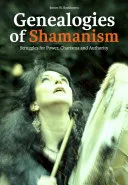
Genealogies of Shamanism
 84
84

Genealogies of Shamanism
Jeroen W Boekhoven’s *Genealogies of Shamanism* offers a necessary corrective to the often uncritical embrace of shamanic concepts in Western esotericism. The work’s strength lies in its detailed archival work, particularly its dissection of the Bollingen Foundation's role in shaping mid-20th-century shamanism discourse. One finds a particularly sharp critique of how early anthropological and psychological interpretations, such as those influenced by Mircea Eliade, established a framework that frequently overlooked the diversity and specificity of indigenous practices. A limitation, however, is the dense academic prose which, while precise, can be a barrier for readers less accustomed to scholarly critique. The chapter examining 'Twentieth-century European constructions' effectively demonstrates how the shaman was often mythologized through a European lens, serving as a projection screen for Western spiritual longings rather than an accurate representation of lived experience. It is a valuable, albeit demanding, contribution to understanding the intellectual history of a complex field.
📝 Description
84
Jeroen W Boekhoven’s 2023 book traces shamanism's academic interpretations from the Enlightenment.
Genealogies of Shamanism examines how scholars and popular culture have understood shamanism from the Enlightenment period up to the late 20th century. Jeroen W Boekhoven details the ways the concept of the shaman has been defined, redefined, and redefined again across various intellectual traditions. The book charts a path through European ideas of the shaman in the eighteenth and nineteenth centuries, early American interpretations in the twentieth century, and the impact of the Bollingen Foundation in the mid-20th century. It shows how the image of the shaman became a screen onto which cultural hopes and fears were projected.
Boekhoven analyzes important ideas such as the 'ecstatic' quality attributed to shamans and how 'shamanism' grew as an academic subject. The work also looks closely at the power struggles and issues of authority involved in defining and researching shamanic practices. It concludes with a specific study of shamanism in the Netherlands. This study is for those interested in the intellectual history of shamanism and the academic fields that have engaged with it, offering a critical view distinct from romanticized ideas.
This book enters the ongoing scholarly conversation about how Western societies have conceptualized and represented shamanism, particularly since the Enlightenment. It addresses how academic disciplines like anthropology and religious studies have shaped the understanding of shamanic traditions, often filtering them through Western philosophical and psychological frameworks. The work questions the historical construction of 'the shaman' as a universal figure, highlighting the influence of Western discourse in creating and disseminating specific notions of ecstatic experience and spiritual authority. It situates these academic trends within broader cultural shifts and intellectual currents that have engaged with non-Western spiritual practices.
💡 Why Read This Book?
• Understand the historical evolution of 'shamanism' as an academic concept, from 18th-century interpretations to its establishment as a field in the 1960s-1990s, allowing you to critically assess modern claims. • Analyze the specific influence of institutions like the Bollingen Foundation (1930s-1960s) on shaping Western perceptions of shamanic practices, providing context for later developments. • Examine the power dynamics and struggles for authority in defining shamanism, as detailed in Chapter 9, offering a lens for deconstructing claims of authenticity and expertise.
⭐ Reader Reviews
Honest opinions from readers who have explored this book.
❓ Frequently Asked Questions
What were early European interpretations of shamanism?
Early European interpretations, particularly from the 18th and 19th centuries, often viewed shamanism through the lens of folklore and exoticism, sometimes conflating it with witchcraft or demonic possession, as explored in Chapter 2.
How did the Bollingen Foundation influence shamanism studies?
The Bollingen Foundation played a significant role from the 1930s to the 1960s by funding key publications and research, impacting how shamanism was understood within academic and psychological circles, a focus of Chapter 5.
What is the book's perspective on the 'genesis of a field' of shamanism?
The book argues that the field of shamanism studies in America from the 1960s to the 1990s was heavily influenced by specific academic constructions and power dynamics, rather than solely emerging from direct engagement with indigenous traditions.
Does the book discuss shamanism in specific geographic regions?
Yes, Chapter 8 provides a detailed Case Study on 'Shamanisms in the Netherlands,' examining how the concept was understood and applied within a specific European context.
What are the main struggles discussed regarding the study of shamanism?
Chapter 9, 'Struggles for power, charisma and authority,' highlights how scholars and practitioners have vied for control over the definition and interpretation of shamanism, often reflecting broader cultural and intellectual conflicts.
When was Genealogies of Shamanism first published?
Genealogies of Shamanism by Jeroen W Boekhoven was first published in 2011, providing a relatively recent academic overview of historical interpretations.
🔮 Key Themes & Symbolism
Constructing the Shamanic Figure
This work meticulously details how the 'shaman' has been conceptualized, often as an archetype of the ecstatic or intermediary, across different historical periods and academic disciplines. Boekhoven shows how Enlightenment thinkers, early 20th-century psychologists, and post-war scholars each imposed their own frameworks, transforming the figure into a mirror for Western preoccupations rather than a direct reflection of diverse indigenous realities.
The Bollingen Foundation's Influence
Chapter 5, 'The Bollingen Connection, 1930s-1960s,' is central in understanding the academic institutionalization of shamanism studies. The foundation's funding significantly shaped which texts were translated, researched, and published, thereby directing the discourse and establishing certain interpretations of shamanism as dominant within Western intellectual circles.
Power Dynamics in Field Definition
The book critically examines the inherent 'Struggles for power, charisma and authority' within the academic and esoteric study of shamanism. Boekhoven illustrates how defining the boundaries of the field, asserting theoretical dominance, and claiming authoritative knowledge have been central to its development, particularly from the 1960s onwards.
European vs. American Interpretations
Distinct chapters analyze 'Twentieth-century European constructions' and 'Post-war American visions' of shamanism. This comparative approach reveals differing cultural biases and intellectual currents, such as the European focus on folklore and the American integration with psychology, highlighting how 'shamanism' became a versatile concept adaptable to various cultural agendas.
💬 Memorable Quotes
Direct passages from the work, attributed to the author.
“Eighteenth and nineteenth-century interpretations often projected European notions onto non-Western figures.”
— This highlights how early academic engagement with shamanism was less about objective observation and more about fitting observed phenomena into pre-existing European cultural and religious frameworks, often leading to misrepresentation.
“The Bollingen Foundation's funding shaped the discourse on shamanism significantly.”
— This points to the crucial role of institutional support and patronage in establishing academic fields, suggesting that the direction of shamanism studies in the mid-20th century was influenced by financial backing and specific editorial choices.
“Defining shamanism involved struggles for power and authority.”
— This concept underscores that the academic and popular understanding of shamanism is not neutral but has been contested terrain, with different individuals and groups vying to control its meaning and legitimacy.
“Twentieth-century European constructions often mythologized the shaman.”
— This suggests that European scholars and artists frequently transformed the figure of the shaman into a romanticized or symbolic entity, detached from the specific cultural contexts and lived realities of practitioners.
“The genesis of shamanism as an academic field in America occurred within specific intellectual currents.”
— This indicates that the emergence of shamanism as a distinct area of study in the latter half of the 20th century was a product of particular academic trends and debates, rather than a straightforward discovery of ancient practices.
🌙 Esoteric Significance
Tradition
This work does not belong to a specific esoteric lineage but rather provides a critical historical and academic framework for understanding how various traditions have interpreted and utilized the concept of shamanism. It serves as a meta-text, analyzing the genealogical roots of esoteric and anthropological engagement with shamanic phenomena, offering scholars and practitioners a clearer view of the intellectual scaffolding upon which their beliefs might be built.
Symbolism
While the book itself is a historical analysis rather than a repository of esoteric symbols, it frequently discusses how symbols associated with shamanism—such as altered states of consciousness, spirit journeys, or the figure of the healer—have been interpreted. These symbols, when examined through Boekhoven's lens, become markers of cultural projection and academic construction rather than purely sacred or universal motifs.
Modern Relevance
Contemporary thinkers and practitioners interested in comparative religion, altered states, or the anthropology of consciousness can draw on this work. It provides essential critical distance for those engaging with modern shamanic revival movements, helping to discern historical influences and academic biases from authentic spiritual practice. Thinkers seeking to decolonize spiritual discourse will find its genealogical approach particularly valuable.
👥 Who Should Read This Book
["• Scholars of comparative religion and anthropology seeking a rigorous historical overview of how 'shamanism' became an academic and popular category, particularly those interested in the period from the 18th century through the late 20th century.", '• Students and practitioners of esoteric traditions who wish to understand the intellectual history behind concepts of shamanism and spirit work, moving beyond received notions to examine their origins.', "• Researchers interested in the impact of institutional funding and academic discourse on spiritual movements, specifically those who want to trace the 'genesis of a field' as discussed in Chapter 8."]
📜 Historical Context
Published in 2011, Jeroen W Boekhoven's *Genealogies of Shamanism* emerged during a period of intense academic and popular interest in shamanic practices, often fueled by New Age movements and anthropological reconsiderations. The book directly engages with the intellectual currents that shaped the study of shamanism from the Enlightenment onwards. It critically examines the legacy of scholars like Mircea Eliade, whose work on shamanism, though influential, is here contextualized within broader academic constructions. Boekhoven situates his work against a backdrop where competing schools of thought, from functionalist anthropology to psychological interpretations, vied to define shamanism. The book implicitly addresses the reception of shamanic studies, noting how certain interpretations gained academic traction (e.g., through the Bollingen Foundation's patronage) while others remained marginal, offering a scholarly counterpoint to the often uncritical enthusiasm surrounding shamanism in the late 20th century.
📔 Journal Prompts
The construction of shamanism in 'Eighteenth and nineteenth-century interpretations'.
The Bollingen connection and its impact on mid-20th-century shamanic discourse.
Examining the 'struggles for power, charisma and authority' in defining shamanism.
The specific case study of 'Shamanisms in the Netherlands'.
How early 20th-century American interpretations differed from European ones.
🗂️ Glossary
Shamanism
A range of indigenous spiritual practices characterized by a practitioner's ability to interact with a spirit world. Historically, the term has been broadly applied and subject to significant academic and cultural interpretation.
Ecstatic practices
Rituals or states of consciousness involving intense emotional or spiritual experience, often believed to facilitate communication with supernatural realms. Such practices are frequently associated with shamanic traditions.
Bollingen Foundation
A philanthropic foundation active in the mid-20th century that provided significant funding for research and publications, notably impacting the study of Jungian psychology and comparative religion, including shamanism.
Genealogy
In this context, refers to the historical tracing and analysis of the origins and development of concepts, ideas, or fields of study, revealing their underlying influences and transformations over time.
Academic construction
The process by which concepts or phenomena are defined, categorized, and understood within scholarly disciplines, often reflecting the prevailing theories, biases, and agendas of the academic community.
Esoteric
Relating to or accessible only by a relatively small number of people with a specialized knowledge or interest. In this book's context, it refers to interpretations and practices often outside mainstream academic or religious frameworks.
Anthropology
The scientific study of humanity, concerned with human behavior, human biology, cultures, societies, and linguistics, in both the present and past, including past human species.