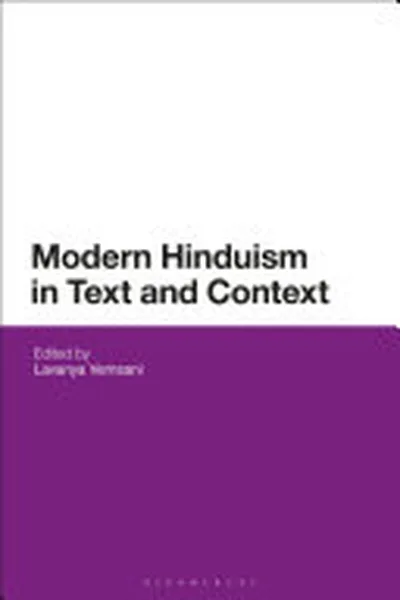
Modern Hinduism in Text and Context
 77
77

Modern Hinduism in Text and Context
Lavanya Vemsani's study, "Modern Hinduism in Text and Context," is a significant contribution to the academic understanding of contemporary Hinduism, particularly for its insistence on integrating textual analysis with lived cultural expressions. The book's strength lies in its willingness to engage with less-canonical materials, such as regional Saiva texts and the performative aspects of Odissi dance, offering a refreshing departure from more traditional scholarship. Vemsani’s approach in linking these cultural forms directly to spirituality and ritual provides concrete examples of Hinduism's ongoing evolution. However, the sheer breadth of topics, while ambitious, occasionally leads to a sense of breadth over depth. For instance, the discussion on yoga and festivals, while valuable, sometimes feels introductory rather than exhaustive. A particular strength is the examination of Nationalist biographies, which reveal the complex interplay of political and spiritual identity in the 20th century. The work serves as a crucial resource for scholars, though readers seeking a purely devotional text will find its academic rigor paramount. It is a meticulously researched volume that demands careful attention.
📝 Description
77
Lavanya Vemsani's 2018 book examines modern Hinduism through its texts and lived contexts.
This 2018 academic study by Lavanya Vemsani analyzes contemporary Hinduism by examining its scriptural foundations alongside its lived realities. The book moves past general overviews to consider how Hindu traditions function and change in the present day. Vemsani employs a dual approach, studying textual sources and the tangible expressions of faith found in various cultural phenomena. This methodology allows for a deeper understanding of the religion's dynamic nature.
The work incorporates less commonly examined materials, including regional Saiva texts with their distinct theological and ritualistic viewpoints. It also looks at cultural forms like Odissi dance and the personal accounts in biographies of prominent nationalists. These elements are treated as crucial to understanding modern Hindu spiritual and ritualistic life. The book also addresses subjects that have historically had less scholarly focus, such as yoga, dance, visual arts, and festivals. These are discussed in relation to core questions of spirituality and ritual, showing how artistic expression, communal celebration, and devotional practice contribute to Hinduism's enduring vitality.
While categorized as esoteric, this book functions more as a scholarly analysis of religious traditions rather than a guide to occult practices. It situates modern Hinduism within its historical and cultural contexts, examining how ancient traditions adapt and persist. The focus is on understanding the religion's internal dynamics and external expressions, rather than on mystical or secret knowledge. It provides a framework for understanding how a major world religion continues to evolve in the modern era through its texts and the everyday lives of its adherents.
💡 Why Read This Book?
• Gain insights into how regional Saiva texts inform contemporary Hindu practices, offering a view beyond mainstream scriptural interpretations, as detailed in Vemsani's analysis of these specific textual traditions. • Understand the significance of Odissi dance and visual arts not merely as cultural expressions but as integral components of Hindu spirituality and ritual, as explored in the book's contextual approach. • Appreciate the dynamic interplay between historical Nationalist figures and their spiritual lives, providing a concrete example of how political movements intersect with religious identity in modern India, a theme Vemsani addresses through biographical studies.
⭐ Reader Reviews
Honest opinions from readers who have explored this book.
❓ Frequently Asked Questions
What are some of the new sources Lavanya Vemsani examines in "Modern Hinduism in Text and Context"?
The book incorporates regional Saiva texts, which offer localized theological perspectives. It also analyzes the significance of Odissi dance and the personal narratives found in biographies of Nationalists, moving beyond commonly studied scriptures.
How does the book approach topics like yoga and festivals?
Vemsani discusses yoga, dance, visual art, and festivals not in isolation but in tandem with questions of spirituality and ritual. This approach aims to show their integral role in modern Hindu practice and belief systems.
What is the primary argument regarding Hinduism's endurance?
The book argues that Hinduism endures not only through its ancient texts but also through its adaptive capacity and continuous reinterpretation within evolving social and cultural landscapes, as demonstrated by its contextual analyses.
Who is the intended audience for this book?
This work is intended for academics, students of religious studies, and individuals interested in a scholarly, in-depth understanding of contemporary Hinduism, particularly those focusing on South Asian religions and cultural studies.
When was "Modern Hinduism in Text and Context" first published?
The book was first published on July 26, 2018, making it a relatively recent academic contribution to the study of modern Hindu traditions.
Does the book focus on ancient Hindu scriptures or modern practices?
It focuses on modern Hinduism, examining both textual sources relevant to contemporary understanding and the lived, contextual practices of the religion today, thus bridging text and practice.
🔮 Key Themes & Symbolism
Textual and Contextual Synthesis
This theme underscores Vemsani's methodological innovation: the fusion of close textual analysis with an examination of lived religious practices. By analyzing regional Saiva texts alongside phenomena like Odissi dance and Nationalist biographies, the book demonstrates that a holistic understanding of modern Hinduism requires attending to both scripture and its diverse manifestations. This approach reveals how ancient traditions are reinterpreted and enacted in contemporary settings, challenging static notions of religious study.
Cultural Expressions as Spiritual Practice
The book elevates cultural forms like dance, visual art, and festivals from mere accessories to integral aspects of Hindu spirituality and ritual. Vemsani argues that these expressions are not peripheral but are active sites where religious meaning is created, contested, and sustained. By examining how yoga, for instance, is practiced and understood today, the work illustrates the dynamic relationship between physical discipline, meditative states, and devotional experience within the modern Hindu framework.
Addressing Underexplored Dimensions
A significant contribution of the book is its focus on themes and issues that have historically received limited scholarly attention. This includes a detailed look at regional traditions, which often possess unique theological nuances distinct from pan-Indian narratives. By bringing these less-examined aspects into the scholarly discourse, Vemsani provides a more inclusive and representative picture of the vast and varied range of modern Hinduism.
The Enduring and Evolving Nature of Hinduism
The core argument revolves around Hinduism's capacity for endurance through continuous adaptation and reinterpretation. Vemsani shows that the religion's vitality stems not just from its scriptural inheritance but from its ability to engage with and integrate new social, cultural, and political contexts. The book illustrates this through examples of how Hindu thought and practice have responded to modernity, nationalism, and global influences, highlighting its ongoing transformation.
💬 Memorable Quotes
Direct passages from the work, attributed to the author.
“Hinduism endures not only through its ancient texts but through its adaptation to contemporary contexts.”
— This interpretive statement highlights the book's central thesis: that the religion's longevity is a product of its dynamic engagement with the modern world, not just adherence to historical scripture.
“Regional Saiva texts offer unique perspectives often missed in broader studies.”
— This points to the book's commitment to exploring specific, less-publicized traditions within Hinduism, suggesting they hold vital keys to understanding the religion's diversity and depth.
“Yoga and dance are examined as integrated spiritual and ritualistic practices.”
— This signifies the book's methodological approach of viewing cultural expressions not as separate from religious life, but as active components of Hindu spirituality and ritual in the modern era.
“Biographies of Nationalists reveal the intersection of political and spiritual identity.”
— This highlights how the book uses personal narratives to explore complex societal phenomena, demonstrating the entanglement of religious belief with nationalistic aspirations in the 20th century.
“The study considers festivals as crucial sites for contemporary Hindu expression.”
— This emphasizes the importance placed on communal celebrations as living embodiments of religious tradition, showing how they contribute to the ongoing life and meaning of Hinduism.
🌙 Esoteric Significance
Tradition
While not strictly aligned with a singular Western esoteric lineage like Hermeticism or Kabbalah, Vemsani's work speaks to the esoteric library's broader interest in non-dualistic philosophies and practices. It explores traditions (like Tantra, implicitly within Saivism) that often contain esoteric dimensions concerning spiritual transformation through embodied practices and subtle energies. The book’s contextual approach to yoga and ritual aligns with esoteric traditions that seek direct experience and experiential knowledge of the divine, moving beyond purely intellectual understanding.
Symbolism
The book implicitly engages with symbols through its discussion of dance and visual art. For instance, the mudras and iconography within Odissi dance can be seen as symbolic languages conveying complex philosophical and devotional concepts. Similarly, the representation of deities in visual art functions symbolically, acting as focal points for meditation and embodying divine attributes. These elements, when analyzed in context, reveal layers of meaning accessible through both scholarly interpretation and devotional practice.
Modern Relevance
Contemporary thinkers and practitioners exploring embodied spirituality, the intersection of art and religion, and the adaptive nature of tradition find Vemsani's work highly relevant. Scholars of South Asian religions, comparative mysticism, and ritual studies continue to draw on its methodological approach. Furthermore, individuals engaged with modern yoga as a spiritual discipline, rather than solely as physical exercise, will find the contextualization of its practices insightful, reflecting a growing interest in holistic approaches to well-being and consciousness.
👥 Who Should Read This Book
• Academics and students of Religious Studies focusing on South Asian traditions, who will benefit from the book's rigorous textual and contextual methodologies. • Researchers interested in the anthropology of religion and the study of lived practices, gaining insights into how Hinduism is expressed beyond canonical texts. • Individuals exploring the intersection of culture, spirituality, and ritual, particularly those interested in the performative and artistic dimensions of religious life.
📜 Historical Context
Published in 2018, Lavanya Vemsani's "Modern Hinduism in Text and Context" emerged during a period of heightened academic interest in the fluidity and contemporary relevance of religious traditions. The intellectual currents favored post-colonial studies, the anthropology of religion, and the examination of lived religion, moving beyond purely textual or theological analyses. This work contributes to a scholarly conversation that, following figures like Wendy Doniger and Diana Eck, sought to present a more nuanced and diverse picture of Hinduism, acknowledging its regional variations and adaptive capacities. It engaged with scholarship that was increasingly challenging monolithic interpretations of Hinduism, particularly in response to nationalist appropriations of the religion. The book's focus on under-examined regional texts and cultural practices implicitly countered dominant narratives and offered a more granular view, aligning with methodologies that prioritize empirical observation and diverse source materials.
📔 Journal Prompts
Regional Saiva texts and their unique spiritual contributions.
The integration of Odissi dance within contemporary Hindu devotional life.
How Nationalist biographies illuminate the interplay of faith and politics.
The evolving understanding and practice of yoga in modern Hinduism.
Festivals as dynamic expressions of enduring Hindu traditions.
🗂️ Glossary
Saiva Texts
A corpus of scriptures and literature dedicated to the worship of the Hindu deity Shiva. Regional Saiva texts often contain distinct theological doctrines, ritual practices, and philosophical interpretations specific to particular geographical areas or lineages.
Odissi Dance
A classical Indian dance form originating from the state of Odisha. It is known for its lyrical grace, expressive storytelling, and often depicts themes from Hindu mythology, particularly related to Vishnu and Shiva.
Nationalists
Refers to individuals actively involved in nationalist movements, particularly in the context of India's struggle for independence from British rule. Their biographies often reveal complex personal motivations, including spiritual and philosophical underpinnings.
Spirituality
The quality of being concerned with the human spirit or soul as opposed to material or physical things. In the context of Hinduism, it encompasses devotion, meditation, philosophical inquiry, and the pursuit of liberation or enlightenment.
Ritual
A set of actions performed mainly for their symbolic value, often in a prescribed order. In Hinduism, rituals range from daily domestic worship (puja) to elaborate public ceremonies and festivals, serving to connect the human and divine realms.
Textual Approach
A method of studying religion that focuses on the analysis and interpretation of written scriptures, theological treatises, and philosophical texts to understand beliefs, doctrines, and historical development.
Contextual Approach
A method that examines religious phenomena by considering their social, cultural, historical, and political environments. It emphasizes understanding beliefs and practices as they are lived and experienced by adherents.