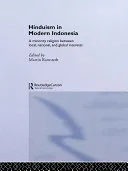
Hinduism in Modern Indonesia
 84
84

Hinduism in Modern Indonesia
Martin Ramstedt's 'Hinduism in Modern Indonesia' provides a meticulously researched account that serves as a critical corrective to monolithic views of both Hinduism and Indonesian religious life. The strength of the book lies in its granular detail, particularly its exploration of how Hindu traditions in Indonesia are not merely transplanted but actively remade through local cultural lenses. A particular passage detailing the adaptation of the Ramayana narrative in specific Javanese communities, illustrating its fusion with indigenous spirit beliefs, stands out for its clarity and depth. However, the book's academic rigor, while admirable, can sometimes render its prose dense, making it a demanding read for those not already steeped in the field. The original blurb, simply stating 'Table of contents,' offers no hint of the substantial analytical work within. This is a serious scholarly contribution, not light reading.
📝 Description
84
Martin Ramstedt's 2004 study examines Hinduism's adaptation in modern Indonesia.
Published in 2004, Martin Ramstedt's "Hinduism in Modern Indonesia" offers a scholarly look at how Hindu traditions function within the Indonesian archipelago. The book moves past simple labels to show the many ways Hindu practices and ideas have been kept alive, changed, and remade. Ramstedt traces the history and current forms of Hindu rituals, beliefs, and philosophies, creating a detailed picture of a faith that continues to develop. It highlights how local traditions in Indonesia have often blended with Hindu influences, resulting in unique expressions of faith found nowhere else. The study also considers the historical context of studying religion in Indonesia, including the impact of Dutch colonial perspectives and post-independence efforts to shape national religious identity. It acknowledges earlier anthropological work on Hindu-Buddhist connections in areas like Java and Bali, placing Ramstedt's own analysis within this ongoing academic conversation.
While not explicitly esoteric in the Western occult sense, this book examines how a major world religion, Hinduism, develops unique, localized, and sometimes syncretic forms in a predominantly non-Hindu environment. It touches on the ways beliefs and practices can transform when removed from their perceived origins and become integrated into different cultural matrices. The study's focus on the dynamic evolution and adaptation of religious expression provides insight into how traditions can maintain vitality and meaning through change, a process that can be seen as a form of esoteric development within a community.
💡 Why Read This Book?
• Gain insight into the specific ways Hindu traditions were reshaped by Indonesian cultural contexts, a detail not typically found in general studies of Hinduism, as exemplified by discussions on the syncretic Javanese interpretations of Hindu epics. • Understand the socio-political forces that have shaped Hindu identity in Indonesia since the mid-20th century, a crucial element for grasping the persistence of minority religions in the nation-state. • Explore the concept of 'Agama Hindu Dharma' and its distinction from localized, pre-formalized Hindu practices, offering a nuanced view of religious identity beyond simplistic labels.
⭐ Reader Reviews
Honest opinions from readers who have explored this book.
❓ Frequently Asked Questions
When was Martin Ramstedt's 'Hinduism in Modern Indonesia' first published?
Martin Ramstedt's 'Hinduism in Modern Indonesia' was first published in 2004, providing a scholarly examination of Hindu traditions within the Indonesian archipelago during that period.
What is a key concept discussed in 'Hinduism in Modern Indonesia' regarding religious practice?
A key concept is religious syncretism, where Hindu doctrines and practices are adapted and blended with indigenous beliefs and cosmological frameworks unique to Indonesian cultures.
Who is the primary audience for 'Hinduism in Modern Indonesia'?
The primary audience consists of academics, researchers, and advanced students in fields such as religious studies, anthropology, and Southeast Asian history, who require detailed, evidence-based analysis.
Does the book focus on Balinese Hinduism exclusively?
While Bali is a significant area of Hindu practice in Indonesia, the book examines Hinduism more broadly across the archipelago, including its manifestations in regions like Java, acknowledging diverse adaptations.
What historical influences does the book consider in its study of Indonesian Hinduism?
The book considers the impact of Dutch colonial scholarship, which often framed local religions through Western perspectives, and post-independence national identity formation efforts on Hindu communities.
What distinguishes 'Agama Hindu Dharma' from other Hindu practices discussed?
'Agama Hindu Dharma' refers to a more formalized, officially recognized identity, often contrasted in the book with fluid, localized, and pre-formalized expressions of devotion and belief.
🔮 Key Themes & Symbolism
Religious Syncretism
The work meticulously details how Hindu traditions in Indonesia do not exist in isolation but are profoundly shaped by local animistic beliefs, ancestor veneration, and pre-existing cosmological systems. This syncretism is not merely superficial but represents a deep integration, where Hindu deities and narratives are reinterpreted and often coexist with indigenous spirits and practices. Ramstedt illustrates how this fusion creates unique religious expressions that are distinctly Indonesian, moving beyond a simple import-export model of religion and highlighting the adaptive capacity of spiritual traditions.
Identity Formation
A significant theme is the construction and negotiation of Hindu identity within the Indonesian context. The book explores the formalization of 'Agama Hindu Dharma' as a recognized religion by the state, examining how this official categorization interacts with more fluid, localized devotional practices. It highlights the challenges faced by Hindu communities in maintaining their distinctiveness and asserting their identity amidst a predominantly Muslim population and national policies that often sought to standardize religious affiliation.
Cultural Adaptation
Ramstedt emphasizes that the Hinduism found in Indonesia is not a static replica of its Indian origins but a living tradition that has undergone continuous adaptation. This involves the recontextualization of Hindu texts, rituals, and philosophical concepts to align with Indonesian cultural values and social structures. The book provides examples of how religious performances, temple architecture, and even the understanding of karma and dharma are influenced by local cultural norms, demonstrating a vibrant process of cultural engagement.
Colonial and Post-Colonial Influence
The book acknowledges the historical impact of Dutch colonial scholarship on the study and categorization of religions in Indonesia, often imposing Western frameworks. It also implicitly addresses the post-independence era's emphasis on national unity and religious policy, which influenced how minority religions like Hinduism were officially recognized and practiced. This historical layering provides a crucial backdrop for understanding the contemporary state of Hinduism in Indonesia.
💬 Memorable Quotes
Direct passages from the work, attributed to the author.
“Hindu traditions in Indonesia are characterized by their integration with indigenous cosmological frameworks.”
— This highlights the core argument that Indonesian Hinduism is not a direct transplant but a unique synthesis, blending Hindu philosophies with local spiritual beliefs and practices.
“The concept of 'Agama Hindu Dharma' represents a formalized religious identity.”
— This points to the state's role in defining and recognizing Hindu practices, distinguishing them from more localized or fluid forms of devotion that might not fit official categories.
“Local narratives often reinterpret Hindu epics and deities.”
— This illustrates the dynamic nature of religious transmission, where core stories and figures are adapted to resonate with Indonesian cultural contexts and values.
“Syncretism is a defining feature of religious expression in the archipelago.”
— This emphasizes that the blending of different religious elements is not an anomaly but a fundamental characteristic of how faith is lived and understood in Indonesia.
“Colonial scholarship influenced early analyses of Indonesian religions.”
— This notes the historical lens through which Indonesian religions were studied, suggesting a need to re-examine these traditions beyond potentially biased Western interpretations.
🌙 Esoteric Significance
Tradition
While not strictly an esoteric text in the Western sense, 'Hinduism in Modern Indonesia' touches upon esoteric themes through its examination of how Hindu philosophical concepts, particularly those related to cosmology, consciousness, and spiritual liberation, are interpreted and adapted within unique cultural matrices. It aligns with the broader Hermetic and Gnostic interest in diverse paths to gnosis and understanding the divine through varied cultural expressions, viewing local adaptations not as deviations but as valid manifestations of universal principles.
Symbolism
The book implicitly discusses symbolism through its exploration of how Hindu deities and epics are recontextualized. For instance, the adaptation of figures like Vishnu or Shiva within Indonesian mythologies can be seen as symbolic of the integration of cosmic principles into local spiritual hierarchies. The reinterpretation of narratives from texts like the Ramayana or Mahabharata within Indonesian cultural frameworks also serves as symbolic representation of how universal archetypes are localized and made relevant to specific communities.
Modern Relevance
Contemporary scholars and practitioners interested in comparative mysticism, religious syncretism, and the phenomenology of religious experience draw on works like Ramstedt's. Thinkers exploring the 'perennial philosophy' or seeking to understand how spiritual traditions evolve in diverse cultural environments find valuable case studies here. Modern occult and esoteric circles often look to such studies to understand the global reach and adaptability of spiritual concepts, informing their own interpretations of universal spiritual laws through varied cultural lenses.
👥 Who Should Read This Book
• Researchers of Southeast Asian religions: Gain a nuanced understanding of the specific socio-religious dynamics that shape Hindu practices in Indonesia, moving beyond generalizations. • Students of comparative religion: Analyze concrete examples of religious syncretism and cultural adaptation, crucial for understanding how global traditions interact with local contexts. • Scholars of cultural anthropology: Examine how religious identity is constructed and negotiated within a complex multi-faith nation-state, offering insights into the interplay of belief and social structure.
📜 Historical Context
Published in 2004, 'Hinduism in Modern Indonesia' emerged in an era of renewed academic interest in the diversity of religious expressions within Southeast Asia, particularly following the political shifts after the fall of Suharto's New Order regime. The work engages with a long tradition of scholarship on Indonesian religions, implicitly critiquing earlier anthropological studies, such as those by Clifford Geertz, which sometimes presented a more monolithic view of Balinese Hinduism or focused heavily on colonial-era classifications. Ramstedt's approach moves beyond earlier orientalist or purely descriptive accounts, aiming for a nuanced analysis of contemporary practices and identities. The intellectual currents of the time favored deconstructing grand narratives and focusing on localized religious phenomena and the agency of practitioners. The book’s reception would have occurred within a scholarly landscape increasingly aware of the complexities of religious pluralism and identity politics in post-colonial nations.
📔 Journal Prompts
The adaptation of Hindu narratives in Indonesian cultural contexts.
Reflect on the concept of 'Agama Hindu Dharma' versus localized devotional practices.
Analyze the role of syncretism in shaping Indonesian Hinduism.
Consider the influence of colonial scholarship on the study of Indonesian religions.
Explore how Hindu deities are reinterpreted within Indonesian cosmological frameworks.
🗂️ Glossary
Syncretism
The merging or blending of different religious beliefs, myths, or practices, often resulting in a new or hybrid religious form that incorporates elements from multiple traditions.
Agama Hindu Dharma
A term referring to the officially recognized form of Hinduism in Indonesia, often distinguished from more localized or informal expressions of Hindu belief and practice.
Cosmological Frameworks
Systems of beliefs and understanding that explain the origin, structure, and nature of the universe, often influencing religious practices and interpretations within a culture.
Indigenous Beliefs
Spiritual and religious practices, traditions, and worldviews originating from the native inhabitants of a particular region, often predating the arrival of major world religions.
Religious Adaptation
The process by which a religion modifies its doctrines, rituals, or practices to better suit the cultural, social, or political environment in which it is situated.
Post-Colonial Studies
An academic field examining the cultural, political, and economic legacy of colonialism and imperialism, often focusing on the impact on formerly colonized societies.
Gnosticism
A diverse set of religious and philosophical movements characterized by a belief in a transcendent, unknowable God and the presence of a divine spark within humanity, accessible through secret knowledge (gnosis).